

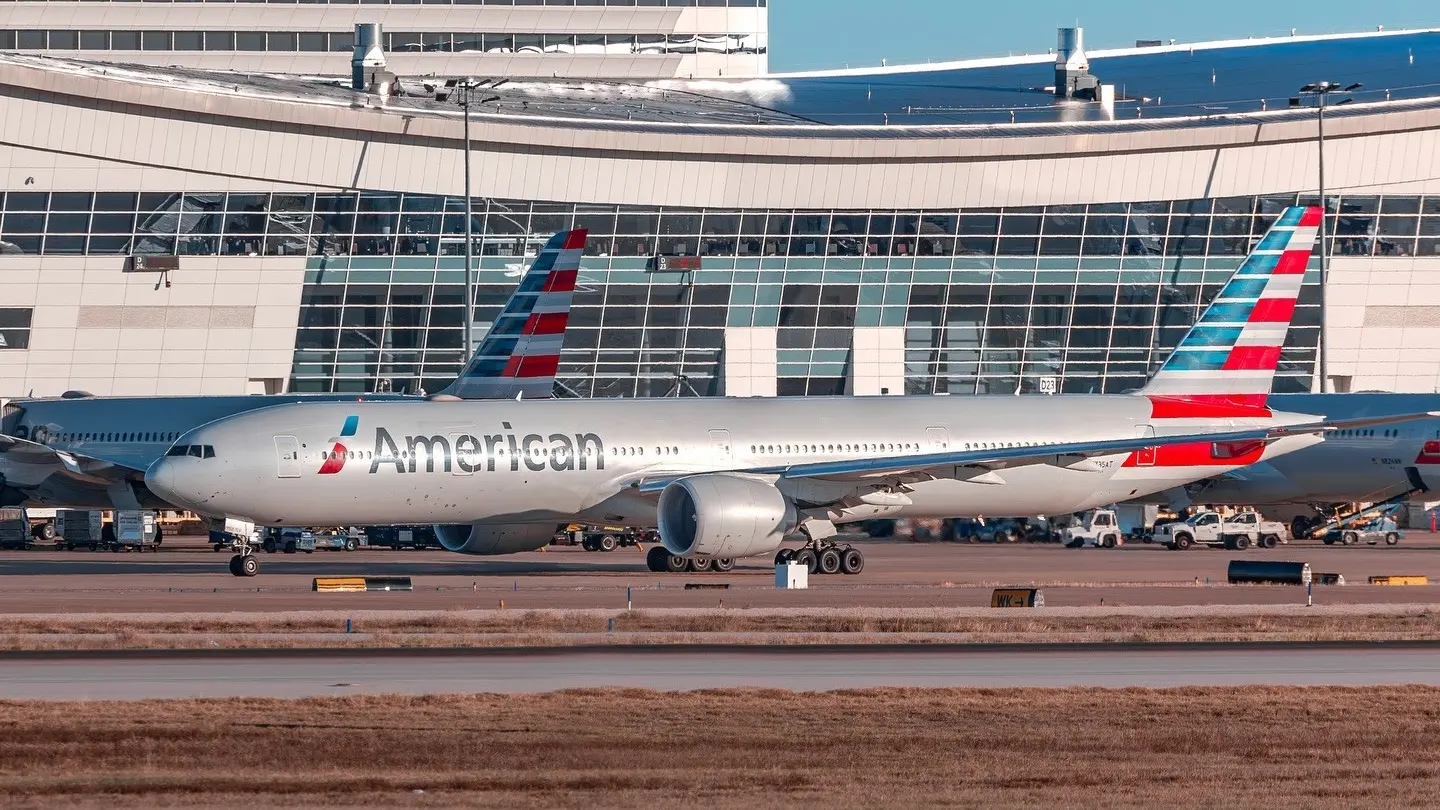
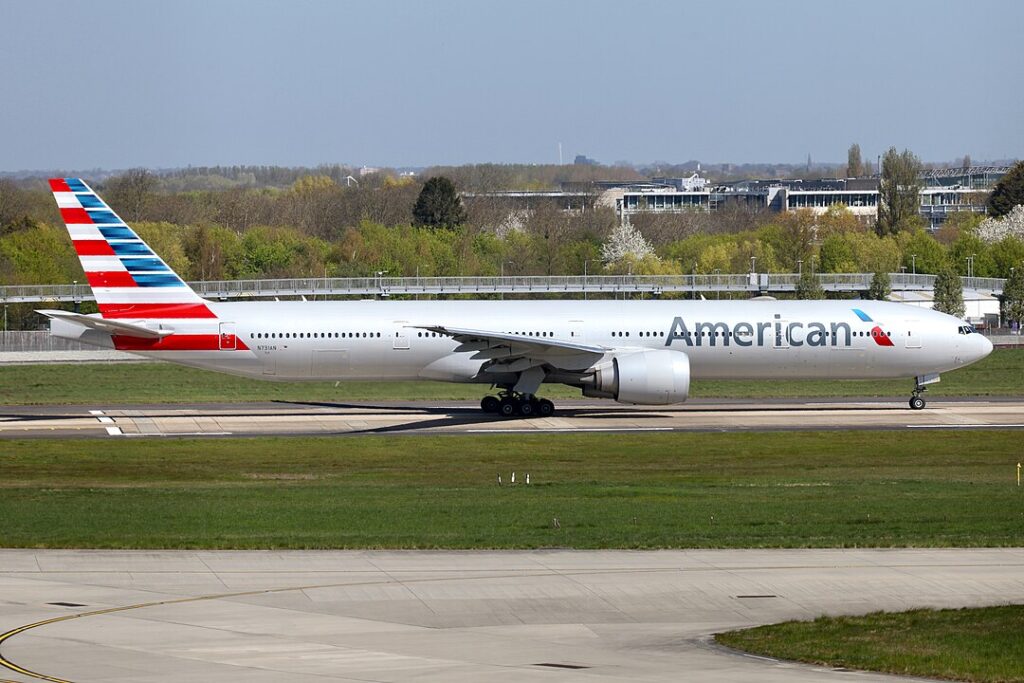
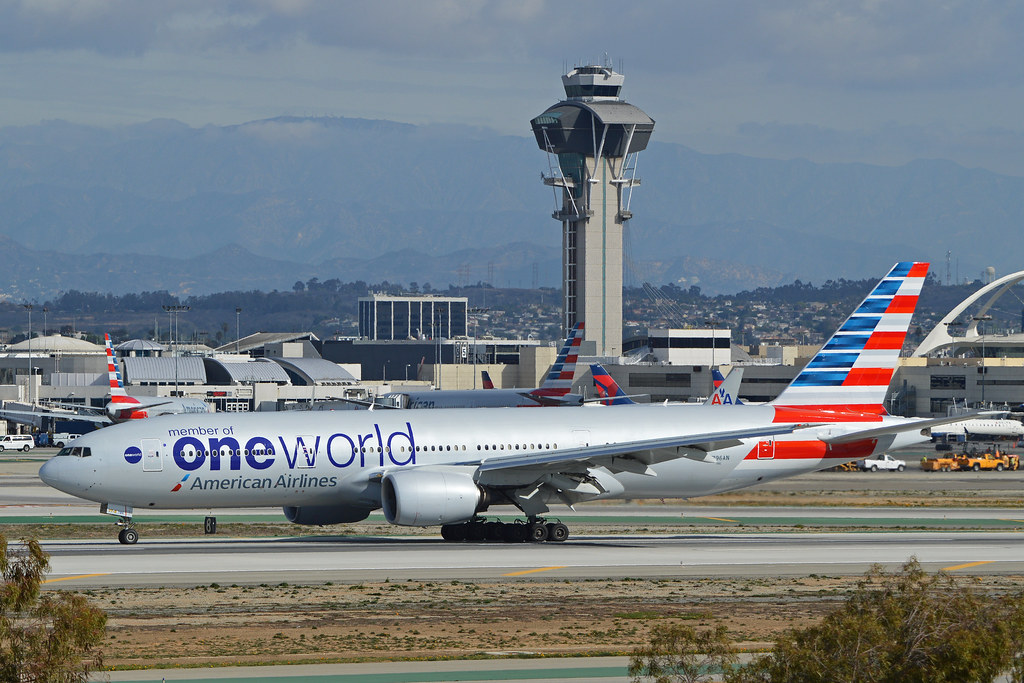
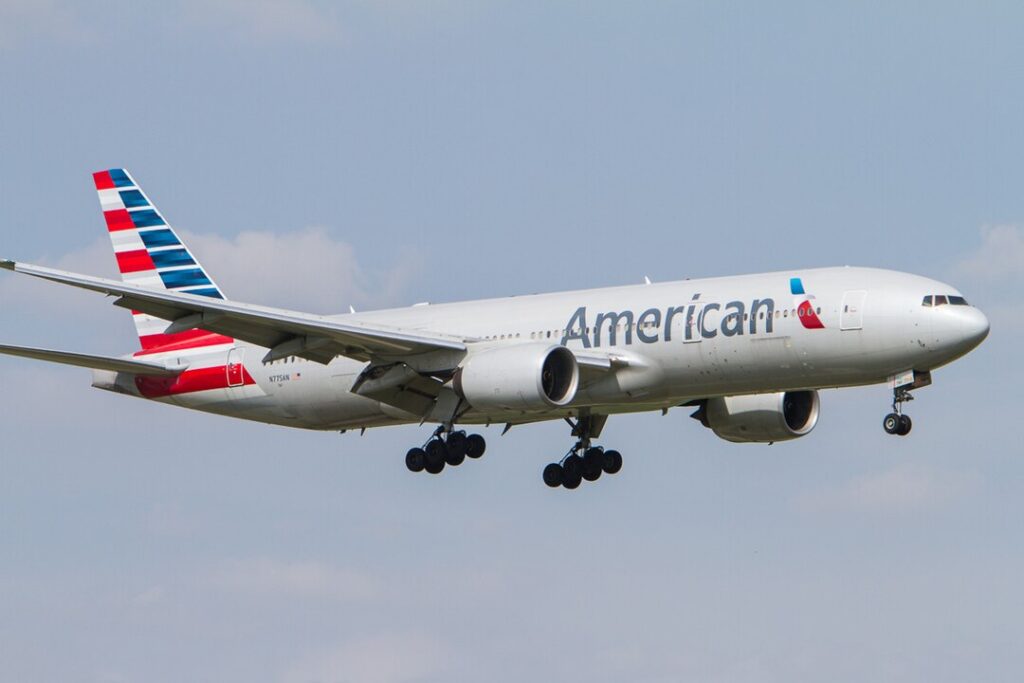
FORT WORTH- American Airlines (AA) disrupted an $8,000 business class journey from New York (JFK) to Buenos Aires-Ezeiza (EZE) after an aircraft delay led to a series of reported reservation problems.
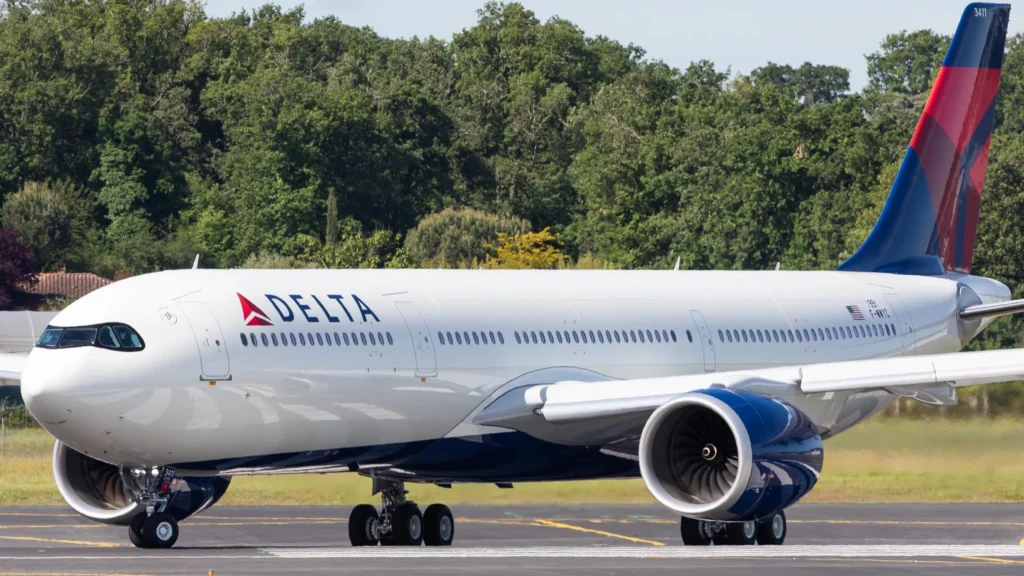
The passenger was later rebooked onto Delta Air Lines (DL) via Atlanta (ATL) after American’s reported automated rebooking, lack of notification, and ticket cancellation made the original itinerary difficult to recover.
24 Hour Delay Became Ticket Cancellation
The incident involved a senior citizen and experienced independent traveler who was traveling to Argentina for a complex international journey. The passenger, referred to as Jane in the original account, had dedicated her life to philanthropy and regularly traveled internationally on her own.
She had booked an American Airlines nonstop flight from New York-JFK to Buenos Aires-Ezeiza on Saturday evening. Her travel plans did not end in Buenos Aires.
After landing in Argentina, she had a separate commercial flight followed by a charter flight to reach her final destination in the southern part of the country.
The American Airlines business class ticket cost more than $8,000. The original account also noted that the same itinerary represented an expensive use of AAdvantage miles, cited at 450,000 miles each way. Jane also held American Airlines Executive Platinum status.
Jane left her home in Pennsylvania on Saturday afternoon and drove to JFK for the evening departure.
The flight continued to display an on-time status until passengers were preparing to board. At the gate, however, American announced that the flight would not depart that evening and would instead be delayed until 7:00 PM the following day.
According to the original account, the disruption was connected to the previous evening’s JFK to Buenos Aires flight. That Friday service had reportedly been delayed throughout the day, and American apparently decided at the last minute to use the aircraft expected for Saturday’s departure to operate the delayed Friday flight.
Passengers at JFK were instructed to line up for hotel and meal vouchers.
Rather than stay at the airport overnight, Jane returned to Pennsylvania. During her two-hour drive home, she contacted the companies handling her onward travel in Argentina and rearranged both the commercial connection and charter flight.
Those changes reportedly cost her thousands of dollars out of pocket. Despite the additional expense, the revised plan appeared workable because she expected to return to JFK on Sunday, take the delayed 7:00 PM departure, and arrive in Argentina early the next morning.
Unexpected Rebooking Created Second Problem
When Jane returned to JFK on Sunday afternoon, she discovered that her American Airlines ticket had been cancelled.
The original account says the airline’s reservation system had automatically rebooked her onto the delayed Friday flight. That change reportedly occurred only about 15 minutes before the Friday flight departed.
Jane had not requested the change and, according to the account, did not receive notice that her reservation had been moved.
Because she did not board the Friday flight, the reservation system apparently treated her as a no-show. The result was more serious than the missed segment. Her ticket was cancelled, including the return portion of the itinerary.
This sequence transformed a 24-hour operational delay into a broader reservation failure:
The Saturday flight was delayed until Sunday evening. The system then reportedly moved the passenger to the already delayed Friday flight without notice. She did not board that flight, was recorded as a no-show, and subsequently lost the remaining itinerary.
The original account specifically says the writer received all of Jane’s American Airlines texts and emails. The writer therefore stated that no notification of the unexpected rebooking had been received.
That point is significant because the passenger’s later no-show resulted from a reservation change she reportedly did not know had occurred.
The published account by Live and Let’s Fly presented the incident as an example of how an operational disruption can become substantially more serious when automated reservation changes are not clearly communicated.
American Could Not Restore Original Booking
Jane then attempted to return to the flight she had originally booked.
American representatives reportedly told her that the business class cabin was sold out. The original account, however, says her seat was still unassigned.
Agents handling the booking by telephone and at the airport reportedly declined to place her back into business class through an overbooking or other exception.
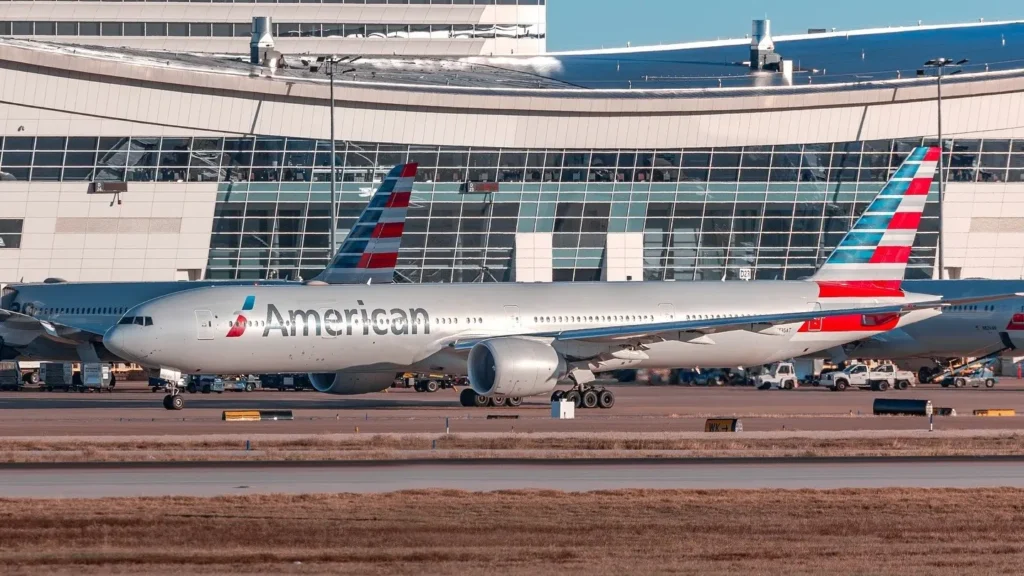
Instead, American rebooked her into premium economy on the Sunday night AA953 flight. That flight was showing an on-time departure at the time.
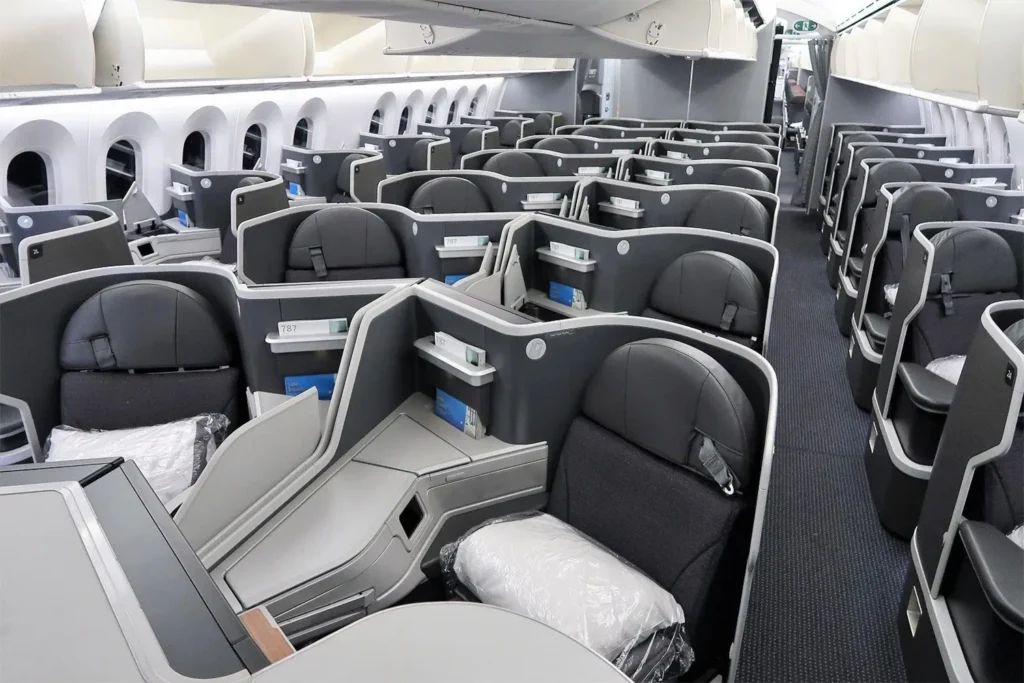
The change left Jane facing not only the original delay but also a downgrade from the business class cabin she had paid more than $8,000 to secure.
JFK Customer Service Escalation Added to Disruption
The passenger reportedly contacted American Airlines reservations and the airline’s Twitter/X support team while trying to restore the original itinerary.
According to the account, both teams were unable to resolve the issue and said the flight was under airport control.
At the JFK counter, Jane reportedly had a boarding pass for the delayed September 19 AA953 flight in business class. A check-in agent took the boarding pass and told her that it was invalid.
Another agent reportedly appeared willing to escalate the matter and made a telephone call. According to the original account, however, the agent ended the call and then told Jane:
“We owe you nothing. This is an American Express ticket.”
The statement became another point of contention because American Express was responsible for issuing the ticket, but the original account says American Express later confirmed that it had not made the reservation changes.
According to that account, the changes had been initiated by American Airlines and the airline remained in control of the ticket.
Trip Ended With Different Airline
After American Airlines failed to restore the original business class itinerary, the writer cancelled Jane’s American Airlines ticket and arranged an alternative itinerary on Delta Air Lines via Atlanta.
The change allowed her to continue toward Argentina, but it came after the passenger had already spent thousands of dollars modifying her onward transportation and had lost the business class itinerary she originally purchased.
The reported outcome also meant that she was delayed by several additional hours and moved out of business class into a lower cabin before ultimately leaving American Airlines altogether.
Incident Shows About Irregular Operations
The reported sequence demonstrates how multiple travel problems can compound during an airline disruption.
A mechanical or aircraft-related delay can initially be limited to a schedule change. In this case, however, the reported problem developed into a reservation change, an alleged failure to notify the passenger, a no-show designation, cancellation of the remaining itinerary, and a cabin downgrade.
For international travelers with separate onward reservations, the effects can extend beyond the airline’s own ticket.
Jane had a commercial connection and a charter flight waiting in Argentina. When the American Airlines departure changed, those reservations also needed to be modified, creating additional costs that were outside the original airfare.
Automated Rebooking Needs Clear Communication
The reported incident also shows why automated rebooking must be paired with timely passenger notification.
When an airline moves a passenger to a different flight without clear communication, the customer may continue traveling to the airport based on the itinerary they believe remains valid. If the system then records the traveler as a no-show, the consequences can extend to other segments of the same ticket.
In this case, the original account says the automated change occurred close to the Friday departure, leaving little opportunity for the passenger to discover the change and respond.
Premium International Travel
The financial impact of the reported disruption was greater than the ticket price alone.
Jane had purchased a business class ticket valued at more than $8,000 and had separate transportation arranged after reaching Buenos Aires. Changing those plans reportedly cost thousands of dollars in additional expenses.
The loss of business class also mattered because the original booking was a premium international itinerary associated with her Executive Platinum status.
Calls for American Airlines to Take Responsibility
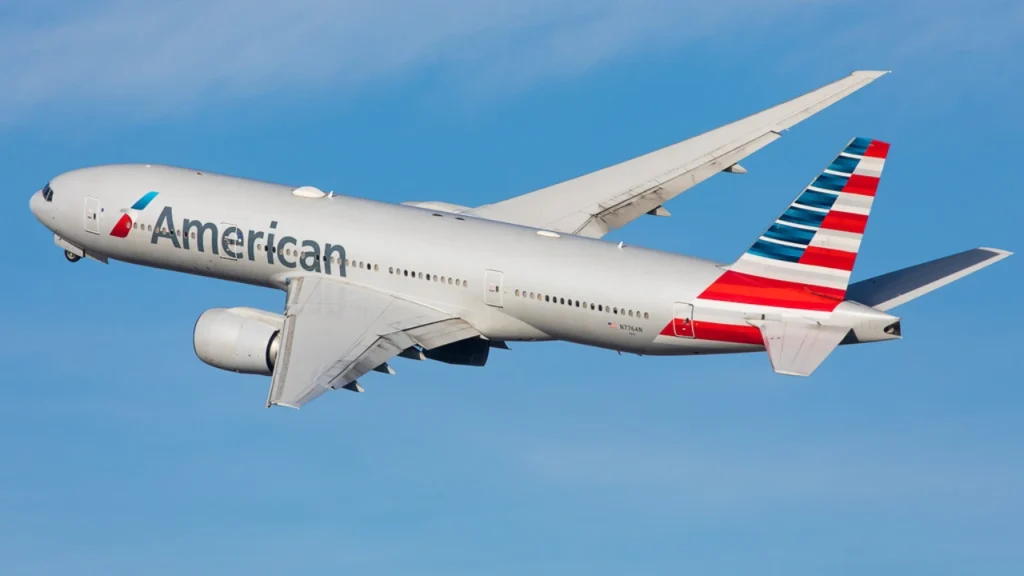
The original account argues that American Airlines should take responsibility for the passenger’s additional expenses arising from the disruption.
It also strongly criticizes the customer service response at JFK, particularly the handling of a passenger whose itinerary had already been disrupted by an airline-caused operational problem.
The writer went further by describing the episode as a serious management and accountability failure and specifically questioning the record of CEO Robert Isom’s tenure. Those statements are the writer’s opinions rather than independently established findings.
The account also argued that employee accountability at JFK needed improvement and criticized what it characterized as a failure to provide effective assistance during an irregular operation.
Disruption That Went Far Beyond Flight Delay
The reported American Airlines case began with an aircraft-related scheduling problem but developed into a much more complex travel failure.
A passenger traveling from Pennsylvania to JFK for a $8,000-plus business class trip to Argentina reportedly saw her flight remain on time until boarding, learned that it had been delayed 24 hours, returned home, paid thousands to rearrange onward transportation, and then returned to JFK the next day only to discover that her ticket had been cancelled.
The cancellation reportedly followed an automatic rebooking to the delayed Friday flight approximately 15 minutes before departure. Because the passenger did not know about that change, she did not board, was treated as a no-show, and lost the remainder of her itinerary.
American then reportedly declined to restore her business class seat, despite the source account stating that the seat remained unassigned, and moved her to premium economy on Sunday night’s AA953.
The passenger ultimately abandoned the American Airlines itinerary and traveled on Delta Air Lines via Atlanta.
The case highlights the practical importance of accurate reservation systems, timely notifications, coordinated airport support, and clear responsibility when an airline disruption affects a high-value international itinerary.
Stay tuned with us. Further, follow us on social media for the latest updates.
Join us on Telegram Group for the Latest Aviation Updates. Subsequently, follow us on Google News
