

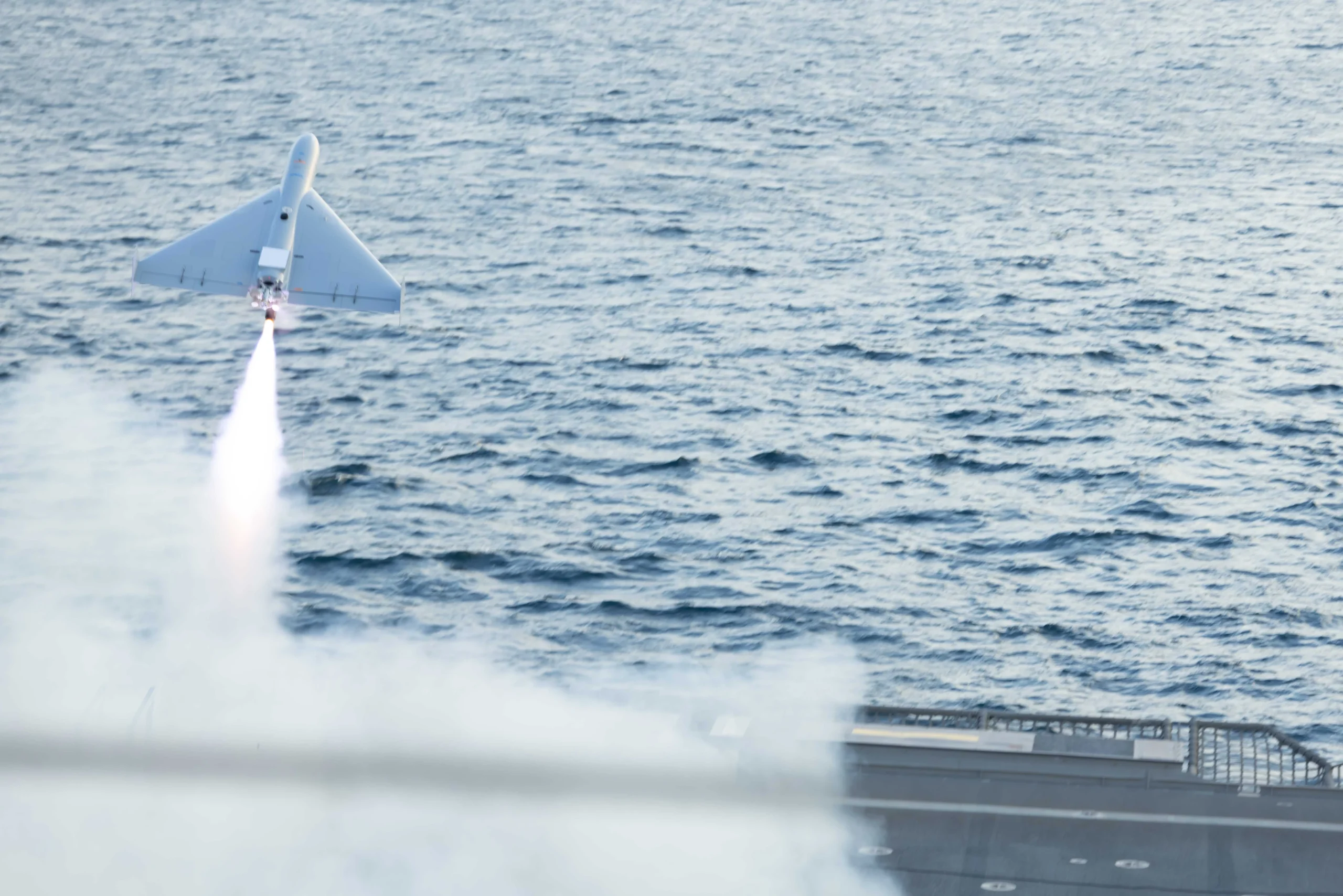
KYIV— Russia has introduced an optical navigation system called Susanin on its Geran-4 and Geran-5 attack drones, giving the aircraft another way to navigate Ukrainian airspace when electronic warfare systems disrupt satellite signals.
The development highlights Moscow’s efforts to improve the reliability of its long-range drone campaign without relying entirely on expensive cruise missiles.
Ukraine’s Defence Intelligence Directorate (GUR) disclosed details of the technology in October 2026, identifying the system as an electro-optical navigation module that matches images of the ground with reference imagery stored onboard.
The technology resembles terrain-matching systems used by cruise missiles, but its installation on comparatively inexpensive jet-powered drones could create additional challenges for Ukrainian air defences.
Susanin Optical Navigation System Technology
The Susanin system uses a downward-facing optical sensor to capture images of the terrain beneath a drone during flight.
An onboard computer compares these images with previously stored photographs, allowing the aircraft to estimate its position and follow a planned route without depending solely on satellite navigation or radio signals.
Ukrainian drone analyst Serhii Beskrestnov, known as Flash, has warned that Russia is expanding its use of optical navigation across several unmanned aircraft.
Similar technology has appeared on Molniya, V2U and Lancet drones, while the Geran-4 and Geran-5 represent a significant development in its use on faster, long-range platforms.
The system does not eliminate every navigation problem, but it can reduce the effectiveness of electronic jamming against satellite-dependent guidance.
Its performance still depends on factors such as the quality of stored imagery, the terrain beneath the aircraft and suitable visibility conditions.
Low-Cost Cruise Missile Technology for Drones
The technology follows a principle also used by cruise missiles, including the American Tomahawk, which employs Digital Scene Matching Area Correlation to compare observed terrain with stored reference images.
Russia’s Kh-101 cruise missile also uses a comparable terrain-based navigation approach known as Otblesk-U.
However, the cost difference between these weapons and Russia’s attack drones is substantial.
The Kh-101 is estimated to cost approximately $2.4 million per missile, while the Geran-4 has been reported at around $50,000 to $70,000 per unit; estimates place the Geran-5 at roughly $100,000 to $115,000.
Russia has increased its use of jet-powered attack drones as it adapts to Ukrainian interception methods.
According to the figures cited in recent reporting, Russian forces launched more than 3,500 jet-powered attack drones at Ukraine in September 2026 alone, demonstrating the scale of the challenge facing Ukrainian air-defence units.
The Susanin system is particularly useful for pre-planned attacks against stationary targets because it follows a predetermined route rather than independently identifying moving targets.
Ukrainian defence specialists have therefore cautioned against treating optical navigation as a complete targeting solution, Business Insider reported.
Ukraine’s Defence Options Against Russian Drones
The introduction of Susanin could reduce the effectiveness of electronic warfare against certain Russian drone missions.
Ukraine may consequently need to rely more heavily on physical interception, including interceptor drones capable of pursuing fast-moving jet-powered aircraft and conventional air-defence missiles.
These options present their own difficulties. Interceptor drones must catch aircraft that can travel faster than many existing counter-drone platforms, while expensive surface-to-air missiles are also needed to defend against more advanced cruise and ballistic missiles.
Ukrainian specialists have identified possible ways to limit optical navigation, including obstructing the camera’s view or exploiting poor visibility caused by clouds, rain and fog. However, these conditions cannot be guaranteed during an attack.
Russia’s adoption of terrain-matching technology reflects a wider effort to adapt its drone fleet to Ukraine’s evolving defences. If Moscow expands the system’s use, Kyiv will face additional pressure to combine electronic warfare with effective physical interception and other countermeasures.
Stay tuned with us. Further, follow us on social media for the latest updates.
Join us on Telegram Group for the Latest Aviation Updates. Subsequently, follow us on Google News
