

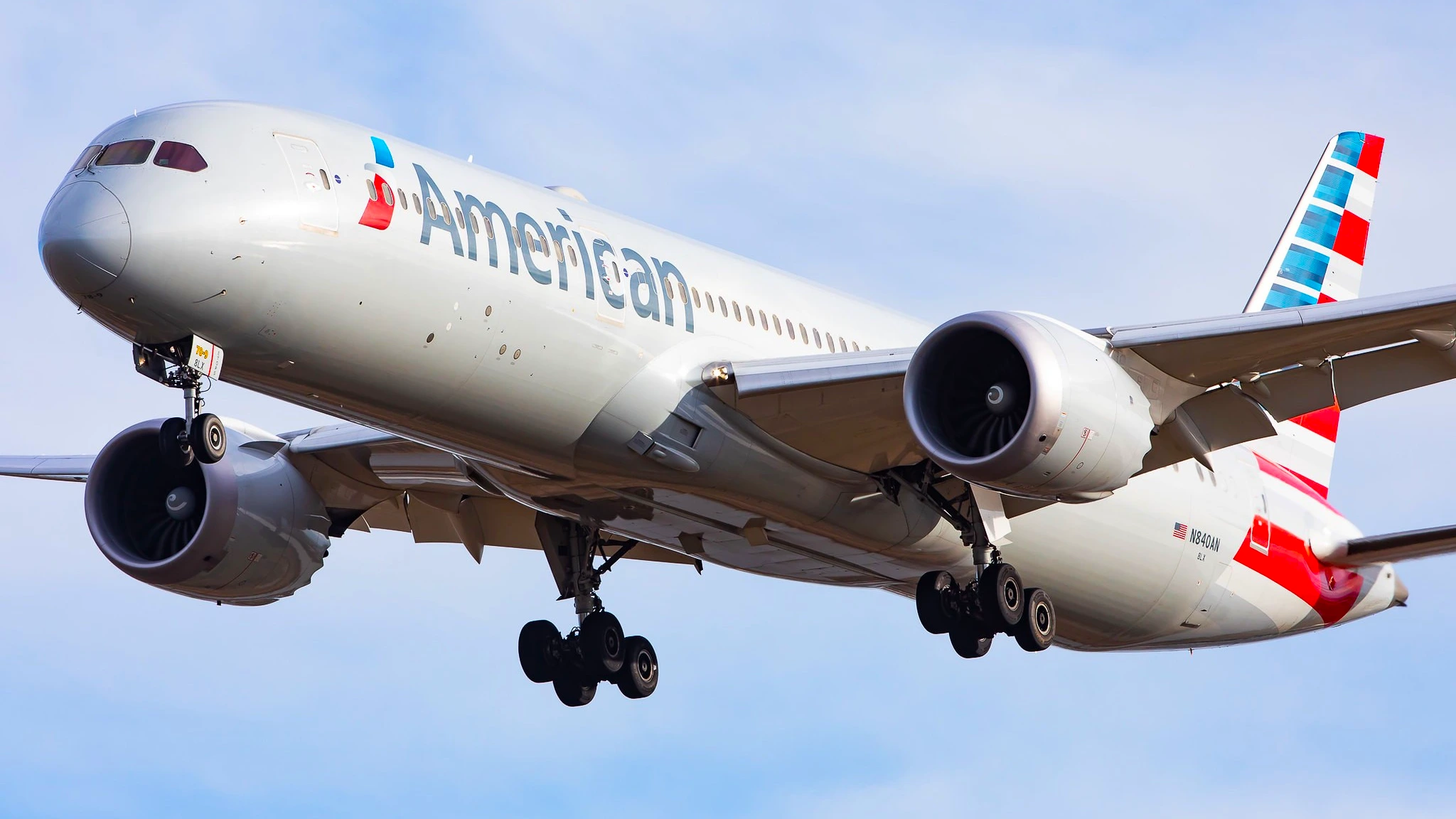
FORT WORTH- An American Airlines (AA) passenger on flight AA258 from Philadelphia International Airport (PHL) to Lisbon Airport (LIS) reported being unable to open the aircraft lavatory door and turned to X for help.
American Airlines responded by requesting her booking confirmation code through direct message. The exchange attracted widespread attention because the routine customer service response did not directly address the immediate problem described by the passenger.
What Happened on American Airlines Flight AA258?
The passenger reported that the lavatory door would not open during her flight from Philadelphia to Lisbon. She said she had been knocking on the door to attract attention but could not get anyone to respond.
After struggling to get help onboard, she posted on X, formerly Twitter, describing the problem. Her message quickly attracted attention, with users waiting to see how American Airlines would respond.
The airline’s social media team replied just over eight minutes later:
The reply acknowledged the passenger’s situation but asked for booking information rather than directly addressing the locked door. One social media user joked that the confirmation code seemed to be a password required to unlock the bathroom.
The incident was covered by View from the Wing, which examined the response and compared it with other reported cases involving passengers who became trapped in aircraft lavatories or elsewhere during travel.
Passenger Was Not Trapped for Hours
The growing online discussion created the impression that the passenger had remained trapped for hours. She later clarified that this was not the case.
She had fallen asleep while people continued discussing her situation online, accounting for the gap between her original post and subsequent updates.
The passenger eventually got out of the lavatory, although the account did not specify exactly how the door was opened or who freed her.
Her original post had received more than 1.1 million views by Saturday morning. As the attention continued to grow, she expressed frustration and wrote, “STOP LIKING THIS”.
The response from other users was mixed. Some criticized her for posting on social media rather than getting someone’s attention, even though she had already said she was knocking on the door. Others suggested that she light a cigarette, adding to the unusual range of reactions.
The passenger appeared more bewildered than pleased by the attention. After leaving the lavatory, she also complained that the activity was draining her phone battery while she was alone in Europe.
Why Confirmation Code Request Drew Criticism
An airline confirmation code is a standard tool for identifying a reservation. Customer service representatives use booking references to locate passenger details, review travel arrangements and investigate account-specific questions.
For that reason, asking for a confirmation code is not inherently unreasonable. American Airlines also responded within just over 8 minutes, so the criticism was not primarily about a slow initial reply.
The concern was that the response appeared disconnected from the passenger’s immediate need. She had already supplied the flight number and reported that a physical door would not open.
Identifying her reservation could help the airline locate her booking, but it would not, by itself, release a jammed lavatory door.
The exchange illustrates the difference between routine customer service and a situation requiring immediate practical assistance. A booking reference may be useful for follow-up, but the first priority in a reported onboard emergency should be to establish whether the passenger can receive assistance from the cabin crew.
The available account does not establish whether the confirmation code request delayed the passenger’s rescue or what steps the airline took behind the scenes. It does show how a standardized response can appear inappropriate when the problem requires a physical solution rather than account verification.
Amtrak Comparison
The American Airlines incident brought to mind an earlier case involving Amanda Carpenter, who became stuck in an elevator at the BWI Amtrak station in February 2016.
Nearly seven months later, Amtrak responded to her earlier plea by asking whether she was still in the elevator. The response became a memorable example of customer service that appeared out of touch with the urgency of the original problem.
The comparison is relevant because both incidents involved customers seeking assistance with a physical problem and receiving a response that appeared poorly matched to their circumstances.
The American Airlines discussion also included a separate exchange in which the airline’s social media team suggested that another passenger try knocking on a lavatory door before asking for a confirmation code. That interaction added to the impression that the company’s responses relied on routine support procedures instead of directly addressing the reported situation.
These examples do not prove that the companies failed to coordinate with their operational teams. They demonstrate how the wording of a public response can shape customer perceptions, especially when the reported problem is urgent and potentially distressing.

Other Aircraft Lavatory Incidents
Passengers becoming trapped inside aircraft lavatories is not without precedent. Several reported incidents involving different airlines have required improvised solutions, prolonged efforts or changes to flight operations.
These cases also show why a door that appears simple to operate may require more than ordinary assistance when its locking mechanism fails.
In one Delta Air Lines incident, a passenger became trapped inside a lavatory after the lock stuck. Several flight attendants could not get the door open, but a pilot eventually freed the passenger using a butter knife.
The incident illustrates how a mechanical problem with a small cabin fixture can require an improvised method of release when normal attempts fail.
Another Delta passenger remained trapped for approximately 35 minutes on a flight between Salt Lake City and New Orleans.
The reported rescue involved the passenger kicking the door from inside while a pilot pulled from outside. The passenger was eventually freed after the combined effort.
In another case, a father and his three-year-old child became trapped inside an aircraft lavatory on a Delta flight from Taipei to Seattle. The incident reportedly lasted about 35 minutes.
A butter knife did not work in this case. After the ordeal, the father stress-ate three bags of Sun Chips. Delta later provided 4,000 miles as compensation.
The case demonstrates that lavatory door problems can affect more than one passenger and cause distress even when the situation is eventually resolved without a major operational disruption.
What Airlines Can Learn From These Incidents
The incidents demonstrate that aircraft lavatory problems can range from minor lock malfunctions to situations requiring tools, door removal, mechanical assistance or changes to flight operations. The solution depends on the specific fault and the resources available to the crew.
They also highlight the importance of separating communication from physical assistance. A social media team can acknowledge a report, help identify the passenger and coordinate with the airline’s operational staff. However, it cannot directly inspect or release a jammed door from a remote customer service channel.
When a passenger reports being unable to leave a lavatory, the immediate priority should be to ensure that the cabin crew knows about the problem and can assess it. Booking details may assist with follow-up, but they should not distract from the practical need to establish contact and arrange appropriate help.
Clear communication can also prevent misunderstandings. A response that acknowledges the reported problem and explains the next step is more useful than a routine request that does not address the passenger’s immediate concern.
In the AA258 case, the airline’s reply came relatively quickly, and the available account does not show that the confirmation code request delayed the passenger’s release. The criticism arose because the message seemed to focus on reservation verification when the passenger was asking for help with a door she could not open.
Passenger’s Ordeal Continued After She Got Out
Although the passenger was eventually freed, the online attention created another inconvenience. She said her phone battery was draining as the post continued to attract engagement, leaving her concerned about managing her phone while alone in Europe.
That detail adds context to the incident. The immediate problem was the lavatory door, but the viral response created a separate burden for a traveller already dealing with an unexpected situation.
The case ultimately highlights two distinct issues: the practical challenge of responding to a reported aircraft lavatory malfunction and the importance of matching customer service communication to the problem being reported.
American Airlines’ request for a confirmation code was a conventional way to identify a reservation.
However, the exchange shows why standard procedures need to be paired with context-sensitive communication, particularly when a passenger describes a problem that may require immediate onboard assistance.
Stay tuned with us. Further, follow us on social media for the latest updates.
Join us on Telegram Group for the Latest Aviation Updates. Subsequently, follow us on Google News
