

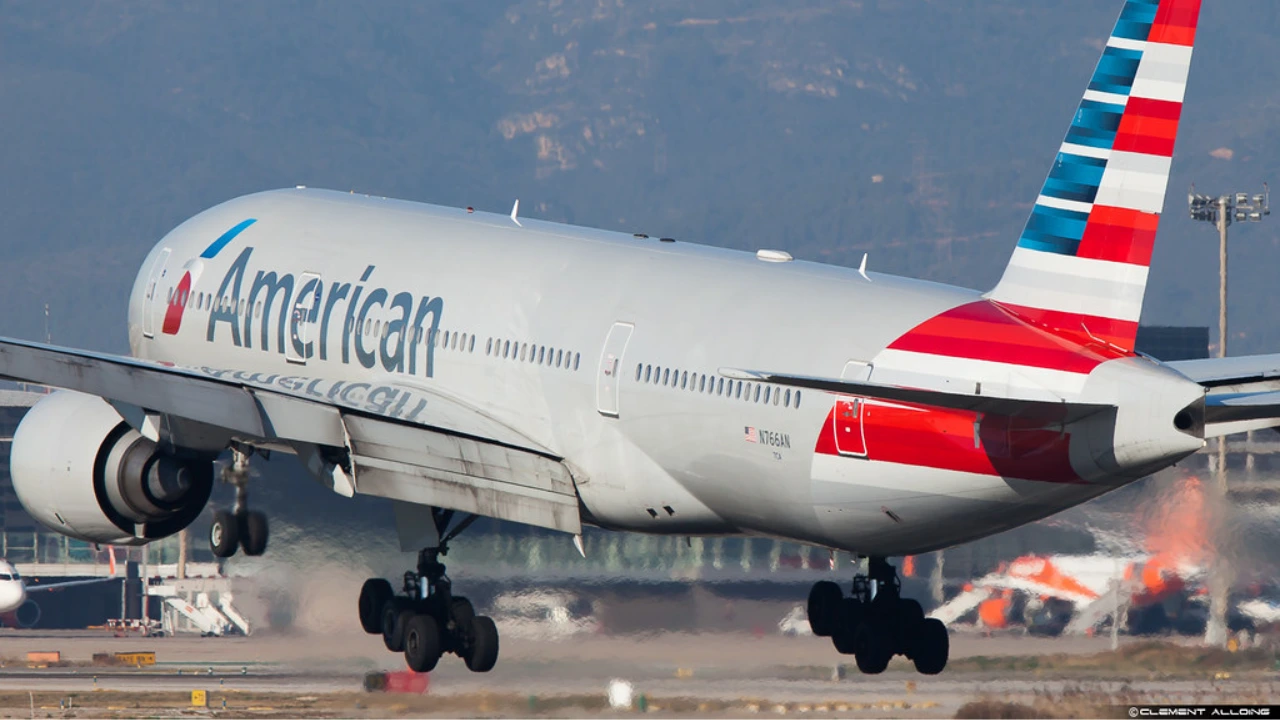
FORT WORTH- American Airlines (AA) was forced to return a London-bound Boeing 777-200ER to Phoenix Sky Harbor International Airport (PHX) on Friday after the widebody suffered an engine failure during takeoff.
The aircraft was operating the carrier’s daily long-haul service to London Heathrow Airport (LHR) when the crew turned back less than an hour into the flight.
The pilots declared a mayday and reported they could not restart the left engine, with 11 hours of fuel remaining onboard.
They chose not to jettison fuel before returning, so the aircraft landed significantly overweight and used almost the entire runway to stop.
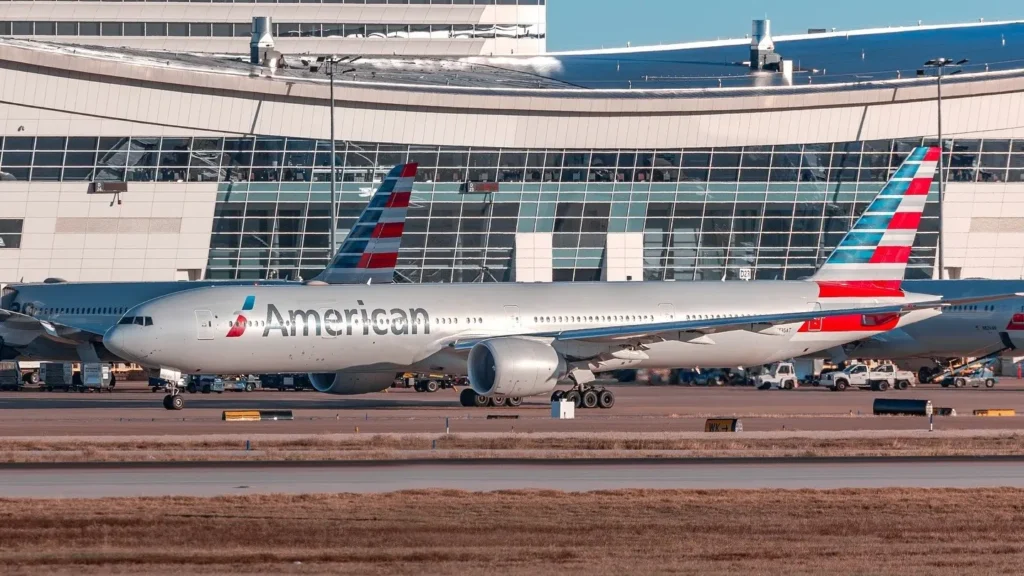
American Airlines 777 Engine Failure
AA194 is American’s daily long-haul flight from its hub at Phoenix Sky Harbor International Airport (PHX) to London Heathrow (LHR).
The aircraft involved, registered N759AN, is a nearly 25-year-old airframe, according to flight tracking data from Flightradar24.
It pushed back from gate B13 at approximately 4:35 PM, 5 minutes after its scheduled pushback time of 4:30 PM, then taxied to Runway 25R on the south side of the airfield.
Less than 15 minutes later, the aircraft began its takeoff roll and became airborne at approximately 4:49 PM, assuming the normal westbound departure path from PHX. By 4:52 PM, it was climbing through 6,000 feet (1,829 meters) and had turned north.
According to Simple Flying, the timing of the engine failure remains unclear. ATC recordings obtained by ThePlaneSpotter captured the moment the crew declared an emergency:
“American 194, we’re gonna declare mayday, mayday, mayday. We have an engine failure. We’re unable to restart it.”
The crew then said they would be heading back to Phoenix and leveled the aircraft off at around 7,200 feet (2,195 meters).
Just 6 minutes after departure, the plane was north of PHX and heading east before it made a sharp turn to the north over Loop 101 in north Scottsdale.
It then turned back west and maintained its heading as it traveled just south of Lake Pleasant.
The pilots confirmed that the left Rolls-Royce Trent 800 engine, known as engine #1, had failed. While rerouting back to PHX, the crew informed controllers that dumping fuel would not be necessary, despite a total of 283 passengers onboard. The exchange with ATC was brief:
- ATC: “Are you gonna do any fuel dump? You just burning fuel?”
- Pilot: “No, we’re not gonna dump any fuel.”
- ATC: “Okay.”
While remaining at 7,200 feet, the aircraft flew southwest before positioning itself over Luke Air Force Base (LUF) to head back east.
At approximately 5:14 PM, the plane gradually descended to 6,200 feet as it crossed over Glendale. It held that altitude for a few minutes before descending further and turning south to line up for its approach.
The aircraft was on final approach at around 5:20 PM and touched down safely on Runway 26 about three minutes later at 5:23 PM.
Carrying nearly all of its fuel, N759AN landed significantly heavier than normal and required almost the full length of the runway to slow down. Runway 8/26 is the longest runway at PHX, extending about 11,490 feet.
It primarily handles arriving flights from the north and heavy aircraft, with occasional departures.
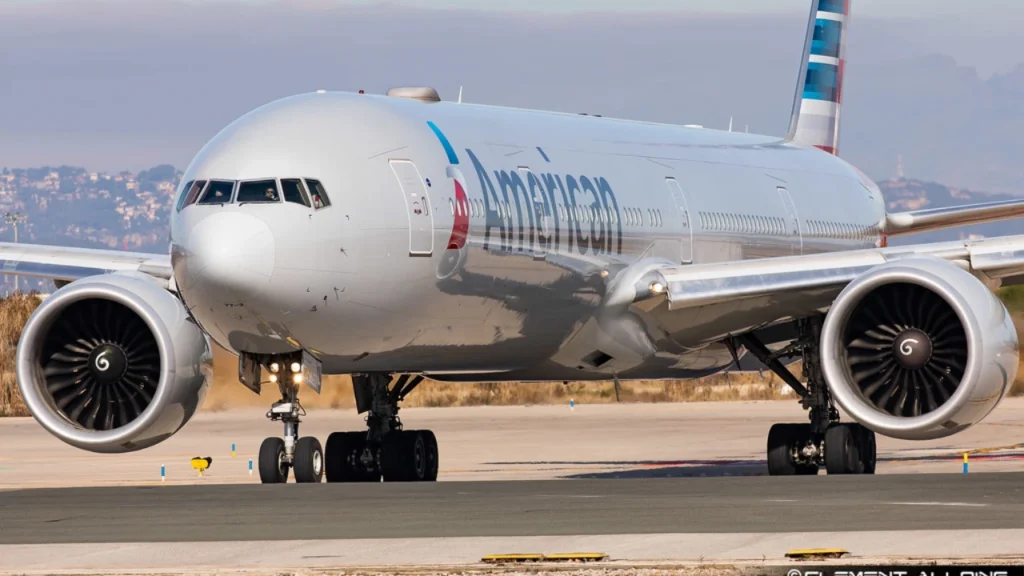
Overweight Landing Aftermath at Phoenix
First responders appeared to have been dispatched before the aircraft arrived as a precaution, based on video footage from the tarmac.
The aircraft exited the runway but had to remain on the taxiway to cool down, as the overweight landing left its brakes and landing gear extremely hot, according to ThePlaneSpotter. It subsequently taxied safely back to Terminal 4.
N759AN remains on the ground at PHX and will likely be out of service for a few days to weeks for repairs.
Flight data shows AA194 has been delayed until Saturday at 2:00 PM. It is not known whether American arranged accommodations for affected passengers or rebooked them on other flights.
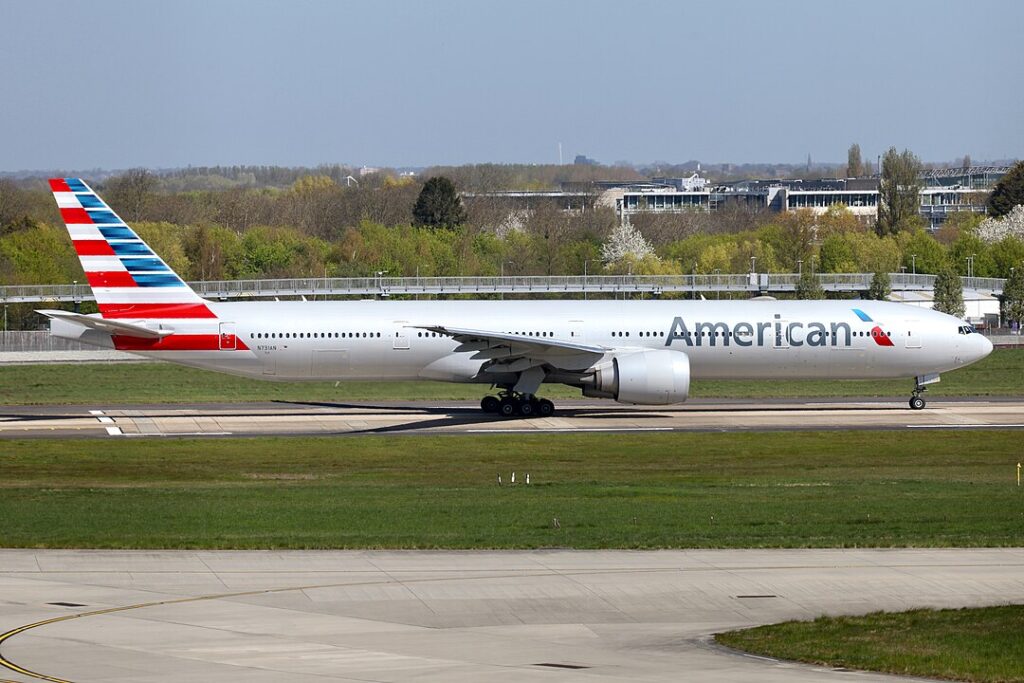
Why Fuel Jettison Carries Financial Risk
It is unclear why the crew decided against dumping fuel. However, fuel jettison carries risks and has created legal trouble for other airlines.
Late last year, Delta Air Lines (DL) agreed to pay nearly $80 million to settle a lawsuit stemming from a January 2020 incident.
In that case, Delta’s former 777-200LR suffered a compressor stall from its #2 engine after takeoff from Los Angeles (LAX).
The lawsuit alleged that more than 50 people suffered skin and lung irritation after the crew operating the Shanghai-bound aircraft decided to dump fuel over a populated area while returning to LAX.
The final approval hearing for that settlement is scheduled for Monday.
Stay tuned with us. Further, follow us on social media for the latest updates.
Join us on Telegram Group for the Latest Aviation Updates. Subsequently, follow us on Google News
