

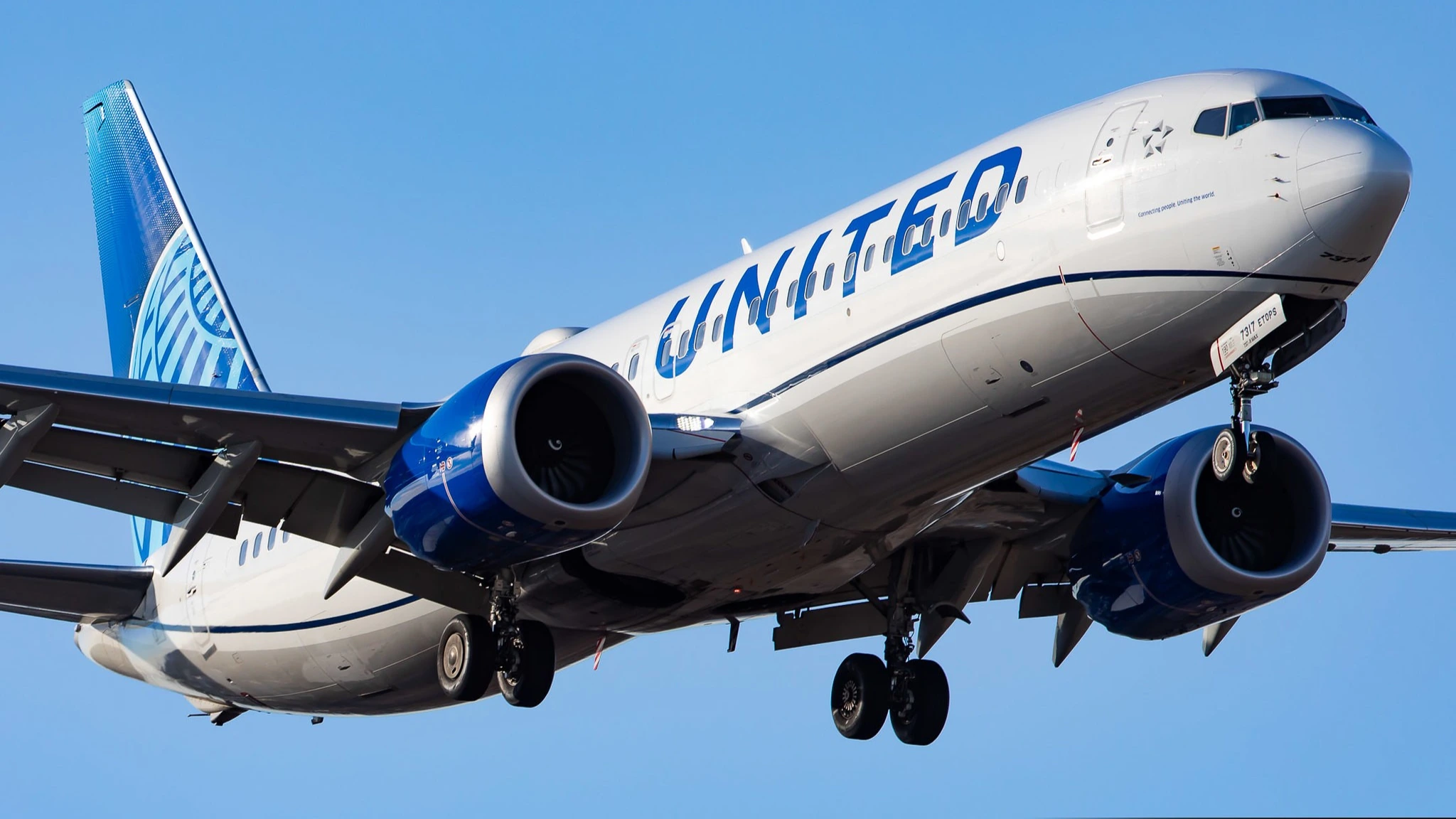
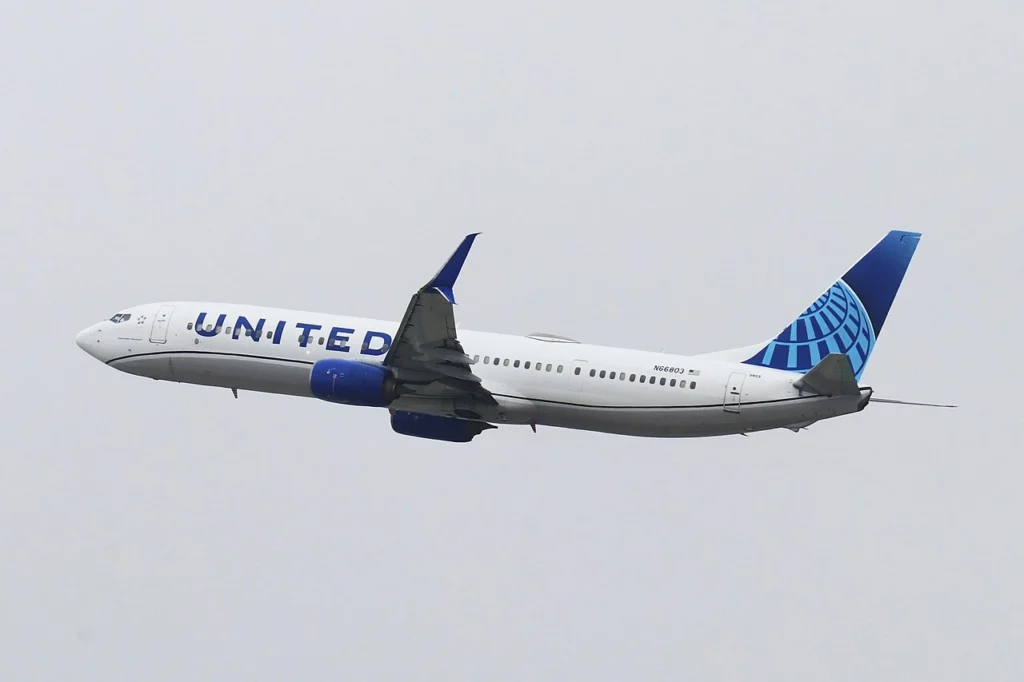
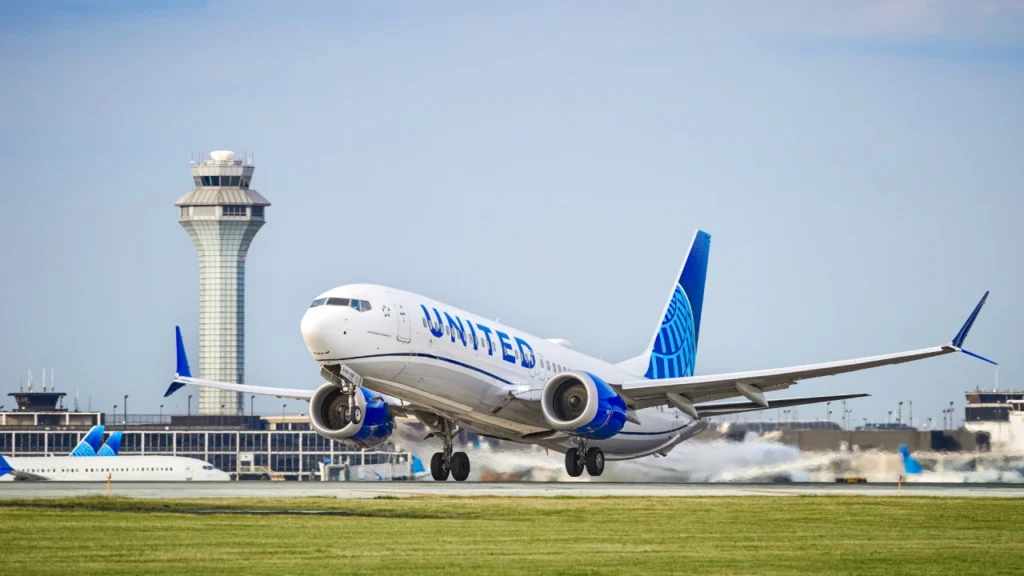
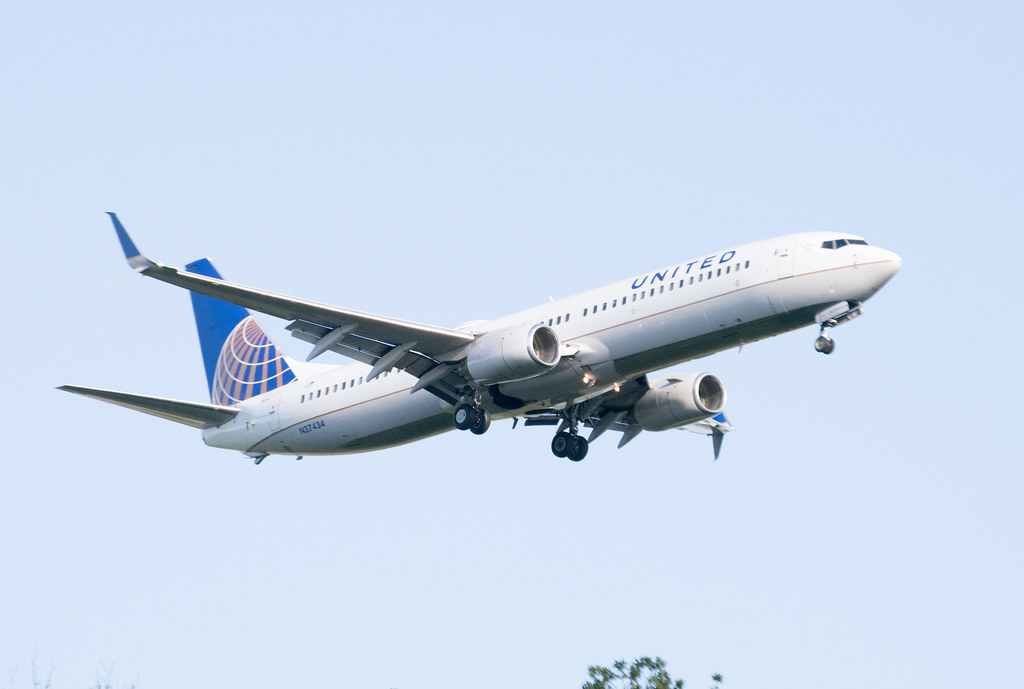
CHICAGO- A United Airlines (UA) Boeing 737 MAX 8 operating flight 779 landed safely at Denver International Airport (DEN) after the crew reported an electrical issue during the approach.
The Federal Aviation Administration confirmed the landing took place around 12:45 PM local time and said it will investigate.
The aircraft had departed Austin-Bergstrom International Airport (AUS). The pilots stopped on the taxiway after landing to describe severe interference in their headsets, followed by a traffic collision alert, drawing fresh attention to the state of air traffic control communications around Denver.
What UA779 Crew Told Denver Tower
The pilots reported that interference over the radios during the landing approach grew powerful enough that they could barely communicate with each other inside the cockpit. Hearing air traffic control instructions also became difficult.
During the same approach, the aircraft received a Resolution Advisory (RA) from its Traffic Alert and Collision Avoidance System (TCAS).
An RA is the highest level of TCAS warning and directs pilots to climb or descend to maintain separation from nearby traffic. TCAS guidance takes priority over standard air traffic control instructions while an RA is active.
These are the words from the audio clip of the UA779 aircrew verbatim after touching down in Denver:
“On approach, we had a severe electrical disturbance in our headsets. It got so loud that we could barely communicate in the cockpit. It was hard to hear ATC, and then we got that [TCAS Resolution Advisory] that we had to contend with as well.”
As reported by Simple Flying, the call was posted online to X by Thenewarea51, which shared the clipped communications using audio from the ATC App.
Aircraft and Route Details
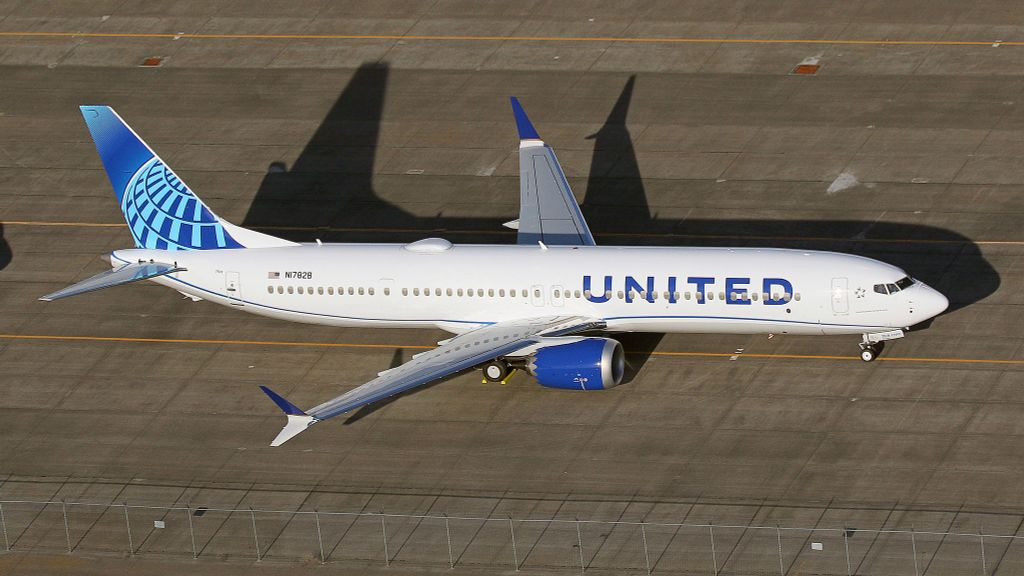
The FAA identified the aircraft as a Boeing 737 MAX 8. According to Planespotters.net, the jetliner is registered N67350 and is only 2 years old. A young airframe makes an onboard malfunction unlikely but not impossible.
UA779 operates a scheduled service between Austin and Denver, a routing of roughly two and a half hours. No cause has been confirmed for either the interference or the collision alert.
Why FAA Investigates Cases Like This
The FAA has a policy of investigating incidents involving loss of communication with air traffic control. The agency stated it will investigate this event.
The TCAS element raises the significance of the case. The system de-conflicts aircraft directly, working between airplanes without relying on ground infrastructure, and is designed to function even when radio contact with controllers degrades.
An approach in which a crew reported both severe communication interference and a Resolution Advisory warrants technical analysis to determine whether the two events were connected or occurred independently.
May 2025 Denver Communications Outage
The report follows a communications failure just over a year earlier. On May 12, 2025, part of the Denver Air Route Traffic Control Center in Longmont, Colorado, lost communications with aircraft at around 1:50 PM local time when both transmitters covering a segment of airspace went down.
The FAA placed the interruption at approximately 90 seconds and said controllers used another frequency to relay instructions, with aircraft remaining safely separated.
Denver7 Investigates reported that between 15 and 20 pilots were unable to speak with controllers for up to six minutes, a longer figure the FAA disputed.
The agency later attributed the event to overlapping outages affecting radio transmitters and circuits at the facility. The FAA replaced the transmitters and repaired the circuits.
Frank McIntosh, then deputy head of the FAA’s Air Traffic Organization, told a House committee hearing on May 15, 2025, that both the main and a backup frequency failed, and that a controller was able to transmit to an aircraft to move to a secondary frequency. He said there was no loss of separation.
Political Pressure
Colorado lawmakers responded to the 2025 outage with direct pressure on federal officials.
Senators John Hickenlooper and Michael Bennet, together with Representatives Joe Neguse and Diana DeGette, wrote to Transportation Secretary Sean Duffy and then Acting FAA Administrator Chris Rocheleau on May 20, 2025.
The letter called for immediate action on aging aircraft communications infrastructure and on staffing levels at air traffic control facilities. Hickenlooper later described the country’s ATC infrastructure as decrepit and long past its expected life.
The Denver Air Route Traffic Control Center covers roughly 285,000 square miles of airspace across parts of Colorado, Arizona, New Mexico, Utah, Kansas, Nebraska, South Dakota, Wyoming, and Montana.
Accelerated National ATC Overhaul
Congress approved $12.5 billion to overhaul aging air traffic control systems. The program covers telecommunications networks, radar surveillance, and data management technology.
The modernization effort originally carried a 15 year timeline. FAA Administrator Bryan Bedford told a House aviation subcommittee that the agency condensed the schedule to 3
years, targeting completion by the end of 2028. Peraton was selected as program manager for the work.
Early priorities include replacing remaining copper wiring with fiber and establishing a new digital command center.
The program also covers new Tower Simulation Systems at 113 towers, Enterprise Information Display Systems at 435 towers, new surface radars at 44 airports, and Terminal Flight Data Manager technology at 89 airports.
Upgrades Coming to Denver Specifically
Denver International Airport is receiving a $43 million investment aimed at infrastructure and safety.
The funding supports systems that let controllers track aircraft and vehicles on runways and taxiways and alert them to potential conflicts, addressing runway incursion risk.
Additional radar is scheduled for installation at the airport by November 2026, giving controllers improved tracking and identification of aircraft positions. The funding also replaces paper flight strips with electronic ones.
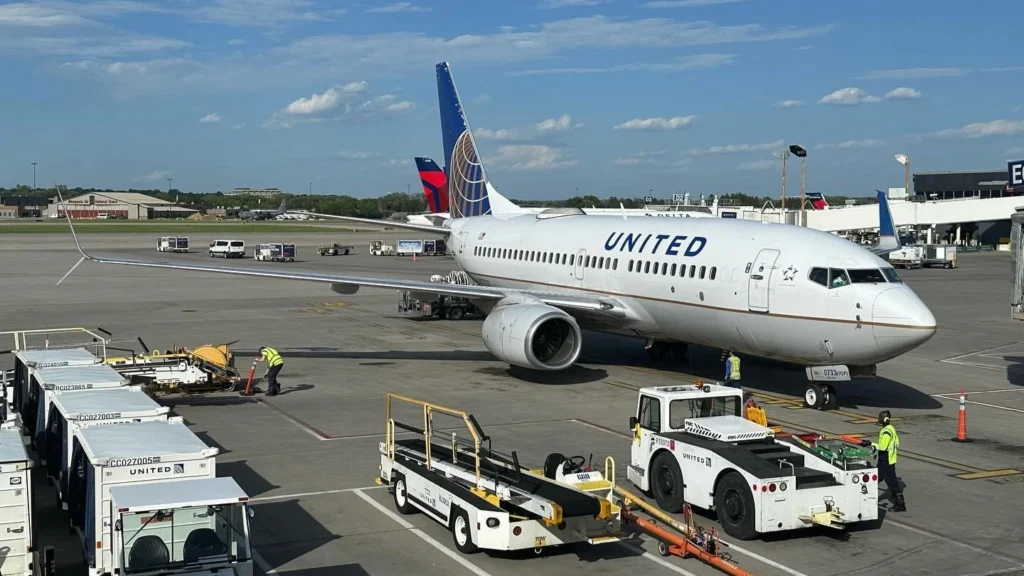
Denver handles close to 1,000 aircraft movements each day, which makes communication reliability central to daily operations at the airport.
Folklore of Mile High Airport
Denver International Airport attracts a steady stream of conspiracy theories, many prompted by its unusual art selections.
The best known is the towering blue horse statue on the airport grounds, widely nicknamed Blucifer, along with an animatronic gargoyle display that would randomly speak phrases such as “welcome to the Illuminati.”
Television programs including Conspiracy Theory with Jesse Ventura have fueled the enduring lore surrounding Denver’s biggest hub. The airport administration has essentially embraced this pop culture trend.
The leading theory holds that a massive, top-secret underground bunker city lies beneath the runways.
When Denver Center experiences a simultaneous failure of both primary and backup ground transmitters, conspiracy theorists point to it as proof, and the mundane explanation of a wire short simply sounds like a cover-up to true believers.
The communications problems themselves have been very real, and the fix now underway is an engineering one. Only time will tell if the upgrades finally put to rest the aura of mystery that surrounds the airfield.
Stay tuned with us. Further, follow us on social media for the latest updates.
Join us on Telegram Group for the Latest Aviation Updates. Subsequently, follow us on Google News
