

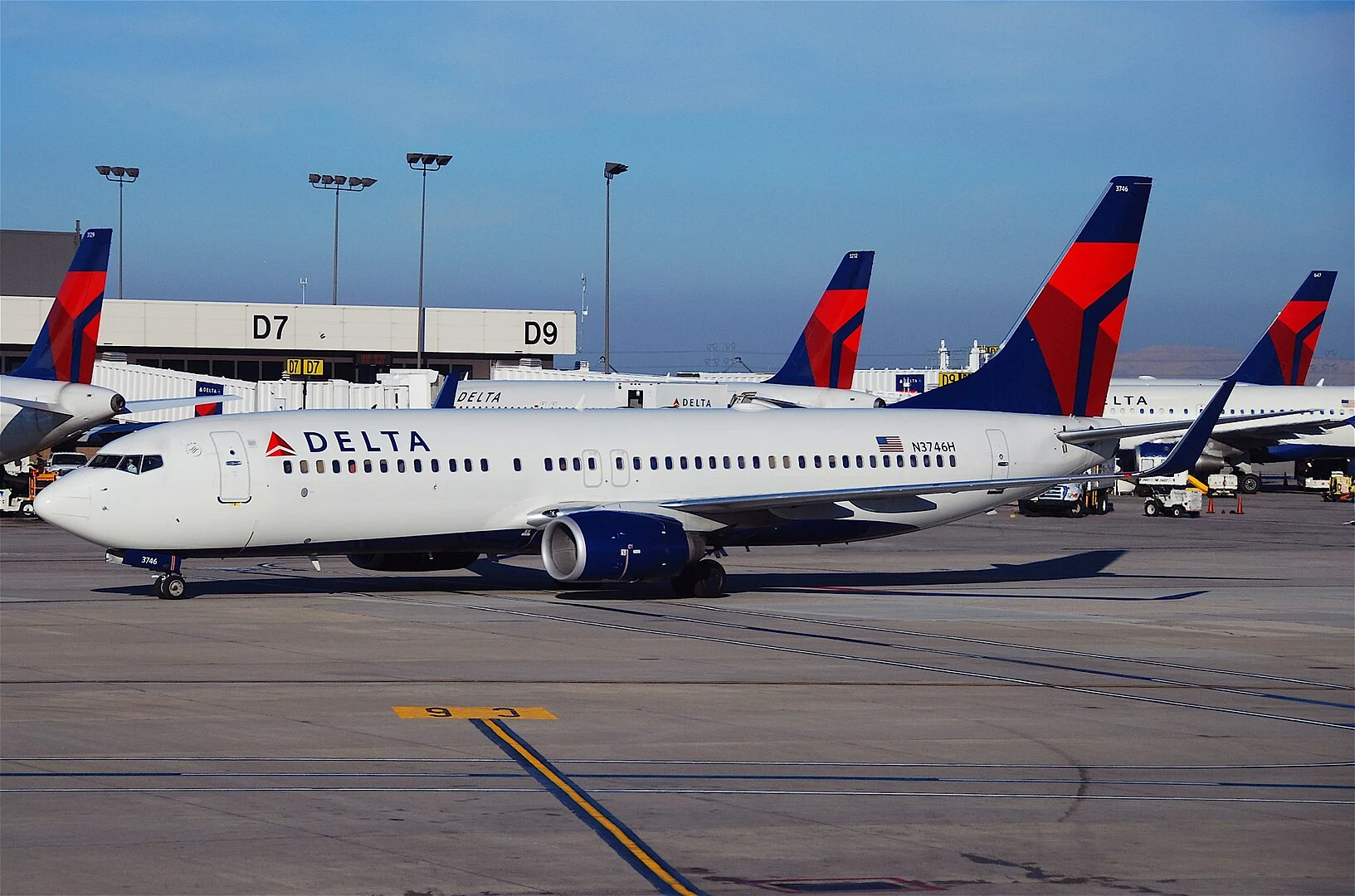
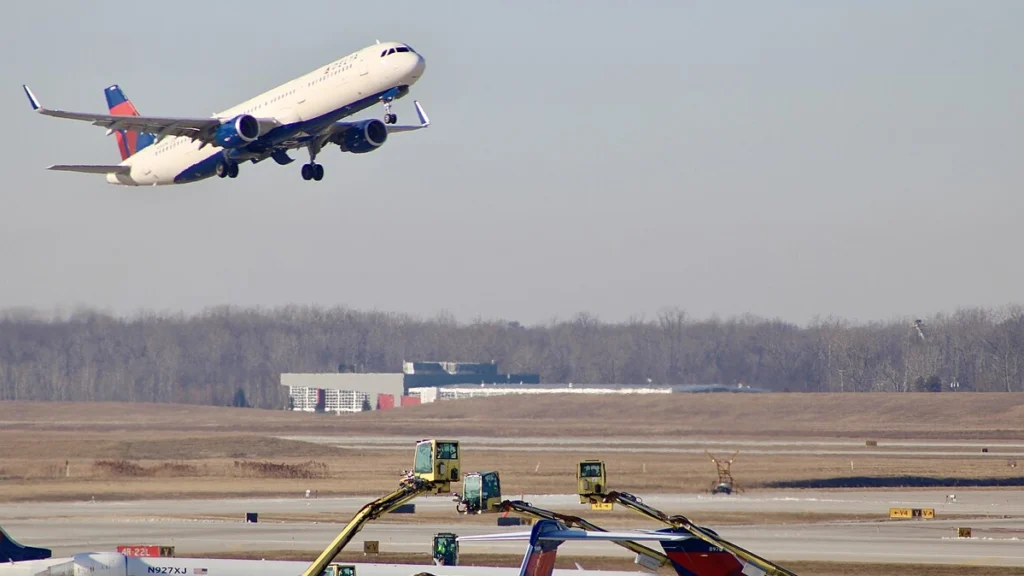
ATLANTA- Delta Air Lines (DL), headquartered in Atlanta (ATL), must continue defending a class action lawsuit over its claim to be the world’s first carbon-neutral airline. A federal judge has cleared the way for a passenger to pursue damages under California consumer protection law.
The ruling rejected the carrier’s latest attempt to end the case. It arrives despite the fact that Delta burns jet fuel across an aging fleet, owns an oil refinery, and holds an interest in a private jet company.
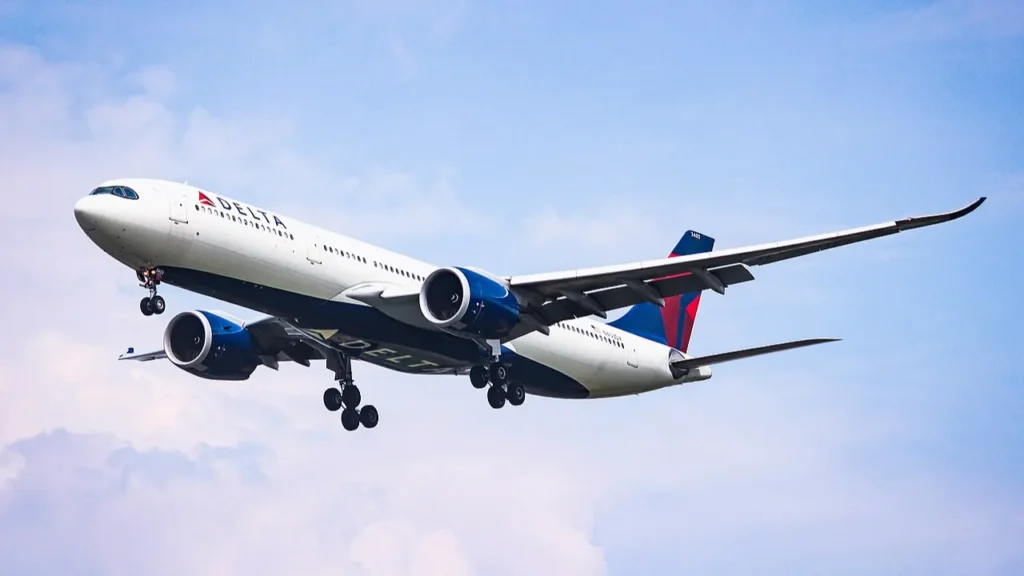
https://commons.wikimedia.org/wiki/File:Delta_Airlines_Airbus_A330neo_-_N403DX.jpg
Delta’s Environmental Marketing
US District Judge Maame Ewusi-Mensah Frimpong issued the ruling on July 28, 2026. The order permits the plaintiff to attempt to prove that Delta violated California’s Consumers Legal Remedies Act, which bars a business from misrepresenting the characteristics, benefits, or quality of a service.
The judge denied injunctive relief. Delta stopped promoting itself as carbon neutral on March 31, 2022, and the lead plaintiff acknowledged she understands the airline’s current marketing goal of reaching net-zero emissions by 2050.
The original complaint was filed on May 30, 2023. The case now proceeds on a third amended complaint.
The ruling does not decide whether Delta misled anyone. It establishes only that the plaintiff has enough to take the claim forward.
The judge also rejected Delta’s argument that the Airline Deregulation Act preempts the case. Delta contended that state law cannot regulate airline rates and services.
The court disagreed, reasoning that California left the airline free to choose its own environmental program, and treating carbon offsets as investments separate from the flight itself.
The case sits against the backdrop of 2020, when companies were leaning heavily into ESG messaging, and greenwashing had become standard corporate practice.
The central legal question is whether such claims amount to marketing puffery or create real liability when they do not come true.
Carbon Neutrality Campaign and Its Foundation
Delta announced in February 2020 that it would spend $1 billion over 10 years and become carbon neutral on March 1 of that year. The airline stated it had “become the first carbon neutral airline on a global basis” and had been “carbon neutral since March 2020.”
The message reached consumers through press releases, social media, a podcast, Delta.com banners, a paid campaign, seatback screens, and an in-flight napkin.
As flights continued burning jet fuel, Delta treated emissions reductions purchased elsewhere as balancing that fuel burn. The complaint describes plans to spend more than $30 million on credits covering roughly 13 million metric tons of 2020 emissions.
Delta has said it ultimately spent more than $280 million on credits between March 2020 and March 2022. Much of that spending appears to have been wasted.
The airline expanded its environmental messaging in 2022 with an “eco-conscious” amenities announcement covering canned wine, bamboo cutlery, and recycled polyester bedding.
How Carbon Offsets Are Supposed to Work
A carbon offset lets a company fund a project that reduces or prevents emissions somewhere else, then count that reduction against its own output. Forest preservation is among the most common categories.
A credit holds value only if 3 conditions hold. The trees must face a real threat, the payment must be what caused the protection, and no other party can claim the same reduction. Each credit therefore depends on a counterfactual claim about a world where that specific credit was never purchased. Those assumptions rest on events that never occur, which leaves the market open to fraud.
The lawsuit targets credits in Delta’s portfolio, citing accounting problems, preservation projects that would have proceeded regardless of funding, delayed emissions reductions, and double counting.

Kariba Project Became National Story
Delta previously promoted its involvement with the Kariba project in Zimbabwe. Bloomberg columnist Matt Levine, writing about the people behind the scheme, summarized the outcome as money that largely disappeared alongside credits that proved fake.
The New Yorker’s Heidi Blake obtained an on-the-record statement from the owner of the forest generating the credits. He said he hoped the full account would not be published, “because I probably will go to jail.”
The failure came down to the baseline. Project operators effectively invented figures for how much deforestation would have occurred without preservation. A nearby reference forest showed that limited deforestation was actually taking place, which meant the credits were not protecting much of anything.
In Levine’s account, the problem with the anti-deforestation project was that there was too little deforestation to begin with, a good outcome for the climate but a poor one for anyone selling credits.
One person involved in the project raised the discrepancy internally, and a colleague dismissed it. The operators also oversold the credits, selling the same reductions to multiple buyers.
Central Question of Reliance
The case turns on whether consumers purchased Delta tickets, or paid more to fly Delta, because they were deceived about the airline’s environmental record.
Delta’s strongest defense may come from the lead plaintiff’s own testimony. She testified that carbon-neutral advertising played no role in the four ticket purchases used to support her claim.
An ex-boyfriend, her parents, and an employer paid for some of that travel, and schedule, convenience, and SkyMiles also factored into her choices. She later submitted a declaration and deposition corrections backing away from that testimony.
Delta’s Defense
Delta argues it purchased the credits in good faith and cannot be held responsible for the later collapse of individual projects.
The airline also holds survey data indicating the campaign barely registered with consumers.
According to that data, 0.1% of survey respondents and zero respondents in California mentioned the environment or carbon neutrality when asked why they selected an airline. That evidence goes directly to reliance, which the plaintiff must establish for the claim to succeed.
Class Certification
The proposed class covers California residents exposed to the campaign between September 1, 2021 and March 31, 2022 who purchased Delta tickets beginning September 1, 2021.
Delta has stated that 1,452,601 people with at least one California address bought a ticket between March 1, 2020 and March 31, 2022, a figure reported by View from the Wing.
Delta will work to break up any certified class by arguing that exposure varied by channel. Press releases, social posts, and rotating Delta.com banners reached different audiences, while napkins and seatback screens reached passengers only after they had already bought a ticket.
Preemption Remains Key Issue
The Airline Deregulation Act question is likely to return on appeal. In Zajac v. United Airlines, a federal judge in Maryland held that the statute preempted a similar greenwashing claim tied to ticket prices.
That divergence between federal courts gives Delta a substantial argument at the appellate level, and it raises a broader question about why airlines receive preemption protection that other industries do not.
Delta Still Holds Advantage
Delta made an absolute claim about present-tense carbon neutrality while depending on a voluntary offset market with well-documented weaknesses.
The airline has separately acknowledged that aviation emissions are “hard-to-abate” and that its existing fleet, current technology, and available fuel cannot deliver its long-term emissions goals.
The obstacles facing the plaintiff remain considerable. Proving reliance on the advertising at the point of purchase is difficult, class certification is far from assured, and Delta carries strong preemption arguments into any appeal. On the current record, the airline is the more likely winner.
Stay tuned with us. Further, follow us on social media for the latest updates.
Join us on Telegram Group for the Latest Aviation Updates. Subsequently, follow us on Google News
