

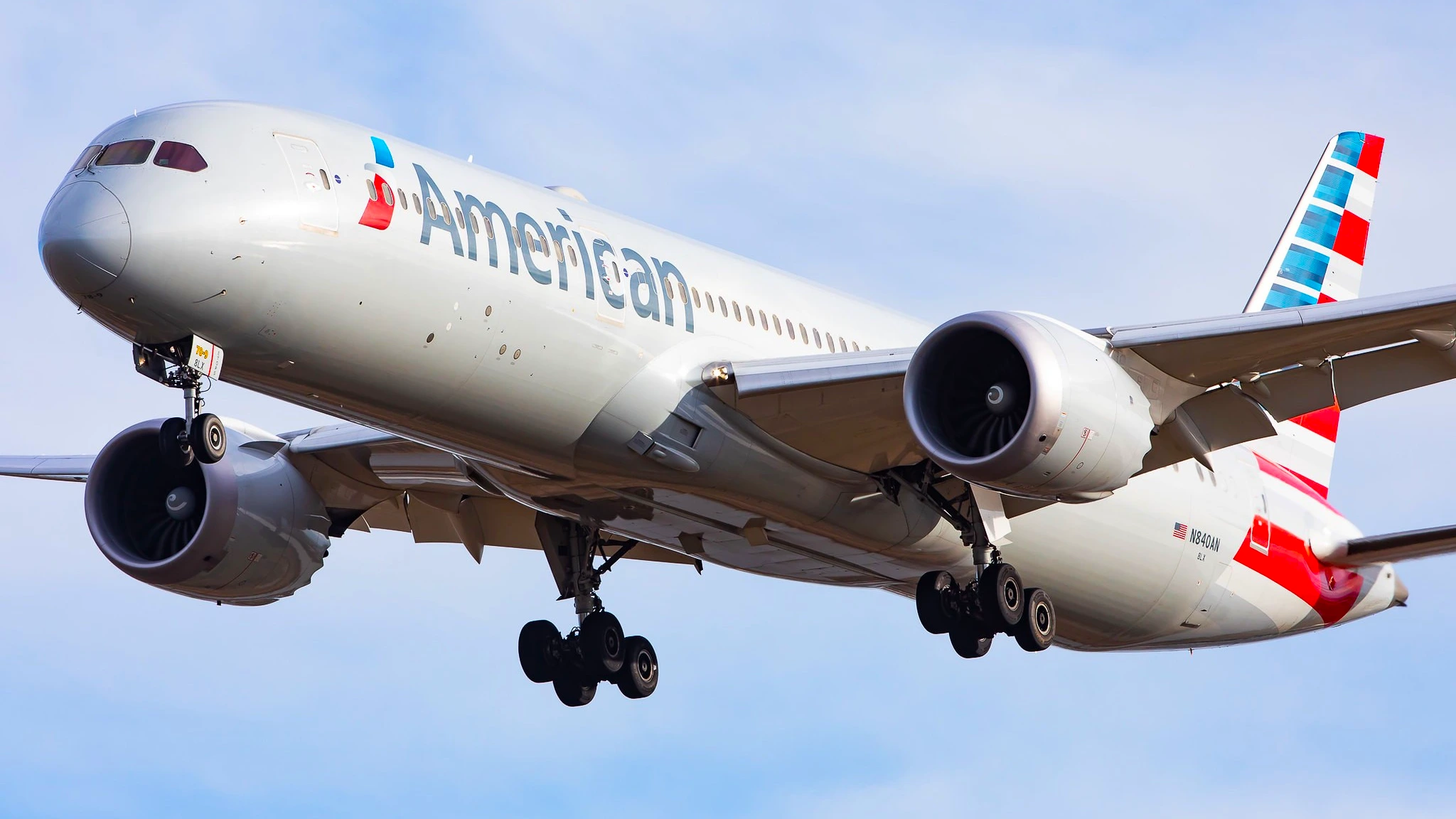
FORT WORTH- American Airlines (AA) is introducing a new system to score flight attendants using customer satisfaction data and operational metrics. The initiative aims to quantify service quality but raises concerns about accuracy and fairness.
The scoring model will rely on flight data from routes operating through hubs like Dallas/Fort Worth International Airport (DFW), combining Net Promoter Score and delay attribution to evaluate individual crew performance across flights.
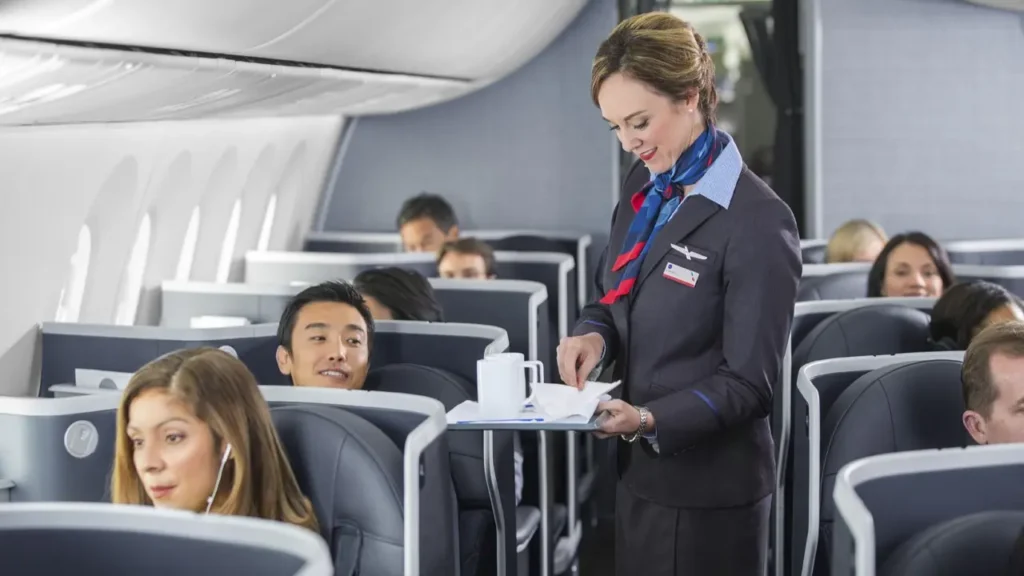
American Airlines Flight Attendant Scoring System
American Airlines (AA) has spent the last 12 months building a system that assigns individual scores to flight attendants.
As first reported by aviation insider JonNYC, the model evaluates employees across several parameters, including Net Promoter Score (NPS), delays attributed to crew actions, and a metric described as operational contribution.
According to PYOK, this system is designed to create comparative performance rankings among flight attendants.
This approach effectively places employees in direct competition with colleagues, a shift from traditional team-based evaluation models.
Operational contribution refers to how effectively a crew member supports flight efficiency, including adherence to procedures, timely service delivery, and coordination with ground and cockpit teams. However, this metric remains loosely defined and may vary across flights.

Understanding Net Promoter Score (NPS)
NPS is a widely used customer satisfaction metric. It asks passengers how likely they are to recommend the airline on a scale from 0 to 10.
Passengers are grouped into three categories:
- Promoters (score 9–10)
- Passives (score 7–8)
- Detractors (score 0–6)
The final NPS is calculated by subtracting the percentage of detractors from promoters, excluding passives. Scores range from -100 to +100.
Airlines typically record NPS values between +35 and +45. Southwest Airlines (WN) once reported a significantly higher score of +71 before strategic changes impacted its performance.

Structural Limitations of NPS
NPS evaluates the overall passenger experience, not individual employee performance. Passengers rarely assess a single flight attendant in isolation, especially on multi-crew flights.
Survey participation is also limited. In many cases, only one or two passengers per flight complete the NPS survey. This creates a small sample size that can skew results and reduce reliability.
Additionally, one negative interaction can outweigh several positive ones, affecting the overall perception of service.
When multiple crew members contribute to a single experience, isolating individual performance becomes difficult.

Influence of Product and Operational Factors
Passenger satisfaction is heavily influenced by factors outside a flight attendant’s control. These include aircraft condition, seating comfort, onboard entertainment, and connectivity.
Operational disruptions also play a major role. Delays caused by maintenance issues, broken inflight Wi-Fi, forced gate-check baggage, and limited food or beverage availability can significantly lower satisfaction scores.
Historical examples highlight this disconnect. TAP Air Portugal saw its NPS shift from -40 to +56 after introducing newer aircraft, Wi-Fi, and enhanced onboard services. The improvement occurred without changes in cabin crew performance.
Similarly, Iberia (IB) reported a 10 percent increase in NPS after deploying Airbus A350 aircraft on its Madrid to New York JFK route in 2019.
These cases demonstrate that product upgrades often drive satisfaction more than service interactions.

Management Perspective Versus Crew Concerns
American Airlines (AA) is likely to argue that strong customer service can mitigate operational shortcomings.
The expectation is that skilled flight attendants can recover negative situations and improve passenger perception.
However, this assumption creates tension. Flight attendants may view the system as unfair because it holds them accountable for factors beyond their control. This perception can weaken trust between employees and management.
The variability between flights further complicates scoring. Differences in aircraft, passenger loads, and operational conditions mean that performance cannot be consistently measured across all scenarios.

Industry Comparison and Privacy Concerns
Performance-based evaluation systems are increasingly common across global airlines. However, implementation methods vary and often face resistance.
In 2023, Delta Air Lines (DL) introduced a system that shared flight attendant names with passengers before departure, requesting individual feedback.
Although Delta’s workforce is not unionized, the move drew criticism from the Association of Flight Attendants-CWA, which called it an “outrageous violation of privacy.”
This response highlights broader concerns about surveillance, data usage, and employee rights within performance tracking systems.
Balancing Measurement and Fair Evaluation
American Airlines’ scoring initiative reflects a shift toward data-driven performance management.
While the goal is to improve service quality, the effectiveness of such systems depends on accurate measurement.
Metrics must distinguish between controllable service actions and external operational factors. Without this balance, performance scores risk misrepresenting employee contributions and creating workplace friction.
A fair evaluation framework requires transparency, sufficient data samples, and clear definitions of performance criteria.
Without these elements, scoring systems may undermine morale rather than enhance service standards.
Stay tuned with us. Further, follow us on social media for the latest updates.
Join us on Telegram Group for the Latest Aviation Updates. Subsequently, follow us on Google News
