


EDWARDS, CA.- NASA’s Armstrong Flight Research Center is moving to acquire a Boeing 737-73W from the U.S. Air Force to build a new reduced-gravity testbed aircraft. The agency awarded a sole-source contract worth $8.4 million to Denmar Technical Services, Inc., a small aviation firm based in Reno (RNO), Nevada, to assess and modify the jet.
The aircraft currently belongs to the Air Force and supports a classified military program. Once modified, the plane will be owned by NASA Armstrong and operated out of NASA Johnson in Houston (IAH). The modified 737 will validate astronaut lunar suits and crew systems for the Artemis program, with the work targeted for completion by October 1, 2026.

NASA Targets Secretive Air Force 737 Jet For Zero-G Work
NASA’s Armstrong Flight Research Center posted a contracting notice justifying the planned sole-source contract to Denmar Technical Services for “Reduced Gravity Modification” of the Boeing 737-73W. Aircraft modified for this role are often called “Vomit Comets” because the extreme parabolic maneuvers they perform to simulate zero-gravity environments tend to induce nausea and other physical side effects.
The notice states that NASA needs Denmar to conduct a feasibility assessment to determine whether the 737-73W can perform the reduced-gravity mission. The contractor will also modify the aircraft cabin if required, perform overdue maintenance and inspections, complete airworthiness restoration tasks, and paint the exterior with NASA identifiers.
If modified, the aircraft would support the Reduced Gravity Test Bed Project. The immediate goal is to validate space suits for the Artemis program in an operationally relevant, reduced-gravity environment before lunar missions take place, TWZ reported.
The Artemis Connection
Artemis is NASA’s current effort to return U.S. astronauts to the lunar surface. The Artemis II mission, conducted in April, involved the first crewed fly-by of the Moon since the Apollo program ended in the early 1970s. The spacecraft did not touch down, and the goal now is for a crewed lunar landing in 2028.
The aircraft will let NASA test lunar suits and associated crew systems in a simulated low-gravity setting. This kind of testing is critical because astronauts must verify that their equipment functions correctly under lunar conditions before any actual landing attempt.
A Classified Owner And A Tight Timeline
The Boeing 737-73W under consideration belongs to the U.S. Air Force. According to TWZ, Denmar holds specialized knowledge of the jet because it is currently contracted by the Air Force to modify the aircraft under a classified military program.
NASA’s notice explains that the agency does not have a “need to know” regarding the current Air Force modifications. As a result, NASA cannot share those details with another contractor or grant another firm access to the aircraft. The Air Force will transfer ownership to NASA only after completing its closeout tasks.
This arrangement makes Denmar uniquely positioned to finish its existing Air Force obligations while performing the feasibility assessment, maintenance, and any required modifications.
The constrained timeline for the space suit testing means NASA needs the assessment and overdue maintenance to begin immediately, with modifications running concurrently with the Air Force closeout work.

Who Is Denmar Technical Services
Denmar is headquartered in Reno, Nevada, and lists a wide range of specialized design, modification, flight testing, and analysis work in its portfolio.
The company describes itself as a national leader in infrared and radiofrequency survivability, signature modeling, and agile software development for operational assessments.
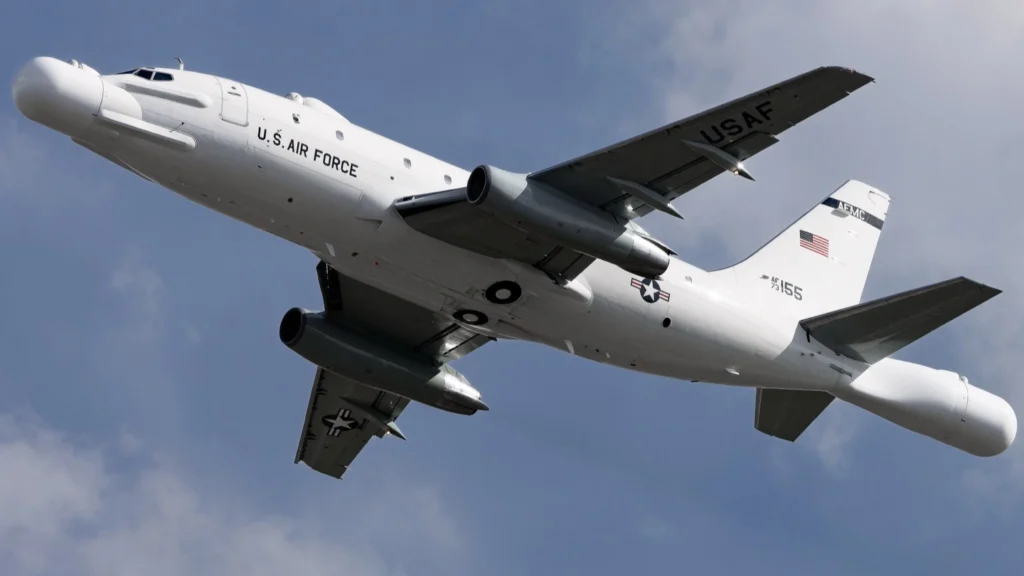
Denmar is also understood to have been the prime contractor behind the extensive modifications to the NT-43A, a heavily modified radar test bed aircraft commonly known by the callsign RAT55. That aircraft is based on a much older 737-200 airframe and has been described as the world’s most secretive 737. The current contract, however, involves a much newer 700-series model, so it does not refer to the NT-43A.
The Likely Aircraft: N712JM
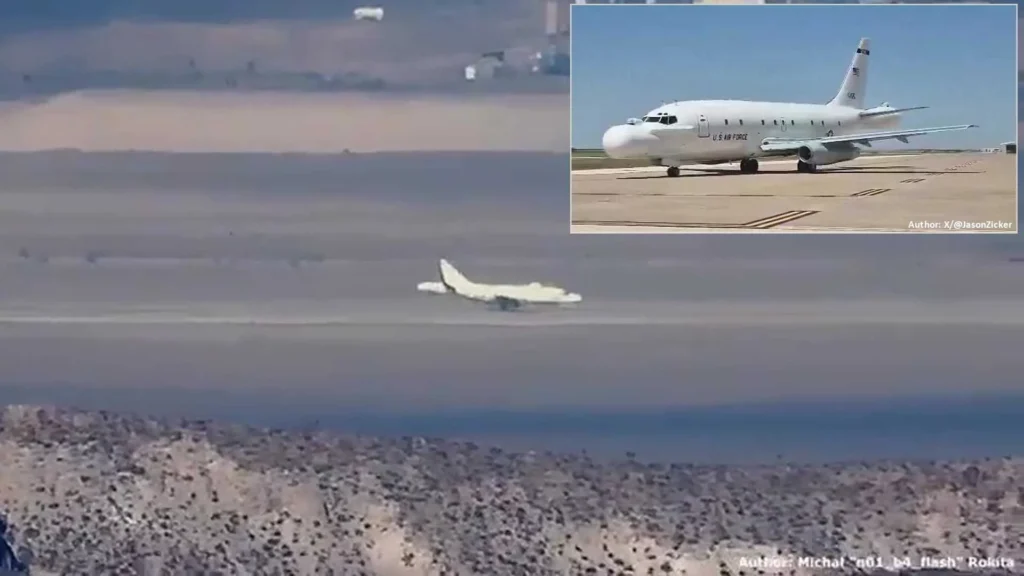
There is a strong possibility that the 737 NASA is now eyeing is one that the Air Force acquired in 2020, registered as N712JM. This aircraft is a -73W model and remains on the U.S. civil register. FAA records show Denmar acquired it in 2019, and Boeing originally delivered it in 2013 through a trusteeship arrangement.
The jet drew attention in 2020 because it appeared to be wearing a green protective coating and carried unusual external features, including visible instrumentation and sensor wiring. These signs pointed to a flight test setup.
The aircraft later conducted many test flights in military ranges off the coast of Southern California, often flying unusual flight profiles.
FAA records list N712JM as registered to an address tied to the Air Force’s Rapid Capabilities Office at Joint Base Anacostia-Bolling in Washington, D.C. The exact mission of the aircraft remains unknown, though its registration links it to an office known for high-priority programs such as the B-21 Raider stealth bomber and the X-37B spaceplane.

What Remains Unclear
NASA has not publicly confirmed the source of the aircraft or its classified mission in the contract award notice released for the June 1 award. The sole-source justification released separately is the document that outlines the Air Force origin and the classified program details.
A question also remains about what effort the Air Force is making to allow it to transfer a classified 737 to NASA. The transfer reflects a notable pattern, with NASA leveraging some of the most secretive 737s in existence to support its less sensitive research needs.
Stay tuned with us. Further, follow us on social media for the latest updates.
Join us on Telegram Group for the Latest Aviation Updates. Subsequently, follow us on Google News
