

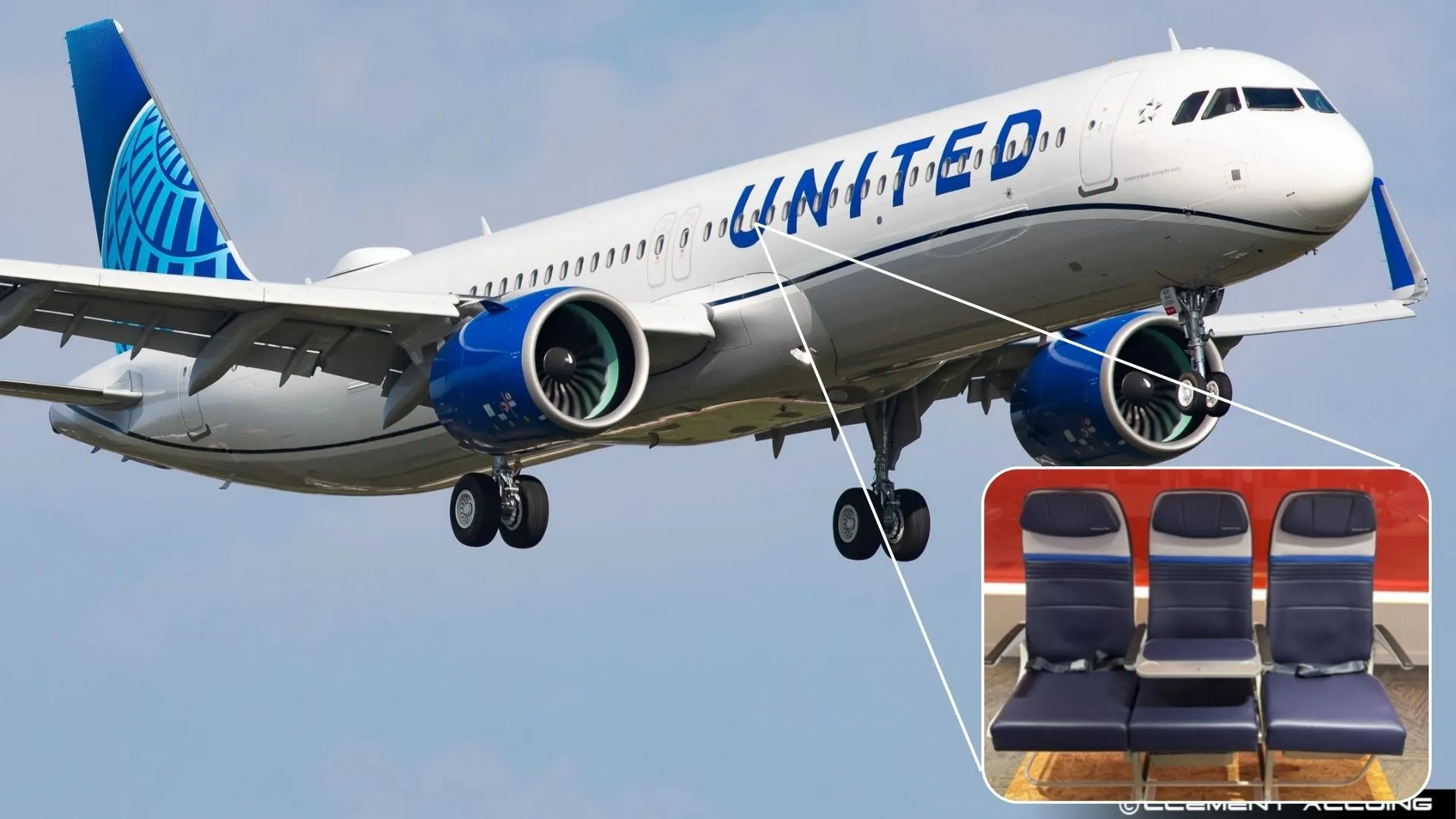
CHICAGO- United Airlines (UA) is reportedly working on a new Economy Class seating product that would permanently block the middle seat in selected rows.
The concept is believed to be under evaluation for the airline’s upcoming Airbus A321neo Coastliner fleet and could help align aircraft seating configurations with Federal Aviation Administration (FAA) cabin crew requirements.
The proposed product could be introduced on aircraft operating premium transcontinental routes connecting San Francisco (SFO), Los Angeles (LAX), and Newark (EWR).
Reports suggest the initiative may provide operational flexibility while also offering economy passengers additional personal space.
New Economy Product Emerges Ahead of Coastliner Launch
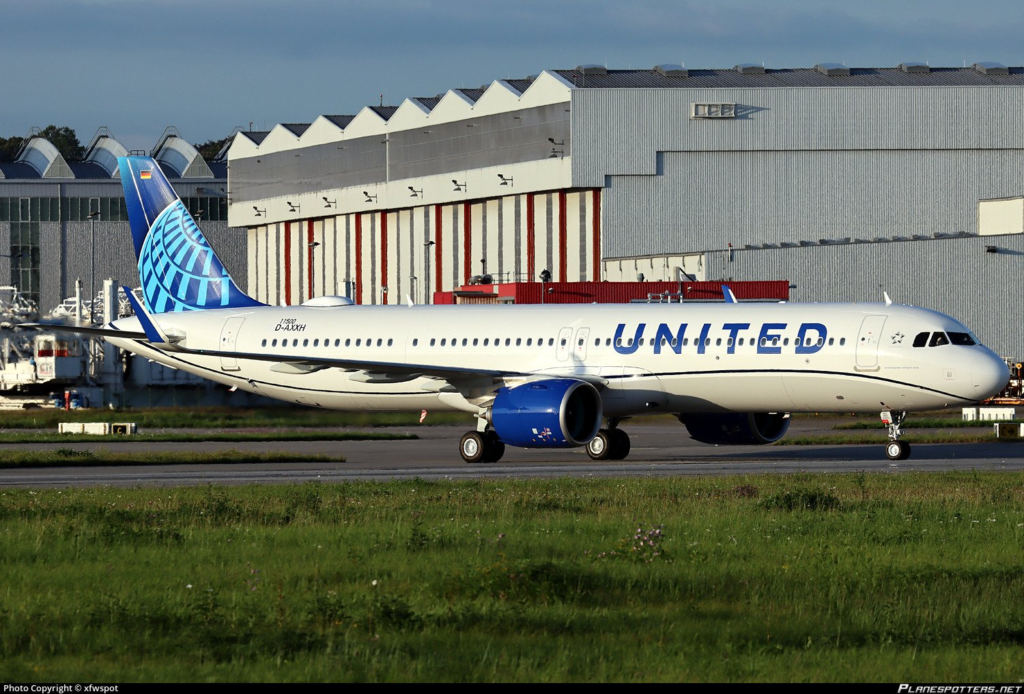
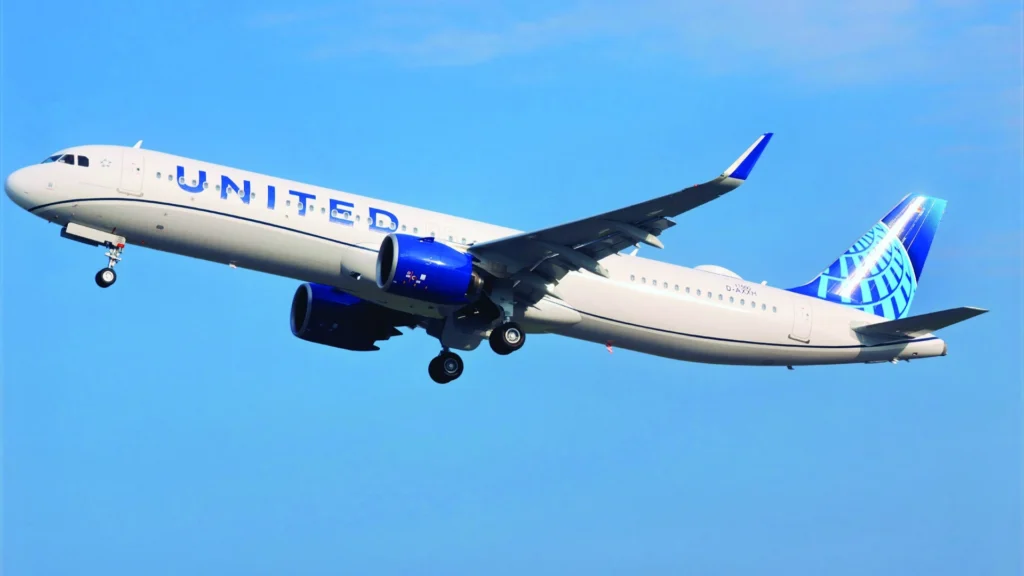
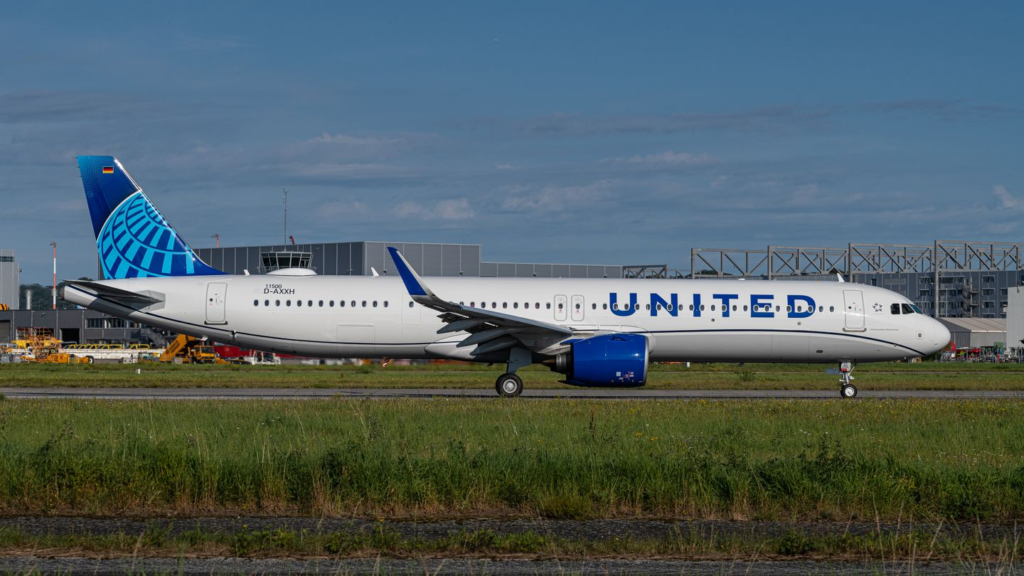
United Airlines is scheduled to receive the first of 50 specially configured Airbus A321neo Coastliner aircraft later this year.
The new subfleet is intended to replace the airline’s aging Boeing 757 fleet on premium transcontinental services.
The Coastliner aircraft will feature a total of 161 seats distributed across three cabins:
| Cabin Class | Seats |
|---|---|
| Polaris Business Class | 20 |
| Premium Plus | 12 |
| Economy Class | 129 |
| Total | 161 |
The configuration is significantly less dense than United’s standard Airbus A321neo, which accommodates 200 passengers.
For comparison:
| Aircraft Type | Total Seats |
|---|---|
| Airbus A321neo (Standard) | 200 |
| Airbus A321neo Coastliner | 161 |
| Airbus A321XLR | 150 |
The lower-capacity Coastliner aircraft are designed to support premium-focused routes while offering a higher proportion of premium seating.
According to PYOK, United is reportedly studying a new Economy Class product that would physically block the middle seat in a three-seat row through the use of a tray table secured across the seat cushion.
Blocked Middle Seat Concept Works
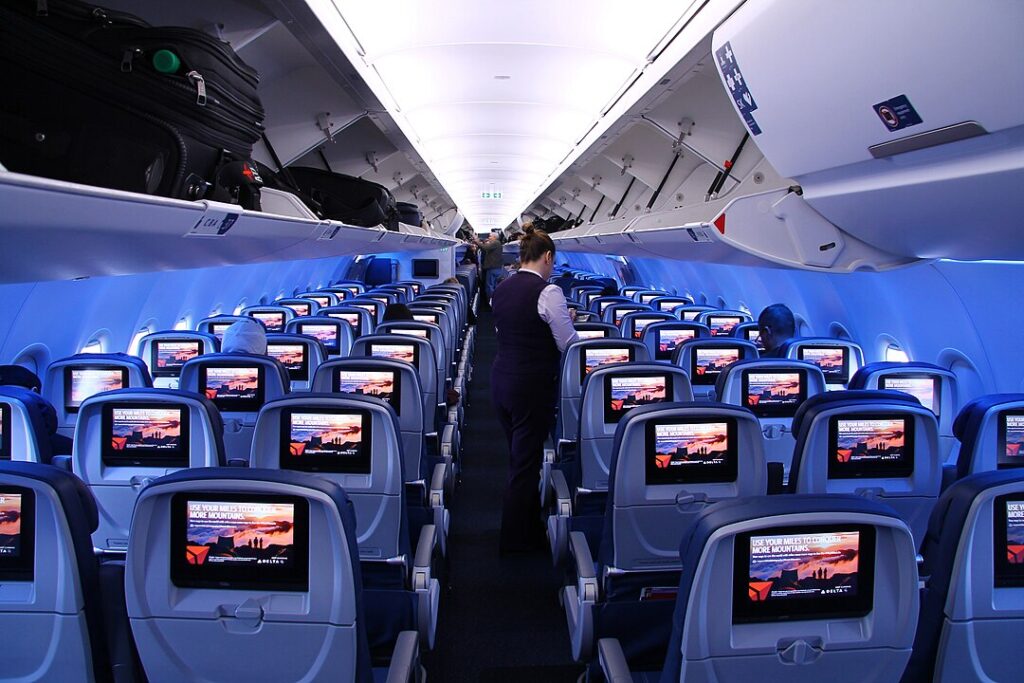
The proposed design closely resembles the Euro Business Class concept used by several European airlines, including on short-haul flights, where the middle seat is intentionally left vacant to create additional passenger space.
Under the reported concept, a tray table would be locked across the middle seat, preventing passenger use.
When required, the tray table could be unlocked and stored beneath the seat, allowing the seat to return to normal service.
The report gained attention after Reddit user “Floppy Over Drive” shared an image allegedly showing the concept.
In the post, the user wrote:
“Got word from a buddy at HDQ that says United is working on a new seat product that will feature a permablocked middle seat in Economy.”
The post further claimed:
“This seat would debut on the A321XLR and possibly Coastliner. This is born out of necessity to align with minimum flight attendant requirements without requiring additional headcount.”
United Airlines has not publicly confirmed the reported concept.
Flight Attendant Requirements Matter
The reported seating strategy appears to be connected to FAA cabin crew staffing regulations.
Under current FAA rules:
| Passenger Seats | Minimum Flight Attendants |
|---|---|
| 101 to 150 | 3 |
| 151 to 200 | 4 |
The FAA requires two flight attendants for the first 100 passenger seats and one additional flight attendant for every additional 50 seats, or fraction thereof.
As a result:
- A standard 200-seat Airbus A321 requires four flight attendants.
- A 150-seat Airbus A321XLR requires three flight attendants.
- A 161-seat Airbus A321 Coastliner normally requires four flight attendants.
The Coastliner exceeds the 150-seat threshold by 11 seats, placing it into the next staffing category and requiring an additional crew member.
This has led to speculation that reducing the number of usable passenger seats through a permanently blocked middle-seat arrangement could potentially help align aircraft configurations with lower staffing thresholds, depending on regulatory treatment and certification.
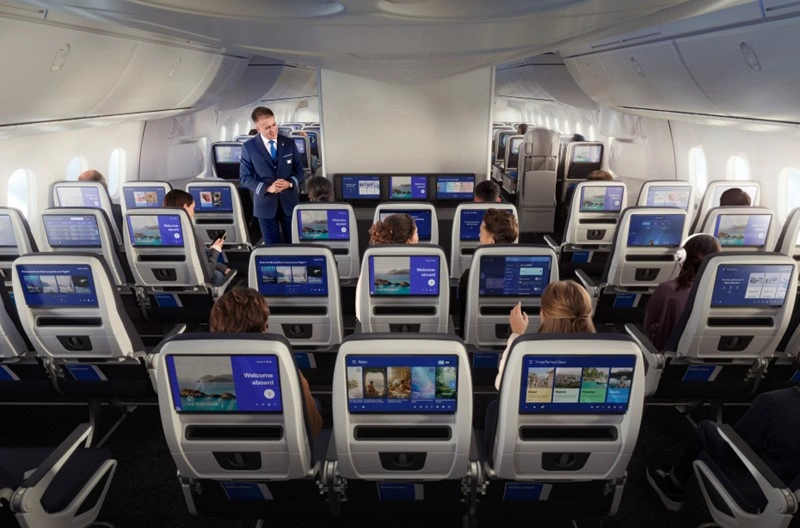
New Seating Product
The reported concept could serve multiple operational purposes.
Lower Staffing Requirements
One possible use would be to permanently remove selected seats from service, potentially reducing required cabin crew numbers on certain aircraft configurations.
Additional Passenger Space
United could also position the product as a comfort-focused option for Economy Class travelers. A blocked middle seat would provide additional shoulder room and personal space without requiring a premium cabin upgrade.
Greater Fleet Flexibility
The concept may also provide operational flexibility when substituting aircraft between the Airbus A321XLR and Airbus A321neo Coastliner fleets. Similar seating configurations could help simplify staffing and deployment decisions across both aircraft types.
Different Rules Apply in Europe
Flight attendant staffing requirements vary significantly between the United States and Europe.
In the United States, minimum cabin crew requirements are primarily linked to passenger seat counts. This allows airlines to influence staffing requirements through aircraft seating configurations.
European regulations generally place greater emphasis on aircraft type rather than seating density.
For example:
- Airbus A321 aircraft typically require a minimum of five flight attendants in Europe.
- Airbus A320 aircraft typically require a minimum of four flight attendants.
Because staffing requirements remain largely fixed, European airlines often maximize available seat capacity rather than reducing passenger counts to influence crew requirements.
By comparison, many U.S. airlines limit Airbus A320-family aircraft to a maximum of 150 seats, enabling operations with three flight attendants rather than four.
United Yet to Comment on Reports
The airline has not announced plans to introduce a permanently blocked middle-seat Economy Class product, and details remain based on industry reports and unofficial sources.
If implemented, the concept would represent an unusual approach to balancing passenger comfort, fleet flexibility, and FAA staffing requirements on premium transcontinental aircraft.
Stay tuned with us. Further, follow us on social media for the latest updates.
Join us on Telegram Group for the Latest Aviation Updates. Subsequently, follow us on Google News
