

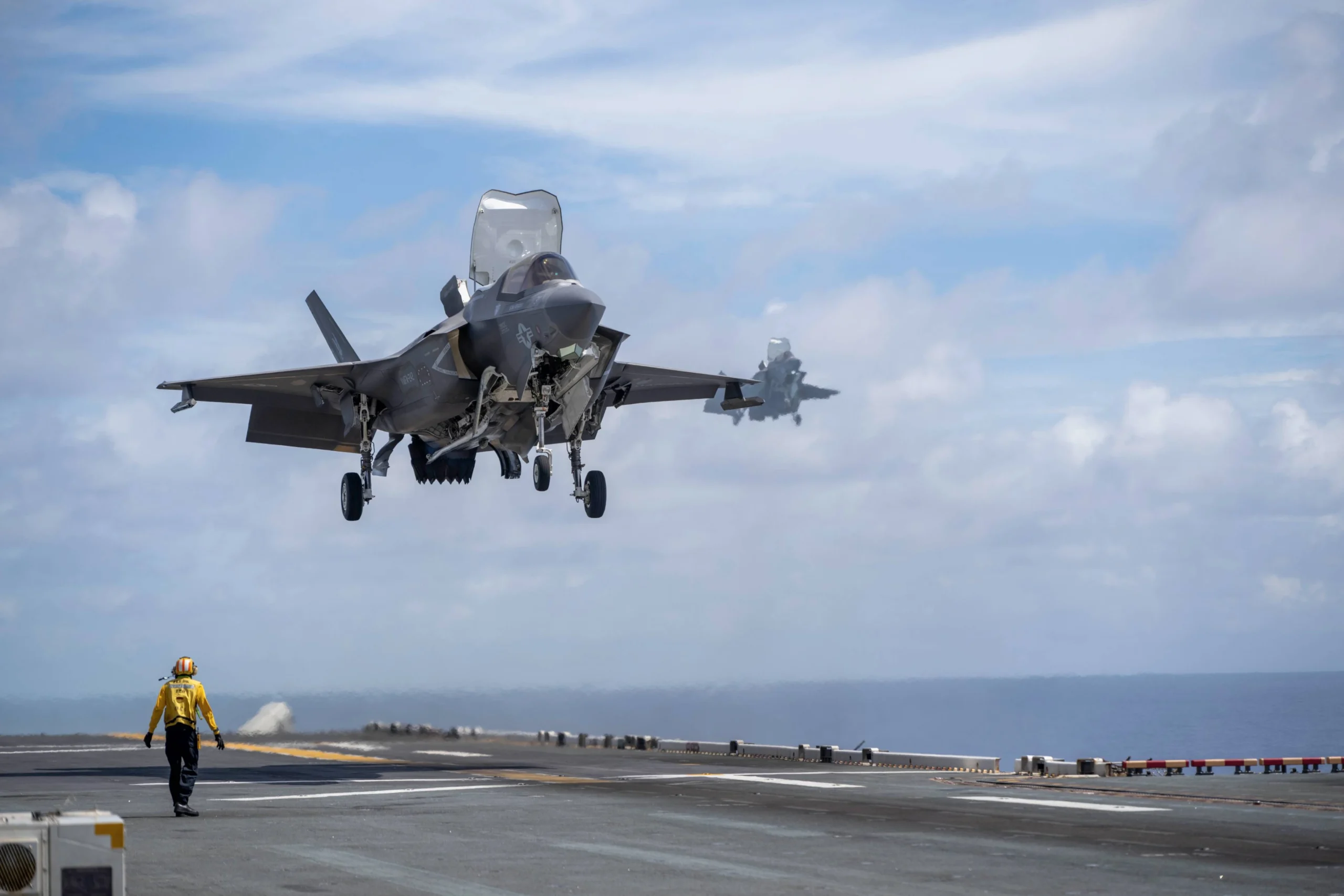
WASHINGTON, D.C.- US Secretary of Defense Pete Hegseth has confirmed that the Pentagon will move forward with the US Navy’s F/A-XX Next Generation Fighter (NGF) programme, with a contract decision planned for August 2026.
The announcement reaffirms the Department of Defense’s commitment to fielding a carrier-based sixth-generation fighter despite budget pressures from the Trump Administration.
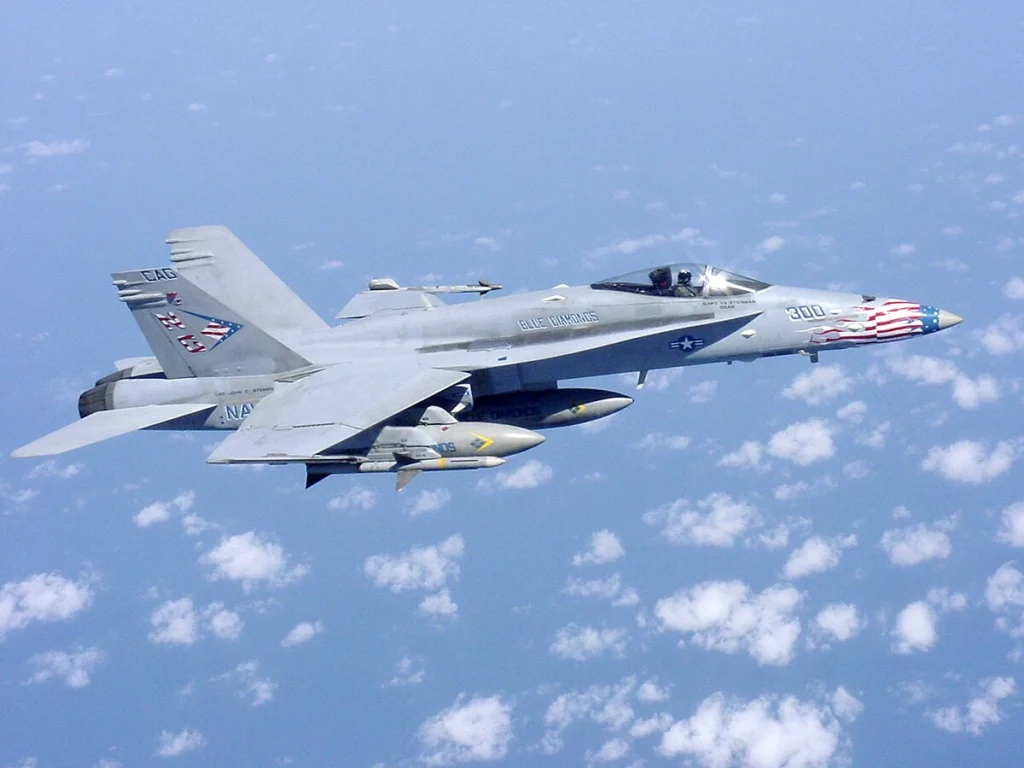
The F/A-XX is designed to eventually replace the US Navy’s fleet of over 470 Boeing F/A-18E/F Super Hornet fourth-generation strike fighters.
Boeing and Northrop Grumman remain the presumptive finalists for the highly classified contract after Lockheed Martin was eliminated from the competition in early 2025.
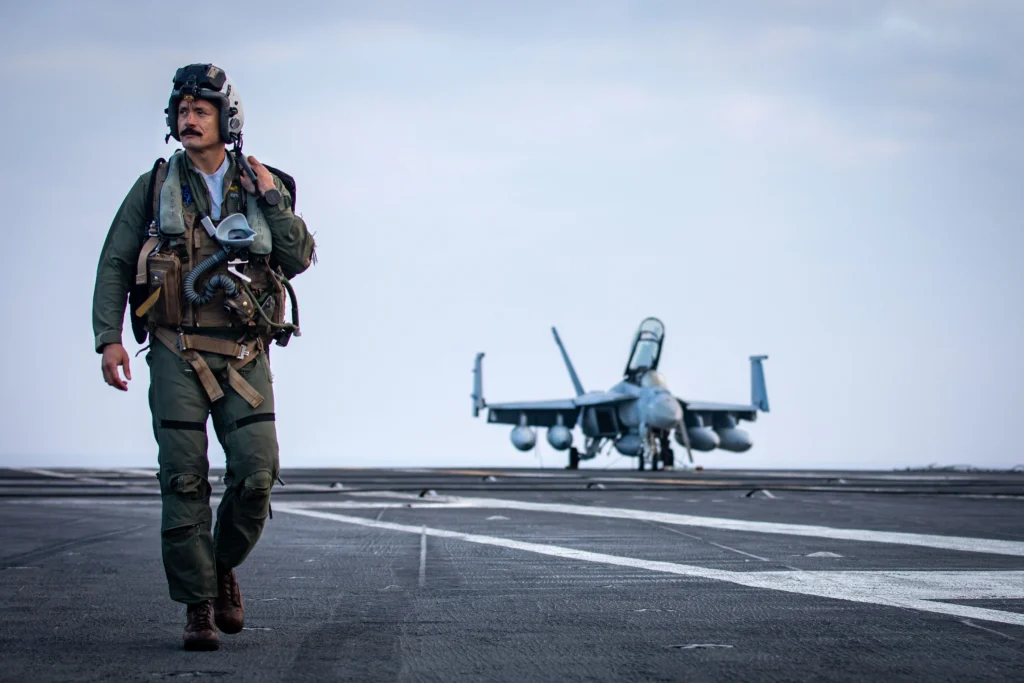
US Navy New 6th-Gen Fighter Delays
Speaking during a congressional committee hearing on 29 April 2026, Hegseth described the next-generation naval fighter as a critical future capability. He stated that fielding the aircraft is not a question of “if” but “when,” signaling clear institutional support for the programme.
The Pentagon chief confirmed the US Navy plans to announce its source selection around August 2026. However, the contract award does not mean the new fighter will arrive on aircraft carrier flight decks in the near term.
The programme has faced repeated delays in final design and vendor selection, missing several internal deadlines over the past few years.
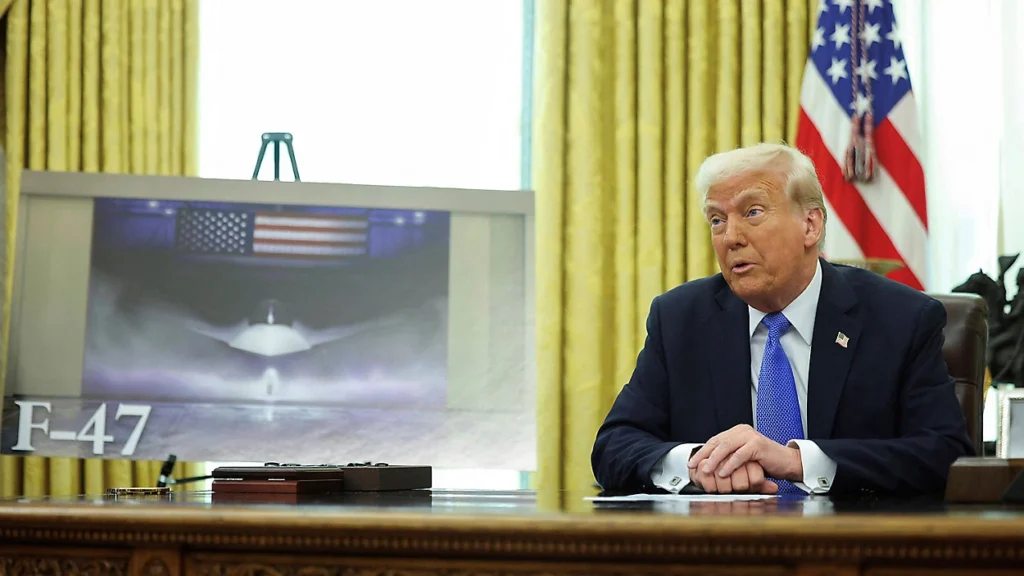
F/A-XX Faces Budget Constraints Amid F-47 Priority
The Trump Administration has prioritized the US Air Force’s land-based F-47 Next Generation Air Dominance (NGAD) fighter over the Navy’s F/A-XX programme.
The fiscal year 2027 budget request allocated $5 billion for the F-47 project, on top of the $3.4 billion provided in FY2026. By contrast, only around $214 million was requested for the F/A-XX over the same two-year period.
A Pentagon budget official previously told FlightGlobal that the administration’s strategy was to go “all in” on the F-47, citing concerns about the US aerospace industrial base’s capacity to support two sixth-generation fighter programmes simultaneously.
The goal was to provide enough funding for the Navy to complete source selection, but not necessarily advance the F/A-XX into production.
Lawmakers in Congress pushed back on this approach during FY2026, overruling the administration’s spending proposal and steering nearly $1.7 billion toward the F/A-XX programme.
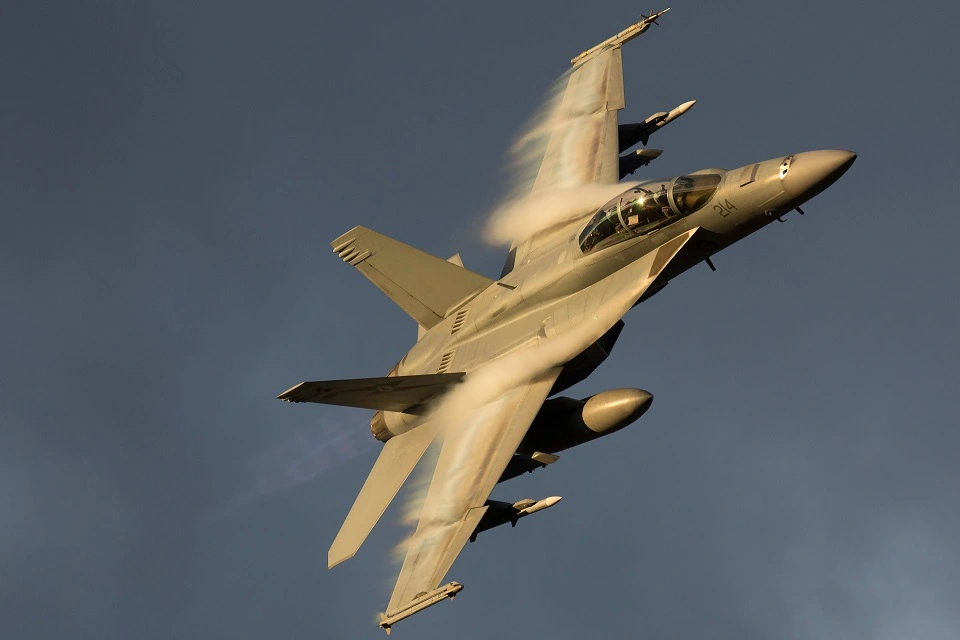
Boeing and Northrop Grumman Compete for the Contract
Boeing and Northrop Grumman are the two remaining competitors for the NGF contract. Both companies are already engaged in major advanced development programmes. Boeing is building the F-47 for the US Air Force, while Northrop Grumman is producing the B-21 Raider long-range stealth bomber.
Neither company appears concerned about taking on additional work. Steve Parker, chief executive of Boeing Defense, Space & Security, stated at the 2025 Paris Air Show that Boeing could handle both the F-47 and F/A-XX programmes simultaneously.
Northrop Grumman recently released a rendering of a carrier-based sixth-generation fighter, presumed to be connected with its F/A-XX design. The company stated it is ready to advance next-generation naval aviation with speed and capacity.
F/A-XX Timeline Lags Behind the Air Force’s F-47
While the US Air Force’s F-47 programme has progressed rapidly through vendor selection and into engineering design, the Navy’s F/A-XX has moved at a much slower pace. The Air Force awarded Boeing the F-47 contract in March 2025 and now projects a first flight by 2028.
The F/A-18E/F Super Hornets that the F/A-XX is meant to replace are expected to continue flying for several more decades alongside the smaller fleet of fifth-generation Lockheed Martin F-35C fighters.
Boeing plans to deliver new Super Hornets until 2027, but the oldest airframes have already been in service for 30 years.
Hegseth acknowledged the trade-offs involved, noting the need to balance industrial capacity and programme timelines to avoid slowing down other defence priorities.
Stay tuned with us. Further, follow us on social media for the latest updates.
Join us on Telegram Group for the Latest Aviation Updates. Subsequently, follow us on Google News
