

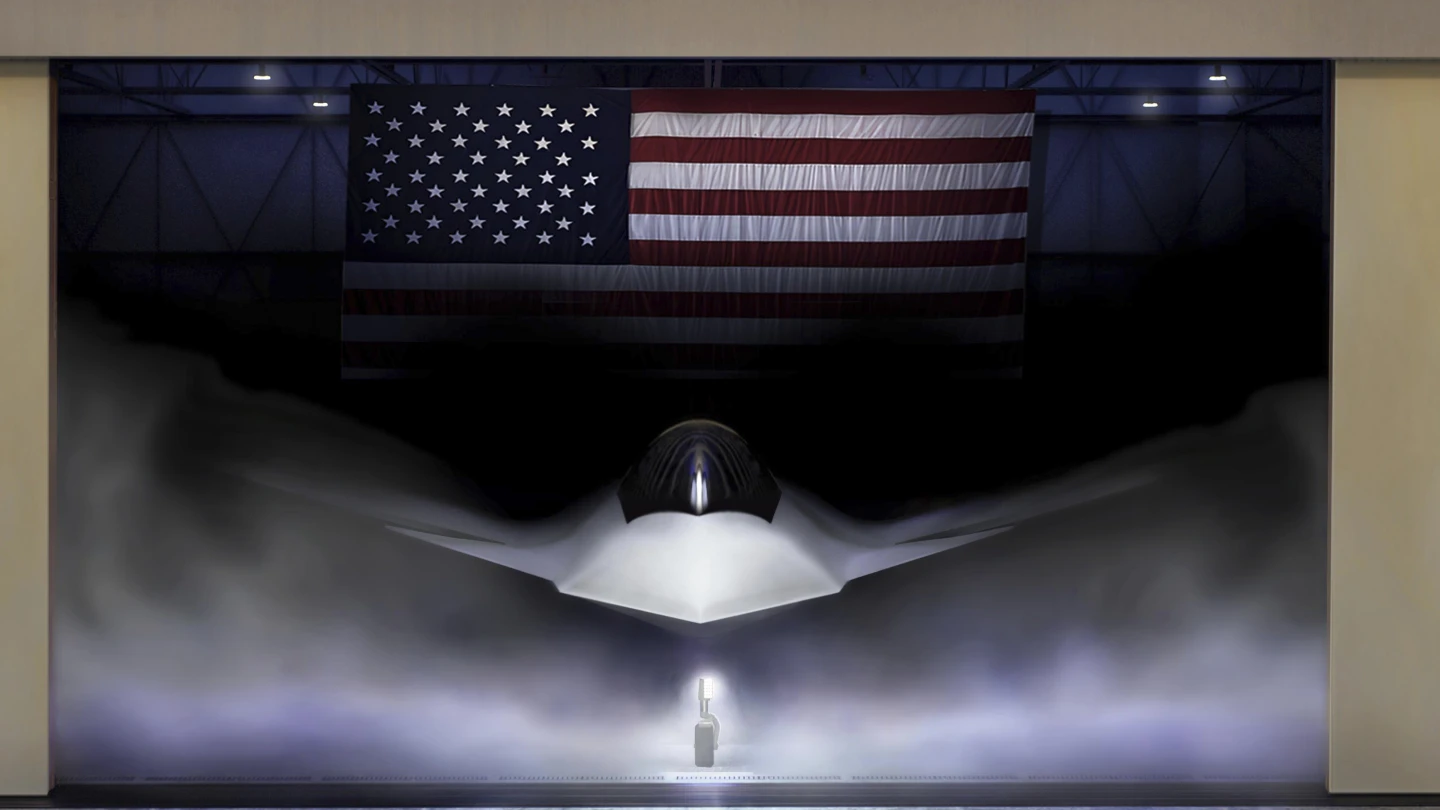
WASHINGTON D.C.- Chinese state media outlets are working to undermine confidence in the U.S. Air Force’s sixth-generation F-47 fighter jet program. Reports focus on high costs, Boeing’s production challenges, and rare earth mineral dependencies.
The China Aerospace Studies Institute (CASI) at Air University released a report on April 13 analyzing early Chinese media coverage of the F-47. U.S. defense experts say the messaging follows a predictable pattern aimed at domestic, regional, and American audiences.
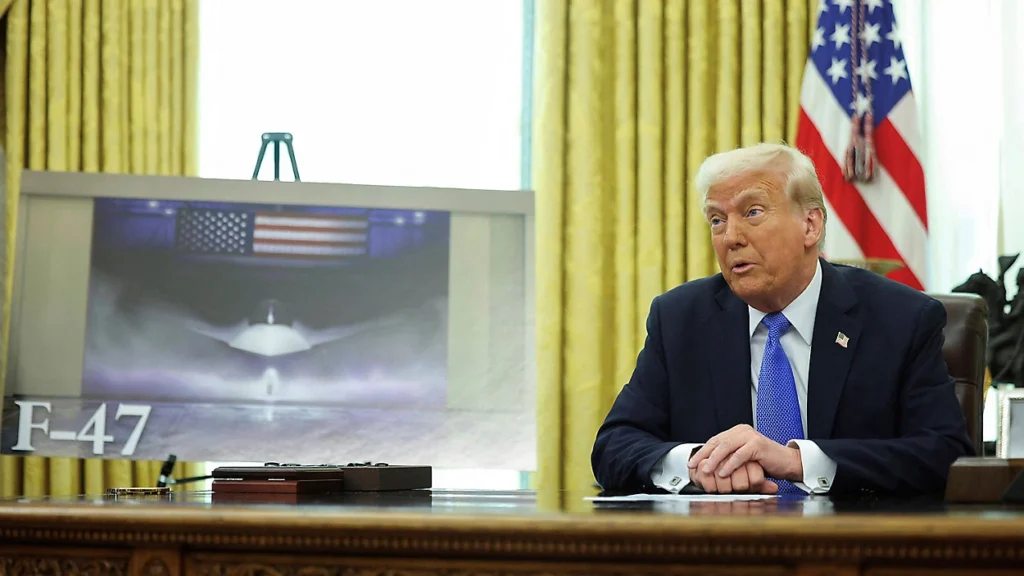
How Chinese State Media Frames the F-47 Program
The CASI report, authored by research analysts at BluePath Labs, identified three core themes across Chinese media coverage.
Outlets have emphasized the F-47’s projected cost as a vulnerability, criticized prime contractor Boeing, and predicted that rare earth metal access will become a chokepoint in production.
The U.S. Air Force has positioned the F-47 as the world’s first sixth-generation fighter. Officials say the aircraft will feature advanced stealth technology, a combat radius exceeding 1,000 nautical miles, and speeds above Mach 2.
That combat radius would nearly double the range of the F-22 Raptor. Current plans call for acquiring more than 185 F-47s to match the existing F-22 fleet size.
Retired Navy Cmdr. J. Michael Dahm, senior resident fellow at AFA’s Mitchell Institute for Aerospace Studies, said the coverage aligns with standard state media strategy.
Chinese reporting targets three audiences: the domestic population, regional neighbors, and the U.S. government.
For Chinese citizens, the goal is to project confidence that China can compete. For regional allies, the message discourages alignment with Washington. For American officials, the aim is to seed doubt about U.S. defense programs, Air and Space Forces reported.
Cost Concerns and Boeing Criticism
Chinese military commentators, including analyst Zhang Xuefeng, have described the F-47 as potentially the most expensive aircraft in history. They argue that high costs combined with U.S. budget pressures could derail the program before it delivers results.
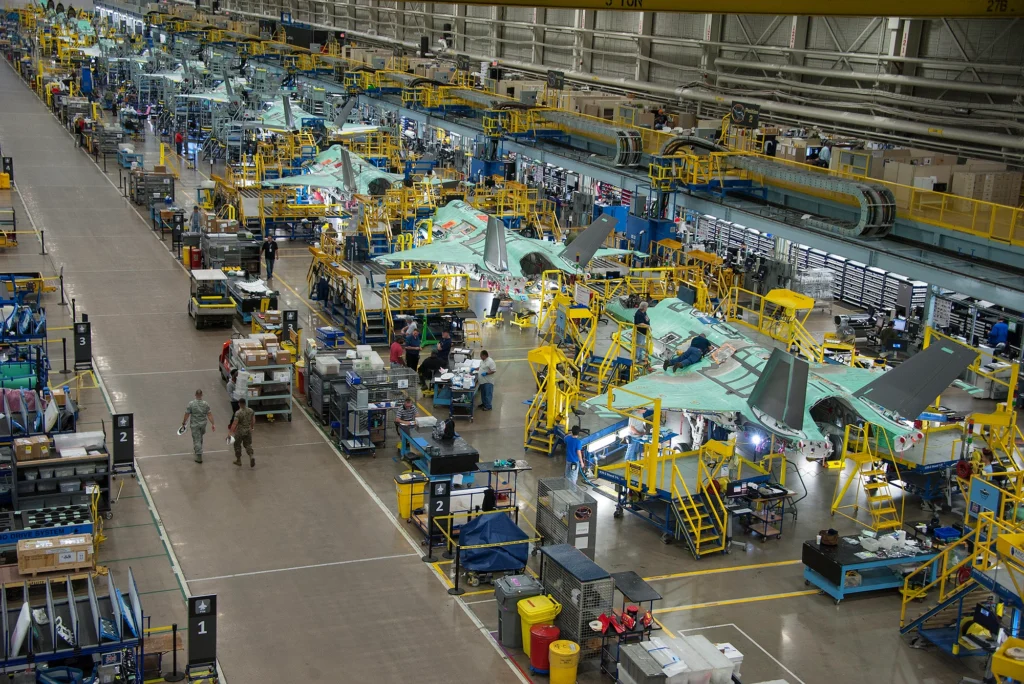
Chinese outlets have also highlighted Boeing’s recent track record, citing KC-46 tanker cost overruns, delayed deliveries, and broader financial difficulties. These reports question whether Boeing can keep the F-47 development on schedule.
USAF Gen. Dale White pushed back on these concerns at AFA’s Warfare Symposium in February. He said the F-47 remains on track to fly by 2028, just three years after the program’s start.
That timeline compares favorably to earlier programs. The F-22 took six years from contract award to first production flight, and the F-35 took five years.
White added that Boeing has ramped up staffing ahead of schedule. Retired U.S. Air Force Col. John Venable, now a senior fellow at the Mitchell Institute, attributed recent industry-wide delays to COVID-19 supply chain disruptions rather than any structural weakness at Boeing.
He predicted a significant improvement in delivery timelines across all major defense contractors.
Downplaying F-47 Capabilities
Some Chinese analysts have attempted to minimize the F-47’s technological significance. Military commentator Jin Yinan suggested the program exists because the United States senses it is losing its technological edge over China. He compared the situation to an aviation “Sputnik moment” for Washington.
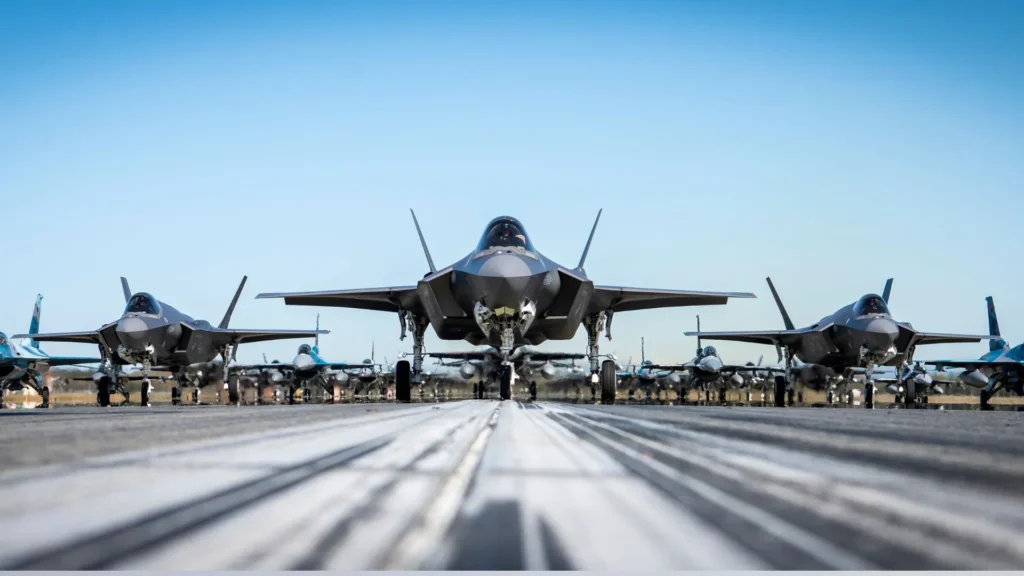
Venable rejected that characterization. He pointed to recent operational successes involving the F-35, which was developed over 20 years ago but continues to outperform Chinese and Russian systems in the field.
He cited the F-35’s role in the January 2025 mission to capture former Venezuelan President Nicolas Maduro, where the jet operated against Chinese-made systems. He also referenced the F-35’s performance against Russian-made S-400 air defense systems during Operation Epic Fury in Iran.
Venable said the F-47 would deliver another “paradigm shift” in U.S. air superiority, building on the technological advantage the F-35 still holds today.
Rare Earth Mineral Supply Debate
The CASI report also noted that Chinese media outlets have flagged the F-47’s reliance on rare earth minerals as a strategic vulnerability.
China controls much of the world’s rare earth production, and Chinese analysts argue this gives Beijing leverage over the program.
Venable acknowledged China’s dominant position in rare earth supply but said the Trump administration has taken steps to diversify sourcing. Efforts to build rare earth processing capacity in Canada and the United States are underway.
He noted that the quantities required for the F-47 program are small enough to be readily obtained through these alternative channels.
Stay tuned with us. Further, follow us on social media for the latest updates.
Join us on Telegram Group for the Latest Aviation Updates. Subsequently, follow us on Google News
