

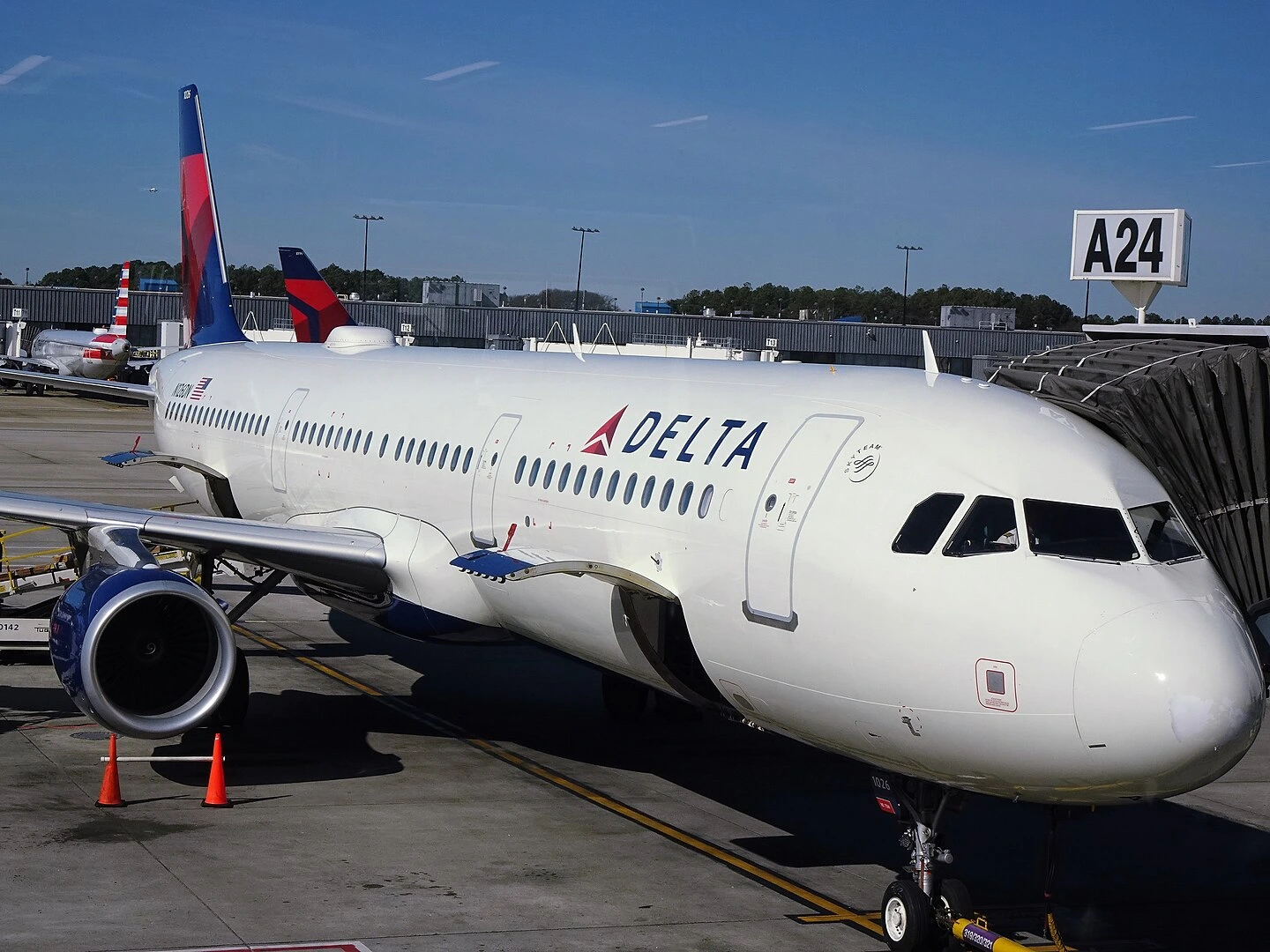
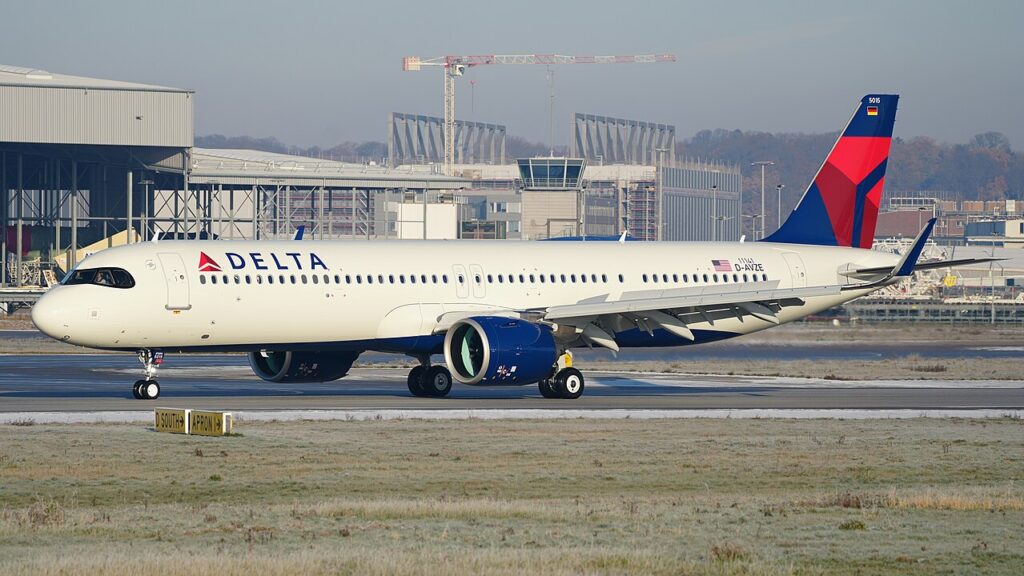
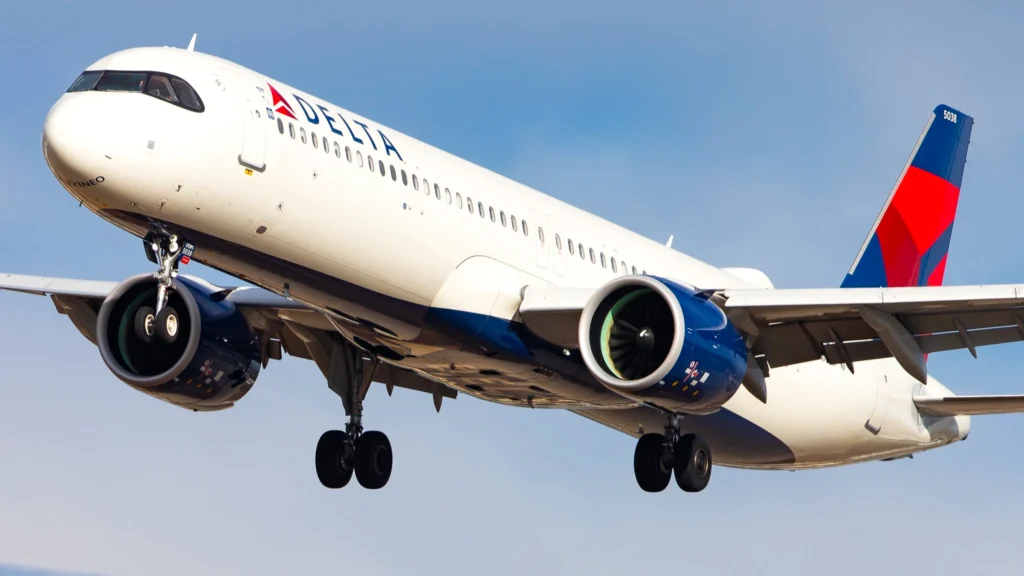
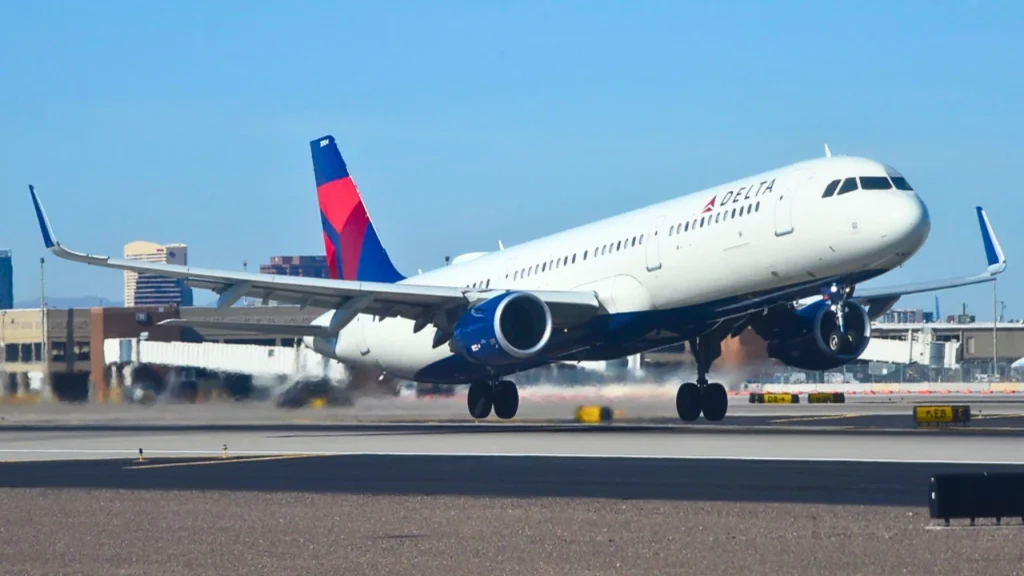
SEATTLE- Delta Air Lines (DL) faces a passenger lawsuit stemming from a May 2024 incident in which an Airbus A321neo caught fire after landing at Seattle-Tacoma International Airport (SEA).
The aircraft had arrived from Cancun International Airport (CUN), Mexico, when a small fire broke out near the nose of the plane after it was connected to ground power.
The passenger claims she sustained an ankle injury while using an emergency evacuation slide during the incident. She filed the lawsuit on Thursday, approximately one week before the two-year anniversary of the May 6, 2024, event.
Delta Air Lines (DL) pilots had detected smoke in the cockpit and initiated an emergency evacuation, deploying chutes so all passengers could exit the aircraft.
Passenger Sues Delta Over Evacuation Injury
The fire reportedly originated from the ground power unit connected to the aircraft, not from the Airbus A321neo itself. After pilots smelled smoke in the cockpit, they activated emergency evacuation protocols. Evacuation slides were deployed, and passengers began exiting the plane immediately.
Reports from the time of the incident indicated there were no significant injuries. However, one woman reportedly twisted her ankle while sliding down an emergency exit chute. The lawsuit filed this week appears to be connected to that specific injury, though the court filings have not confirmed the passenger’s identity publicly.
The decision to evacuate the aircraft was standard procedure given the circumstances. A fire near the nose of an aircraft presents a serious safety risk, and delaying evacuation in such a scenario could result in far greater harm. Aviation safety experts widely consider the crew’s response appropriate and consistent with established emergency protocols, View from the Wing flagged.
Montreal Convention Governs Liability
Because the flight originated in Cancun (CUN) and landed in Seattle (SEA), the route qualifies as an international flight. This means the Montreal Convention governs the legal framework for passenger injury claims, rather than domestic U.S. tort law.
Article 17 of the Montreal Convention holds the carrier strictly liable for bodily injuries caused by an “accident” that occurs onboard the aircraft or during the process of embarking and disembarking. The evacuation slide injury falls within this scope, as it occurred during the disembarkation process.
However, the Montreal Convention imposes important restrictions on damages. It bars punitive, exemplary, and non-compensatory damages entirely. Under the treaty’s first-tier liability framework, the carrier’s exposure is capped at approximately $218,533 per passenger.
Delta Air Lines (DL) would not face damages beyond this amount unless the passenger can prove the airline was negligent, which is a significantly higher legal burden.
Delta’s Liability Remains Limited in Scope
The central question in this case is not whether Delta Air Lines (DL) acted negligently during the evacuation. The crew responded appropriately to a fire emergency. The ground power unit appears to have caused the fire, which shifts responsibility away from the airline’s aircraft maintenance or operational procedures.
For damages above the Montreal Convention’s first-tier threshold, the passenger would need to demonstrate that Delta Air Lines (DL) was at fault or that the airline failed to take all necessary measures to prevent the injury.
Given that the evacuation was a reasonable response to an active fire, proving negligence presents a substantial legal challenge.
The lawsuit arrives nearly two years after the incident. While the passenger may recover compensation under the Montreal Convention’s strict liability provisions, the amount is unlikely to exceed the treaty’s cap based on the available facts.
Stay tuned with us. Further, follow us on social media for the latest updates.
Join us on Telegram Group for the Latest Aviation Updates. Subsequently, follow us on Google News
