


BOGOTÁ— A Lufthansa (LH) Boeing 787-9 Dreamliner was forced into a last-minute go-around after converging with a Qatar Airways Cargo Boeing 777F on final approach to Bogotá El Dorado International Airport (BOG) on April 19.
The aircraft reportedly came within just a few hundred feet of each other, raising serious safety concerns over a loss-of-separation event.
The incident involved Lufthansa (LH) flight LH542 from Frankfurt Airport (FRA) and Qatar Airways Cargo (QR) flight QR8174 from São Paulo Guarulhos International Airport (GRU).
Both aircraft were directed toward the same runway at Bogotá (BOG) following an operational disruption, setting up a potentially dangerous conflict during descent.
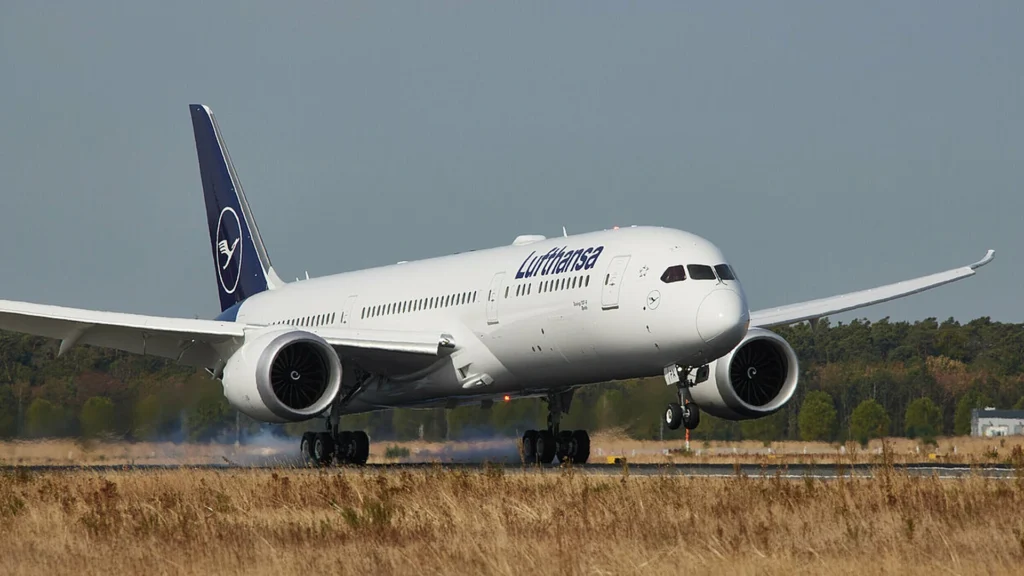
Lufthansa 787 Avoids Collision
Flight tracking data indicate that both jets aligned for landing on the southern runway after the northern runway was temporarily closed. Air traffic control reassigned the Lufthansa 787 mid-approach, placing it behind the slower-moving Qatar 777F.
The Lufthansa aircraft maintained a higher approach speed, which reduced spacing between the two jets.
As both aircraft descended below 10,000 feet, their vertical separation dropped to just a few hundred feet, far below standard safety margins, Simple Flying flagged.
The situation unfolded in low-light conditions just before 7:00 PM local time, adding complexity to an already tight sequence. The proximity triggered an immediate response from the Lufthansa crew, who initiated a go-around to avoid further risk.
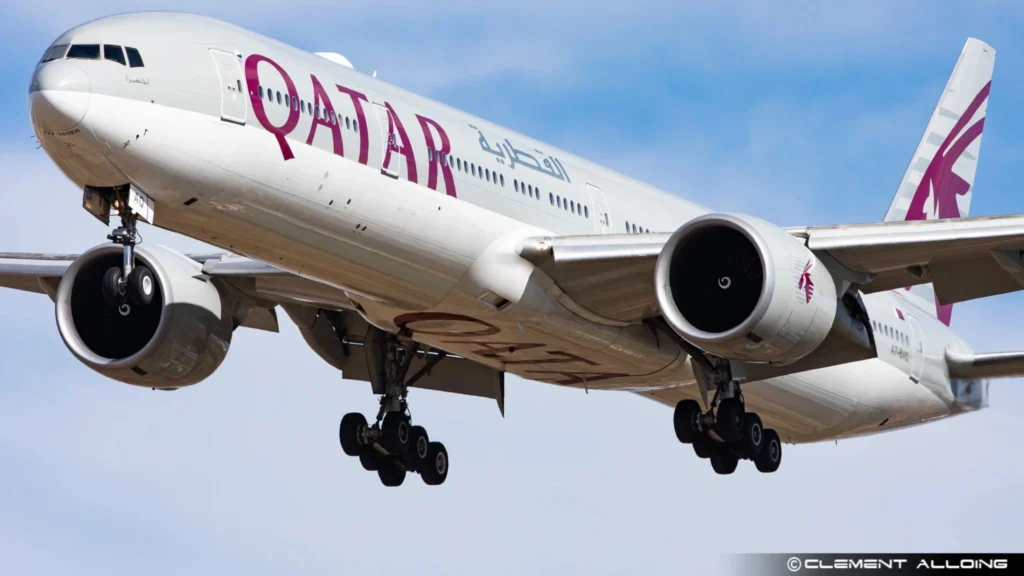
Lufthansa’s 787 Performs a Go-Around Maneuver
The Lufthansa 787 aborted its landing and climbed sharply, reaching over 14,500 feet before rejoining the approach sequence. The maneuver created a safe distance between the two aircraft within seconds.
Meanwhile, the Qatar 777F continued its descent without interruption and landed safely at approximately 6:54 PM. The Lufthansa jet followed with a delayed landing roughly 15 minutes later after stabilizing its second approach.
It remains unclear whether the go-around was instructed by air traffic control or initiated independently by the flight crew. However, such maneuvers are standard safety procedures when pilots identify unstable or unsafe landing conditions.
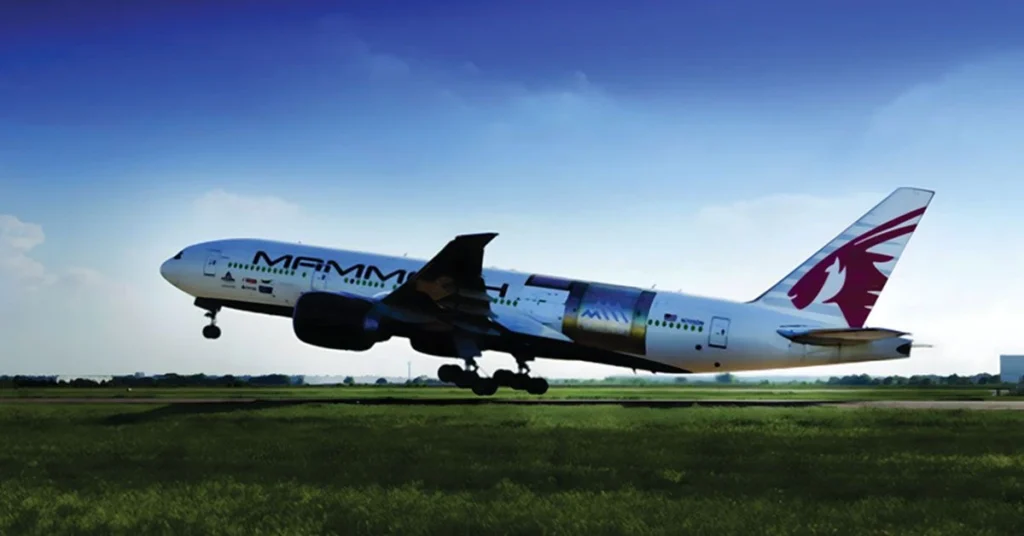
ATC Error Risk
Early indications suggest that air traffic control may have played a role in the incident by assigning both aircraft to the same runway without adequate spacing. The sudden runway closure appears to have disrupted normal sequencing and increased controller workload.
A loss-of-separation event occurs when aircraft breach minimum distance requirements, typically 1,000 feet vertically or three nautical miles horizontally near airports. Such incidents are classified as serious due to their potential consequences.
Modern aircraft rely on onboard systems such as the Traffic Collision Avoidance System (TCAS), which can issue real-time alerts and resolution advisories. These systems act as a final safety barrier when procedural separation fails.
Stay tuned with us. Further, follow us on social media for the latest updates.
Join us on Telegram Group for the Latest Aviation Updates. Subsequently, follow us on Google News
