

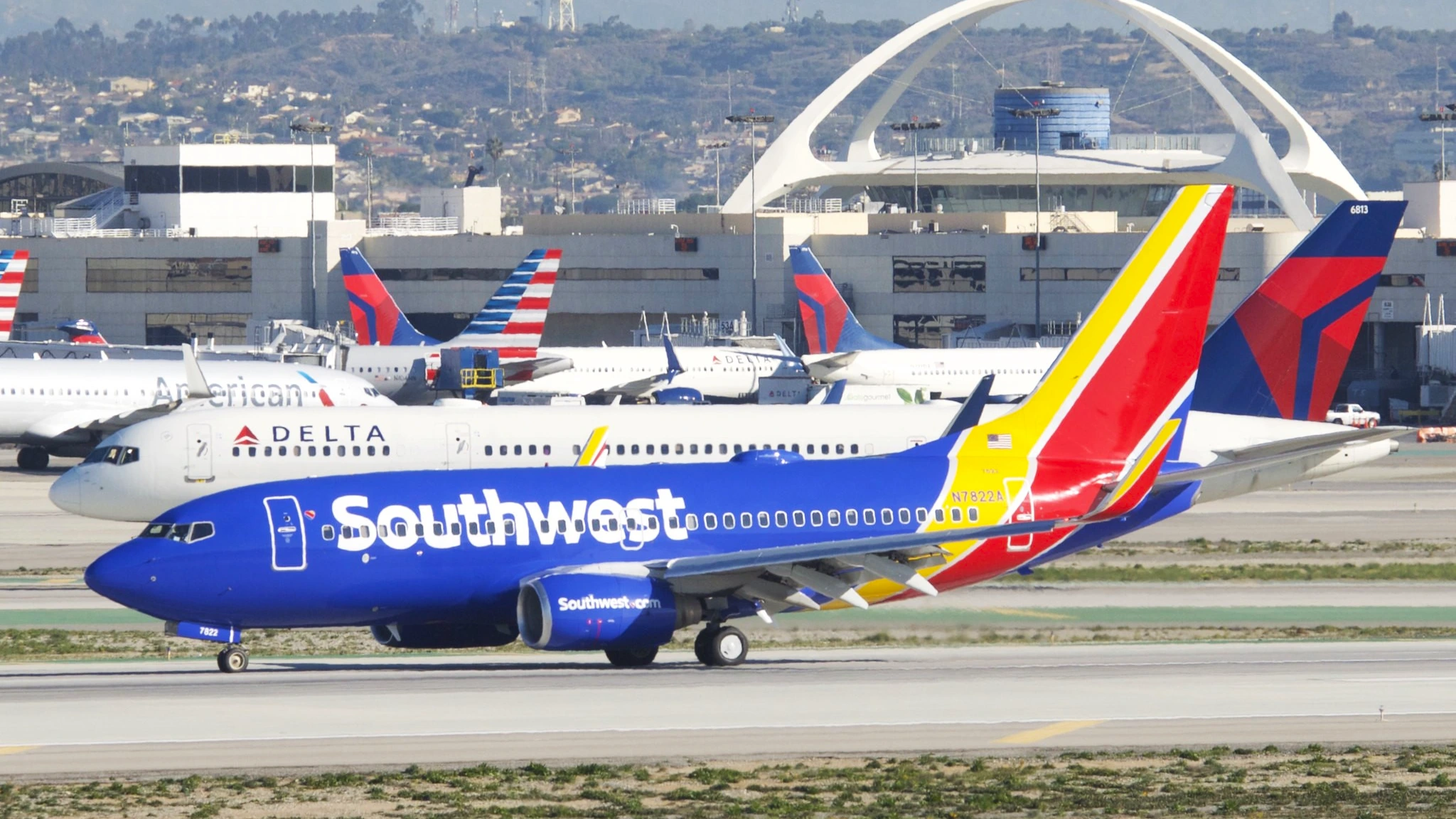
DALLAS- Southwest Airlines (WN) removed a passenger from a flight between Dallas Love Field (DAL) and Tulsa International Airport (TUL) after a disagreement over carry-on baggage storage and a disability accommodation request.
The incident occurred on Thursday, August 6, 2026, and has generated widespread discussion about accessibility rights, airline policies, and crew decision-making.
The passenger said a disability-related medical condition prevented him from placing a backpack under the seat in front of him, while the airline crew maintained that he needed to follow standard carry-on storage procedures.
The situation ultimately resulted in his removal from the flight, although he was later rebooked. The incident has also renewed discussion about how disability accommodations are handled on commercial flights.
Timeline of Southwest Flight Incident
Musician Cody Blackbird shared his experience on Instagram following the incident aboard a Southwest Airlines (WN) flight from Dallas Love Field (DAL) to Tulsa International Airport (TUL).
According to the passenger, he boarded the aircraft carrying a musical instrument and a backpack. He placed both items in the overhead bin because he said the space beneath the seat in front of him was required for a disability-related medical need related to maintaining proper blood flow.
Cabin crew later noticed both items in the overhead compartment and instructed him to move one personal item beneath the seat, in line with the airline’s standard cabin baggage policy.
The passenger responded that he could not do so because of his disability-related medical condition. He also stated that he was not comfortable discussing his private medical information in front of other passengers.
According to his account, he repeatedly explained that he believed ADA and FAA regulations supported his request.
The passenger said the crew initially acknowledged his accommodation request. However, shortly before departure, he was informed that he would have to leave the aircraft for allegedly failing to follow crew member instructions.
According to the original report, the crew also cited non-compliance and stated they were not comfortable proceeding with the passenger on board.
Passenger Says Supervisor Reversed the Decision
After leaving the aircraft, the passenger said a Southwest supervisor reviewed the situation.
According to the passenger, the supervisor told him that he should not have been removed from the flight and should not have been instructed to place his backpack beneath the seat because disability accommodation requirements took precedence over the airline’s standard carry-on policy for able-bodied passengers.
The passenger was subsequently rebooked onto the next available flight but said the incident delayed his journey by approximately 5 hours.
At the time of writing, Southwest Airlines has not publicly released a detailed statement explaining the crew’s decision or commenting on the supervisor’s reported remarks.
Questions Raised About Disability Accommodation
The incident has prompted discussion about how disability accommodations apply to airline cabin baggage policies.
Passengers requesting disability accommodations are generally not required to disclose detailed medical information publicly. Airlines are also required to provide reasonable accommodations for eligible passengers under applicable US accessibility regulations.
While the passenger repeatedly referred to the Americans with Disabilities Act (ADA), disability accommodations on US commercial airlines are generally governed by the Air Carrier Access Act (ACAA), while the ADA primarily applies to certain airport facilities and services.
Based on the publicly available information, it has not been established whether the requested accommodation falls under specific accessibility requirements.
Another unanswered question is whether the requested accommodation required both carry-on items to remain in the aircraft cabin.
The passenger did not publicly explain why the backpack specifically needed to remain onboard rather than being checked before departure. Without those details, it is difficult to determine whether the requested exception is explicitly addressed under existing accessibility regulations.
The available information also does not clarify whether an alternative accommodation was discussed before the situation escalated or whether another seating arrangement could have addressed the passenger’s medical needs.
Balancing Accessibility and Cabin Safety
Commercial airlines are responsible for accommodating passengers with disabilities while also enforcing cabin safety procedures that apply to every flight.
Invisible disabilities are legitimate medical conditions and may require accommodations that are not immediately apparent to airline employees or other passengers.
At the same time, cabin crew members are responsible for ensuring that baggage is stored according to safety requirements before departure.
The available information does not conclusively establish whether the requested accommodation required an exception to Southwest’s standard baggage policy. As a result, the incident continues to generate discussion about how airlines should balance accessibility obligations, passenger privacy, and operational safety.
As highlighted by OMAAT, the circumstances also demonstrate the importance of clear communication between passengers, flight attendants, and airline supervisors when accommodation requests arise during boarding.
Bottom Line
A Southwest Airlines passenger was removed from a flight after refusing to place a personal item beneath the seat, stating that a disability-related medical condition required the space to remain unobstructed.
The passenger maintained that accessibility regulations supported his request, while the crew cited failure to comply with cabin instructions and concerns about continuing the flight with him onboard.
Based on the information currently available, it remains unclear whether the requested accommodation is specifically required under existing U.S. airline accessibility regulations.
Without additional details from either the passenger or Southwest Airlines, the full circumstances surrounding the incident remain unresolved.
Stay tuned with us. Further, follow us on social media for the latest updates.
Join us on Telegram Group for the Latest Aviation Updates. Subsequently, follow us on Google News
