


DENVER- Lufthansa (LH) flight LH481 from Denver International Airport (DEN) to Munich Airport (MUC) aborted takeoff at high speed, raising safety concerns. The Airbus A350-900 halted at around 173 knots after a last-second decision by the crew.
Passengers reported a sudden stop linked to strong tailwinds, with emergency services responding on the runway. No injuries were reported, but the aircraft remained grounded for inspection.
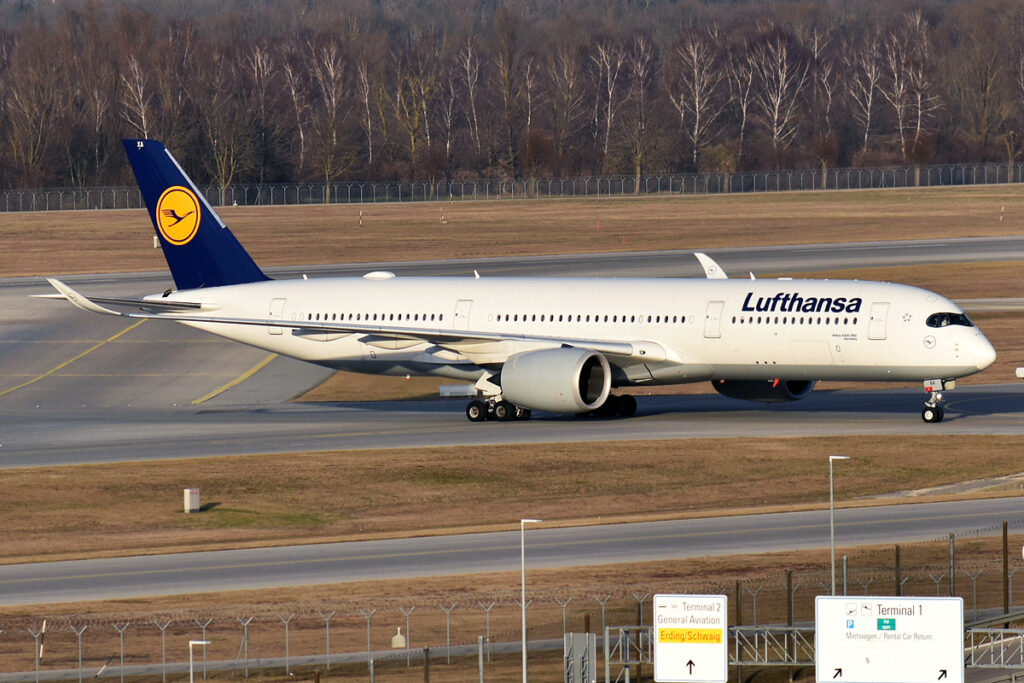
Lufthansa A350 Aborted Takeoff
Lufthansa flight LH481 was preparing for departure from Denver when the crew initiated a rejected takeoff at high speed. The aircraft had nearly reached rotation speed, making the maneuver both rare and operationally critical.
Initial passenger accounts indicate that strong tailwinds may have exceeded safe takeoff limits. Pilots are trained to reject takeoff if performance parameters fall outside safety margins, even at high speed. At approximately 173 knots, the aircraft was close to liftoff, increasing stress on braking systems and landing gear.
The aircraft came to a complete stop near the runway end. Emergency crews, including airport fire services, surrounded the aircraft as a precaution due to potential brake overheating. High-speed rejected takeoffs often risk brake fires because of the intense friction generated during rapid deceleration, Simple Flying flagged.
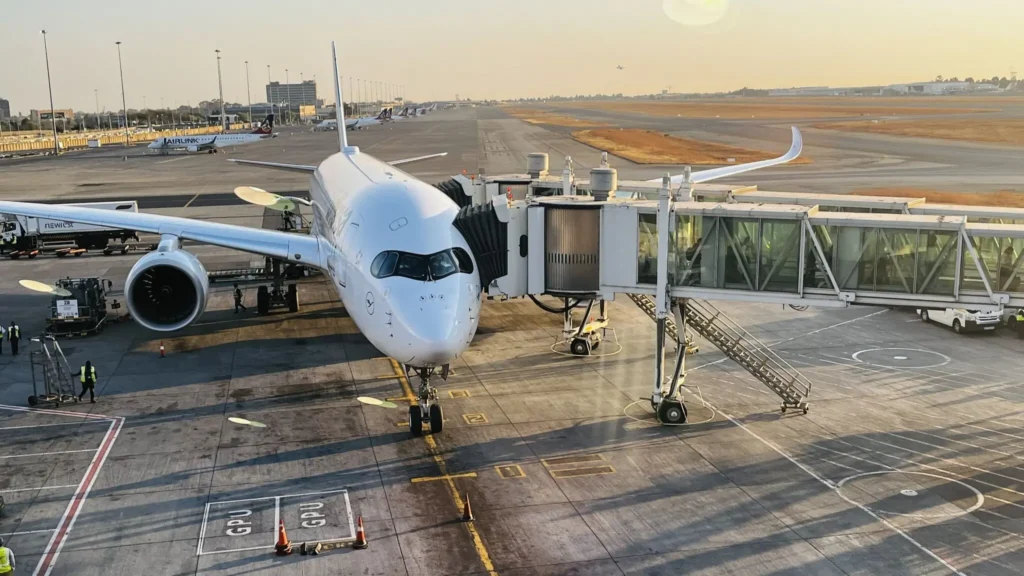
Passengers Remarks
Passengers remained onboard for several hours before being deplaned via stairs onto the taxiway and transported by buses.
According to passenger accounts, the aircraft accelerated normally before the pilots abruptly aborted the takeoff just before rotation. The braking was described as intense, with reports indicating that the aircraft had reached a speed close to V1, the decision speed beyond which stopping safely becomes significantly more difficult.
Emergency crews responded immediately after the aircraft came to a stop. Fire services applied water to the landing gear as a precaution after signs of brake overheating and light smoke were observed. No injuries were reported, and passengers were later deplaned.
The aircraft remained on a taxiway for hours following the incident, suggesting that technical inspections were required before it could be moved or returned to service.
Understanding High-Speed Rejected Takeoffs
A rejected takeoff at high speed is a rare and serious decision. Pilots are trained to continue the takeoff after reaching V1 unless a critical failure occurs, such as engine failure, fire warnings, or unsafe flight conditions.
Rejecting near or at V1 places significant stress on the braking system. Aircraft brakes can overheat rapidly under such conditions, sometimes leading to smoke or even fire risk. This explains the immediate involvement of airport fire crews to cool the brakes and prevent escalation.
Modern aircraft, such as the Airbus A350, are equipped with advanced monitoring systems. These include takeoff performance monitoring tools that compare expected acceleration with actual performance. If the aircraft underperforms beyond a defined threshold, the system can trigger warnings that may prompt pilots to abort.
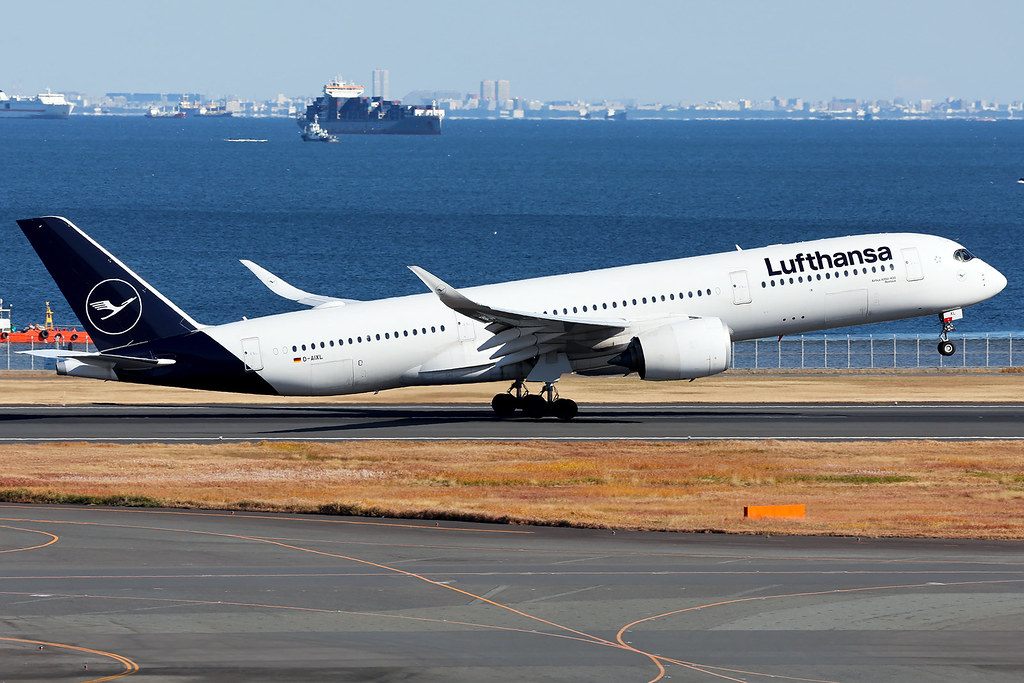
Flight Timeline and Operational Details
Flight tracking data shows the aircraft had earlier arrived as LH480 from Munich. It departed Munich Airport (MUC) at 12:41 pm and landed in Denver at 3:31 pm after a flight duration of 9 hours and 50 minutes.
The return leg, LH481, was scheduled to depart at 5:20 pm. The aircraft pushed back at approximately 5:27 pm and taxied to the runway before initiating takeoff.
During the takeoff roll, the aircraft accelerated normally before abruptly decelerating near the runway threshold. The exact cause remains unconfirmed by Lufthansa, though environmental factors such as tailwinds are strongly suspected.
No official statement had been released by the airline at the time of reporting.
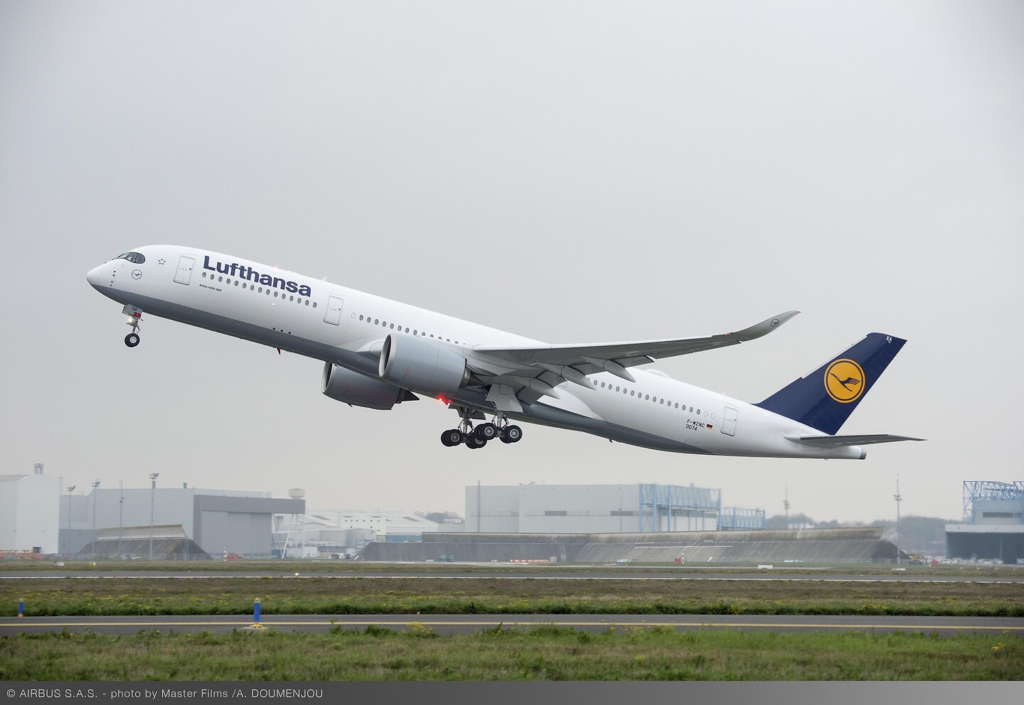
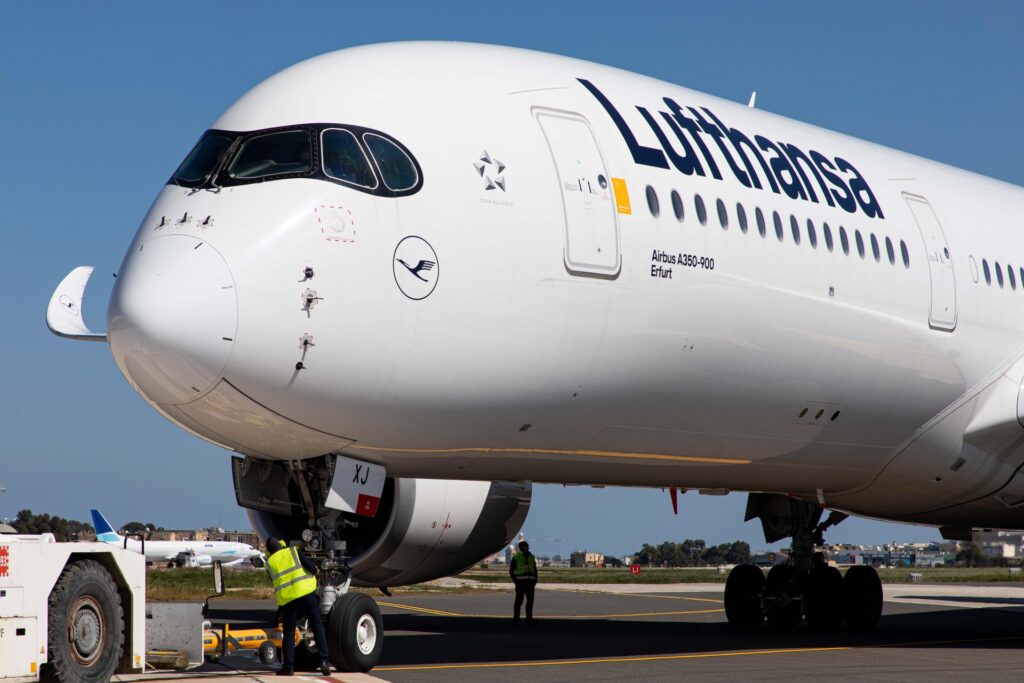
Aircraft Involved: Airbus A350-900 D-AIVD
The aircraft involved is an Airbus A350-941 registered as D-AIVD. It is a seven-year-old widebody aircraft currently part of Lufthansa’s long-haul fleet.
Originally delivered to Philippine Airlines, the aircraft was later transferred to Lufthansa in April 2022. It is named Duisburg, following Lufthansa’s tradition of naming aircraft after German cities.
Key specifications include:
- Total capacity: 318 passengers
- Configuration: 30 Business, 26 Premium Economy, 262 Economy
- Engines: Rolls-Royce Trent XWB-84
- Manufacturer serial number: 280
The A350 is designed with advanced braking and monitoring systems, which likely prevented more serious consequences during the high-speed abort.
Safety Implications of High-Speed Rejected Takeoffs
Rejected takeoffs at high speed are among the most demanding procedures in aviation. Pilots must make split-second decisions based on aircraft performance, runway length, and environmental conditions.
Braking at such speeds generates extreme heat, which can lead to brake failure or fire if not properly managed. Aircraft systems include temperature monitoring and cooling protocols, and emergency crews are typically deployed as a precaution.
In this case, the absence of injuries highlights the effectiveness of both pilot training and aircraft engineering.
Operational Impact and Passenger Handling
The aircraft remained on the ground at Denver following the incident, with inspections likely required before returning to service.
Lufthansa operates multiple weekly flights between Denver and Munich. A subsequent flight was scheduled to depart the next day, potentially accommodating affected passengers.
No replacement flight was immediately recorded, suggesting operational adjustments were still in progress.
Stay tuned with us. Further, follow us on social media for the latest updates.
Join us on Telegram Group for the Latest Aviation Updates. Subsequently, follow us on Google News
