

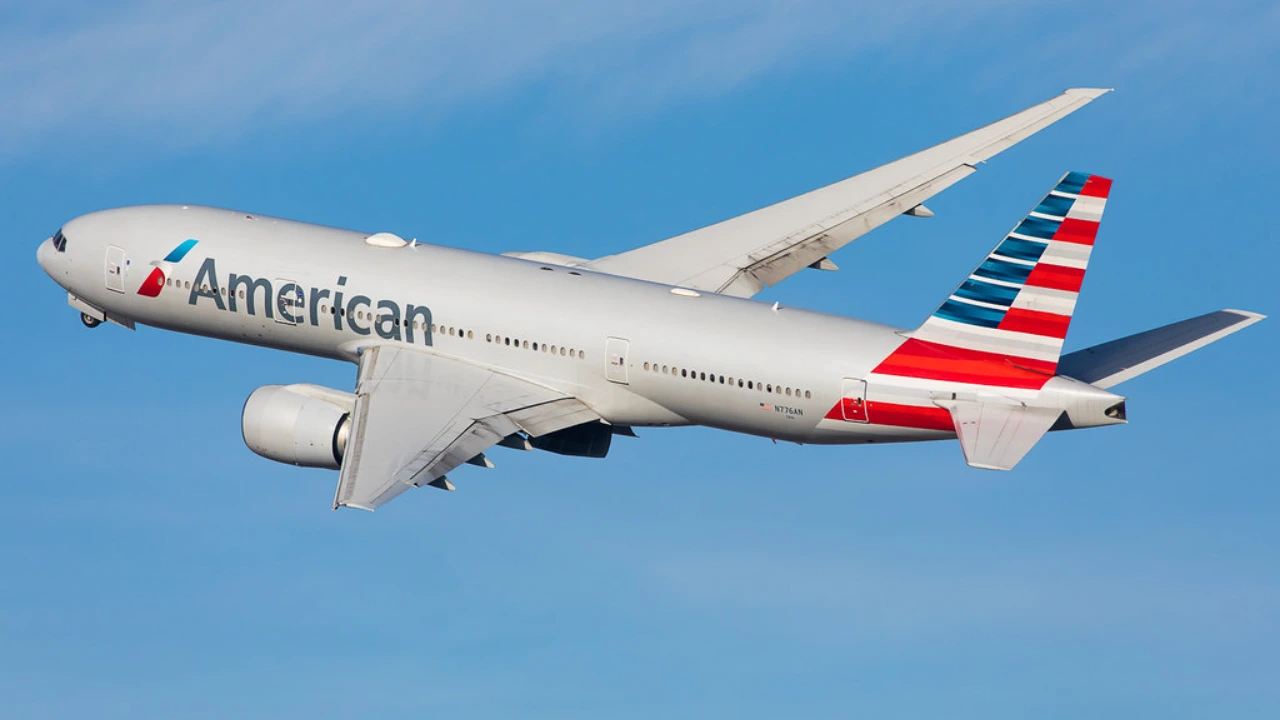
FORT WORTH- American Airlines (AA) is “seriously considering” bringing back seatback screens to its narrow-body fleet, with a decision expected as early as next month. The move is part of a broader in-flight entertainment and Wi-Fi overhaul that could reshape the passenger experience on domestic routes.
As part of those plans, American Airlines is in discussions with SpaceX’s Starlink and Amazon Leo to potentially serve as in-flight Wi-Fi providers. The airline also holds an existing deal with Apple for passengers to stream music and Apple TV+ content aboard its flights, CNBC reported.
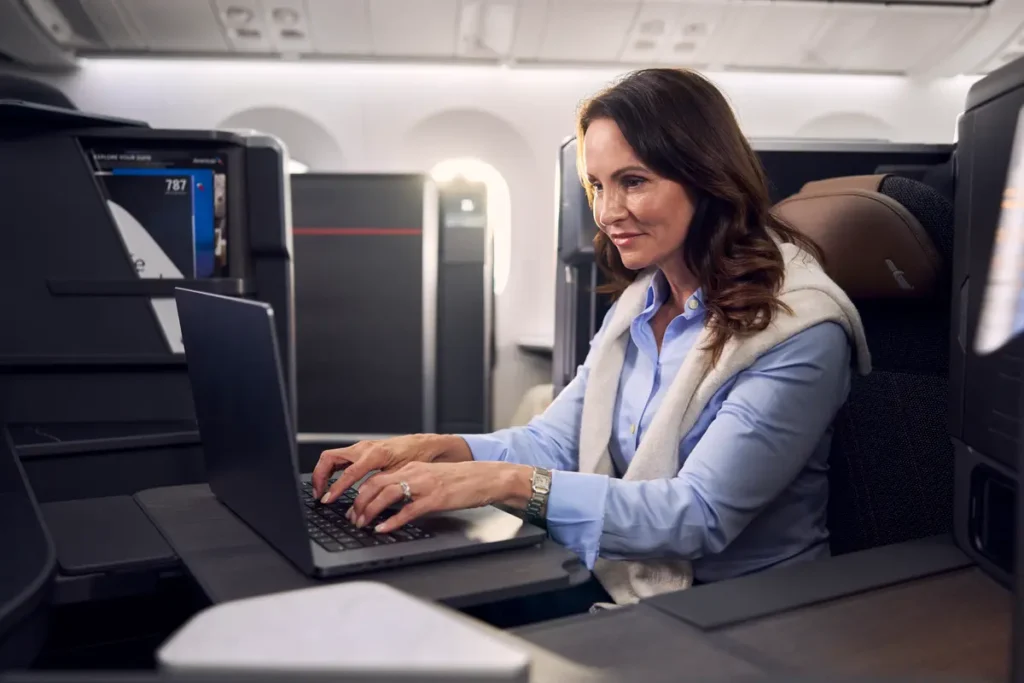
American Considers Screens and Wi-Fi Upgrade
American Airlines removed seatback screens from its mainline narrow-body aircraft nearly a decade ago to cut costs on equipment and reduce aircraft weight.
Executives at the time predicted that passengers would use their own phones, tablets, or laptops to stream content.
That strategy is now under review. American Airlines Chief Customer Officer Heather Garboden told CNBC in a fall interview that the airline was warming to the idea of bringing screens back, noting how much the technology has advanced since the original decision was made.
Adding seatback screens to American’s planes would be a multi-year and costly undertaking. The airline currently operates more than 790 narrow-body Boeing and Airbus jets, with over 280 more on order. New deliveries from the factory could be the first to debut the restored screens.
Beyond screens, American Airlines is also in talks with Amazon about providing seat content that could include Amazon Prime Video, music, and even an in-flight shopping option where customers could use AAdvantage miles for purchases.
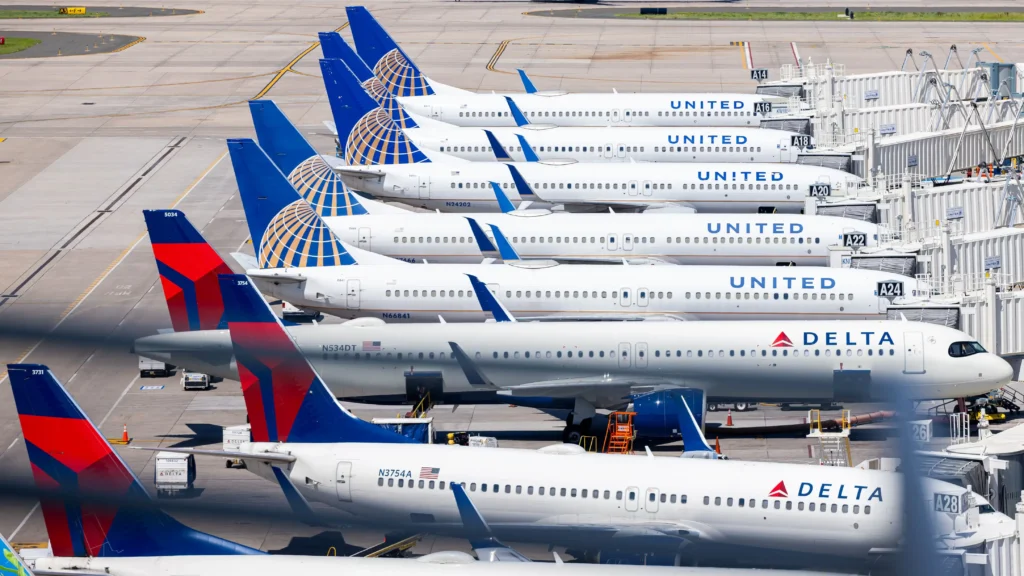
Competitive Pressure From Delta and United Drives the Rethink
Pressure is mounting on American Airlines from rivals Delta Air Lines (DL) and United Airlines (UA), which together account for the majority of the U.S. airline industry’s profits. Both carriers have spent years investing heavily in new cabin technology, in-flight entertainment, and premium seating.
United has committed to installing 4K screens across its forthcoming narrow-body deliveries and retrofits, opting for the Panasonic Astrova system, which features ultra-thin OLED panels, USB-C fast-charging at every seat, and wireless headphone compatibility. Delta, meanwhile, has long offered complimentary live television across most of its narrow-body fleet.
American Airlines is already adding more premium seats across both its narrow-body and wide-body aircraft. Its wide-body jets currently come equipped with seatback screens. The renewed focus on in-flight entertainment signals a shift away from the cost-cutting model the airline adopted years ago.
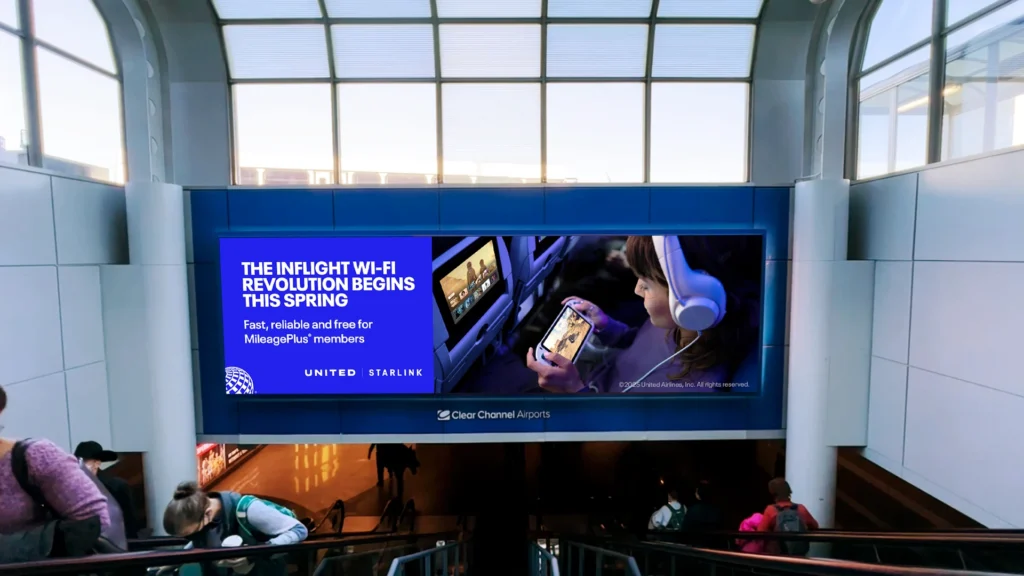
SpaceX Starlink Expands Its Airline Wi-Fi Footprint
SpaceX’s Starlink has steadily gained ground among airlines as a preferred in-flight Wi-Fi provider, securing partnerships with United Airlines (UA), Hawaiian Airlines (HA), and Qatar Airways (QR).
American Airlines currently offers Wi-Fi on nearly its entire fleet, with free Wi-Fi for AAdvantage members planned from January 2026 on approximately 90% of its aircraft. An upgrade to Starlink’s satellite network could significantly improve connection speeds and reliability compared to the current systems in place.
United, Delta (DL), Southwest Airlines (WN), and American have all followed JetBlue Airways (B6) in offering complimentary Wi-Fi, though loyalty program membership is typically required to access the free service.
What a Seatback Screen Return Would Mean for Passengers
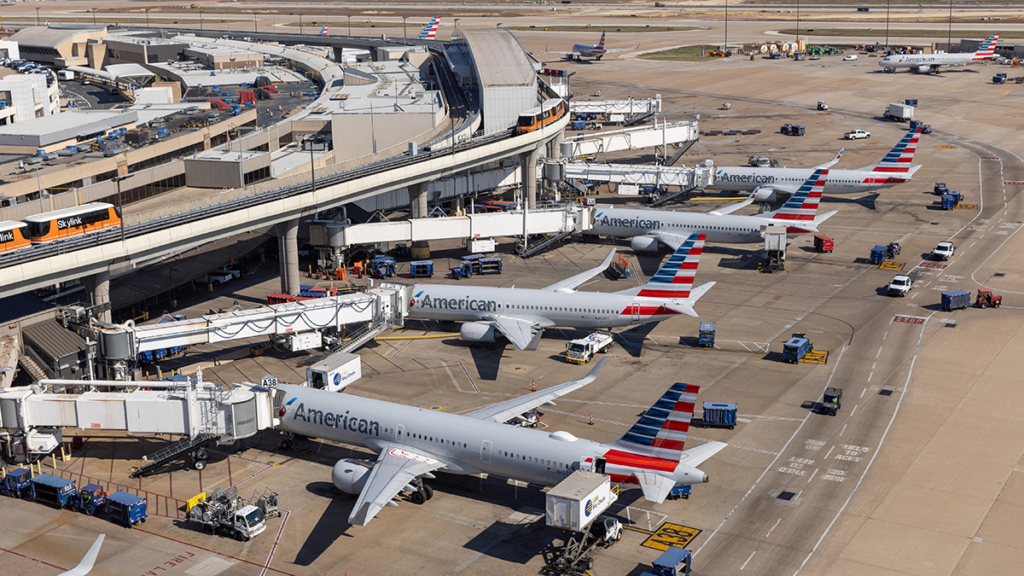
For passengers aboard American Airlines flights operating into major hubs such as Dallas/Fort Worth (DFW), Los Angeles (LAX), New York (JFK), and Miami (MIA), the return of seatback screens would mark a significant change after nearly a decade without them on domestic narrow-body routes.
American’s newly delivered Airbus A321XLR jets already feature seatback screens at every seat with Bluetooth connectivity, wireless charging for business and premium economy passengers, and USB-C and USB-A ports throughout the cabin. This hardware sets a benchmark for what could eventually reach the broader domestic fleet.
The cost of installing seatback screens has dropped considerably since the original removal decision. Systems no longer need to be fully wired through the aircraft, as wireless tablet-style screens can now receive content from an onboard server, potentially reducing the per-plane cost to one-third of what it once was.
Stay tuned with us. Further, follow us on social media for the latest updates.
Join us on Telegram Group for the Latest Aviation Updates. Subsequently, follow us on Google News
