

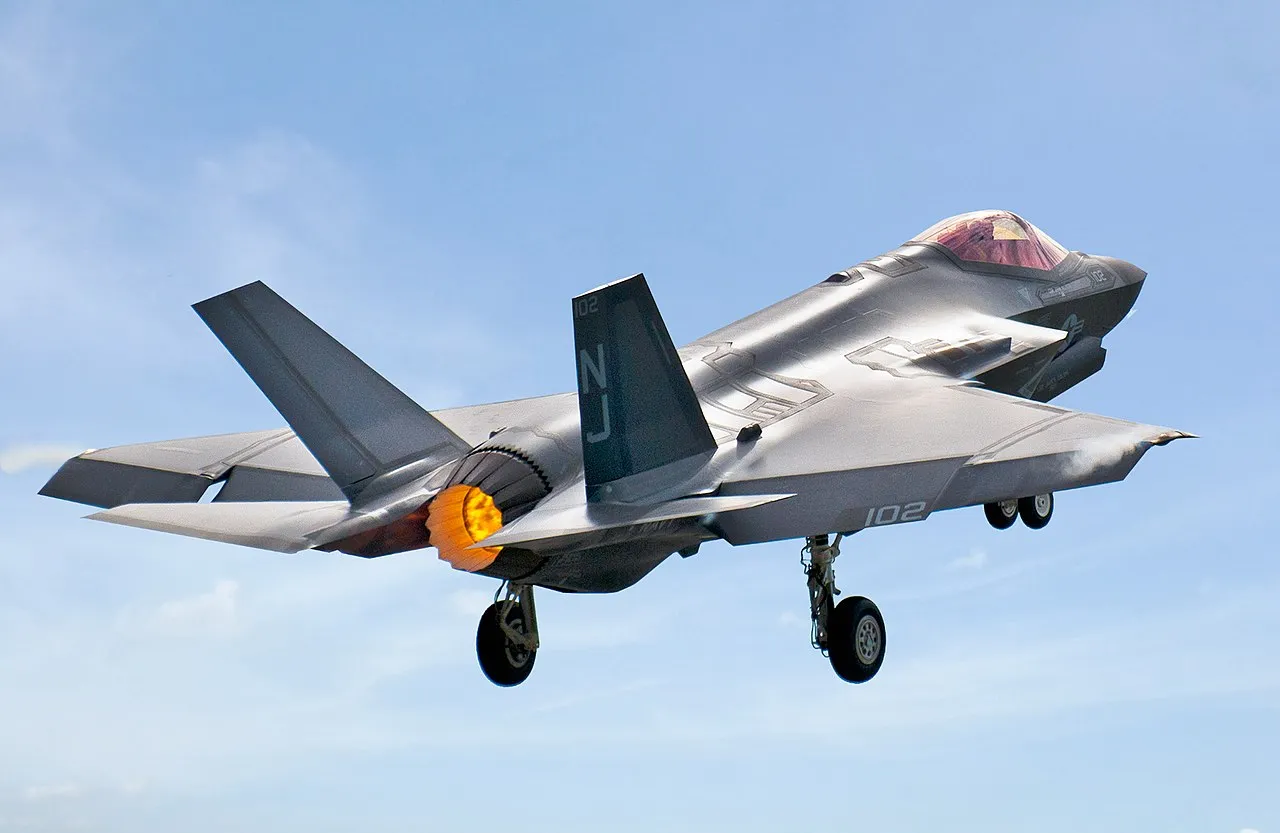
BETHESDA- Lockheed Martin has flight tested an AI-enabled Combat Identification capability on the F-35 Lightning II, improving how pilots detect and classify hostile radar emissions.
The demonstration marks the first time a tactical AI model has generated an independent combat identification during flight.
Testing took place from Nellis Air Force Base (LSV), a major US Air Force training hub where advanced air combat systems are evaluated.
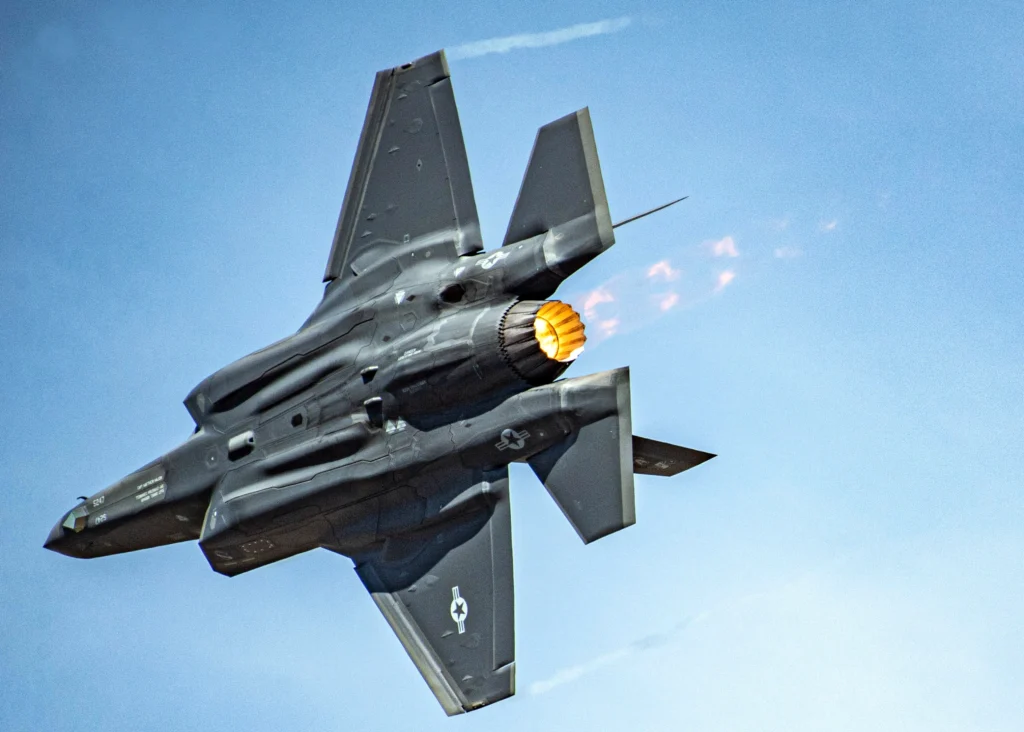
AI-Driven Combat Identification in the F-35 Jet
Lockheed Martin conducted the AI demonstration under a test initiative known as Project Overwatch.
The company integrated a Lockheed Martin-built and trained machine learning model into the F-35’s information fusion system.
During flight, the AI produced an independent Combat ID directly on the pilot’s display on F-35.
The F-35 does not use a traditional heads-up display. Instead, flight and threat data appear on the pilot’s helmet visor, along with a wide-area cockpit display.
During Project Overwatch, the pilot received identification cues from both the legacy system and the new AI model simultaneously.
According to TWZ, this marked the first operational use of a tactical AI model in flight to generate a separate combat identification output.
The AI system resolved ambiguities among complex radiofrequency emitters. Engineers employed automated tools to label new emitters after the flight, retrain the AI model within minutes, and reload the updated software during the same mission planning cycle.
After each sortie, mission data was downloaded, processed, and used to enhance intelligence for subsequent flights.
The total time required to gather raw data and redeploy updates to operational aircraft remains undisclosed.
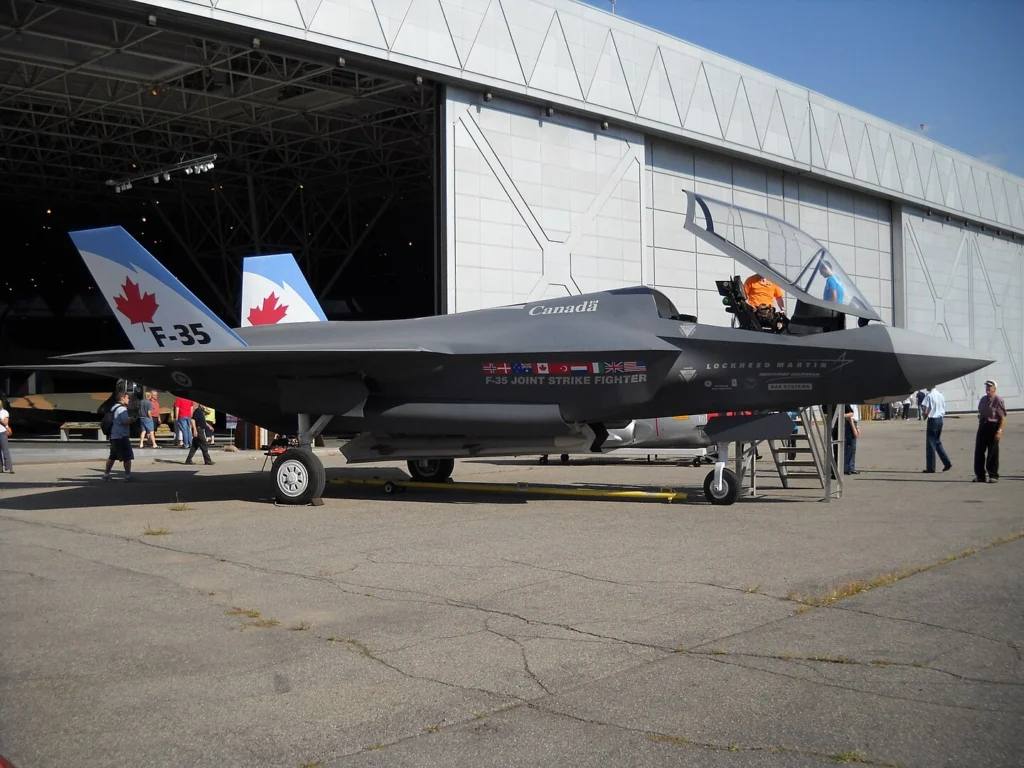
Project Overwatch And Rapid Reprogramming
Modern air defense systems frequently change radar modes, wavelengths, and transmission patterns. These variations can prevent immediate identification when signals deviate from known profiles stored in the aircraft’s threat library.
The F-35 relies on a database of radiofrequency signatures to categorize threats accurately. When an emitter operates in an unfamiliar configuration, the aircraft flags it but may not assign a precise identity. In such cases, pilots must make decisions under uncertainty while managing a high workload and time pressure.
A real-world example illustrates this challenge. During NATO patrols along the alliance’s eastern flank following Russia’s invasion of Ukraine, F-35 pilots encountered air defense systems operating in unexpected modes.
One case involved variants of the S-300 missile system, known by NATO as the SA-20. When the radar operated in a war reserve configuration not previously cataloged, the aircraft detected the emission but could not positively identify it.
Ground teams later updated the threat data and re-uploaded it, enabling accurate classification on subsequent missions.
Project Overwatch compresses this cycle significantly. By retraining the AI model rapidly and integrating updates within the same mission planning window, the process reduces decision latency and improves situational awareness in contested airspace.

Complexity Of Air Defense Environment
The air defense threat ecosystem continues to grow more complex. Radar systems can shift frequencies, adjust waveforms, and employ signal hopping techniques to counter jamming and electronic surveillance. Modulation changes and multi-mode operation further complicate classification.
Adversaries are also incorporating artificial intelligence and machine learning into their own systems. This accelerates the evolution of signal behavior and increases the challenge for traditional electronic warfare approaches.
AI-enabled combat identification supports faster interpretation of ambiguous signals. It reduces pilot cognitive load in high-threat scenarios, where fatigue and task density can degrade performance.
Faster and clearer threat assessment directly supports survivability and mission execution.
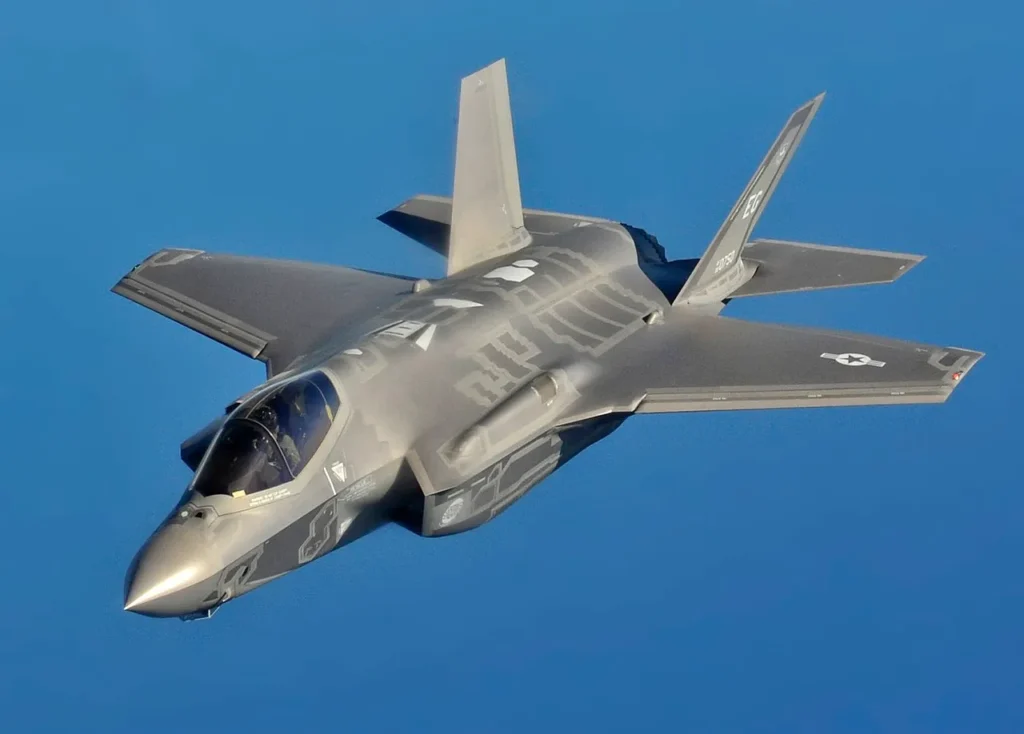
Cognitive Electronic Warfare And Future Capabilities
Project Overwatch represents a step toward cognitive electronic warfare. At its basic level, this concept involves recording unknown emissions and conducting preliminary onboard processing.
A more advanced tier supports real-time data transfer and rapid threat library updates. Higher levels envision pushing software updates to aircraft during active missions through secure data-sharing networks.
The ultimate objective is an autonomous system capable of detecting an unfamiliar emission, analyzing it independently, determining the optimal response, and adapting in real time.
Such a system could then disseminate updated threat data to other compatible platforms across air and maritime domains.
Lockheed Martin’s approach reflects modernization practices seen in systems such as the Aegis Combat System.
The company has previously reduced software update cycles for Aegis from months to days, with a goal of reaching hours, and has demonstrated real-time over-the-air updates to U.S. Navy ships operating in the Red Sea against drone and missile threats.
Alignment With F-35 Block 4 Modernization
All F-35 variants are scheduled to receive enhanced electronic warfare capabilities under the Block 4 upgrade program.
The US Air Force has identified these improvements as a priority, though the broader modernization effort has experienced cost growth and schedule delays. The final configuration and timeline remain under evaluation.
AI-enabled combat identification aligns directly with Block 4 objectives, including expanded processing capacity, improved sensor fusion, and faster adaptation to emerging threats.
By embedding machine learning models into operational systems and refining them rapidly between sorties, Lockheed Martin has established a scalable path toward adaptive electronic warfare.
Project Overwatch demonstrates that the F-35 is moving beyond static threat libraries toward dynamic, data-driven combat identification. As air defense systems become more agile and technologically sophisticated, such capabilities are likely to become operationally essential.
Stay tuned with us. Further, follow us on social media for the latest updates.
Join us on Telegram Group for the Latest Aviation Updates. Subsequently, follow us on Google News
