


FORT WORTH- A family traveling on American Airlines (AA) from San José (SJO) to Dallas/Fort Worth (DFW) faced a damaged stroller during gate checking. Attendants jammed multiple strollers into a jetbridge lift, crushing one and deforming its wheel.
The family captured video evidence of the mishap, which showed the stroller pinned and bouncing unevenly afterward. An agent assured coverage, but the airline later rejected the claim as “normal wear and tear.”
This incident highlights ongoing concerns about American Airlines’ baggage handling for family essentials.
According to View From the Wing, the family waited 15 minutes on the jetbridge as crews struggled to free the tangled items. Such events erode trust in gate-check processes, especially for parents relying on airlines for safe transport of collapsible gear.
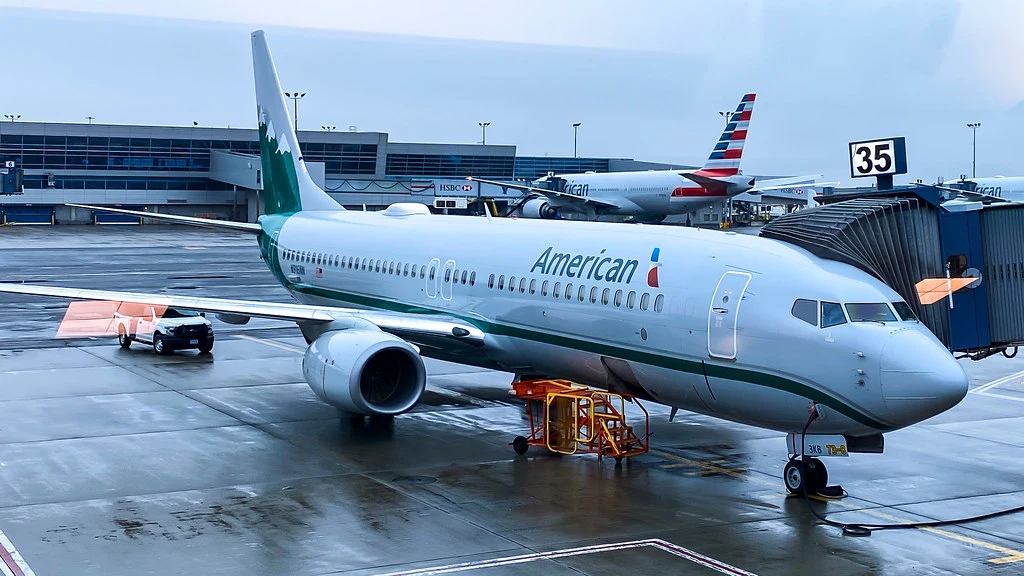
American Airlines Crushed Family Stroller Claim
Ground crews at SJO loaded several strollers into the aircraft’s lift mechanism for storage below during the flight to DFW.
The family noticed delays when attendants scrambled to disentangle the pile. Video footage revealed one stroller trapped under pressure from others, leading to visible deformation in the wheel assembly.
This compression occurred because operators overloaded the confined space, a common risk in high-volume international departures.
American Airlines’ procedures allow free gate-checking of collapsible strollers, but rushed loading amplifies errors. The damaged unit now requires repairs, affecting the family’s mobility on future trips.
Experts note that jetbridge lifts handle up to a certain weight limit, yet oversight lapses persist in busy hubs like SJO, where tourism drives frequent family travel.
The on-site agent instructed the family to file a baggage claim form immediately after deplaning at Dallas/Fort Worth. They submitted photos and video proving the crushing force from the lift.
Weeks later, American Airlines denied reimbursement, classifying the bent wheel and instability as routine degradation from travel. This reversal contradicts the agent’s promise and ignores evidence of mechanical failure over normal use.
The airline’s claims department processes thousands of reports annually, often prioritizing quick denials to control costs.
Families report similar stonewalling, where visual proof fails against standardized rejection templates. This pattern raises questions about accountability in post-flight resolutions.
Steps to Challenge the Denial
Escalate the claim internally first. Families should reply in writing, attaching all evidence and demanding review by a supervisor.
Airlines route initial submissions through automated screens for efficiency, but higher-level intervention often yields reversals. Next, submit a formal complaint to the U.S. Department of Transportation (DOT).
DOT reviews each case with human oversight, prompting airlines to reassess. Though recent administrations vary in enforcement vigor, complaints build records for broader audits. As a final resort, pursue reimbursement in small claims court.
Courts favor documented proof like videos, awarding costs plus damages without needing lawyers.
Families recover funds this way in about 70% of airline disputes under $10,000. Track all correspondence to strengthen positions at each stage.
Broader Patterns in Mobility Aid Mishandling
American Airlines faced a $50 million DOT fine in 2024 for wheelchair violations, including unsafe handling that caused injuries and delays.
The penalty stemmed from thousands of damaged devices between 2019 and 2023, with cases of rough physical assistance and prolonged waits. This record fine, split between Treasury payment and mandated upgrades, underscores systemic flaws in equipment care.
Stroller incidents mirror these issues, as both count as mobility aids under federal rules. The airline invested $175 million in 2024 for tracking systems and training, reducing mishandling by 20% year over year.
Yet, gate checked items remain vulnerable, prompting calls for stricter pre-board inspections.
Protecting Strollers on Future Flights
Opt for carry-on strollers that collapse to fit overhead bins, per American Airlines’ policy on allowable dimensions.
This approach bypasses gate checking risks entirely. Print the official guidelines before travel to reference during boarding. Gate agents occasionally enforce inconsistent rules, as seen in past cases where staff demanded child-sized bags or removed car seats mid-boarding.
Families traveling from SJO to DFW should arrive early to negotiate space. Durable, lightweight models withstand cabin storage better than bulkier checked options.
If gate checking proves unavoidable, tag items visibly and request gentle handling confirmation from crews.
Stay tuned with us. Further, follow us on social media for the latest updates.
Join us on Telegram Group for the Latest Aviation Updates. Subsequently, follow us on Google News
