


ARLINGTON- The US Air Force is preparing a major shift in future airlift capacity, and early analyses reference logistics models from FedEx Express (FX) operating out of Memphis (MEM) to benchmark long-range cargo planning.
The upcoming study will shape the Next Generation Airlift program, which aims to replace legacy heavy airlifters that have supported global missions through hubs such as St. Louis (STL) for decades.
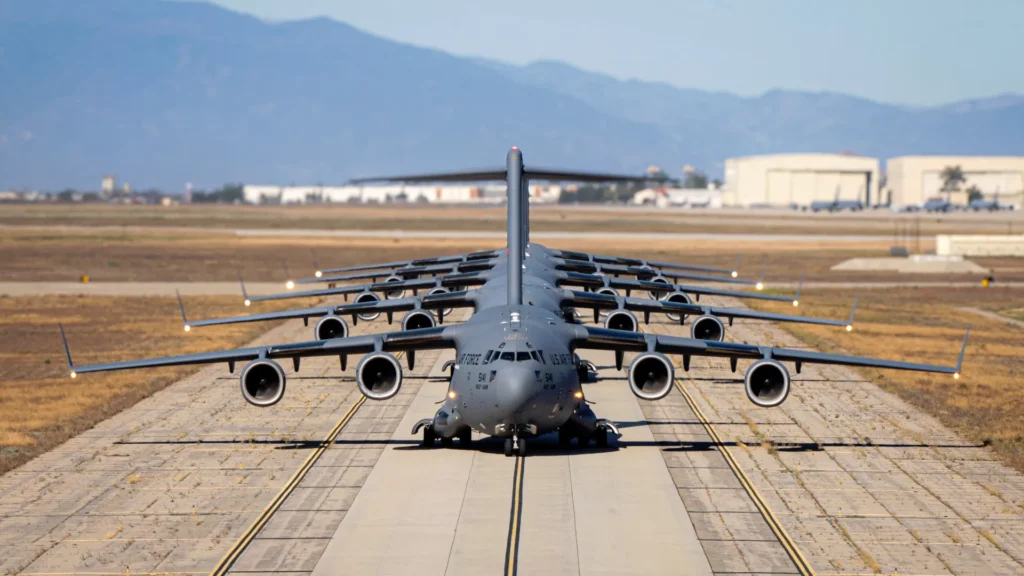
US Air Force Next-Gen Airlift Program
The Air Force released its roadmap for the Next Generation Airlift platform, or NGAL, outlining how it intends to recapitalize the current fleet of Boeing C-17 and Lockheed Martin C-5 aircraft.
Air Mobility Command intends to start an analysis of alternatives in 2027 to define mission needs, performance requirements, and acquisition pathways.
If the process proceeds without budget or development disruption, the first NGAL aircraft could enter production in fiscal 2038, followed by initial operational capability in fiscal 2041.
The strategy lays out a clear replacement sequence. One NGAL will replace each C-5M until that fleet retires around 2045.
After that, the C-17A will be replaced using the same one-for-one model. Current projections show the C-17A remaining viable through 2075, though AMC notes that service life extensions and updates may still be required to bridge the timeline to NGAL.
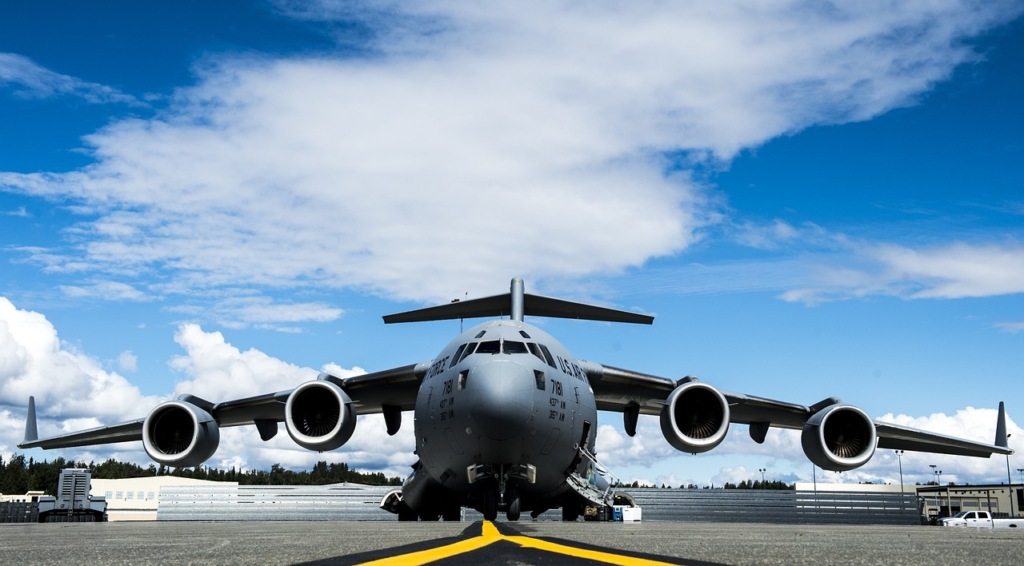
Sustaining Existing Aircraft Until NGAL Arrives
The Air Force acknowledges that any schedule pressure on NGAL demands proactive sustainment of the C-5M and C-17A fleets.
Extending type certificates, modernizing key systems, and pursuing a potential C-17 reengining effort are all listed as options that could help maintain availability until the new platform arrives.
While the strategy focuses on the C-5 and C-17, NGAL is expected to expand into a broader family of airlift systems. This could include medium and light aircraft that eventually replace the C-130 series.
Air Mobility Command and Air Force Special Operations Command are also studying a smaller NGAL variant for tactical missions, including concepts that explore higher autonomy and vertical takeoff capabilities.
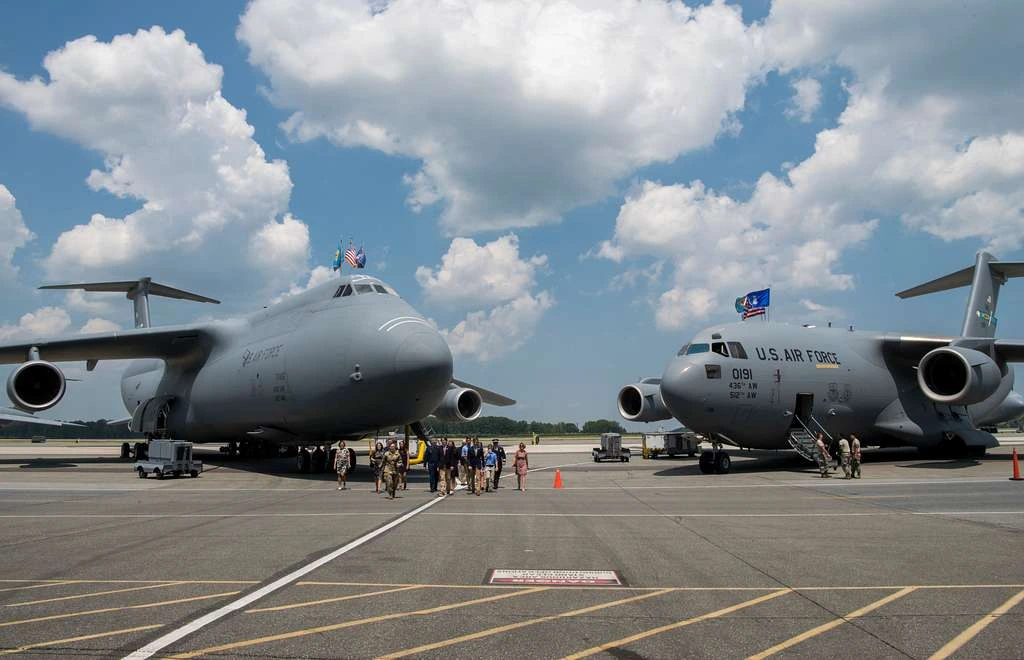
A Shift Toward a Modular Airlift Architecture
NGAL is not envisioned as a single aircraft. Instead, it reflects a shift toward a modular airlift ecosystem that adapts to mission diversity, distributed logistics, and emerging operational demands.
By blending heavy and tactical variants under a common framework, the Air Force aims to create a scalable fleet with shared technologies, training efficiencies, and streamlined maintenance.
The upcoming analysis phase will determine whether NGAL adopts conventional designs or explores new configurations. Those could include blended-wing layouts, adaptive propulsion, or autonomous support aircraft designed for contested logistics environments.
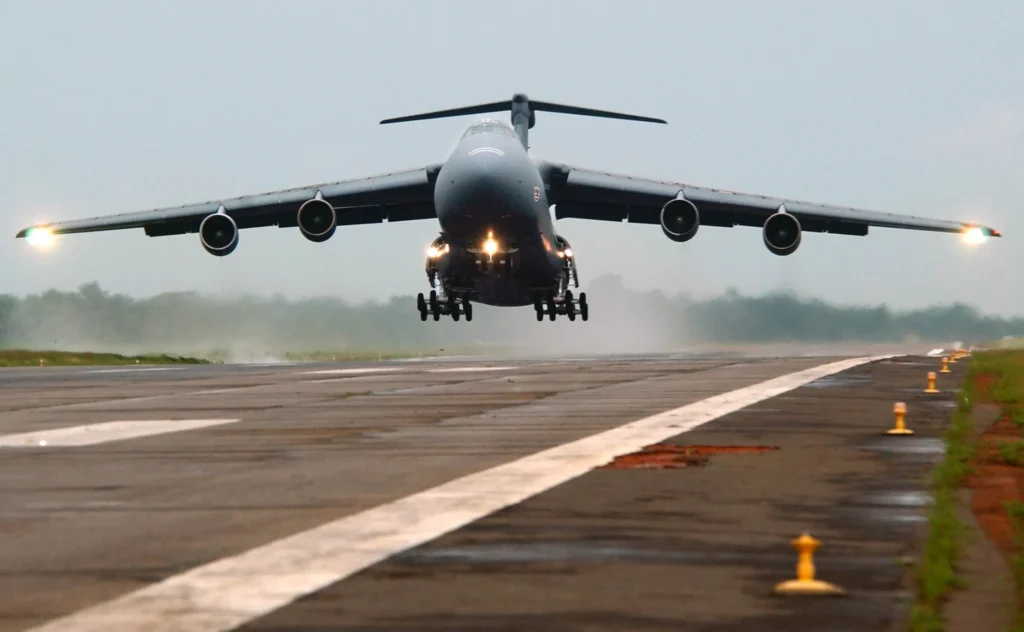
Long-Term Fleet Viability
The long development horizon means sustained funding is essential. Heavy airlift programs typically span decades, and any disruption could delay production past the planned 2038 target.
AMC’s strategy shows a strong emphasis on early planning to reduce lifecycle risk and match emerging combatant command requirements.
The service expects the initial NGAL block to focus on strategic lift, with later variants supporting rapid distribution, humanitarian response, and multinational operations. Early coordination with partner commands is intended to ensure compatibility with joint logistics frameworks and global basing options.
AMC has not ruled out a system of systems approach. NGAL may involve multiple aircraft types rather than a single design, though cost remains a significant concern. Regardless of final configuration, the Air Force has set a firm objective to have NGAL aircraft entering service within the next 15 years.
Stay tuned with us. Further, follow us on social media for the latest updates.
Join us on Telegram Group for the Latest Aviation Updates. Subsequently, follow us on Google News
