


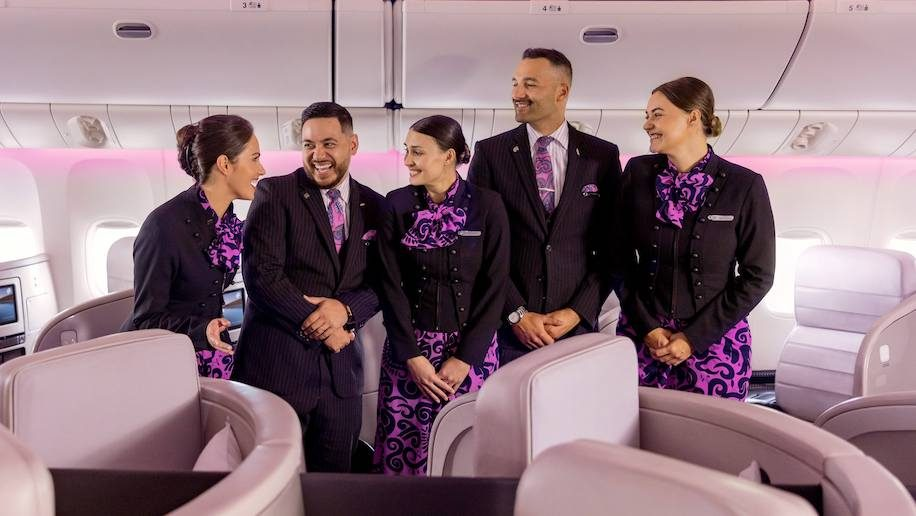
WELLINGTON- New Zealand is preparing for significant disruption as cabin crew at Air New Zealand (NZ) move toward a coordinated strike scheduled for December 8, 2025. The planned industrial action comes after months of tense negotiations between the airline and two unions representing regional, domestic, and international flight attendants.
The joint walkout marks the first time all three cabin crew groups have aligned industrial action on the same day, raising the risk of severe operational impact at Auckland Airport (AKL) and other key domestic hubs across the country.
Air New Zealand Crew Strike
Two unions—E tū and the Flight Attendants Association of New Zealand—have agreed to cooperate despite years of rivalry. Their collaboration is notable, given that Air New Zealand divides its collective bargaining agreements by fleet type, historically limiting the leverage of any single group.
By aligning their strategies, the unions now represent roughly 80% of the airline’s cabin crew workforce, significantly increasing the scale of potential disruption.
Members have stated that management is seeking productivity concessions in exchange for only an inflation-level pay increase, a proposal they argue is neither fair nor sustainable.
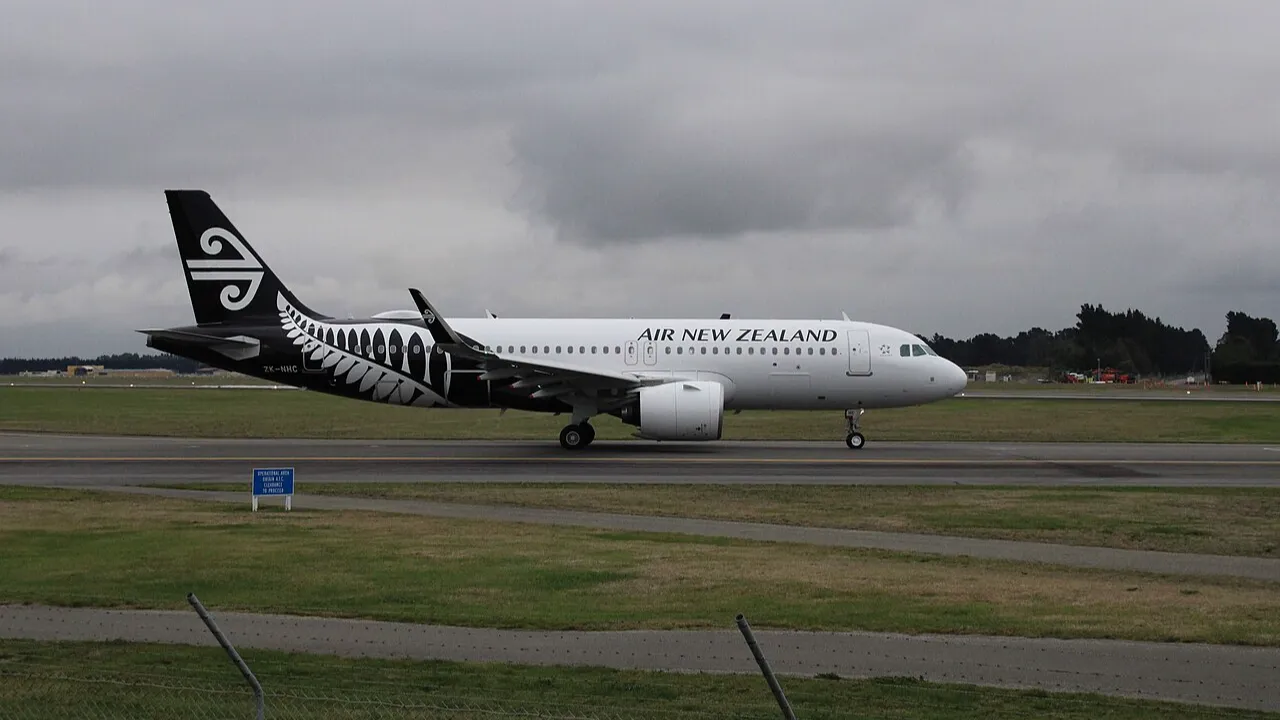
https://commons.wikimedia.org/wiki/File:Air_New_Zealand_A320neo_.jpg
Air New Zealand Strike Timings
The dispute escalated after both unions argued that the carrier had placed efficiency targets above staff well-being. Crew members say rosters have become increasingly demanding, prompting concerns over fatigue and the erosion of long-standing employment conditions.
If no agreement is reached, the coordinated walkout on December 8 will occur at staggered intervals to cover every major operation.
Regional cabin crew intend to strike from 5 am to 11 pm, while domestic and international crews plan to stop work from 12:01 am to 11:59 pm.
This structure is designed to make flight scheduling extremely difficult and could effectively halt most services for the entire day.
Air New Zealand may still be able to operate a small number of flights through non-union staff or trained managers, although the airline has not confirmed the scale of this contingency effort.
Airline Response
The airline has acknowledged the seriousness of the strike notice, emphasizing that it respects employees’ right to take industrial action. It has also said it is working to minimize customer disruption while negotiations continue.
The carrier has not yet released its revised schedule for December 8, urging passengers to remain patient as planning continues.
Internally, the situation has highlighted longstanding tension between the two unions, which clashed during the pandemic over issues ranging from representation to hotel meal allowances. However, both groups now say working together is essential to address shared concerns over rosters, workloads, and conditions.

Supply Chain Challenges
Air New Zealand (NZ) expects next month’s planned cabin crew strike to affect travelers at Auckland Airport (AKL), though leaders aim to keep cancellations limited.
The carrier continues to navigate long-running Pratt & Whitney engine delays tied to its Airbus A320 and A321neo fleet.
Operational Pressures
Air New Zealand faces a mix of labour unrest and technical constraints that are reshaping its short-haul network strategy.
The airline’s chief executive, Nikhil Ravishankar, confirmed that the proposed cabin crew strike would place pressure on customer operations, though negotiations with unions remain active.
He noted that most cabin crew belong to unions and the airline is preparing graded response plans to manage potential service gaps.
The carrier is also dealing with the extended inspection cycle required for the PW1100G engines fitted to its Airbus A320 and A321neo aircraft. These checks are designed to detect microscopic cracks that have disrupted global maintenance schedules.
The airline operates 34 of these narrowbody jets, and the delays are projected to continue for 18 to 24 months. Ravishankar stated that while progress is slow, engineering teams remain focused on keeping aircraft availability as stable as possible.
Industry feedback has highlighted concerns around reliability and customer experience. Ravishankar acknowledged these points and described a renewed internal effort to strengthen operational resilience. Frontline staff have wider authority to adjust bookings and assist customers when irregular operations arise.
Current data shows that 2 percent of the airline’s yearly 170,000 flights involve controllable cancellations, typically driven by engineering or crew issues. The internal benchmark is around 1 percent, which requires a significant performance improvement.

Engineering Constraints
The airline’s engineering division continues to face shortages in spare parts, reflecting broader strain across the global aviation supply chain. Efforts are underway to stabilise staffing and improve maintenance throughput, though bottlenecks persist.
Previous Air New Zealand chief executives have remained in contact with Ravishankar, offering support as he settles into the role.
He described the early weeks of leadership as challenging but credited the wider team for maintaining operational focus.
Cost Pressures and Fare Implications
High inflation and increasing operational expenses, including airport charges and regulated aviation fees, continue to shape fares. The airline maintains that it is working to contain costs where possible while advocating for system-wide improvements.
Ravishankar reiterated his goal of positioning Air New Zealand as a globally respected small airline with strong local roots.
Union negotiations are ongoing, with meetings scheduled this week to prevent escalation toward strike action. While the airline hopes to avoid cancellations, plans are in place to reaccommodate customers if disruption occurs. Cabin crew remuneration ranges from about 58,000 to 85,000 dollars a year, supplemented by non-base allowances due to the nature of the role.
Bottom Line
A historic joint strike by Air New Zealand cabin crew is now a real possibility, with unions united in protest against what they describe as rising workloads and erosion of workplace conditions.
Unless talks progress, the coordinated December 8 walkout is likely to cause major flight disruptions across regional, domestic, and international networks. Passengers should monitor updates closely as negotiations continue.
Stay tuned with us. Further, follow us on social media for the latest updates.
Join us on Telegram Group for the Latest Aviation Updates. Subsequently, follow us on Google News
