


NEW DELHI- The Airports Authority of India (AAI) has completed the tender process for 11 new Flying Training Organisation (FTO) slots at seven of its airports, expanding domestic pilot training capacity through its latest e-tender round.
The move by the AAI, headquartered in New Delhi, addresses a Ministry of Civil Aviation projection that India will need over 30,000 additional pilots in the next decade as carriers expand fleets and the airport network grows.

AAI Concludes February 2026 E-Tender for FTO Slots
AAI launched the e-tender round in February 2026 to allot the 11 new FTO slots. Technical bids were opened on 30 April 2026, followed by financial bids on 22 May 2026.
AAI documents state that the entire process has been successful for all sites, clearing the way for training organisations to establish operations at the seven selected airports.
The Ministry of Civil Aviation estimates a requirement of over 30,000 to 31,800 additional pilots over the next decade. Two parallel expansions underpin that figure. Indian carriers are expected to induct around 500 more aircraft in the next five years, and the airport network is projected to grow by 50 more airports.
AAI currently manages 125 airports across the country, giving it direct control over the infrastructure where much of that training capacity can be sited.

India’s Existing Training Base Remains Limited
India has 41 DGCA-approved FTOs operating from 63 flying bases, a figure recorded as of April 2026, according to Economic Times.
The AAI note warns that without faster expansion of domestic training capacity, the growing demand cannot be met sustainably. The gap has widened steadily.
In early 2023, the Minister of State for Civil Aviation told the Lok Sabha that India had 35 FTOs operating at 53 bases, meaning the network has added only six organisations and ten bases in roughly three years.

Earlier Rounds Named 10 Regional Airports
The latest award builds on 2 earlier slot rounds. In 2021, AAI awarded 9 FTO slots at 5 airports: Belagavi (IXG) in Karnataka, Jalgaon (JLG) in Maharashtra, Kalaburagi (KLH) in Karnataka, Khajuraho (HJR) in Madhya Pradesh, and Lilabari (IXI) in Assam.In June 2022, 6 more slots were awarded at 5 airports: Bhavnagar (BHU) in Gujarat, Hubballi (HBX) in Karnataka, Kadapa (CDP) in Andhra Pradesh, Kishangarh (KQH) in Rajasthan, and Salem (SXV) in Tamil Nadu. Both rounds followed a competitive bidding process.
In addition, the AAI Board approved allotment of land on a card rate basis for 25 years at 20 airports to encourage FTO development.
Policy Changes That Made Slots Viable
The slot rounds followed a set of commercial reforms that lowered the cost of operating a flying school at an AAI airport.
In 2021, then Civil Aviation Minister Jyotiraditya Scindia said AAI had abolished the airport royalty paid by FTOs and cut land rentals to a minimum of Rs 15 lakh from several crores.
The new FTOs at AAI-run airports are set up under a Public Private Partnership model, with the operator running training and AAI providing airside access and land.

Aircraft Fleet and Simulator Additions
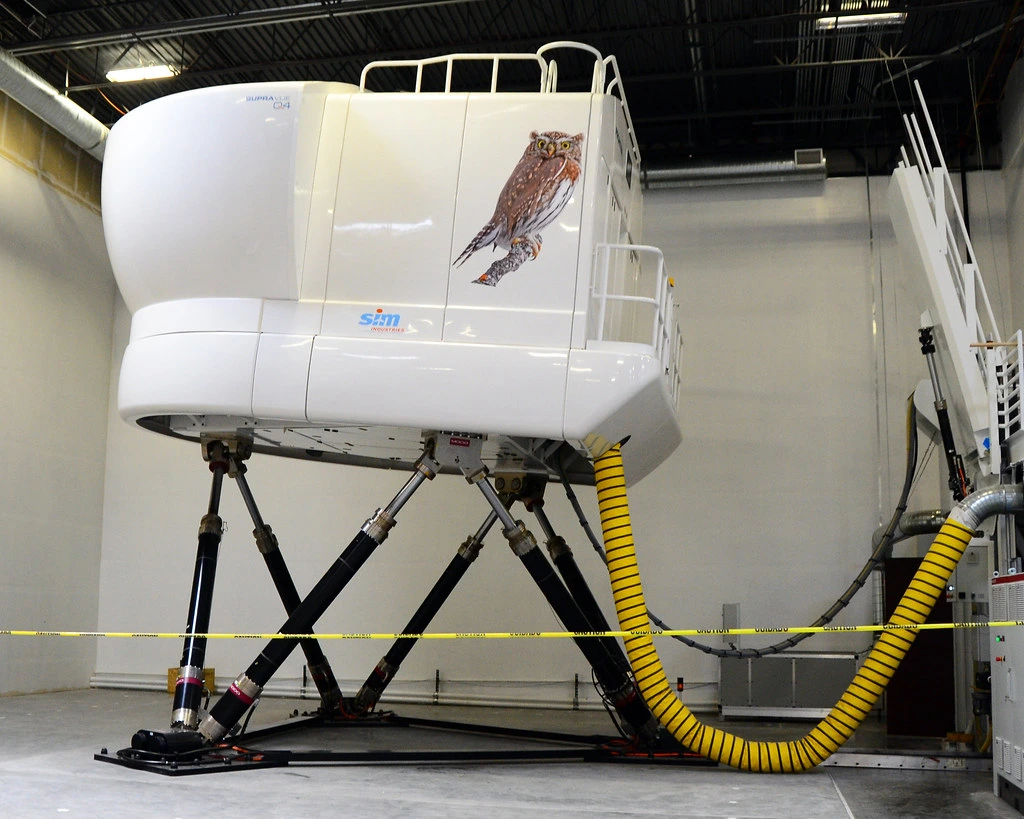
The 11 new FTOs are projected to add 60 to 70 training aircraft in the initial phase.
That number is expected to scale up to a combined fleet of 110 to 120 aircraft at full capacity, along with multiple simulators and training devices.
Projected Training Output
These facilities are expected to create an initial annual training capacity of 400 to 500 aviation professionals, including cadet pilots and technical trainees.
At full maturity, the output could rise to approximately 1,500 professionals per year, with a core output of 700 to 750 cadets and trainees.
For scale, the Indira Gandhi Rashtriya Udan Akademi at Rae Bareli, India’s national flying institute established in 1985 and managed by CAE, trains approximately 300 cadets per year.
The new FTOs at full maturity would therefore add more than twice the annual output of the country’s flagship academy.
The additional capacity will help reduce dependence on overseas pilot training, retain training expenditure within India, and improve utilisation of regional airports, making them ideal for ab-initio flying training.

Licence Issuances Already at Record Levels
Domestic pilot licensing has shown sustained growth. Commercial Pilot Licence (CPL) issuances rose from 640 in 2018 to 1,628 in 2024.
The Ministry of Civil Aviation’s multi-year breakdown shows 744 CPLs in 2019 and a pandemic dip to 578 in 2020.
Issuances then recovered to 1,165 in 2022 and 1,622 in 2023, a 39 per cent year-on-year jump.
The 2024 figure of 1,628 is the highest ever granted in a single year.Of the 1,622 CPLs issued in 2023, 18.12 per cent went to women pilots, and an estimated 14 per cent of the workforce employed with scheduled Indian airlines consists of women pilots.
In a recent year, DGCA also issued 615 CPLs to foreign-trained cadets, alongside 2,309 Student Pilot Licences, reflecting rising domestic enrolment.

Role of Regional Airports
The new FTOs at regional airports are expected to further accelerate this trend by offering more accessible and cost-effective training options for aspiring pilots, while improving productive use of airport infrastructure.
Stay tuned with us. Further, follow us on social media for the latest updates.
Join us on Telegram Group for the Latest Aviation Updates. Subsequently, follow us on Google News
