

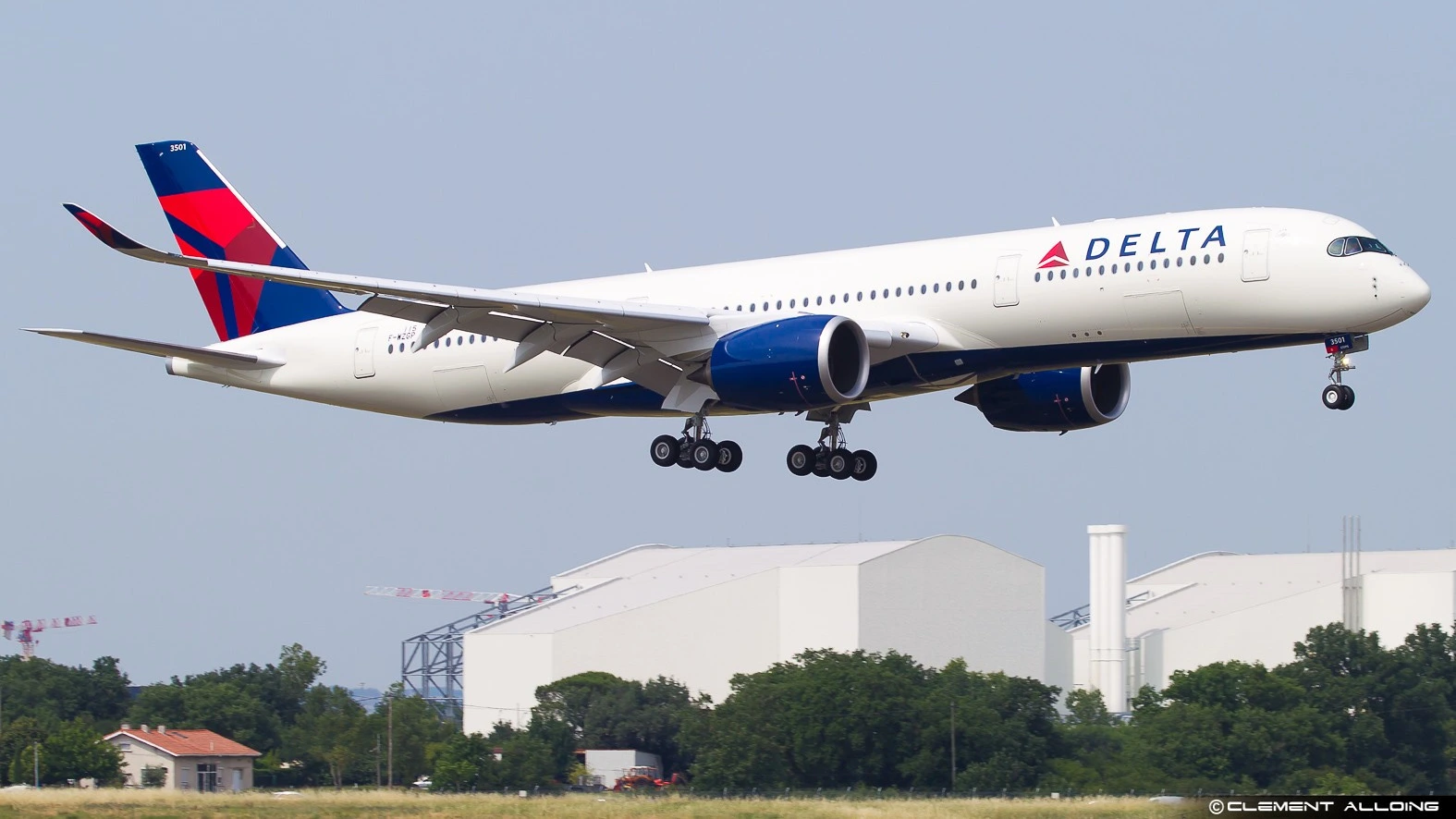
ATLANTA- Delta Air Lines (DL) will launch its first-ever nonstop service between Los Angeles (LAX) and Manila (MNL), adding the Philippines to its global network. The flights begin on March 28, 2027, aboard the Airbus A350-900.
The new route makes Delta the only U.S. carrier operating nonstop between Los Angeles (LAX) and Manila (MNL). It also strengthens the airline’s joint venture with Korean Air (KE), which already serves Manila from Seoul Incheon (ICN).
Delta Adds the Philippines to Its Pacific Map
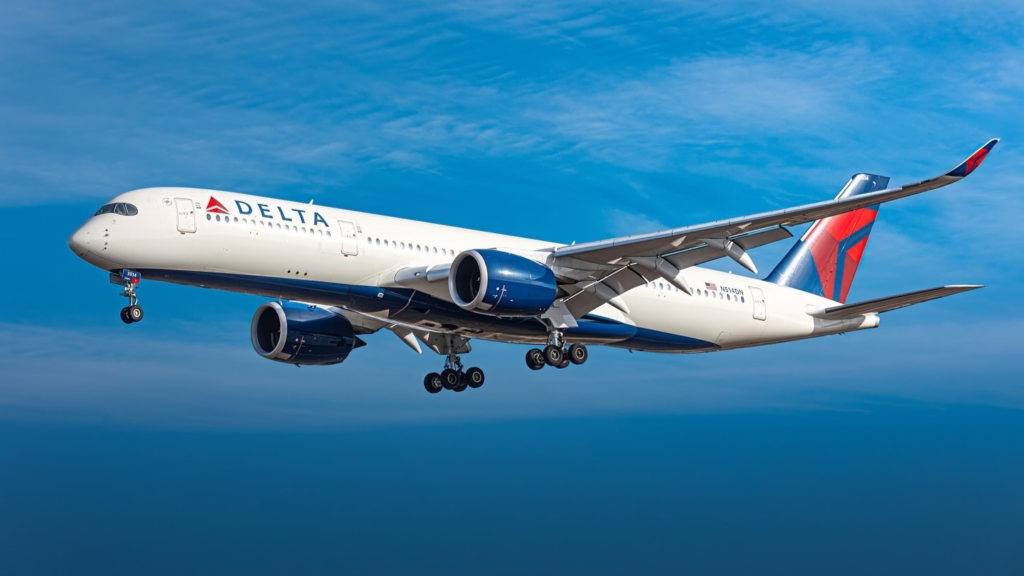
Delta will operate the Los Angeles-Manila route three times weekly from March 28, 2027, before moving to daily flights on June 7, 2027.
The service positions Delta as the sole U.S. airline flying nonstop to the Philippine capital and deepens the carrier’s presence across the Asia-Pacific region.
Jeff Arinder, Delta’s Vice President of Network Planning, said customers traveling through Los Angeles continue to benefit from Delta’s investments at the airport, including an expanding Asia-Pacific network and a second Delta One Lounge. He added that the Manila route strengthens Delta’s position as the leading global carrier and premier West Coast hub at LAX.
Manila serves as the capital of the Philippines and one of Southeast Asia’s key commercial and cultural centers. The city draws business travelers, visitors seeing friends and family, and tourists exploring its history, cuisine, and neighborhoods. As the country’s main international gateway, Manila also connects travelers to island destinations across the Philippines.
A Premium Experience Aboard the A350-900
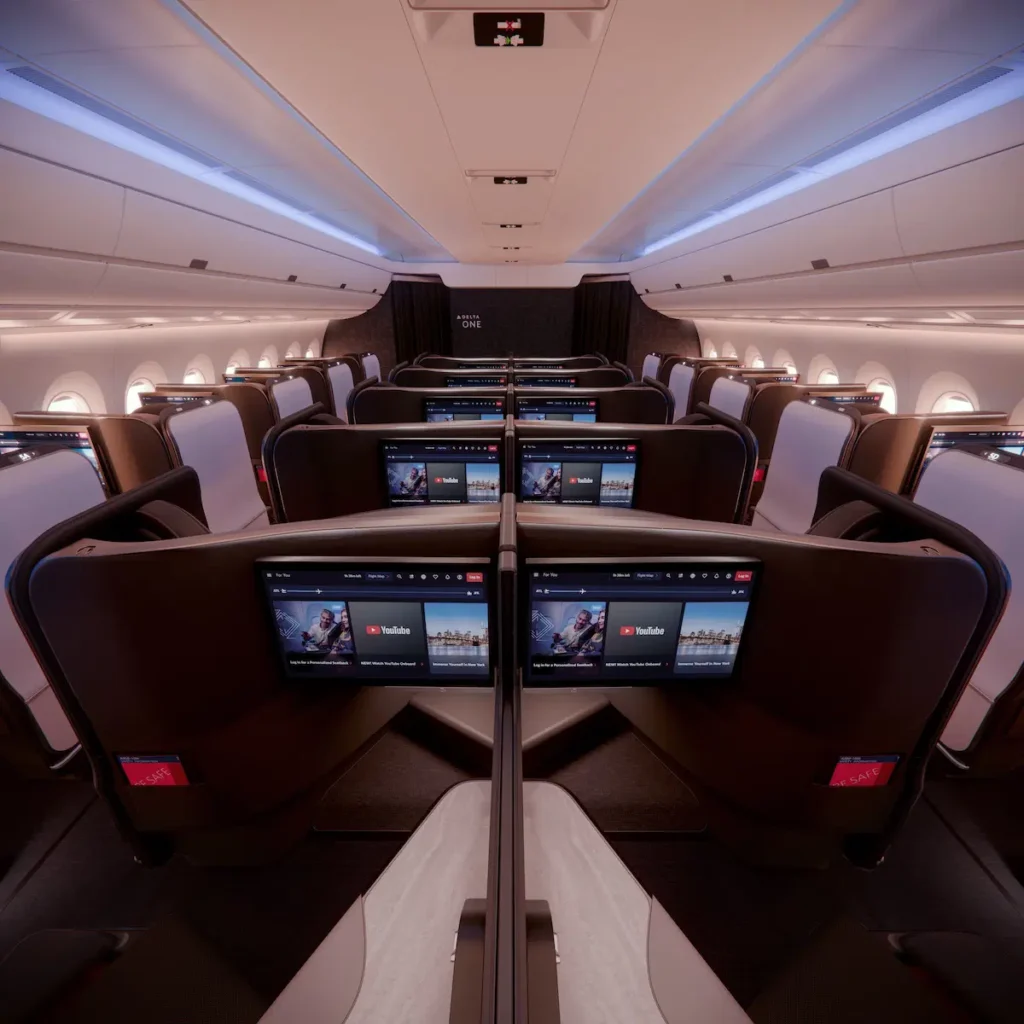
Customers will fly on Delta’s flagship Airbus A350-900, which features four cabins: Delta One, Delta Premium Select, Delta Comfort, and Delta Main. Delta One passengers receive flat-bed seating, elevated dining, and refined service on the trans-Pacific journey.
Every cabin offers seatback entertainment and thoughtfully designed amenities. Fast, free Wi-Fi will be available to SkyMiles Members on trans-Pacific routes starting this fall.
The premium journey begins on the ground at LAX. Delta One customers traveling to Manila can use exclusive Delta One check-in and security, along with two Delta One Lounges.
The newly opened Terminal 2 location makes LAX the first airport in Delta’s network to offer two such lounges. By 2028, Delta will provide four dedicated lounge spaces at LAX, totaling more than 60,000 square feet and over 1,000 seats.
Growing Network From Los Angeles
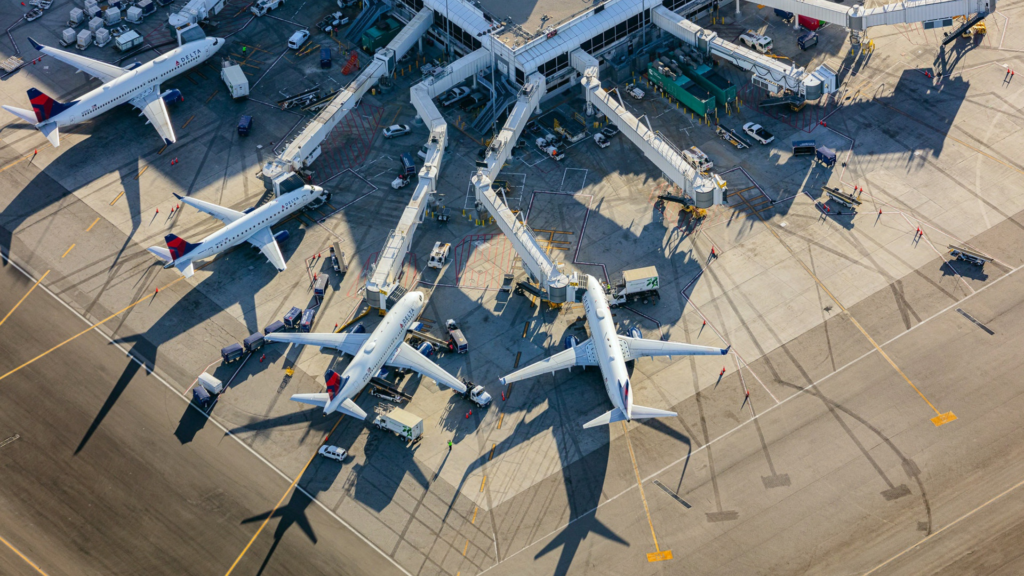
Delta operates more than 160 peak-day departures to over 50 destinations from LAX, its premier West Coast gateway.
Over the past year, the airline has added service to Hong Kong, Melbourne, and Chicago, returned to Shanghai, and announced upcoming routes to Vancouver, Newark, and Manila. Delta also introduced its largest-ever schedule to Florida.
Doug Webster, Chief Operations and Maintenance Officer at Los Angeles World Airports, said the daily Manila service gives guests another direct link to family and culture in the Philippines. He described the route as a reflection of the strong partnership between LAX and Delta in serving one of Southern California’s most connected international markets.
Strengthening the Korean Air Joint Venture
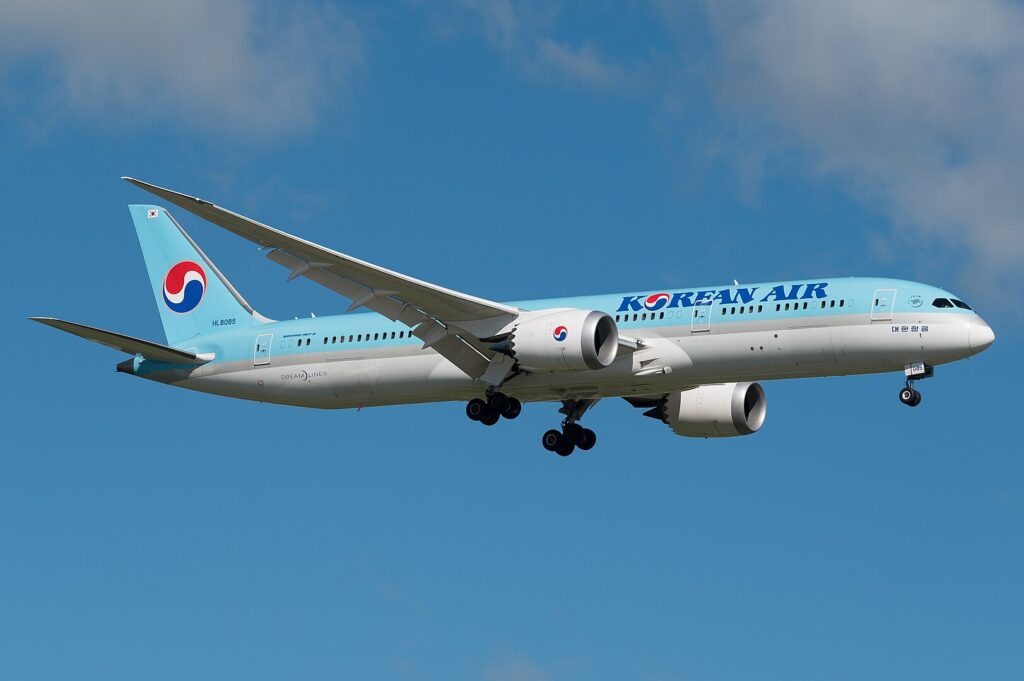
The Los Angeles-Manila route also expands Delta’s joint venture with Korean Air. Customers already reach the Philippines through Korean Air’s multiple daily flights between Seoul Incheon (ICN) and Manila (MNL).
The new Delta nonstop service complements that network, allowing travelers to fly direct with Delta or connect through Seoul with Korean Air.
Through the joint venture, Delta and Korean Air link travelers to more than 260 destinations across the Americas and over 60 destinations throughout Asia. The addition of nonstop Los Angeles-Manila service marks another step in Delta’s long-term investment in Los Angeles and its wider Pacific expansion.
Manila Travel Guide
Manila serves as the capital of the Philippines and the country’s busiest international gateway, routing nearly every foreign arrival through Ninoy Aquino International Airport (MNL). Most travelers treat the city as a brief transit point before connecting onward to islands such as Palawan, Cebu (CEB), or Siargao.
That approach overlooks a dense, layered metropolis that rewards a day or two of exploration. From walled colonial quarters to modern skyline districts, Manila offers far more than its first impression suggests.
Why a Manila Layover Is Worth Extending
Metro Manila is not a single city but a region made up of 16 cities and one municipality, each with a distinct character. The contrast is striking, moving from centuries-old churches and stone fortifications to glass towers and manicured shopping streets within the same metro area.
A long layover or a few spare days gives travelers enough time to sample this range without committing an entire trip to the capital. The key is choosing a practical base and using ride-hailing to cover the distances between attractions.
Getting Into the City From NAIA
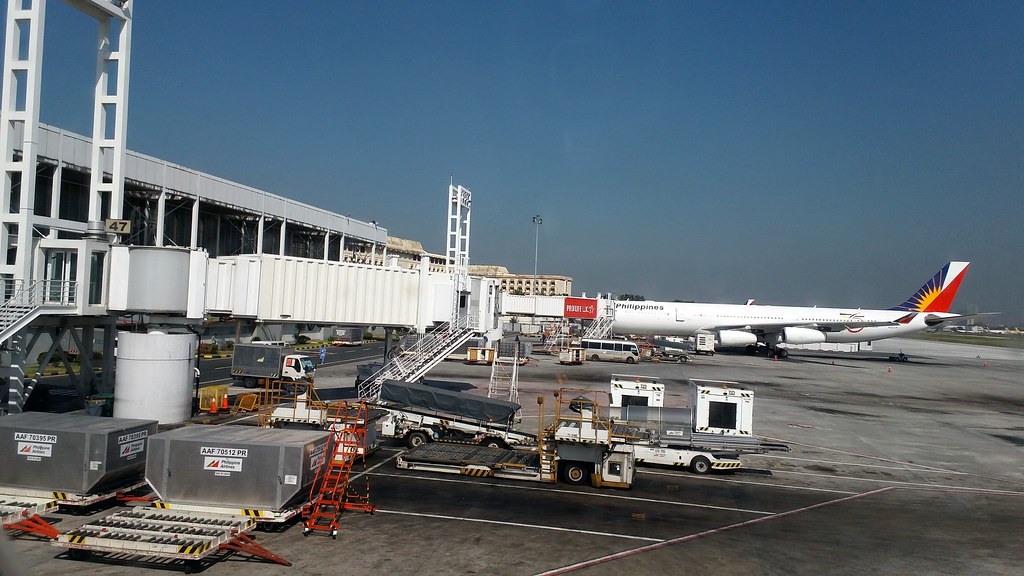
Ninoy Aquino International Airport handles the bulk of international traffic, and onward domestic flights to the islands typically depart from the same hub.
Travelers arriving with time to spare can handle essentials at the airport, including withdrawing cash and buying a local SIM card, before heading into the city.
Grab, the main ride-hailing app across Southeast Asia, is the most reliable way to reach accommodation, since metered taxis and traffic conditions can be unpredictable.
Where to Base Yourself
Makati is the most convenient base for international visitors. As the primary business and financial district, it concentrates a wide range of hotels and hostels, restaurants across all budgets, air-conditioned malls, and the city’s densest nightlife cluster within a walkable area. Its central location shortens travel time to most major attractions.
Bonifacio Global City, known as BGC and located in nearby Taguig, offers a cleaner and more modern alternative. Both districts suit travelers who prefer to stay within easy reach of dining, shopping, and transport rather than in the older, more congested parts of the metro.

Getting Around Manila
Metro Manila operates an extensive public transport network, but it is frequently crowded and strained, particularly during peak hours when trains, buses, and jeepneys reach capacity. Jeepneys, the repurposed military vehicles that became a national icon, run fixed routes at low fares but can be difficult for first-time visitors to navigate.
For short stays, ride-hailing through Grab is the most efficient option. Motorcycle-hailing services such as Move It and Joyride offer a faster way to cut through heavy traffic for those comfortable riding pillion.
Historic Intramuros and Fort Santiago
Intramuros, the walled city established by the Spanish in 1571, is Manila’s foremost historical attraction. Inside its stone ramparts sit colonial-era churches, cobbled streets, and cultural landmarks that contrast sharply with the surrounding urban sprawl.
Casa Manila, a restored colonial house now operating as a museum, displays antique furniture, chinaware, and artwork that reflect the period.
Nearby, Fort Santiago, the district’s oldest fortification, holds particular significance as the site where national hero José Rizal was detained before his execution. Renting a bamboo bicycle is a common way to explore the district at a relaxed pace.
Rizal Park and the National Museums
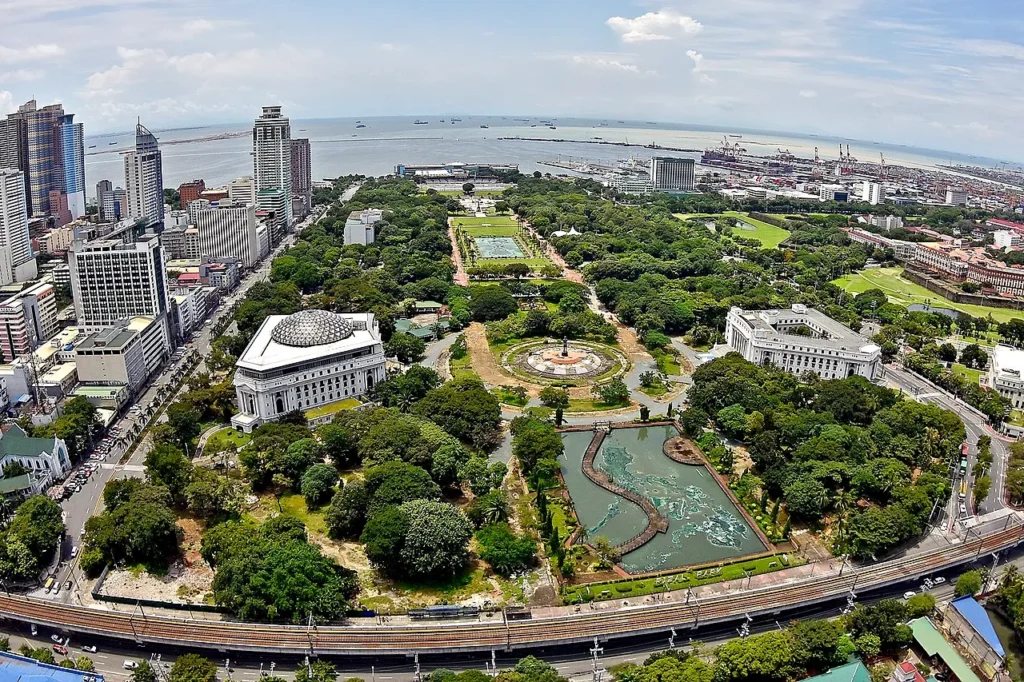
Just outside the walls of Intramuros lies Rizal Park, a large green space bordering Manila Bay that commemorates José Rizal. The park contains gardens, monuments, and open plazas, and the adjacent National Museum complex houses collections spanning fine arts, anthropology, and natural history. The area offers one of the few outdoor spaces in the city center suited to unhurried walking.
Markets and Street Food in Quiapo and Binondo
The Quiapo district showcases Manila at its most energetic, with market areas such as Quinta Market packed with vendors and a wide spread of Filipino street food. A short distance away, Binondo holds the distinction of being the world’s oldest Chinatown, established in 1594.
Its lanes are lined with dim sum houses and food stalls, and the neighborhood reflects the strong Chinese influence woven into Filipino cuisine. Both districts suit travelers looking for authentic local flavors rather than polished dining.
Bonifacio Global City
Bonifacio Global City stands as the metro’s most modern and upscale district. Its centerpiece, Bonifacio High Street, is a pedestrian avenue lined with retail stores, cafes, and international restaurants.
The district is well suited to evening visits, when temperatures cool and the surrounding towers light up. Its cleanliness and contemporary layout make it a notable contrast to the older neighborhoods and a comfortable place to walk without a fixed destination.
Malls and Manila Bay
Shopping malls function as central gathering points in Manila, offering climate-controlled space alongside retail, dining, cinemas, and entertainment.
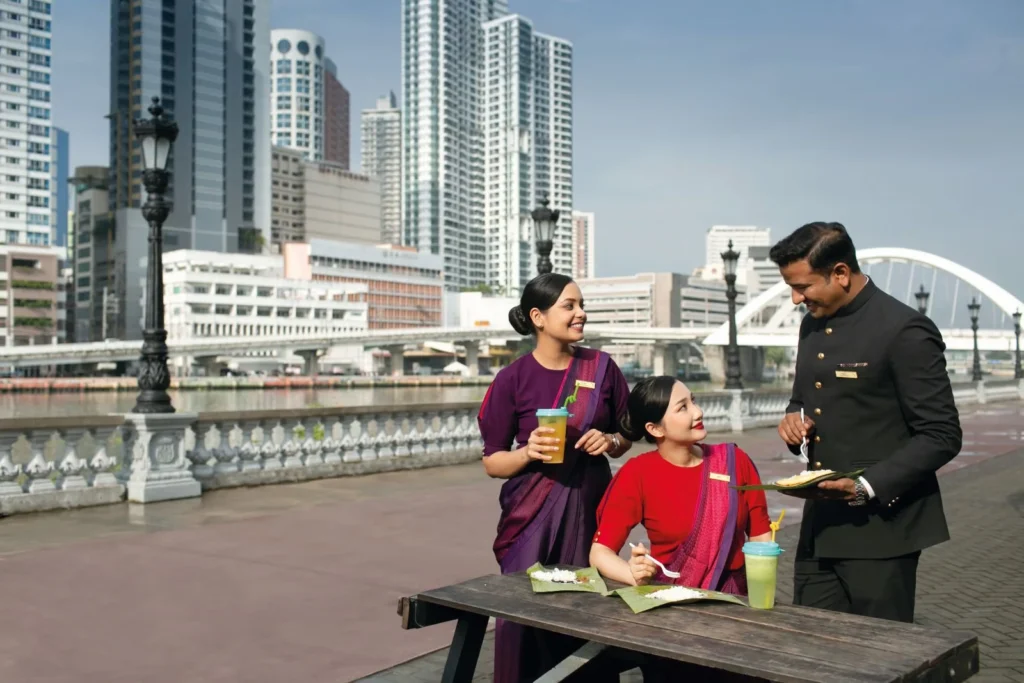
The Mall of Asia in Pasay ranks among the largest in Asia, while the Venice Grand Canal Mall recreates Venetian canals complete with gondola rides. Along the waterfront, the Roxas Boulevard promenade beside Manila Bay provides a well-known spot for a sunset walk with skyline views.
Day Trips From Manila
Several destinations within reach of the capital make convenient day trips. Tagaytay offers cool air and elevated views of Taal Volcano and its surrounding lake. Pagsanjan Falls in Laguna and the crater lake hike at Mount Pinatubo appeal to travelers seeking more active outings.
Baguio, the mountain city known for its cooler climate, serves as a longer weekend escape. The Pinto Art Museum in Antipolo, set within landscaped grounds, has become a popular cultural excursion for those with an interest in contemporary art.
Nightlife in Makati
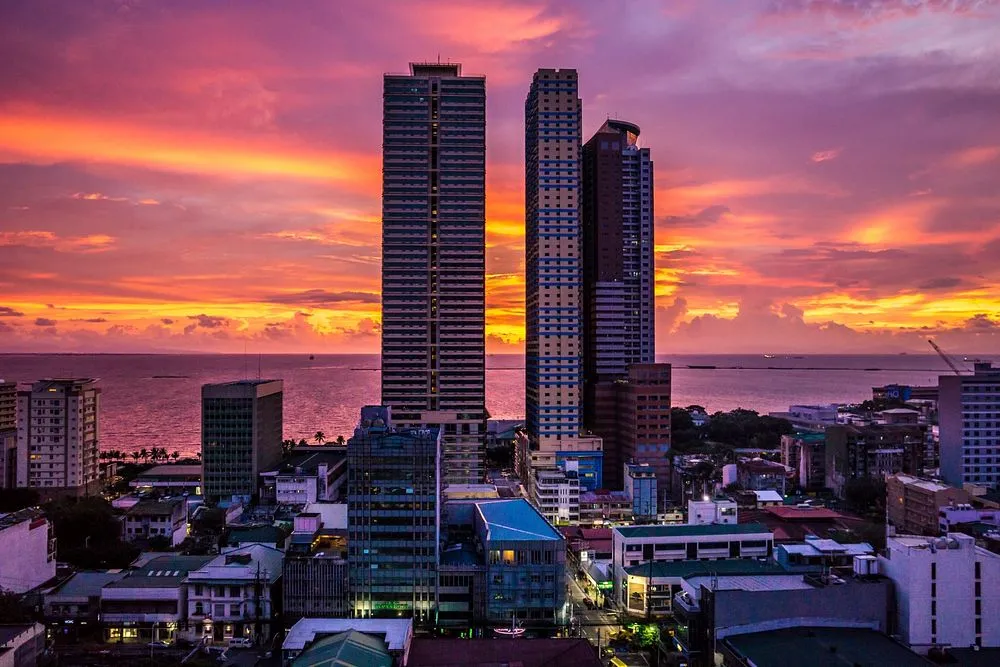
Makati transforms after dark, with the Poblacion area serving as the center of Manila’s nightlife. The district packs cocktail bars, live-music venues, casual pubs, and clubs into a compact, walkable stretch, and new establishments open regularly.
Staying within or near Poblacion allows travelers to enjoy an evening out without a long journey back to their accommodation, which is a practical consideration in a city where late-night traffic and distances can be significant.
Stay tuned with us. Further, follow us on social media for the latest updates.
Join us on Telegram Group for the Latest Aviation Updates. Subsequently, follow us on Google News
