

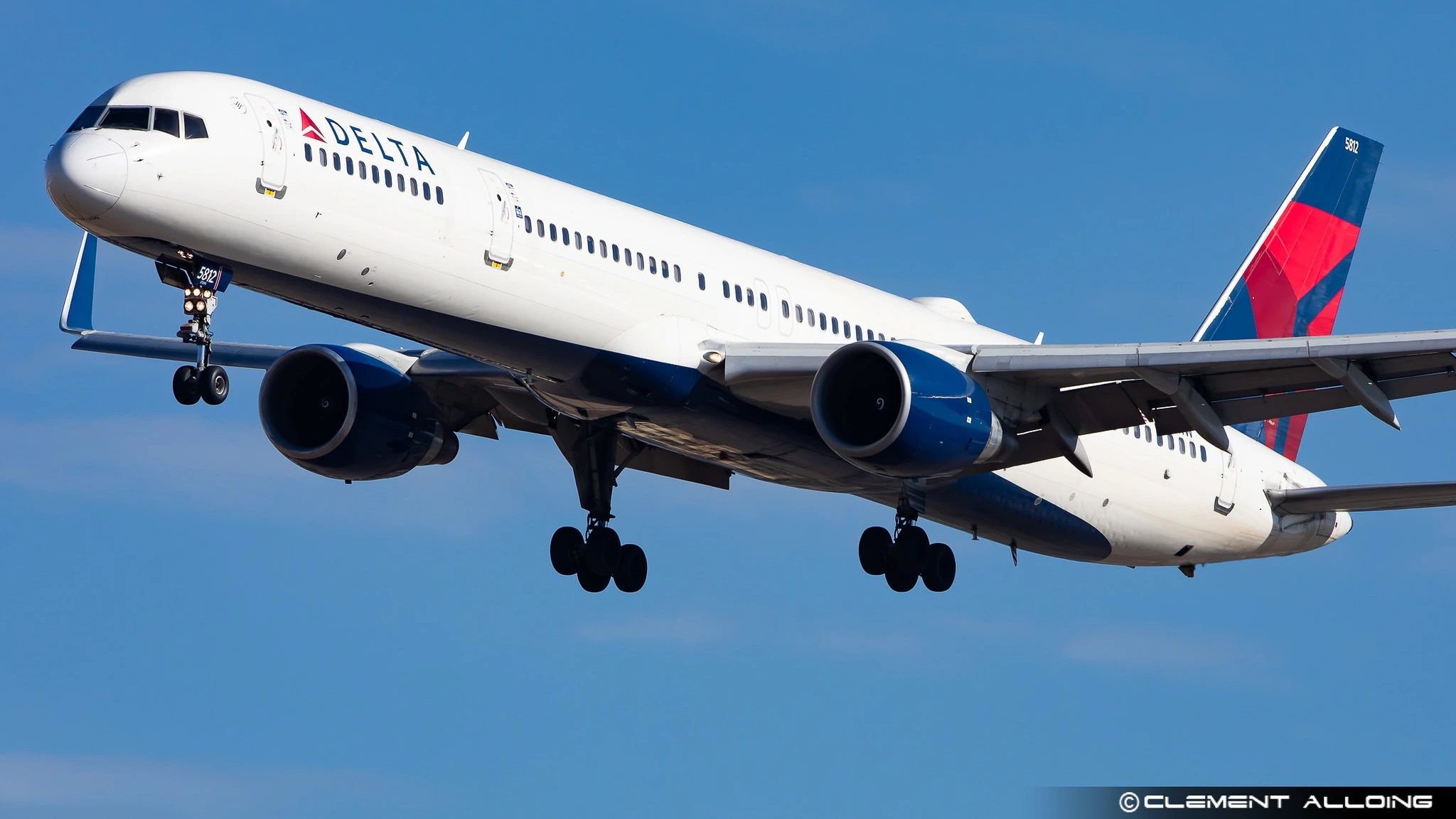
ATLANTA- Delta Air Lines (DL) is facing scrutiny after its generative AI assistant canceled a Platinum Medallion member’s entire round-trip award ticket, despite confirming in writing that her return flight would remain booked.
The passenger held a SkyMiles award between New York (JFK) and Los Angeles (LAX) and asked the Delta Concierge tool to cancel only the outbound leg. Delta reservations agents reportedly told her afterward that the itinerary could not be restored and that a replacement one-way award would cost nearly twice as much.
Award Ticket Vanished After Chatbot Confirmed Opposite
Colleen McCarthy held a round-trip SkyMiles award covering 2 segments:
- DL752 from New York (JFK) to Los Angeles (LAX)
- DL938 from Los Angeles (LAX) to New York (JFK)
She wanted to drop the outbound sector while protecting her return home. Delta Concierge responded with a clear confirmation:
“Your JFK to LAX flight has been canceled, and your LAX to JFK flight remains booked.”
Delta’s own refund record contradicted that message. The confirmation McCarthy posted shows the airline redeposited all 32,400 miles and refunded the full $11.20 in taxes, and it lists both DL752 and DL938.
The document also displays “Refund Number: null,” an oddly fitting detail for a live beta executing real transactions on customer tickets.
Even if the original chat request contained ambiguity, the confirmation did not. Concierge stated the return remained booked while the ticketing record shows the complete award was canceled.
From Answering Questions to Executing Transactions
Delta introduced Concierge in January 2025 as a generative AI assistant built into the Fly Delta app. The tool accesses trip details and SkyMiles account information and accepts natural-language input by text or voice.
The early beta handled informational tasks only:
- Answering questions about upcoming flights
- Explaining SkyMiles account details
- Displaying Medallion status benefits
- Locating available eCredits
- Tracking checked baggage
- Handing customers to Delta Reservations when a request needed deeper support
That scope changed this year. Delta granted the assistant authority to act on live itineraries, including canceling trips and offering rebooking choices during operational disruptions.
As reported by View from the Wing in June, Delta’s marketing chief said Concierge had reached 5% of app users, that rebooking and cancellation were “working really well,” and that the airline planned to move from 5% to 100% the following month. The app still prominently labels the feature “BETA.”

Single Request Cancels Both Flights
Passengers view a round-trip itinerary as two separate flights. Airline reservation systems often store both journeys on one electronic ticket containing multiple flight coupons that remain linked.
Because of that structure, removing one portion is rarely a simple deletion. The booking usually requires a ticket exchange or a full reissue so the remaining itinerary can be repriced under applicable award rules.
In this case, the language model interpreted the request and invoked tools connected to Delta’s reservation and ticketing systems. Somewhere in that chain, either Concierge submitted a full-ticket cancellation or Delta’s IT treated the inbound request from the AI tool as one.
The conversational layer then reported that the return remained booked. The assistant appears to have described what the customer wanted it to accomplish rather than confirming what Delta’s system had actually done. If that occurred, the tool confirmed an action the underlying booking system never completed.
Higher Replacement Price May Have Been Correct
The larger cost quoted for a replacement booking does not by itself indicate a pricing error.
Converting a round-trip award into a one-way itinerary requires repricing under whatever award levels apply at that moment. Delta one-way redemptions can exceed the proportional value of a round-trip, particularly when award inventory has shifted since the original ticket was issued.
The failure lies in sequence rather than price. The system should have quoted the revised cost and confirmed the customer wanted to proceed before refunding the existing ticket. The passenger lost her seat before she ever saw the number.
Human Agents Have Made Identical Errors
Delta’s AI failure is not unique to automation. The publication that first reported this case documented a Delta agent more than a decade ago who adjusted a passenger’s ticket and voided the entire e-ticket, including her return flight on the former US Airways.
It has also observed United Airlines (UA) agents accidentally canceling future flight segments while handling irregular operations. Last month, a Virgin Atlantic (VS) agent canceled a reader’s confirmed LATAM Airlines (LA) business-class award without permission, only to discover that the award space did not return. Virgin initially said it could not fix the problem, then ultimately authorized the passenger to buy a replacement ticket at the airline’s expense.
Reservations agents misunderstand requests, key in wrong instructions, cancel space before confirming they can rebuild a ticket, and confidently give out wrong information.
AI can eventually outperform the median reservations agent because it applies the same rules consistently, remembers every detail of a conversation and operates instantly during the weather events when airline call centers collapse. The scale risk runs the other direction. A bad human agent damages one reservation at a time, while a defective AI workflow can damage thousands identically.
Customer Service Compounded Problem
The technical error created the situation. The response sustained it.
Delta Reservations told the passenger the original award could not be restored after the refund had processed, and that she would need to redeem substantially more for a replacement at current pricing.
Reservation systems do impose real technical limits once a ticket is refunded. Passengers still expect resolution when the error originates inside the carrier’s own technology. That outcome reflects either a choice not to empower human agents with authority to correct automation failures, or the choice of a human not to spend time escalating the case.
Other Carriers Are Building Similar Tools
American Airlines (AA) has tested an AI chat assistant that rebooks customers when weather delays or cancels their flights. Air India (AI) operates AI.g, which assists with bookings, cancellations and refunds. Qatar Airways (QR) runs Sama, which offers conversational shopping and booking.
Accountability remains the unsettled question. Air Canada (AC) once tried to distance itself from incorrect information provided by its chatbot, arguing the tool should be treated as separate from the airline and therefore responsible for its own statements. A Canadian tribunal called that argument “remarkable” and held that the airline was responsible for information delivered through its own website.
That ruling established a principle now facing its next test. Carriers remain accountable for what their digital platforms tell customers, whether the words come from an employee or a model.
Natural language sounds authoritative even when it is not tied to the underlying transaction and has not verified that what it reports actually happened.
Stay tuned with us. Further, follow us on social media for the latest updates.
Join us on Telegram Group for the Latest Aviation Updates. Subsequently, follow us on Google News
