

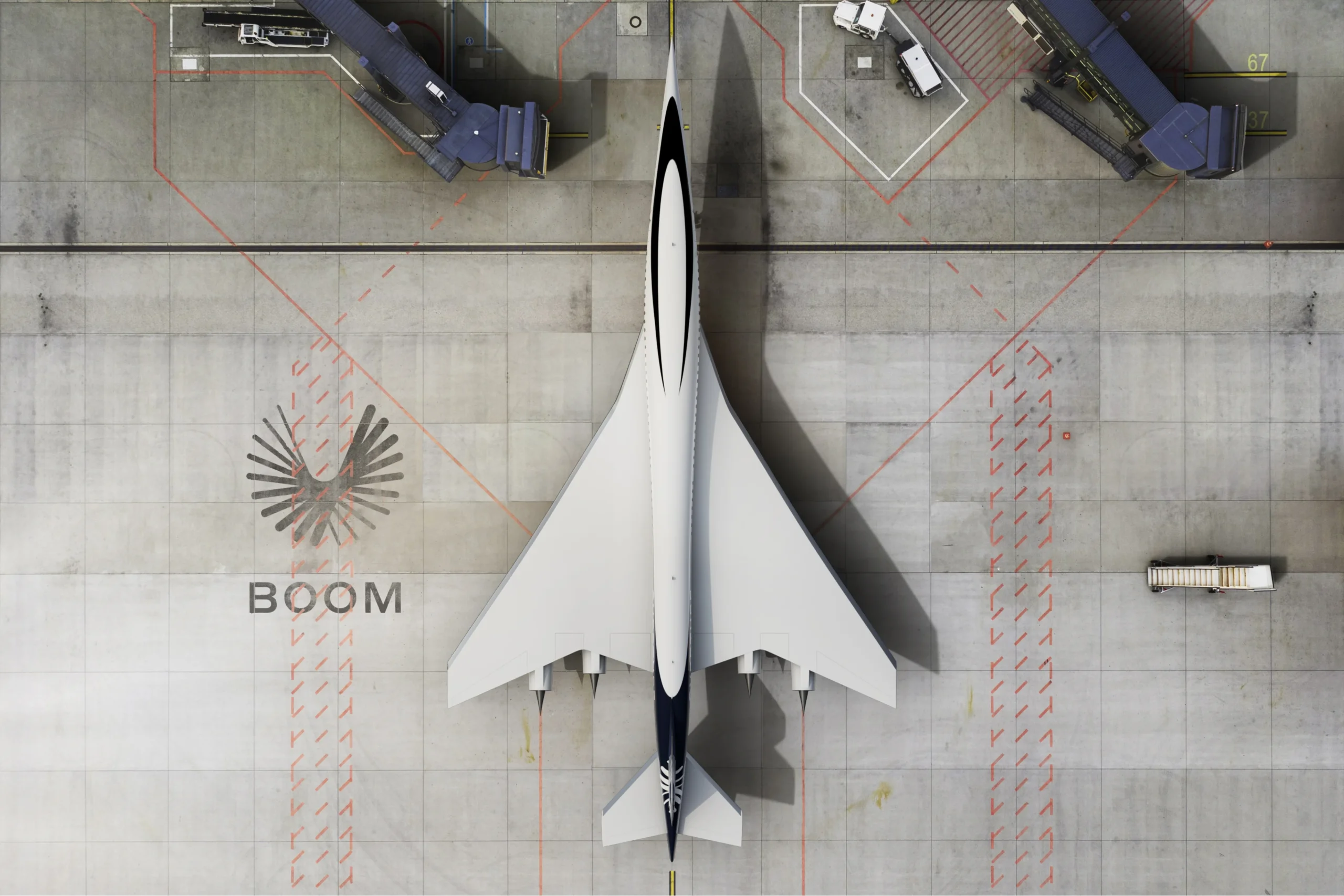
WASHINGTON, D.C.- The Federal Aviation Administration (FAA) has proposed a new rule that would permit supersonic flight over the United States, moving to lift the blanket ban in place since the 1970s.
The shift could eventually benefit carriers that have backed Boom Supersonic, including Japan Airlines (JL), United Airlines (UA), and American Airlines (AA).
The proposal does not revive the Concorde model of full-speed flight over land. It instead creates a legal path for aircraft that prove they generate no audible sonic boom on the ground, a change that matters most for overland city pairs such as New York (JFK) to Los Angeles (LAX) rather than ocean crossings.
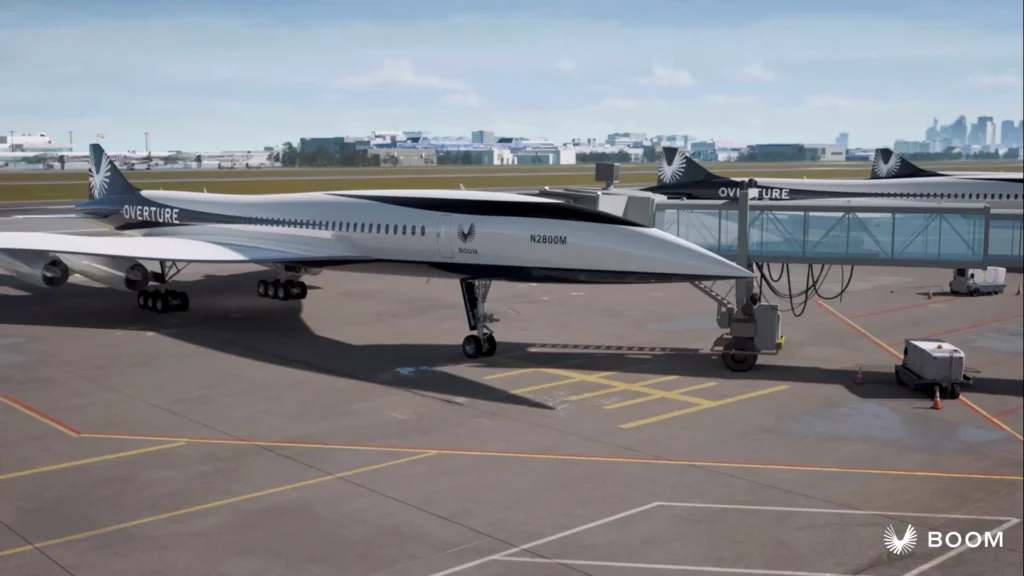
FAA to End 50 Year Supersonic Flight Ban
The agency has published a Notice of Proposed Rulemaking (NPRM) that would swap the existing speed-based restriction for a performance-based standard centered on the aircraft’s impact on people below.
At present, any civil aircraft flying faster than Mach 1, roughly 761 miles per hour (1,225 km/h) at sea level, over land in the United States is illegal, regardless of whether a sonic boom is actually heard on the ground. The existing rule therefore functions as a hard speed cap rather than a noise standard.
The FAA’s proposal changes the basis of the law. Faster speeds would become legal if the agency determines that pressure reaching the surface is no greater than 0.11 pounds per square foot.
In practice, this permits what the industry calls “boomless cruise” rather than unrestricted supersonic flight. The test becomes what people experience on the ground rather than how fast the aircraft travels.
According to View from the Wing, the proposal is the most significant change to U.S. overland supersonic rules since the original restrictions arrived in the 1970s.
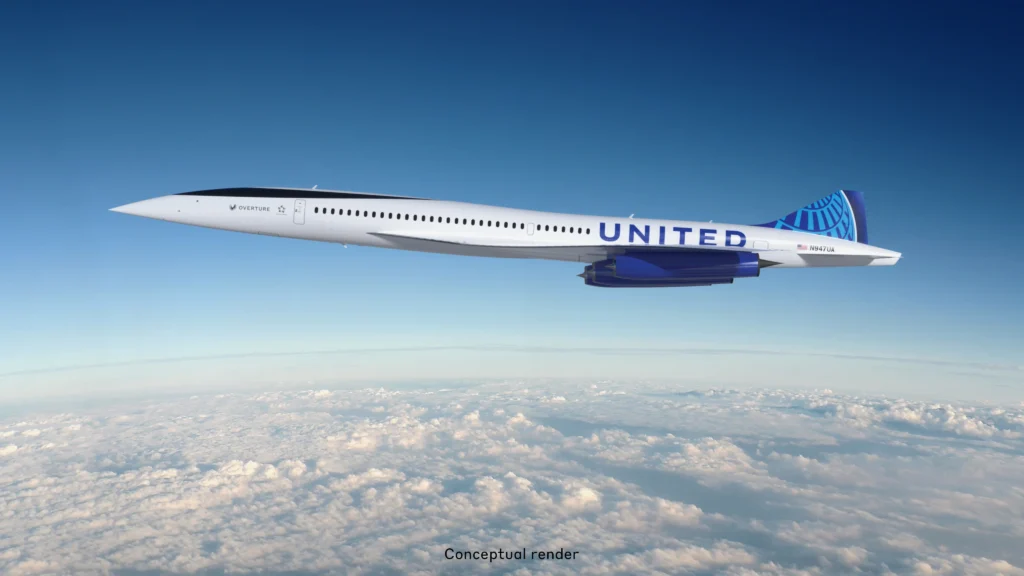
Why US Banned Supersonic Flight Over Land
The original restriction took effect in 1973, when the FAA required special authorization for civil aircraft to exceed Mach 1 inside the country.
The goal was to protect people on the ground from sonic booms at a time when a safe exposure level had not been established.
Public opposition to the Boeing and Lockheed SST projects and to Concorde added pressure.
The FAA took the position that public reaction to sonic boom testing was reason enough to prohibit it, regardless of proven safety.
The agency placed the burden on supersonic proponents to show that booms were acceptable, rather than on the public to prove harm. Under an outright ban, even proving safety would not have been enough to permit flight.
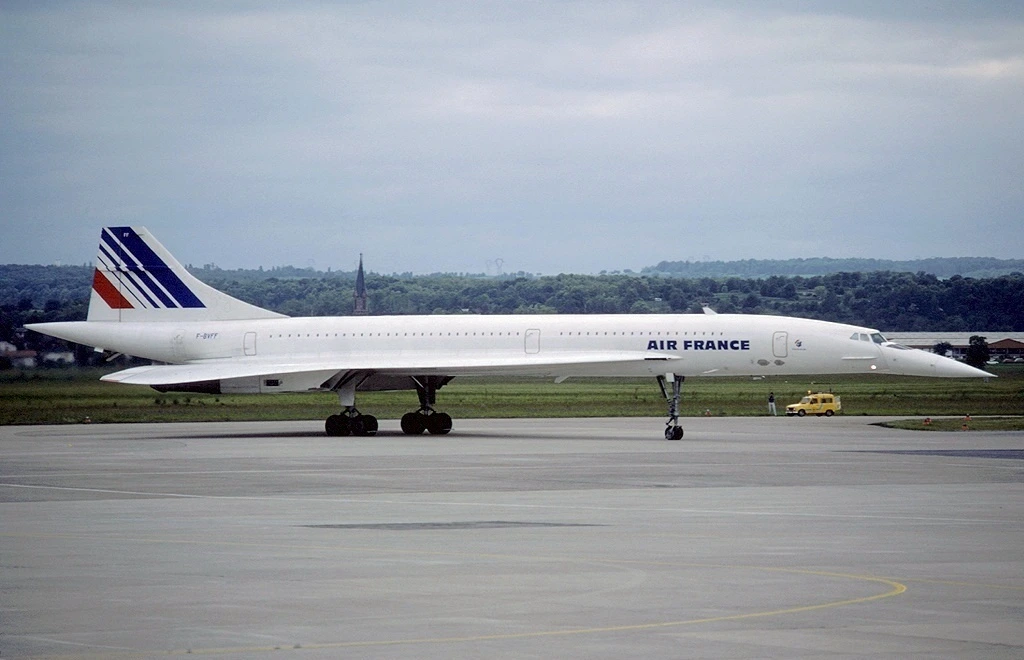
Concorde Faced Even Stricter Limits
The rule tightened further in 1978, after Concorde entered commercial service. From that point, even aircraft flying supersonic outside US airspace were barred from creating booms that reached US territory while arriving at or departing from American airports.
After the Boeing and Lockheed programs ended, attention turned to blocking Concorde from US operations.
The Port Authority of New York and New Jersey initially prevented the aircraft from flying until November 1977 before allowing scheduled service.
The supersonic ban also shielded incumbent airframe manufacturers, and the FAA has confirmed that Boeing met with the agency during the current rulemaking.
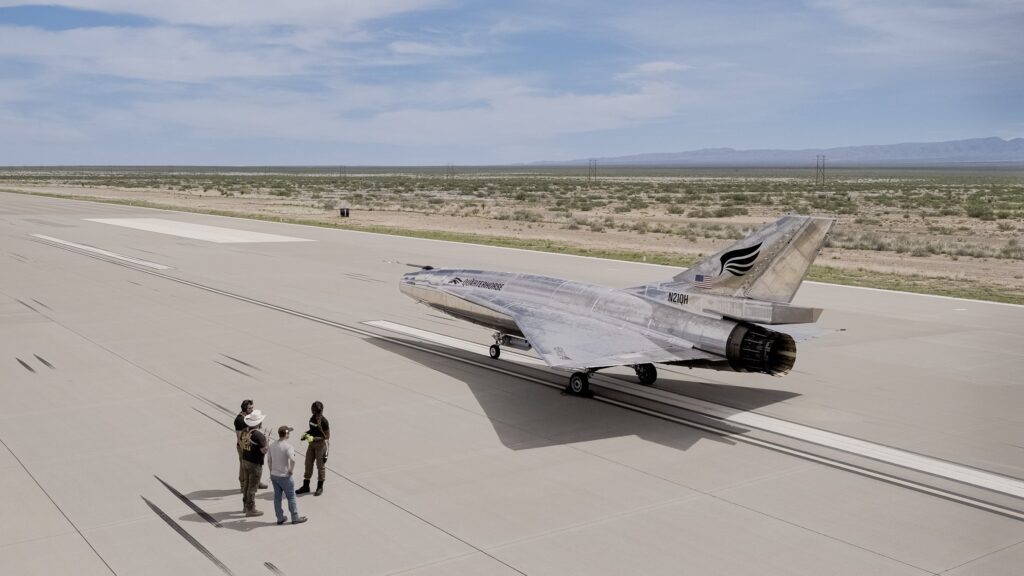
What Change Means for Boom, Hermeus, and Others
The proposal offers a clearer legal footing for supersonic developers such as Boom and Hermeus, replacing a system that relied on one-off test authorizations.
A boomless supersonic operation is currently illegal without special approval, so a permanent standard removes a major source of uncertainty. The change does not, however, solve the deeper commercial problems facing the sector.
The largest obstacle is engine development. Building a new supersonic engine costs billions, and established manufacturers have so far declined to invest. Boom is self-funding but lacks sufficient financing for the task.
A broader legal market for overland flight theoretically improves the investment case, since more permitted routes could mean more flights, though the effect on engine economics is marginal at best.
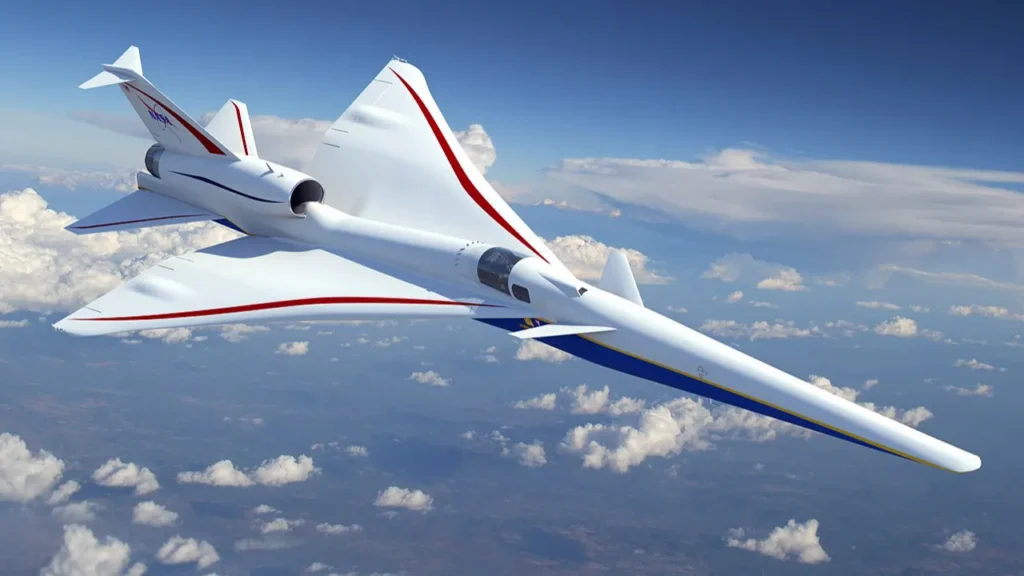
Commercial Hurdles
Market size is a second constraint. A jet limited to supersonic speeds only over the ocean serves a far smaller route map, which is why an aircraft of that type would likely not fly a route such as Los Angeles to London at full speed.
Permission to exceed Mach 1 over land, even below full speed, widens the network, though the number of city pairs with strong premium demand stays limited.
Route economics complete the picture. Flying over land can raise aircraft utilization, but the costs of a small fleet, premium-heavy cabins, engine reserves, and continued noise limits all restrict how many routes can support the model.
The proposed rule raises the odds of testing, demonstration, and eventually limited overland service, yet a working passenger aircraft still requires certification, a viable engine, noise standards, suitable airports, and routes with enough demand.
Those further rulemakings for takeoff and landing noise and for operating requirements are not expected for several years.

Final Rule Is Not Guaranteed
A Notice of Proposed Rulemaking does not produce a final rule on its own. The FAA must receive and weigh public comments before deciding whether to proceed.
The agency has also taken the view that the change is excluded from National Environmental Policy Act (NEPA) constraints, a position that could face legal challenge.
The underlying principle drawing support is straightforward: a rule should rest on the actual effects of flight rather than a blanket prohibition.
Carrier interest, meanwhile, exists but remains tentative. Japan Airlines (JL) has invested in Boom and holds a notional order, while United Airlines (UA) and American Airlines (AA) have signed on in principle without firm commitments.
The proposal nonetheless revives the prospect that air travel across the country could one day match the speeds last seen in the 1970s.
Stay tuned with us. Further, follow us on social media for the latest updates.
Join us on Telegram Group for the Latest Aviation Updates. Subsequently, follow us on Google News
