

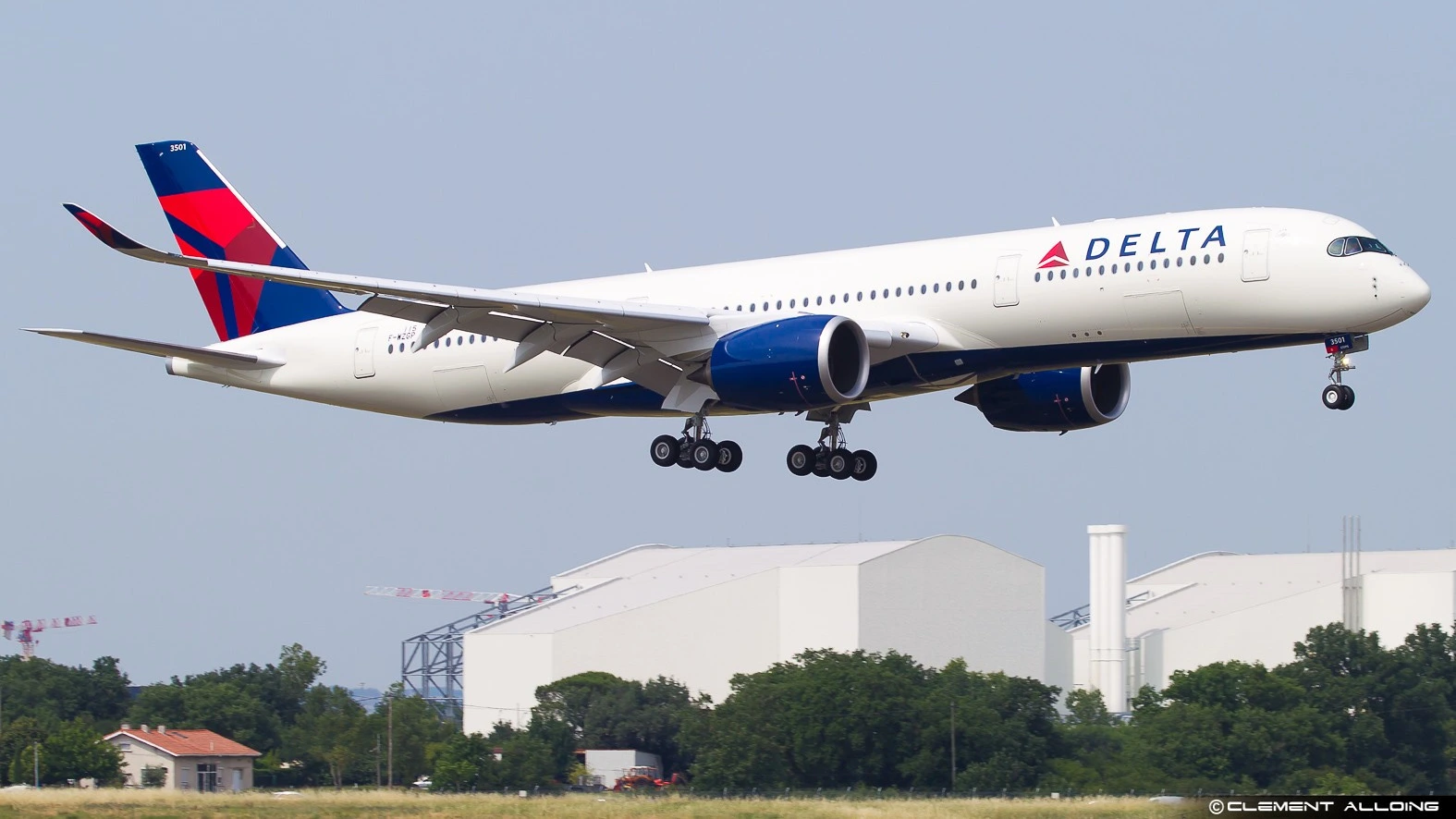
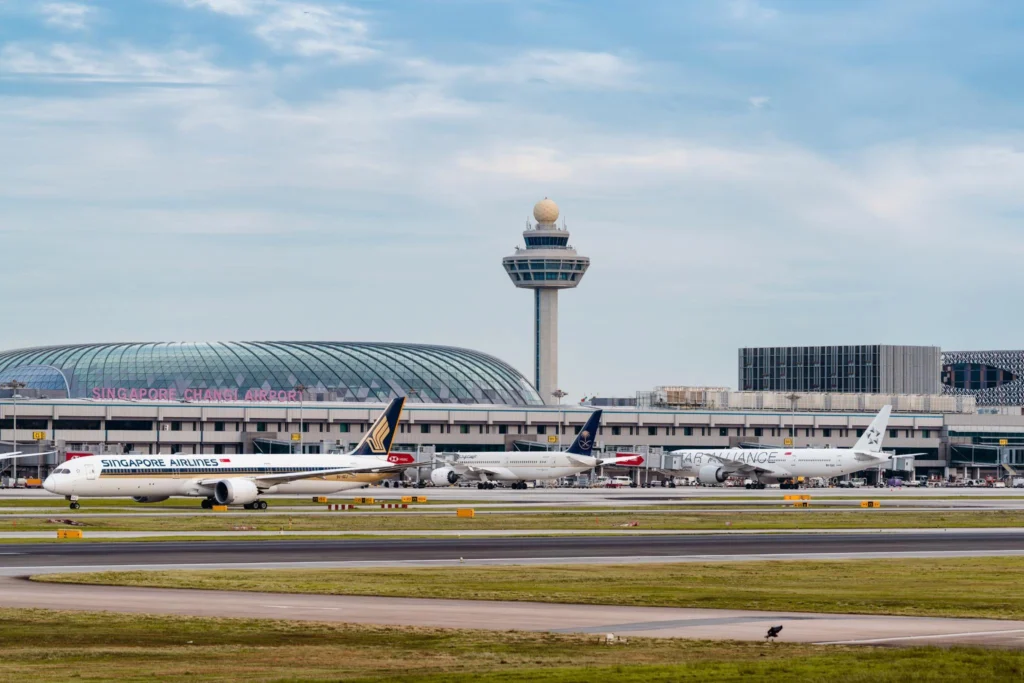
ATLANTA- Delta Air Lines (DL) is preparing for a larger presence in Asia, with Singapore Changi Airport (SIN) emerging as one of its future destinations. While the airline has not announced a launch date, aircraft type, or route, senior executives have confirmed that Singapore remains part of Delta’s long-term growth strategy.
The planned return follows Delta Air Lines’ (DL) renewed expansion across the Pacific, including restored services to Hong Kong International Airport (HKG) and upcoming routes to Manila Ninoy Aquino International Airport (MNL) and Tokyo Narita Airport (NRT). The strategy reflects the airline’s renewed focus on strengthening its Asia network.
Delta’s Long-Term Vision for Singapore
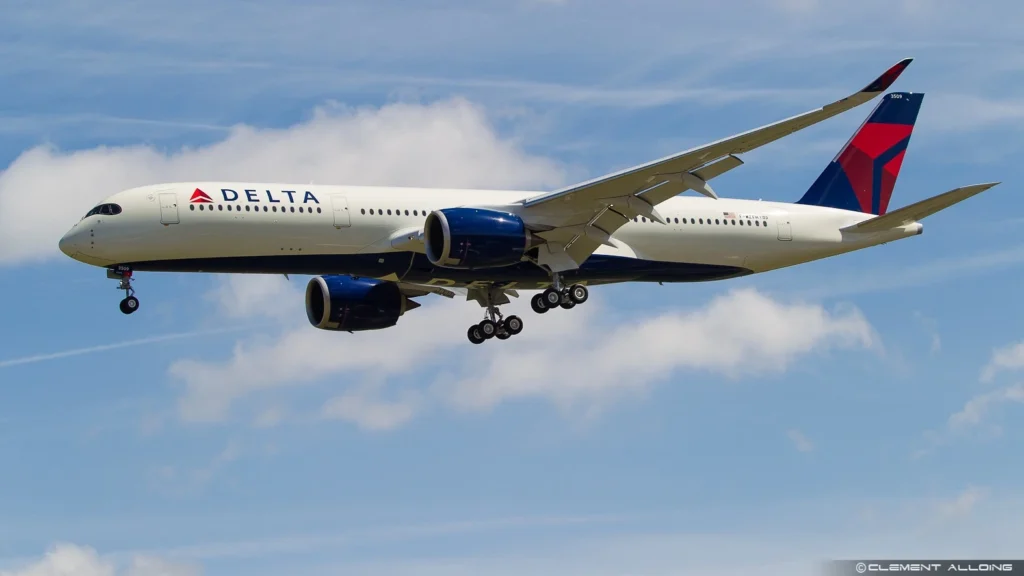
Delta has made its ambitions in Asia increasingly clear over the past two years. After concentrating much of its international expansion on Europe, the airline is now shifting attention toward major Asian markets where it believes additional growth opportunities exist.
Speaking about the company’s strategy, Chief Commercial Officer Joe Esposito confirmed that Singapore is firmly included in Delta’s long-term plans. However, the airline has not disclosed which US city will be connected, when the route will begin, or which aircraft will operate the service.
A nonstop flight to Singapore would represent a major milestone for Delta as it continues rebuilding its Pacific network following years of restructuring.
According to TPG, Delta sees Asia as one of the few remaining regions where significant expansion opportunities still exist, while extensive partnerships and established routes already support its European network.
Why Delta Left Singapore in 2019
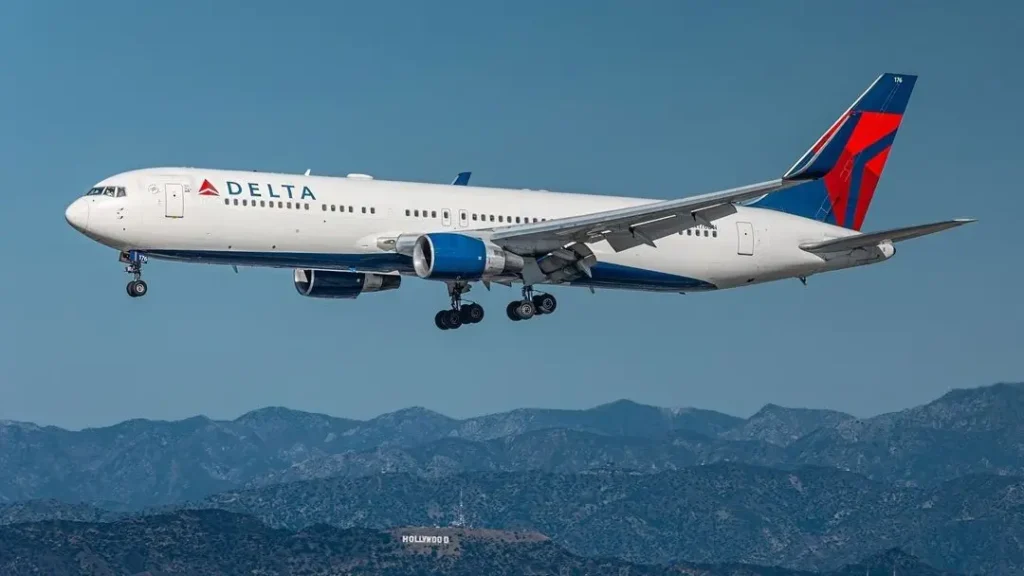
Delta’s previous Singapore operation ended on September 22, 2019. The airline operated a daily Boeing 767-300ER service between Tokyo Narita Airport (NRT) and Singapore Changi Airport (SIN), rather than flying nonstop from the United States.
The route struggled for several reasons.
Growing nonstop competition between the US and Singapore reduced demand for connecting services through Japan. Singapore-based airlines also benefited from stronger customer loyalty, while Star Alliance carriers maintained a dominant position at Changi Airport.
At the same time, Delta was reshaping its Tokyo strategy by shifting operations away from Narita Airport (NRT) toward the more centrally located Tokyo Haneda Airport (HND). As a result, Singapore disappeared from Delta’s network alongside many other fifth freedom routes inherited from Northwest Airlines, Simple Flying flagged.
The End of Northwest’s Narita Hub
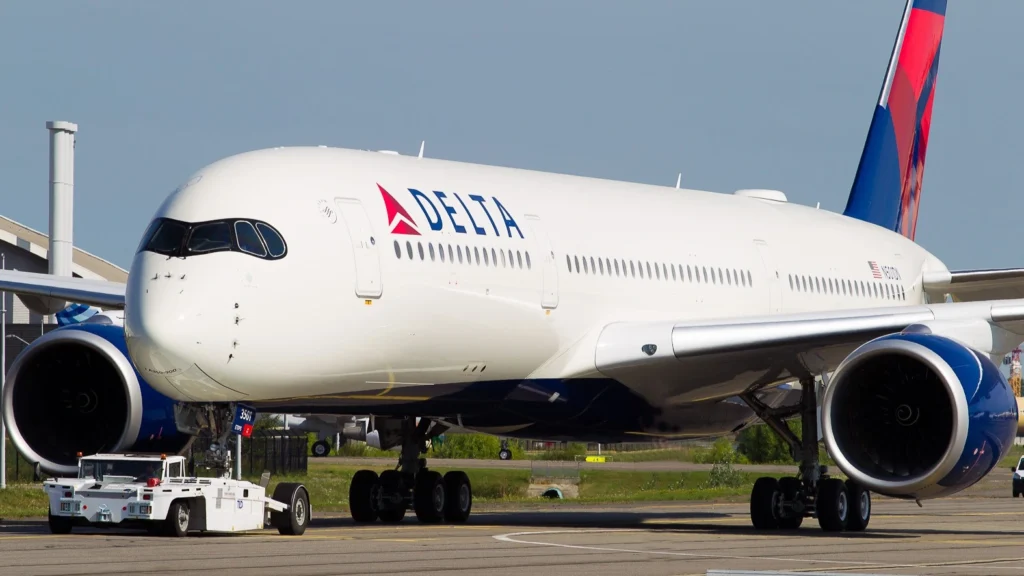
Delta inherited one of aviation’s most unique international networks when it merged with Northwest Airlines in 2008.
Northwest had built a major connecting hub at Tokyo Narita Airport using fifth freedom traffic rights. Passengers arriving from the United States could easily transfer to flights across Asia, creating a hub similar to Delta’s domestic operations in Atlanta or Detroit.
At its peak, Northwest served 19 destinations from Narita.
Northwest’s Narita Network in 2008
| Category | Destinations |
|---|---|
| US Gateways | Detroit, Honolulu, Minneapolis-St. Paul, Los Angeles, Portland, San Francisco, Seattle |
| Asian Destinations | Bangkok, Beijing, Busan, Guam, Guangzhou, Hong Kong, Manila, Saipan, Seoul, Shanghai, Singapore, Taipei |
| Total Destinations | 19 |
Over time, this model became less effective.
Modern long-range aircraft enabled airlines to operate nonstop flights directly between North America and Asia, eliminating the need for intermediate stops in Japan. Meanwhile, expanded access to Haneda Airport made Narita less attractive for passengers whose final destination was Tokyo itself.
Korean Air Partnership Changed Delta’s Strategy
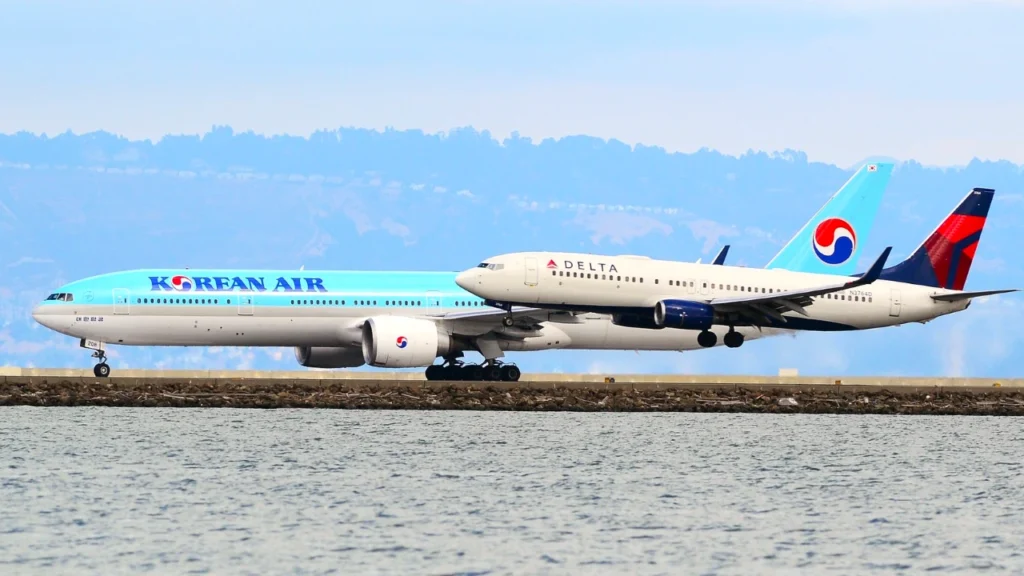
Another major factor behind Delta’s changing network strategy has been its joint venture with Korean Air (KE).
Rather than operating an extensive intra-Asia network itself, Delta now relies on Seoul Incheon International Airport (ICN) as its primary connecting hub across the region.
The joint venture currently operates approximately 38 daily flights between the United States and South Korea, carrying nearly 10,000 passengers every day. This partnership provides extensive onward connectivity throughout Asia without requiring Delta to maintain a large fifth freedom operation.
Esposito described the partnership as providing unmatched connectivity between North America and Asia through strong hubs on both sides of the Pacific.
Delta’s Pacific Network Continues to Grow
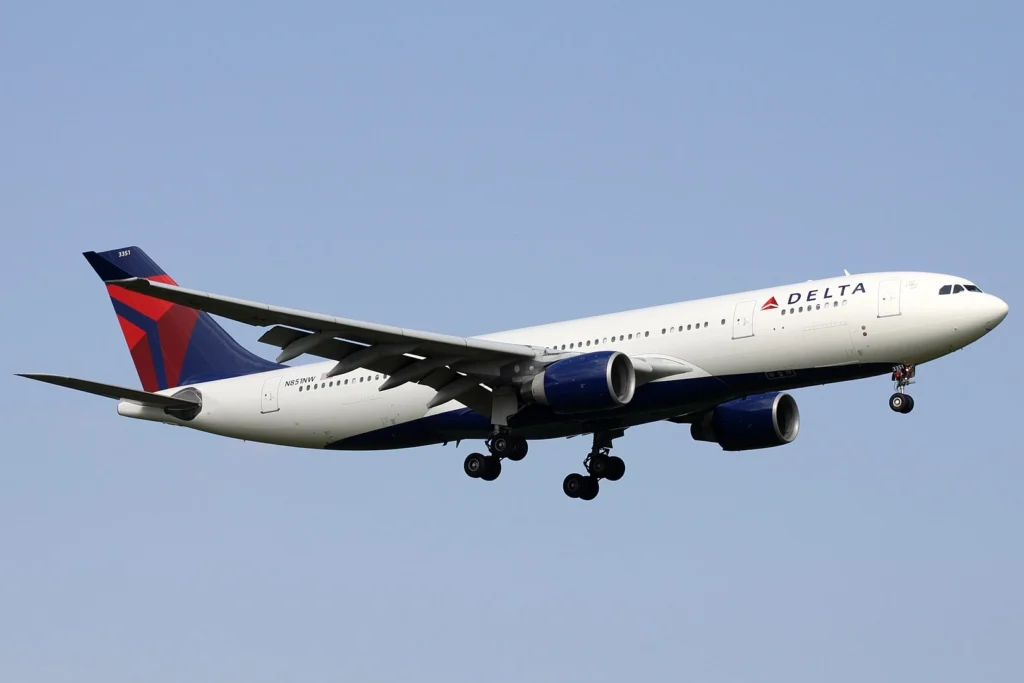
While Europe remained Delta’s primary focus for several years, Asia is now receiving significantly more investment.
The airline has steadily introduced new long-haul services across the Pacific, strengthening connections from its West Coast hubs.
Recent and Upcoming Delta Asia Routes
| Route | Launch | Aircraft |
| Seattle (SEA) to Taipei (TPE) | June 2024 | Airbus A330-900neo |
| Los Angeles (LAX) to Shanghai (PVG) | June 2025 | Airbus A350-900 |
| Salt Lake City (SLC) to Seoul (ICN) | June 2025 | Airbus A350-900 |
| Los Angeles (LAX) to Hong Kong (HKG) | June 2026 | Airbus A350-900 |
| Los Angeles (LAX) to Manila (MNL) | March 2027 | Airbus A350-900 |
| Seattle (SEA) to Tokyo Narita (NRT) | March 2027 | Airbus A330-900neo |
Unlike the former Northwest model, Delta is now focusing on nonstop services from major US hubs instead of routing passengers through Tokyo.
Seattle Appears the Strongest Candidate
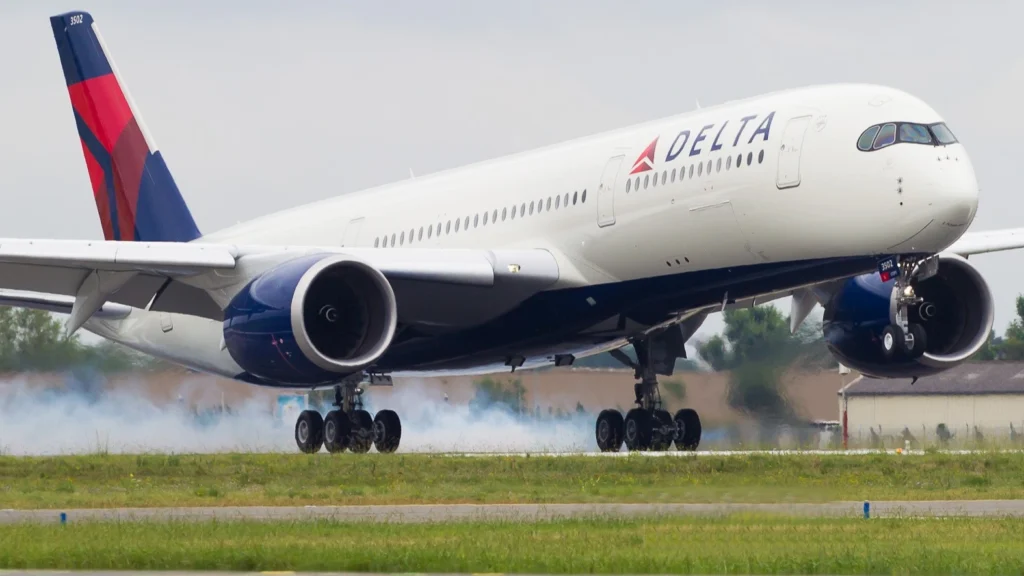
Los Angeles has effectively been ruled out as the launch point for a future Singapore service, making Seattle-Tacoma International Airport (SEA) the most likely option.
Delta already considers Seattle its premier Pacific gateway, operating more than 160 peak day departures to over 60 destinations. This extensive domestic network would provide strong connecting traffic for a Singapore flight.
The route would face direct competition from Singapore Airlines (SQ), which already operates daily nonstop flights between Seattle and Singapore using the Airbus A350-900.
Which Aircraft Could Fly the Route?
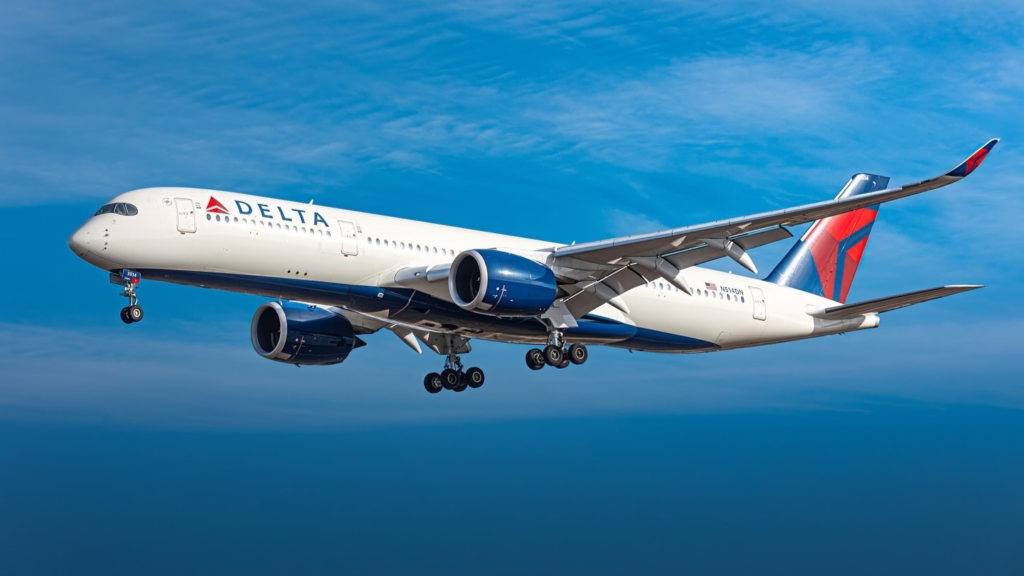
Delta’s Airbus A350-900 is considered the most suitable aircraft for a future Singapore service.
The airline currently operates 41 A350-900 aircraft with another 18 on order. The type already serves many of Delta’s longest Pacific routes and has the range needed for the nearly 16-hour journey between Seattle and Singapore.
Although Delta will soon begin receiving the larger Airbus A350-1000, the carrier has indicated that the aircraft will primarily serve premium flagship routes. As a result, industry observers expect the A350-900 to operate any new Singapore service.
When Could Delta Launch Singapore Flights?
Delta has not announced a timeline for returning to Singapore.
From an operational perspective, the airline already possesses the aircraft capable of operating the route nonstop. However, with new services to Manila and Tokyo Narita scheduled for 2027, Singapore is unlikely to be the immediate priority.
A launch during late 2027 appears possible if fleet availability and market conditions align, although 2028 remains a more realistic timeframe until Delta formally announces the route.
Stay tuned with us. Further, follow us on social media for the latest updates.
Join us on Telegram Group for the Latest Aviation Updates. Subsequently, follow us on Google News
