

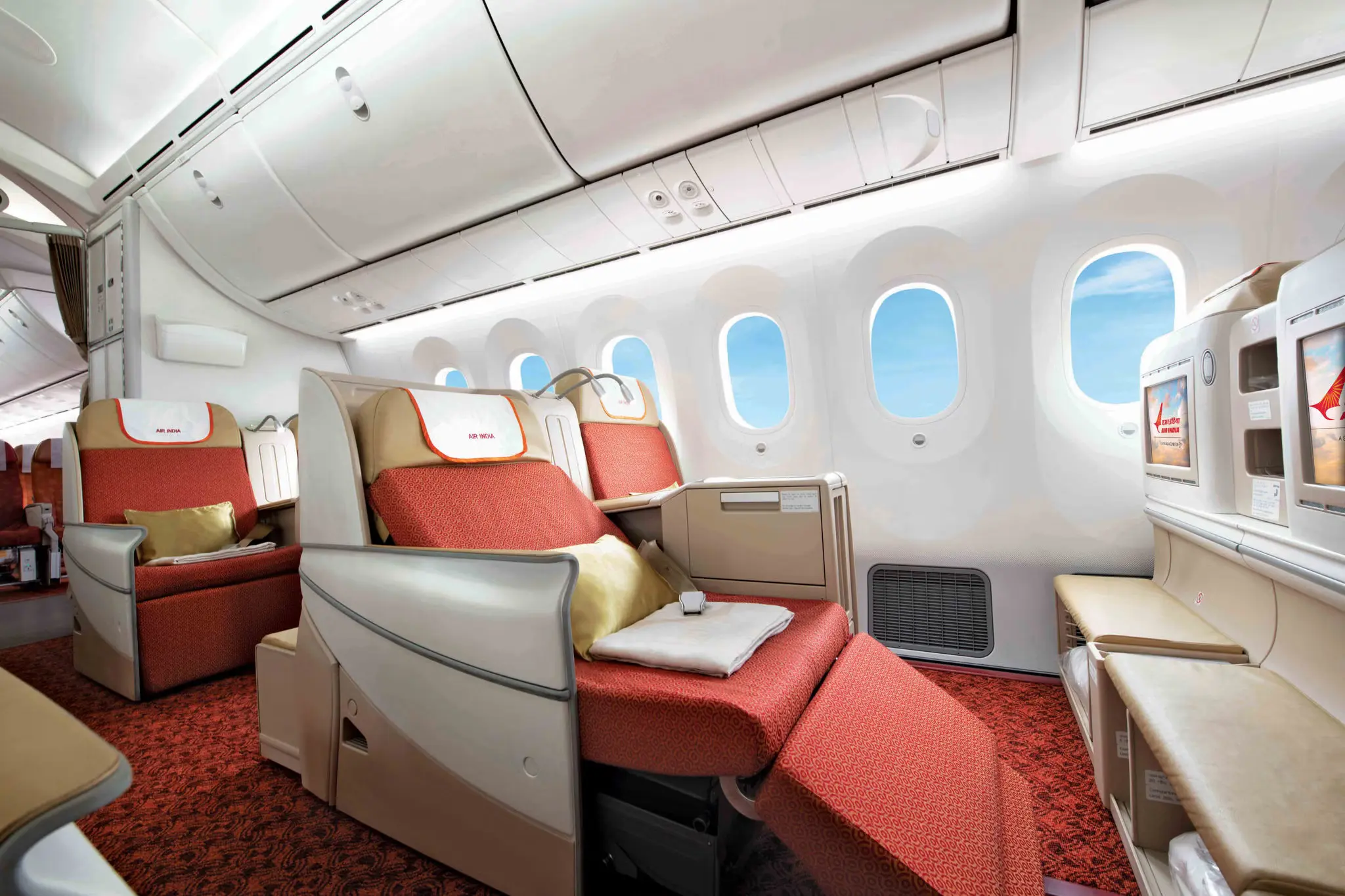
ATLANTA- Several major airlines continue to operate older business class seats on parts of their fleets. These cabins serve major international hubs.
Modern business class now offers fully flat beds, direct aisle access, private suites, larger entertainment screens, and improved storage. However, several airlines still operate legacy cabins that no longer match current industry standards.
According to OMAAT, many of these products remain in service because fleet-wide cabin replacements require years of planning, certification, and significant investment.
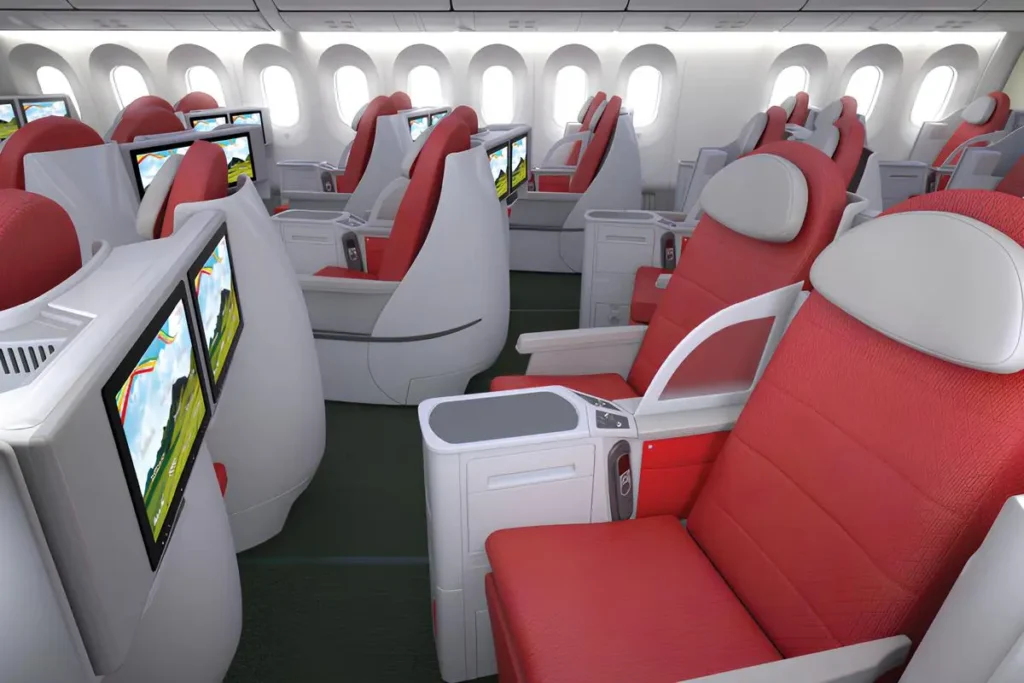
Worst Business Class Seats
Business class has evolved rapidly over the past two decades. Airlines now compete by offering greater privacy, premium bedding, wireless charging, advanced entertainment systems, and direct aisle access from every seat. Even so, not every aircraft has received these upgrades.
This comparison evaluates only the hard product, including the seat design, cabin layout, privacy, storage, and sleeping comfort.
It does not assess soft product elements such as cabin crew, catering, airport lounges, or inflight service.
The assessment is also relative rather than absolute. A fully flat business class seat remains superior to a recliner or angled-flat seat, but some older fully flat products also lag behind today’s competitive standards.
Aircraft with only one or two outdated cabin configurations scheduled for immediate retirement have been excluded, while products that continue to represent a significant portion of an airline’s fleet have been included.
The airlines below are not ranked, and the list highlights products that currently need the most significant upgrades.
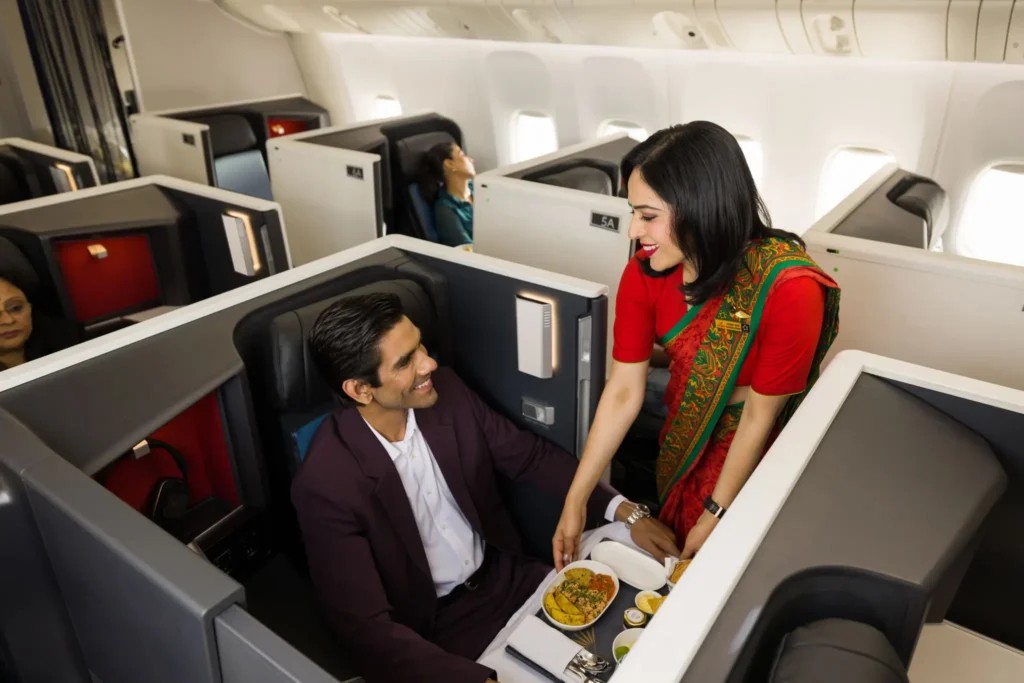
1. Air India Boeing 777 Business Class
- Aircraft: Boeing 777-300ER and Boeing 777-200LR
- Seat Configuration: 2-3-2
- Seat Type: Angled-flat seats
Air India (AI) continues to operate older Boeing 777 aircraft with angled-flat business class seats on several long-haul routes.
Compared with similar cabins operated by other airlines, these interiors show their age through worn seat finishes, older inflight entertainment systems, and inconsistent cabin condition. Some aircraft have also drawn attention because of maintenance-related cabin issues, highlighting the need for refurbishment.
The airline has announced a comprehensive fleet modernization programme under Tata Group ownership, including new cabins across its wide-body fleet. However, refurbishment of the legacy Boeing 777 fleet has progressed more slowly than originally expected.
It is worth noting that not every Air India Boeing 777 features these seats. The airline also operates leased aircraft inherited from other carriers, which offer newer cabin interiors and a noticeably improved business class experience.
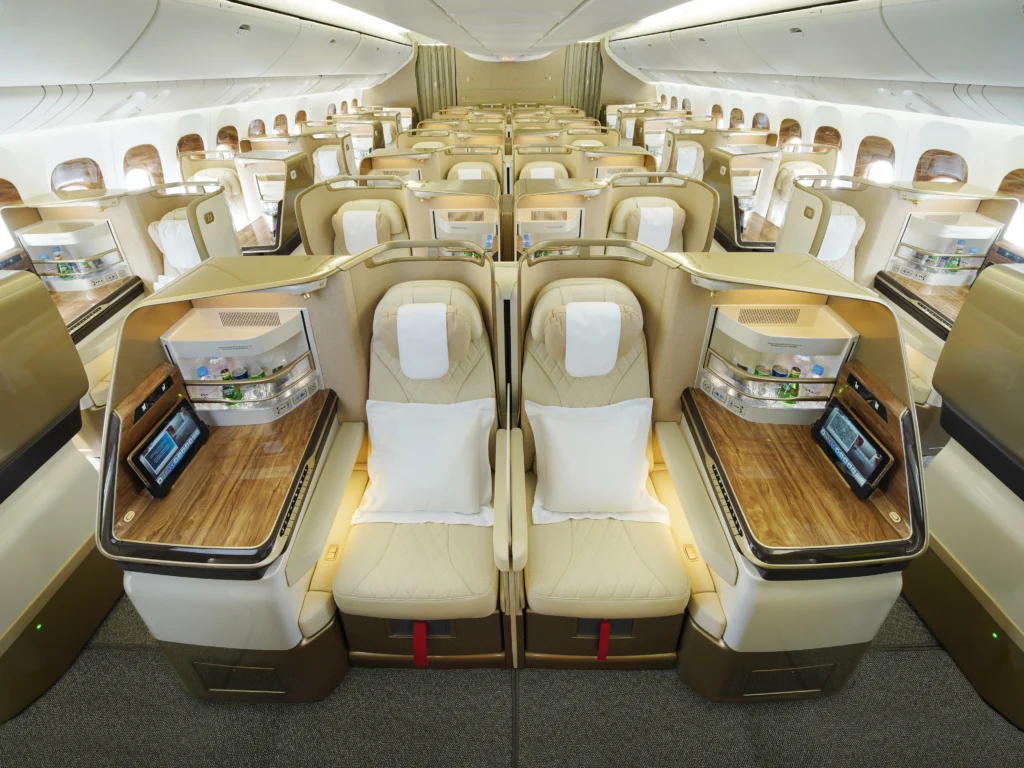
2. Emirates Boeing 777-300ER Business Class
- Aircraft: Boeing 777-300ER
- Seat Configuration: 2-3-2
- Seat Type: Angled-flat seats
Emirates (EK) is widely regarded as one of the world’s leading premium airlines, largely because of its flagship Airbus A380 experience, which features First Class Shower Suites and the onboard Business Class lounge.
However, the airline’s most frequently used long-haul aircraft is the Boeing 777-300ER, and a large portion of this fleet still operates with an older business class cabin.
The cabin uses a 2-3-2 layout with angled-flat seats, meaning not every passenger has direct aisle access. The middle seat section is particularly less desirable for solo travelers, while the angled sleeping position is less comfortable on overnight flights than a fully flat bed.
Emirates has accelerated its Boeing 777 retrofit programme, replacing these cabins with a newer business class product that includes direct aisle access. Although the updated cabin is a significant improvement, it still trails the latest business class suites introduced by several competing airlines.
Until the retrofit programme is completed, passengers may continue to encounter the older configuration on many international routes.
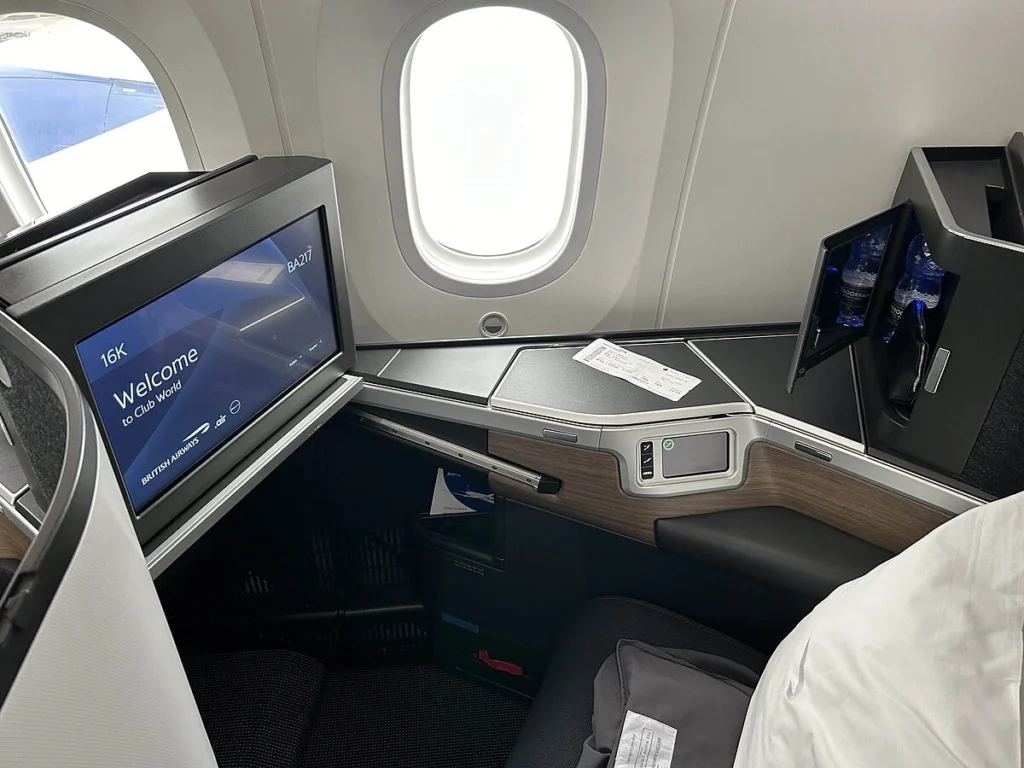
3. British Airways Club World Business Class
- Aircraft: Boeing 787, Boeing 777 (selected), Airbus A380
- Seat Configuration: Up to 2-4-2 depending on aircraft
British Airways (BA) has made significant progress introducing its newer Club Suite business class across much of its long-haul fleet. Even so, several aircraft continue operating the previous Club World cabin.
Many Boeing 787 aircraft, Gatwick-based Boeing 777 aircraft, and the airline’s Airbus A380 fleet still feature the older product. These cabins have up to eight business class seats per row, provide limited privacy, and do not offer direct aisle access for every passenger.
Although the airline plans to retrofit its Airbus A380 fleet with Club Suites, the programme is expected to begin during 2026. Some Gatwick-based Boeing 777 aircraft are expected to retain the older cabins for a longer period.
Compared with today’s leading business class products, the legacy Club World cabin no longer delivers the level of privacy, accessibility, or personal space that premium travelers increasingly expect.
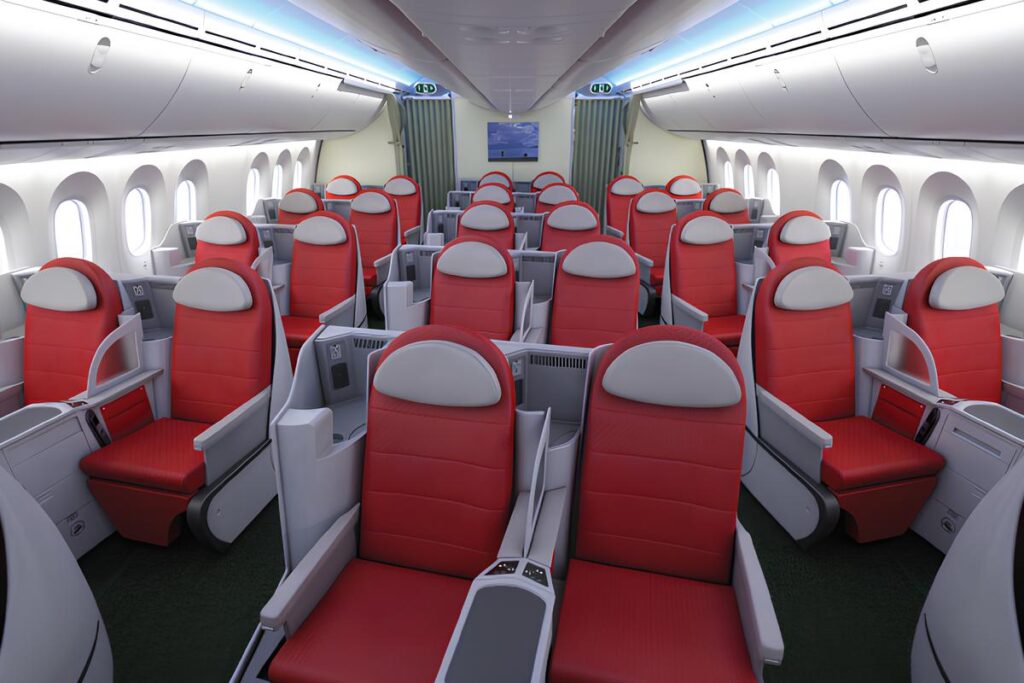
4. Ethiopian Airlines Boeing 787-8 Business Class
- Aircraft: Boeing 787-8
- Seat Type: Angled-flat seats
Ethiopian Airlines (ET) operates one of Africa’s largest international networks and offers extensive connectivity across the continent and beyond. However, more than half of the airline’s Boeing 787-8 fleet still features angled-flat business class seats.
Unlike modern fully flat beds, angled-flat seats allow passengers to slide downward while sleeping, making overnight flights less comfortable.
This issue becomes even more noticeable because these aircraft operate some of Ethiopian’s longest services, including flights to the United States that include a technical stop in Rome.
Cabin refurbishment plans have been discussed, but the programme has experienced delays, leaving these aircraft in regular long-haul service.
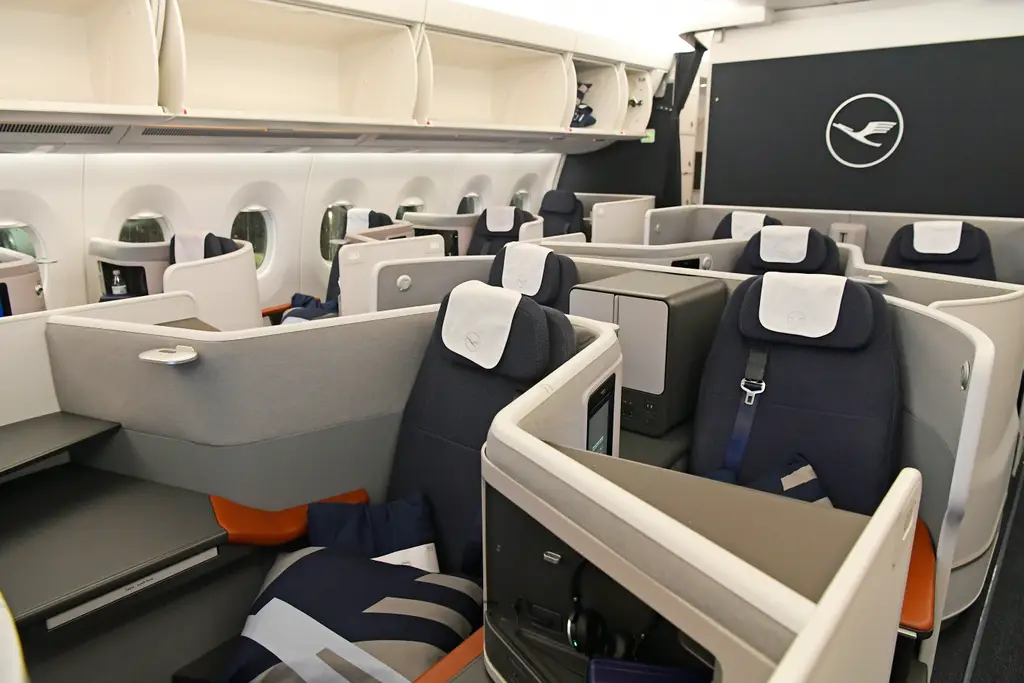
5. Lufthansa Previous Generation Business Class
- Aircraft: Airbus A330, Airbus A340, Airbus A350 (selected), Boeing 747-8, Boeing 747-400, Boeing 787-9 (older deliveries)
- Seat Configuration: 2-2-2 and 2-3-2 depending on aircraft
Lufthansa (LH) has begun introducing its next-generation Allegris business class across selected aircraft. However, the airline’s previous business class remains the dominant product across much of its long-haul fleet.
The older cabin provides limited privacy because neighbouring passengers sit close together, and several seats require passengers to share the footwell area while sleeping. Direct aisle access is also unavailable from every seat, making window-seat passengers dependent on their neighbours during overnight flights.
The design works reasonably well for families or couples travelling together but no longer matches the spacious layouts offered by many competing airlines.
The contrast becomes particularly noticeable when compared with newer products from carriers such as Air France and other international competitors that now provide direct aisle access and significantly greater personal space.
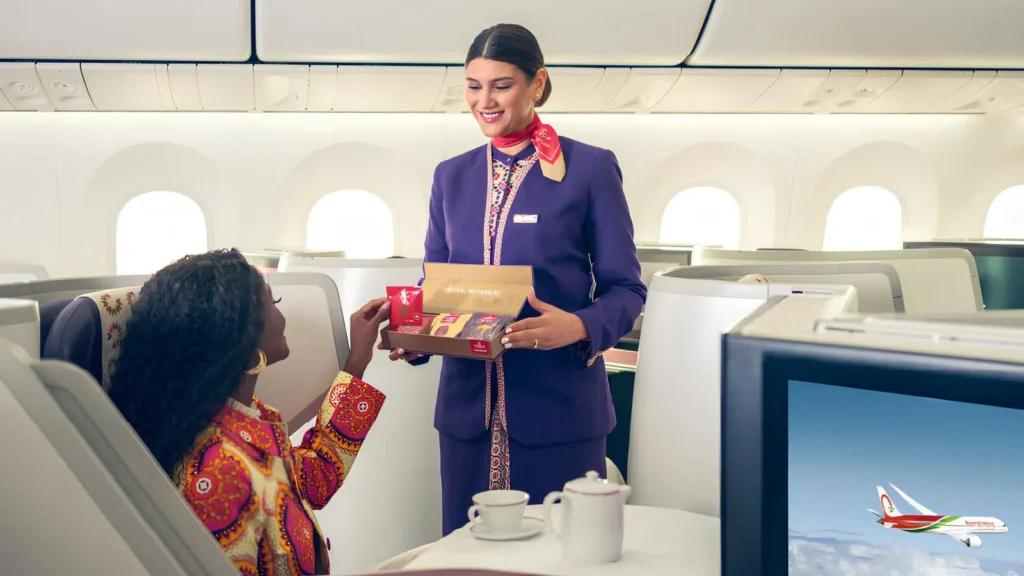
6. Royal Air Maroc Boeing 787 Business Class
- Aircraft: Boeing 787-8
- Seat Configuration: Alternating upper and lower staggered layout
Royal Air Maroc (AT) uses one of the more unusual business class layouts currently flying.
The staggered design places neighbouring passengers at different seat heights, creating a top-and-bottom arrangement that feels unconventional during overnight flights. Window-seat passengers may find themselves elevated above the adjacent passenger, reducing the sense of privacy.
Comfort is further affected by firm seat cushioning that many travellers consider less supportive for long periods of sleep. While the cabin offers direct aisle access, its overall design falls behind more recent staggered business class products introduced by competing airlines.
7. Virgin Atlantic and Air New Zealand Business Class
- Aircraft: Boeing 787-9, Airbus A330-300 (Virgin Atlantic), Boeing 787-9 (Air New Zealand)
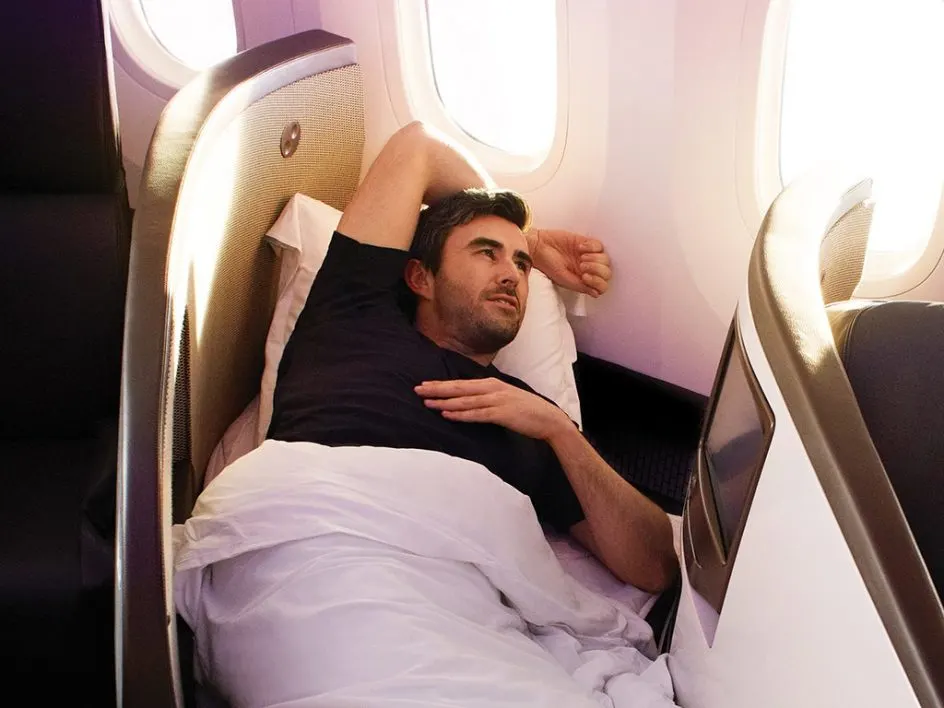
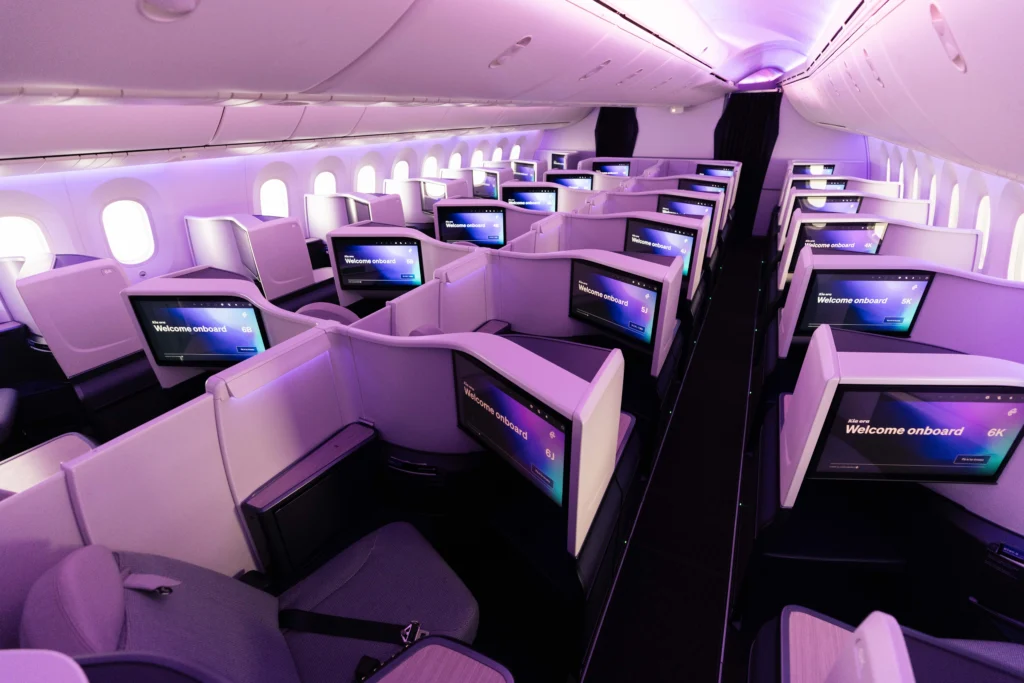
Virgin Atlantic (VS) introduced its herringbone business class in 2003, making it one of the first airlines to offer fully flat beds on long-haul flights. At the time, the cabin represented a major step forward for premium travel.
More than twenty years later, the same product no longer competes with newer business class cabins. Every passenger faces toward the aisle instead of the window, reducing privacy throughout the flight.
Storage space is minimal, and passengers must manually convert the seat into a bed. The sleeping surface is also firmer than many modern business class products.
Virgin Atlantic continues to operate these seats on its Boeing 787-9 and Airbus A330-300 aircraft. The airline already offers significantly better Upper Class Suites on the Airbus A330-900neo and Airbus A350-1000 fleets.
A Boeing 787 retrofit programme has been announced, although work is expected to begin from 2028. Meanwhile, the Airbus A330-300 fleet will eventually leave service.
Air New Zealand (NZ) also continues to use the same herringbone layout on part of its long-haul fleet, although the airline has already started introducing its new Business Premier cabin on refurbished aircraft.
8. Delta Air Lines Boeing 767-300ER Business Class
- Aircraft: Boeing 767-300ER
- Seat Configuration: 1-2-1
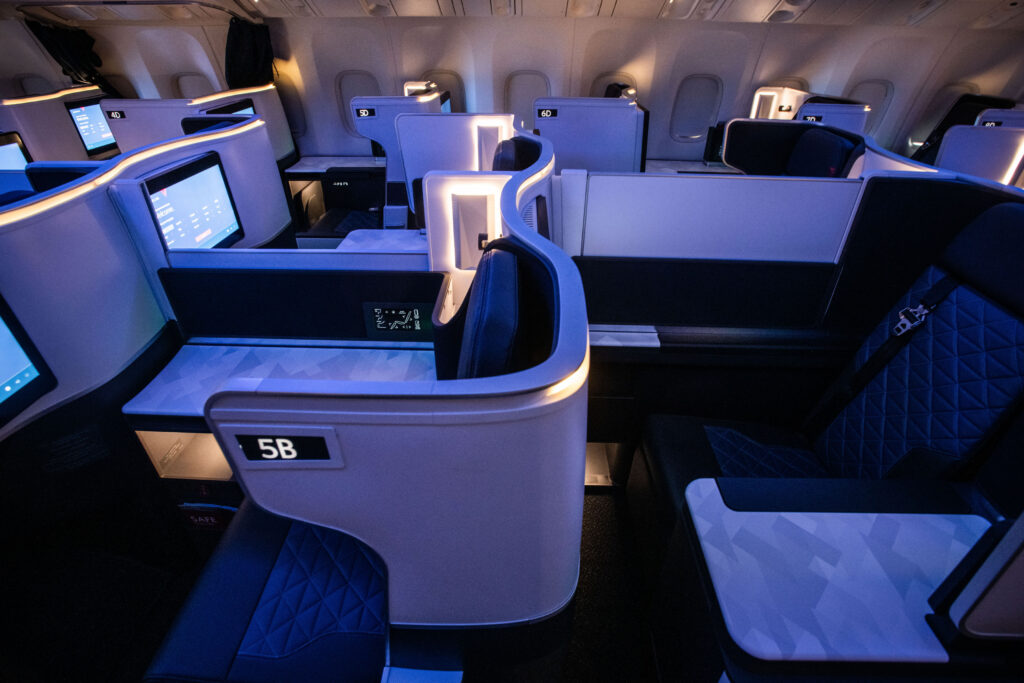
Unlike many airlines on this list, Delta Air Lines (DL) provides direct aisle access from every business class seat on its Boeing 767-300ER fleet. However, the overall cabin has become one of the oldest international premium products among major US airlines.
The seats are noticeably narrower than Delta’s newer Delta One Suites, while the entertainment screens are smaller and lower in resolution. Storage space is also limited compared with newer business class cabins.
Despite these shortcomings, Delta plans to continue operating the Boeing 767-300ER fleet for several more years, including international services through at least 2028 and broader fleet operations until around 2030. As a result, passengers booking Delta One should continue checking aircraft assignments before selecting flights.
The difference becomes particularly noticeable when compared with Delta’s Airbus A350 and Airbus A330neo fleets or even United Airlines’ recently refurbished Boeing 767 cabins.
9. Royal Jordanian Embraer E190-E2 Business Class
- Aircraft: Embraer E190-E2
- Seat Configuration: 2-2 staggered layout
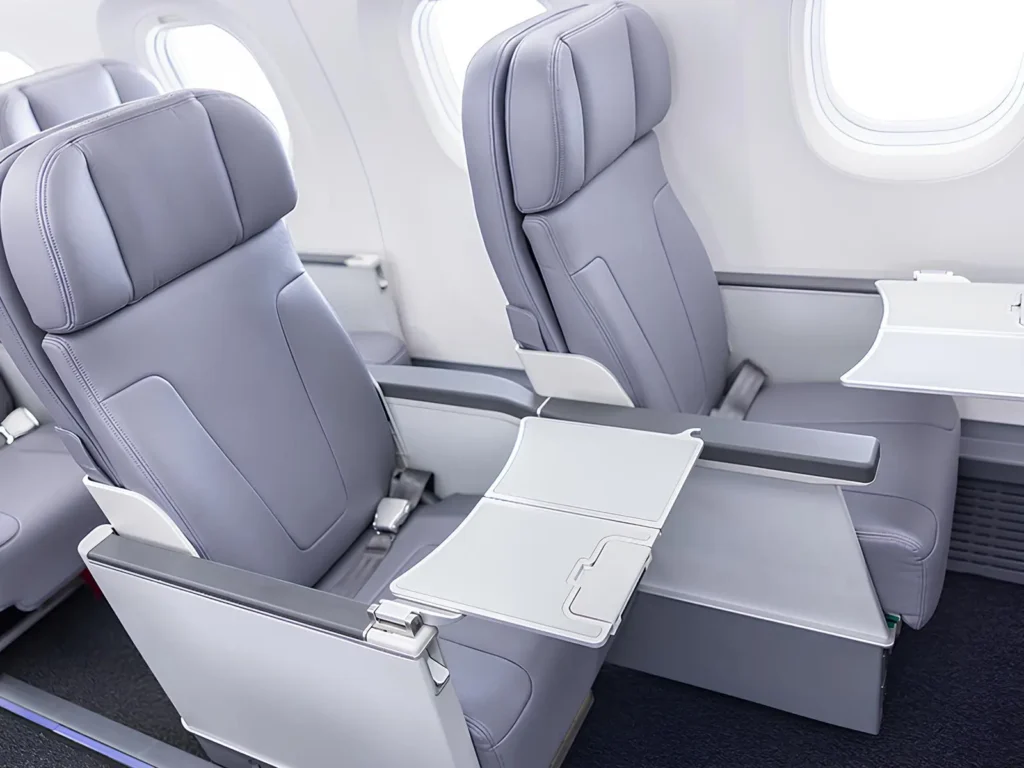
Royal Jordanian (RJ) replaced its previous Embraer business class cabin with a new staggered 2-2 configuration on its Embraer E190-E2 aircraft. Instead of retaining the earlier 1-2 layout, the airline introduced seats where the window seats sit slightly behind the aisle seats.
The design attempts to provide additional shoulder room, but it creates several practical compromises. Access to the window seat is narrow, making boarding and exiting more difficult.
Passengers seated by the window may also feel exposed because the adjacent aisle passenger sits close enough to look directly across the seat.
Although the concept is innovative, the overall execution reduces both convenience and privacy compared with more conventional regional business class layouts.
10. Intra-Europe Business Class
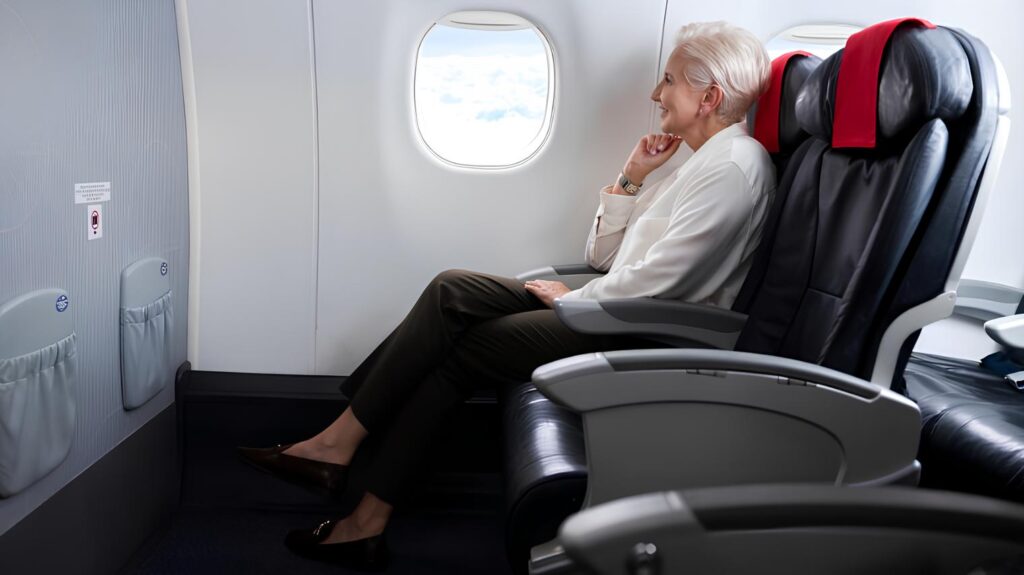
Europe continues to have one of the least competitive short-haul business class products among major aviation markets.
Most European airlines simply block the middle seat in a standard economy row instead of installing dedicated business class seats.
While this gives airlines flexibility to increase or reduce premium cabin capacity depending on demand, passengers receive little improvement in comfort compared with economy class.
Another reason this product has remained unchanged is the lack of competitive pressure. Since nearly every major European network airline follows the same approach, there has been little incentive to introduce a more premium short-haul business class experience.
Why Many Airlines Still Operate Older Business Class Seats
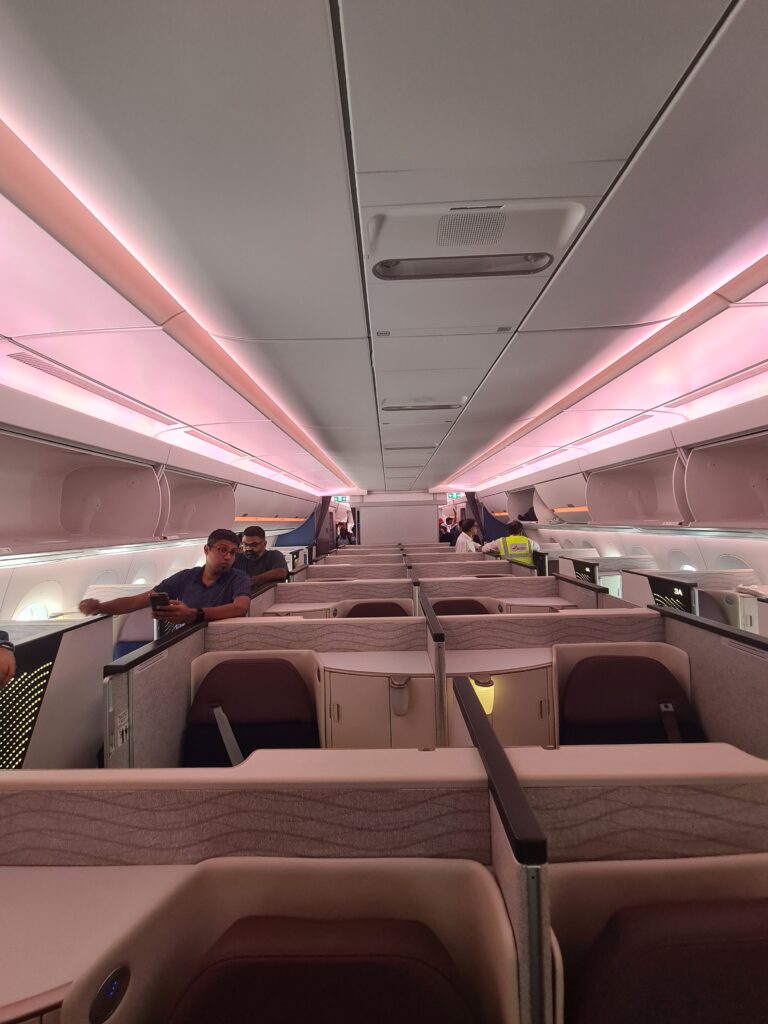
Replacing an entire business class cabin is one of the most expensive investments an airline can make. Retrofitting wide-body aircraft requires extensive engineering work, regulatory certification, and weeks of aircraft downtime.
Many airlines have also experienced delays caused by supply chain disruptions, limited seat manufacturing capacity, certification timelines, and postponed aircraft deliveries. These factors have extended the lifespan of several business class products that airlines originally planned to replace much earlier.
Fleet renewal strategies also influence upgrade schedules. Airlines often prioritize installing new cabins on newly delivered aircraft before investing in older fleets that may eventually be retired.
Methodology
This ranking is based on the overall competitiveness of each business class product in today’s aviation market rather than its historical significance. Each cabin was evaluated using key factors, including seat comfort, sleeping quality, privacy, direct aisle access, cabin layout, storage space, inflight entertainment, and how well it compares with modern business class standards.
The assessment focuses only on the hard product and does not consider soft product elements such as cabin crew, catering, lounges, or onboard service.
Aircraft with outdated cabins that are already scheduled for imminent retirement across only a small portion of an airline’s fleet have been excluded.
Rankings also consider the typical route length on which each product operates, as an aging seat on a long-haul flight has a greater impact on the passenger experience than one used on short regional services.
Conclusion
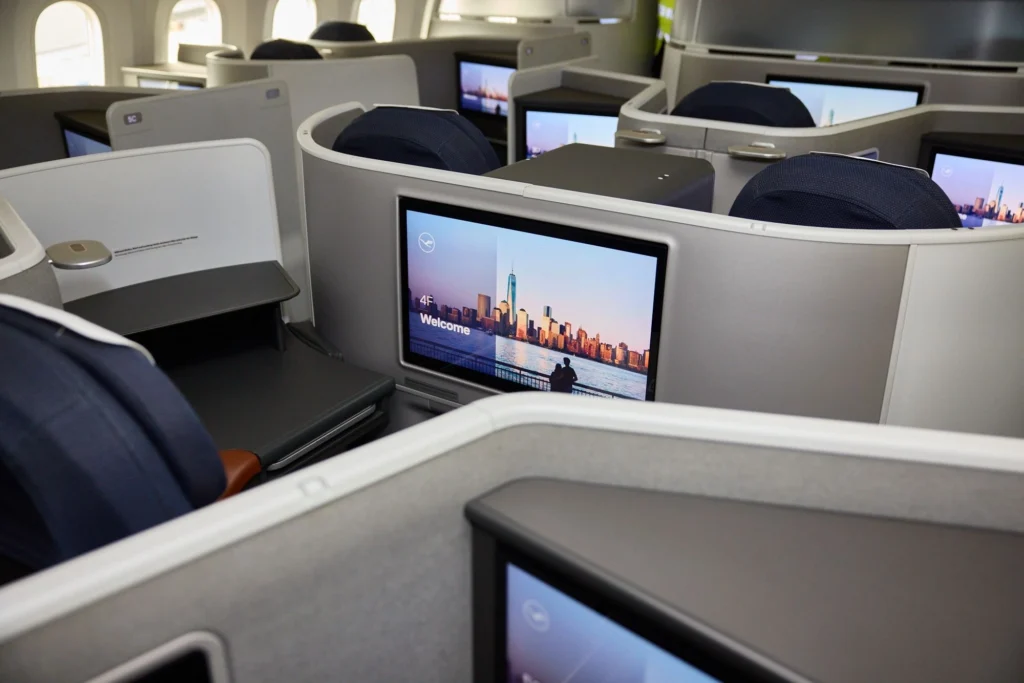
Business class has advanced significantly, with modern cabins offering private suites, fully flat beds, wireless charging, larger entertainment screens, and direct aisle access from every seat.
However, several established airlines still operate legacy business class products that no longer match current industry standards.
That does not necessarily make these airlines poor choices, as many offer excellent onboard service, strong route networks, and newer cabins on other aircraft. The experience often depends on the specific aircraft assigned to a flight rather than the airline itself.
For premium travelers, aircraft type remains one of the most important booking considerations. The same airline may offer one of the industry’s best business class suites on one aircraft while operating a considerably older product on another.
Reviewing the aircraft type and seat map before booking can make a significant difference to the overall travel experience.
Stay tuned with us. Further, follow us on social media for the latest updates.
Join us on Telegram Group for the Latest Aviation Updates. Subsequently, follow us on Google News
