

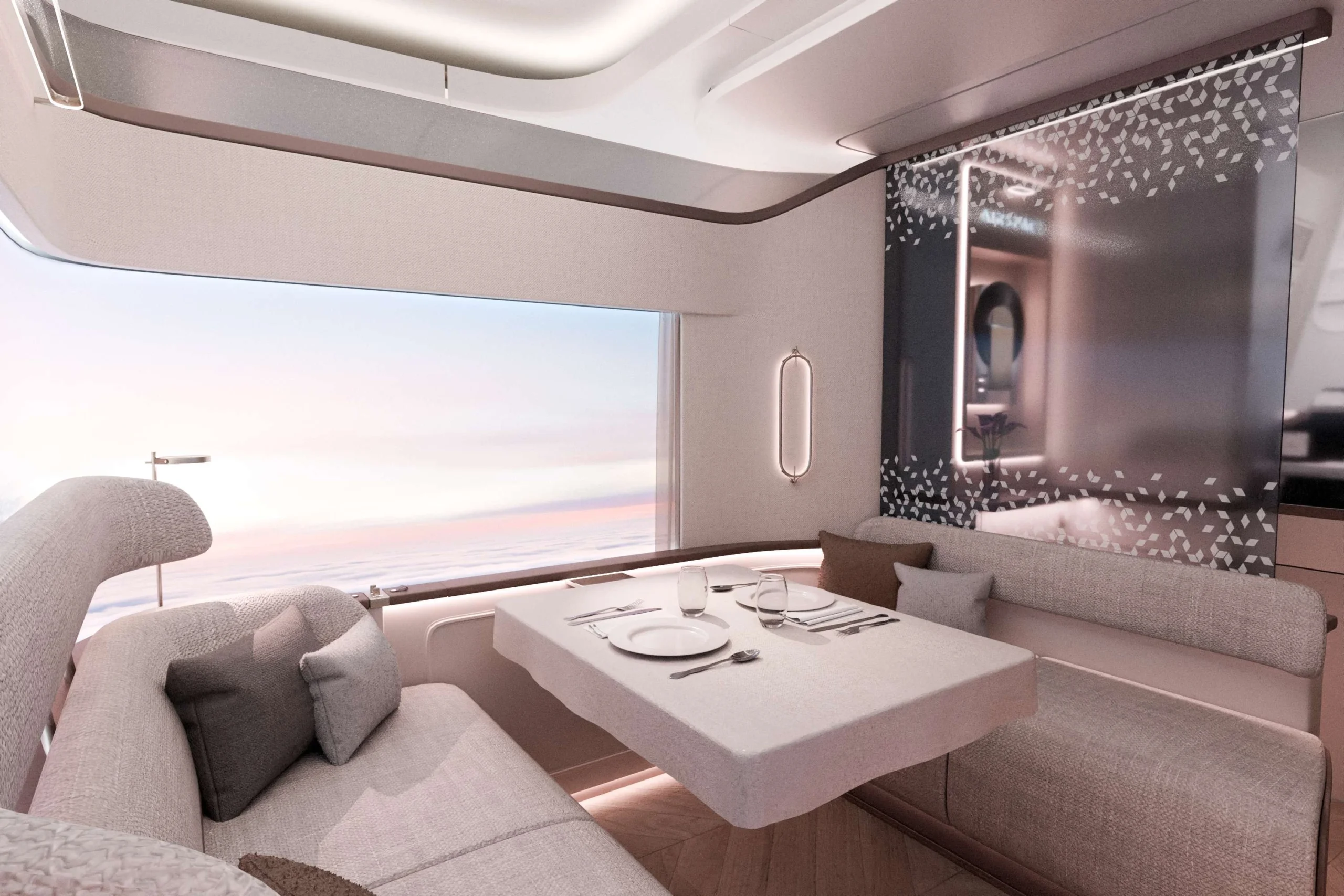
HAMBURG- Airbus has officially moved its ultra-premium “First Class Experience” cabin for the A350-1000 into the development phase, signaling a major push into the growing luxury long-haul market.
The European aircraft manufacturer revealed the update during the Aircraft Interiors Expo in Hamburg, where executives confirmed that several airlines are already evaluating parts of the concept for future premium cabins.
The project reflects the strong recovery in high-end international travel after the COVID-19 pandemic, with airlines increasingly investing in exclusive First Class products to separate themselves from business class offerings.
Airbus said its redesigned Airbus A350-1000 cabin architecture could help carriers create highly differentiated premium experiences on flagship routes from cities such as Singapore, Doha, and London.

A350 First Class
Airbus first introduced the First Class Experience concept in 2025 as a radical redesign of the forward section of the A350-1000.
The layout replaces the traditional front-cabin arrangement with a spacious 1-1-1 configuration that includes an oversized center “Master Suite” designed for two passengers.
The suite features a double bed, private dining space, dedicated lavatory access, and wraparound 4K digital display panels that simulate panoramic external views.
Airbus executives said the concept focuses heavily on space, privacy, and personalization, which remain the most important factors for premium travelers.
To accommodate the larger suites, Airbus engineers reconfigured the aircraft’s front section by relocating lavatories, monuments, and crew rest access areas.
The redesign also creates a quieter sleeping environment by reducing crew movement around the suites during long-haul flights.
Airbus Vice President of Cabin Marketing Ingo Wuggetzer stated that the company has now completed the study phase and is actively developing the product for future airline deployment, Runway Girl Network flagged.
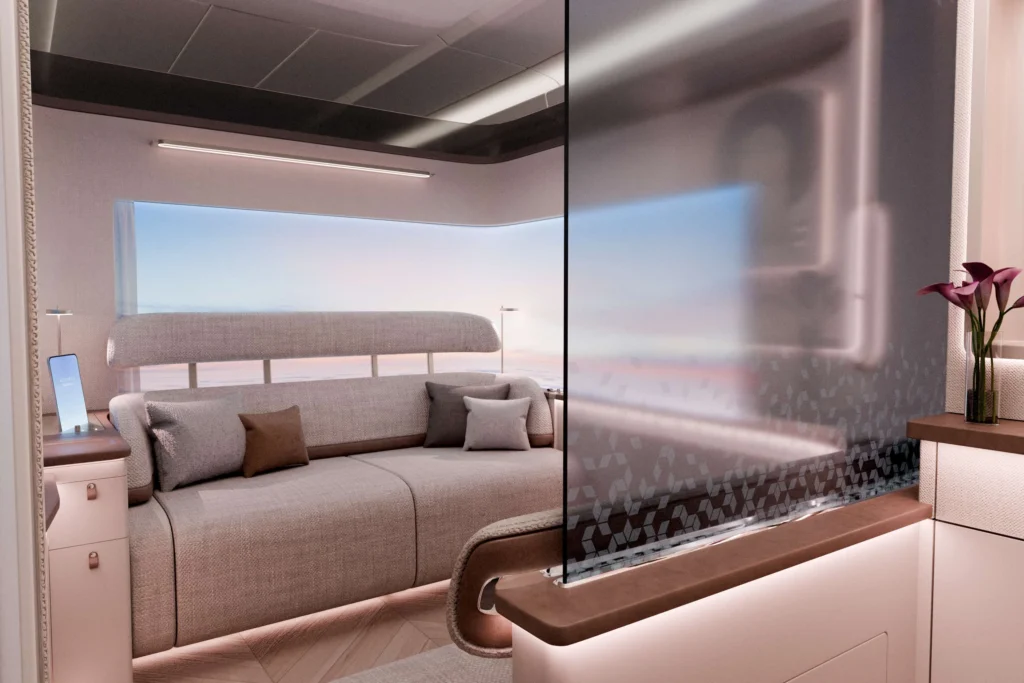
Premium Travel Growth on A350
Airbus believes the market for First Class remains stable despite airlines reducing the total number of premium seats on modern aircraft.
According to the manufacturer, the average number of First Class seats per aircraft has fallen from eight before 2021 to roughly five today.
However, airlines are now building larger and more exclusive suites that command significantly higher fares. Airbus said carriers increasingly want a “First Class-plus” product that sits above conventional premium cabins and delivers a near-private jet experience on commercial flights.
Recent cabin launches from Lufthansa (LH), SWISS (LX), and Japan Airlines (JL) demonstrate the growing industry focus on ultra-luxury travel.
Lufthansa’s new Allegris First Class, which includes a double suite concept, has already gained strong attention across the aviation sector.
Airbus executives added that several airlines currently evaluating new A350 First Class products could adopt elements of the company’s concept. Air India (AI) is among at least five carriers reportedly developing next-generation First Class suites for future A350 fleets.
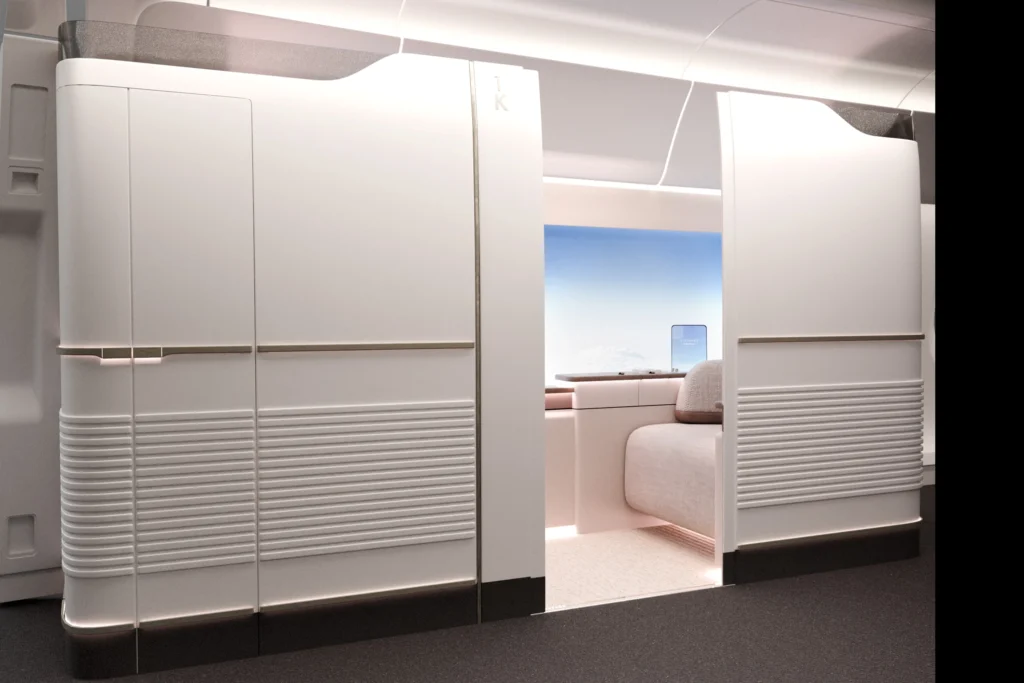
Airline Interest Builds
The manufacturer expects the first cabins inspired by the concept to enter commercial service around 2030. Airbus said some airlines are already in advanced customization discussions, while others remain in the early pre-sales stage.
The decline of the Airbus A380 in global fleets has also increased the importance of the A350-1000 as a flagship aircraft for premium international routes.
Many airlines now view the twin-engine widebody as the primary platform for showcasing their most advanced cabin products.
Airbus acknowledged that the project creates manufacturing challenges because of its highly customized design and relatively low production volumes.
Still, the company believes demand for ultra-premium air travel will continue expanding as airlines compete for high-spending long-haul passengers.
Stay tuned with us. Further, follow us on social media for the latest updates.
Join us on Telegram Group for the Latest Aviation Updates. Subsequently, follow us on Google News
