

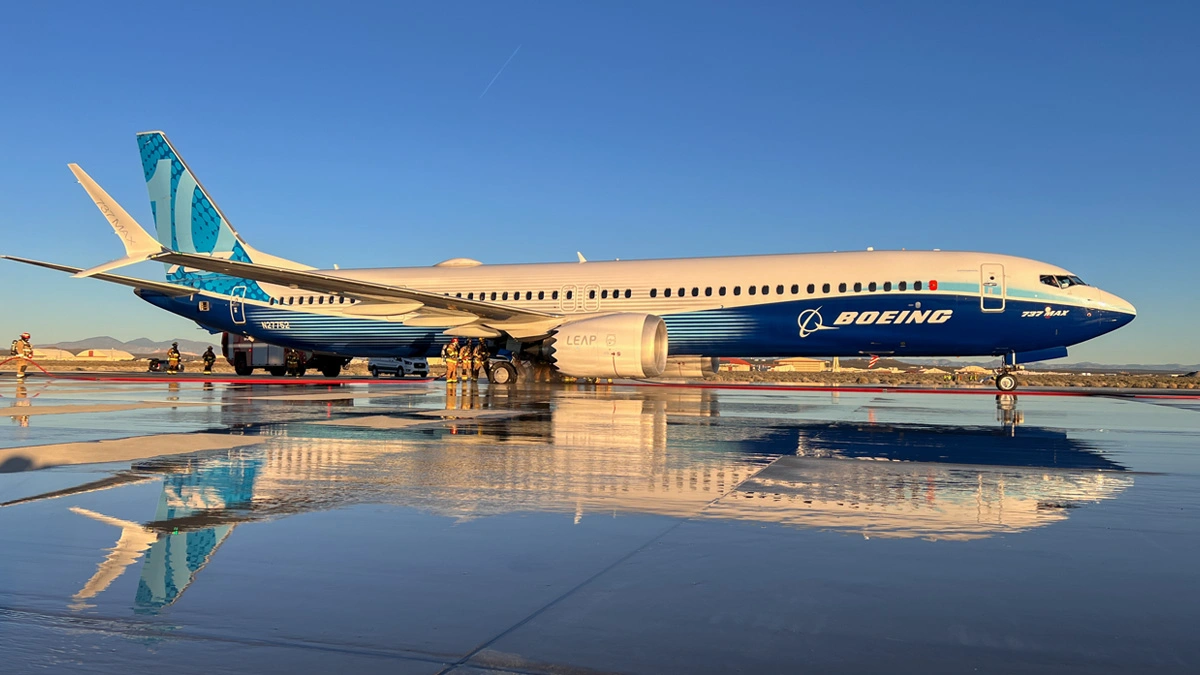
ARLINGTON- Boeing successfully completed maximum brake energy (MBE) certification testing on its 737-10, the largest model in the 737 MAX family. The test took place at Edwards Air Force Base (EDW) north of Los Angeles (LAX), where pilots brought the fully loaded aircraft to a stop from over 200 miles per hour using only worn-down brakes.
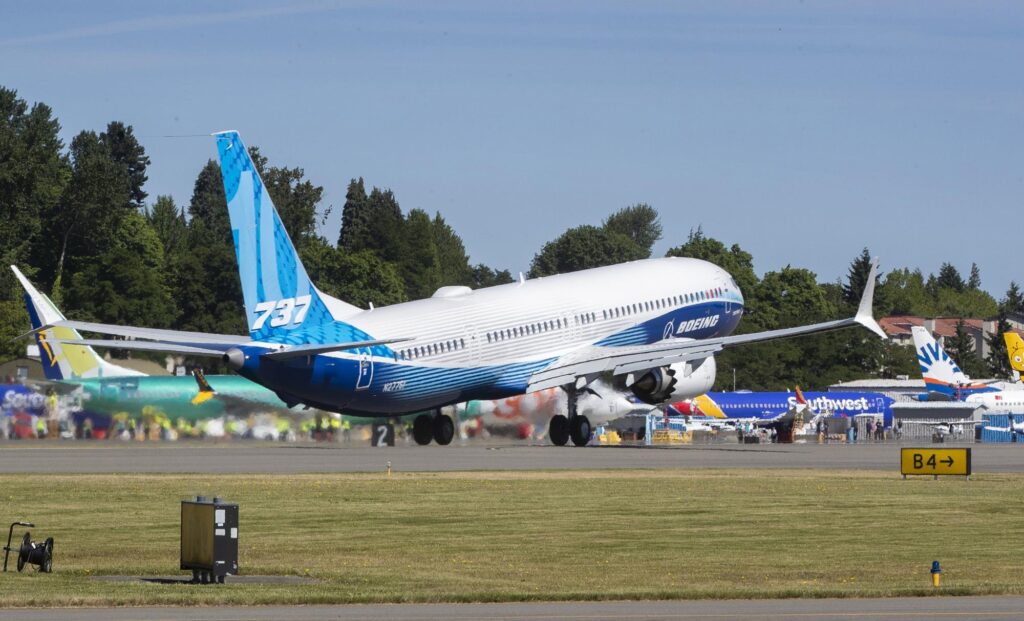
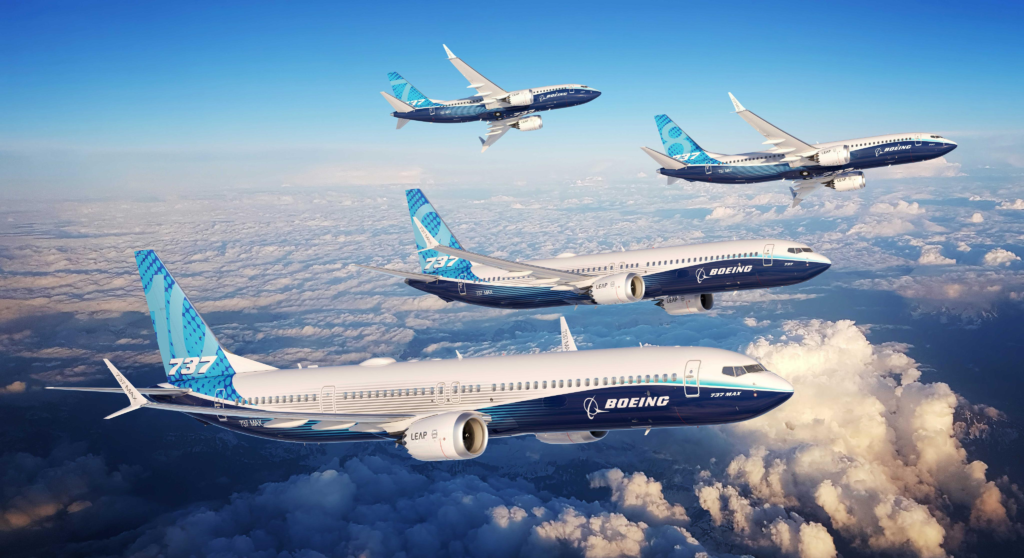
The 737-10 features a longer fuselage than the 737-9 and can seat up to 230 passengers. Boeing aims to certify the 737-10 and the smaller 737-7 later this year, bringing the best per-seat economics of any single-aisle aircraft to airline customers worldwide.

Boeing Tests 737-10 Braking Performance
The MBE test is one of the most demanding certification milestones for any commercial aircraft. It requires the test team to simulate the worst possible rejected takeoff scenario. The aircraft must reach its maximum takeoff speed, abort, and come to a complete stop using only its brakes.
Capt. Kevin Zeznick, the test pilot at the controls, explained the premise. The team loads the airplane to its maximum weight and accelerates to a speed it would reach on any standard takeoff. The goal is to prove the aircraft can stop and remain safe under the most extreme conditions.
For the test, the Boeing Test & Evaluation team loaded the 737-10 to its maximum takeoff weight of 197,900 pounds (89,765 kg). The brakes were machined down to within two percent of their total wear life.
Before the high-speed run, the crew completed a required three-mile taxi to simulate an aircraft leaving its gate and reaching the runway. This sequence replicated the thermal load brakes would carry in a real-world scenario.
Zeznick then accelerated the aircraft down the Edwards runway, reaching 180 knots (207 mph or 333 km/h) before cutting the throttles and applying full braking force. The aircraft came to a stop at approximately 11,000 feet on the 15,000-foot runway. Thrust reversers were not used at any point during the stop.
Five-Rotor Brakes Deliver Record Stopping Power
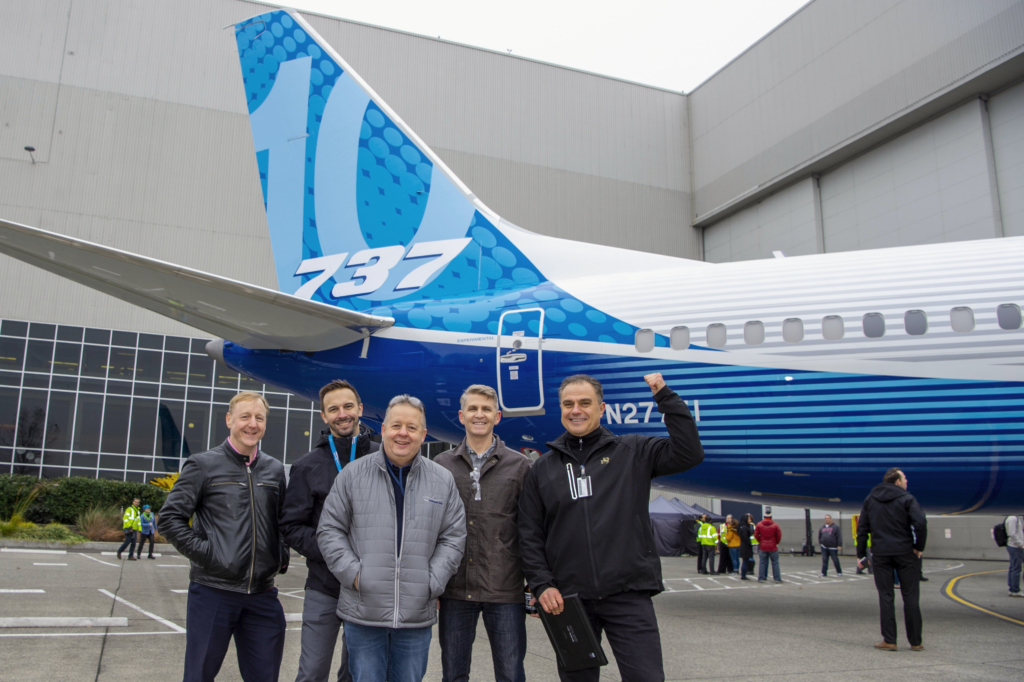
Boeing engineers redesigned the 737 MAX landing gear and strengthened the braking system to handle the 737-10’s longer fuselage and higher takeoff weight. Design engineer Evan Preston called them the highest-performing brakes ever installed on a 737.
The upgrade includes a fifth rotor added to the brake assembly and a longer torque tube. These changes deliver greater brake force and improved stopping performance compared to earlier 737 variants.
The enhanced system directly benefits airline operations by supporting heavier takeoff weights, which translates to more passengers or cargo on each flight.
Certification engineer Colston Polly noted that brake performance data from these tests feeds directly into the aircraft’s certified takeoff performance tables. Better brake results mean airlines can extract more operational value from each departure.
Heat, Fuse Plugs and the Five-Minute Wait
After the aircraft stopped, the entire team held position for five minutes. This mandatory wait simulates the time a commercial airport rescue crew would need to reach an aircraft after a rejected takeoff.
During those five minutes, the kinetic energy absorbed by the brakes converted into extreme heat. Temperatures inside the brake assemblies exceeded 2,500 degrees Fahrenheit (1,371 degrees Celsius).
Boeing engineers designed the wheels with multiple thermal fuse plugs to manage this scenario safely. As intended, the plugs melted and released tire pressure in a controlled manner. All four brake assemblies survived the full five-minute hold before fire crews moved in to cool the components.
Flight Test Engineer Lauren Auerbach confirmed that the brakes delivered the expected pressure and maximum energy absorption. The anti-skid system also performed as predicted. Zeznick added that both acceleration and stopping distances closely matched pre-test calculations.
Boeing Runs Two Full MBE Tests With Separate Brake Suppliers
The 737 MAX uses brakes from two different suppliers, so Boeing conducted two complete MBE tests. Each test required extensive post-run work.
Ground crews jacked the aircraft, removed the deflated wheel and tire assemblies, and swapped out the brakes before the airplane could be towed off the active runway. A single test day stretched up to 12 hours, built on months of planning and coordination.
Both tests produced successful results. All brake assemblies from both suppliers survived the maximum energy scenario within design parameters. Preston said the improved stopping performance, combined with other 737-10 enhancements, will deliver flight manual data that airline customers will value.
The Boeing 737 MAX Development team continues to conduct the remaining certification flight tests and complete the required documentation. The company targets certification of both the 737-10 and 737-7 later this year.
Stay tuned with us. Further, follow us on social media for the latest updates.
Join us on Telegram Group for the Latest Aviation Updates. Subsequently, follow us on Google News
