

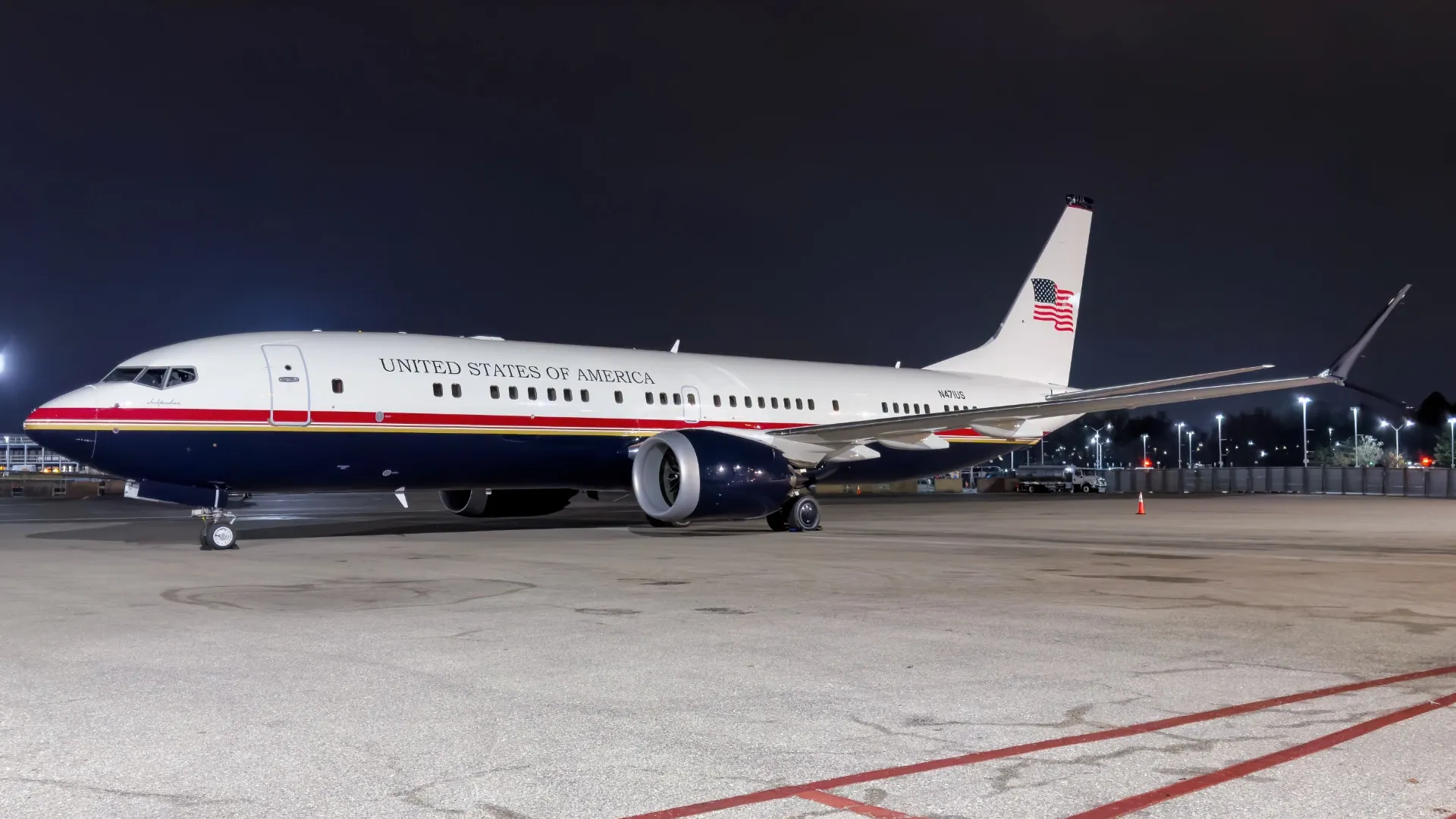
WASHINGTON, D.C.- The U.S. Department of Homeland Security (DHS) spent $464 million on 10 used aircraft through a no-bid contract intended to expand deportation operations. However, most of the fleet has remained largely unused, while some aircraft have instead been leased or offered to other federal agencies.
The purchase included older Boeing 737 passenger aircraft and luxury business jets, but internal documents indicate staffing shortages and changing operational priorities have limited their deployment. The developments have drawn criticism from lawmakers over the use of taxpayer funds and emergency contracting procedures.
Questions Grow Over DHS Aircraft Acquisition
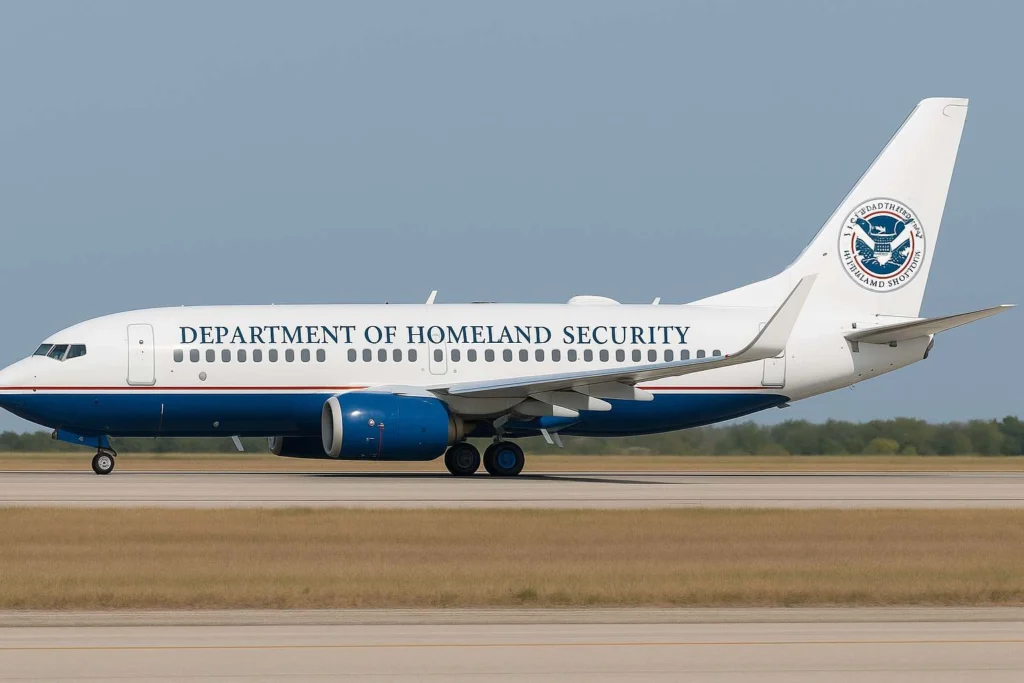
The Department of Homeland Security awarded the contract last fall under an emergency procurement exemption that allowed it to bypass competitive bidding. Officials argued that the aircraft were urgently required to support deportation flights, but subsequent events have raised questions about that justification.
According to internal government documents reviewed by The New York Times, the department lacked enough staff to operate much of the newly acquired fleet. As a result, seven Boeing 737 aircraft remained parked for extended periods at Lake Charles Regional Airport (LCH) in Louisiana instead of carrying out deportation missions.
The department stated that the grounded aircraft had been undergoing maintenance inspections and that two of the aircraft were expected to begin deportation operations later in the month.
Luxury Aircraft Shifted to Other Government Agencies
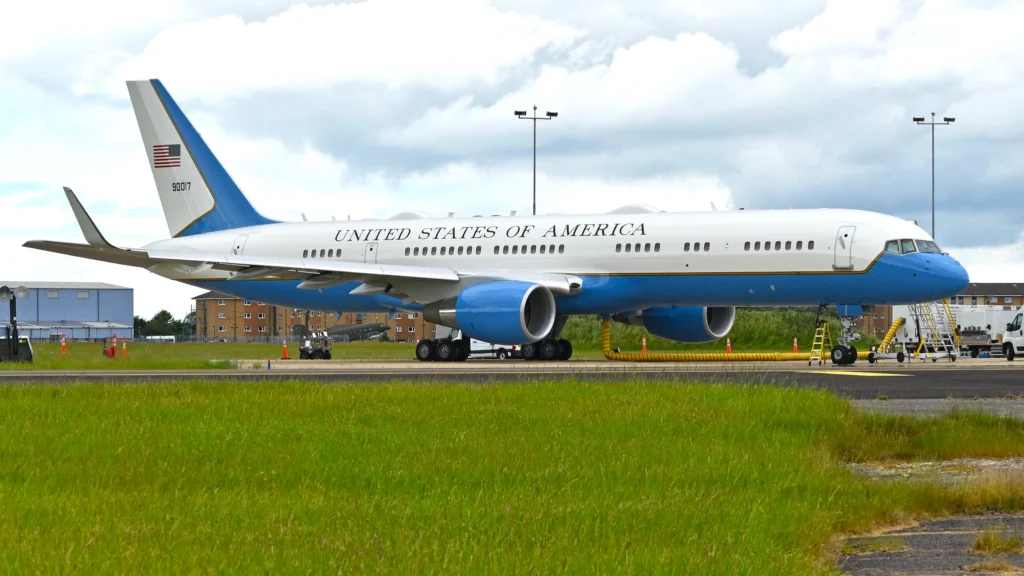
Three of the purchased aircraft were business jets rather than standard passenger aircraft. Shortly after the acquisition, DHS explored transferring or leasing two of these aircraft to other federal agencies.
Senate Democrats said one Gulfstream business jet has already been leased to the Federal Bureau of Investigation (FBI) for use supporting Director Kash Patel’s travel, while also serving broader FBI operational requirements.
Lawmakers also said DHS proposed transferring a Boeing 737 luxury jet to the Department of Defense, although the Pentagon stated that no agreement had been finalized. One remaining Gulfstream aircraft is expected to remain with DHS for senior leadership travel.
Senators Seek Accountability
The purchase has attracted scrutiny from Senators Patty Murray and Christopher Murphy, who requested a detailed accounting of how each aircraft was acquired and how the fleet would ultimately be used.
The senators argued that homeland security officials had already informed Congress that most of the aircraft would not be used for deportation flights as originally planned.
Their letter described the acquisition as a potential misuse of taxpayer funds and called for greater transparency regarding the cost of each aircraft and the department’s long-term operational plans.
Use of Emergency Contracting Faces Increased Scrutiny
Federal procurement law generally requires agencies to seek competitive bids before awarding contracts. DHS instead relied on an exemption for cases involving unusual and compelling urgency. The department has not publicly released the detailed justification for invoking that exemption, citing national security concerns.
According to reporting, DHS has used the urgency exemption to support more than $29 billion in contract spending during President Donald Trump’s second term. The exemption accounted for nearly two-thirds of the department’s contract spending in 2026, a significant increase compared with previous years.
Procurement experts cautioned that while emergency contracting serves an important purpose during genuine crises, frequent reliance on the exemption increases the risk of inefficient spending and reduced oversight.
Fleet’s Future Remains Uncertain
Before purchasing its own aircraft, Immigration and Customs Enforcement (ICE) primarily relied on charter operators and military or Coast Guard aircraft for deportation missions.
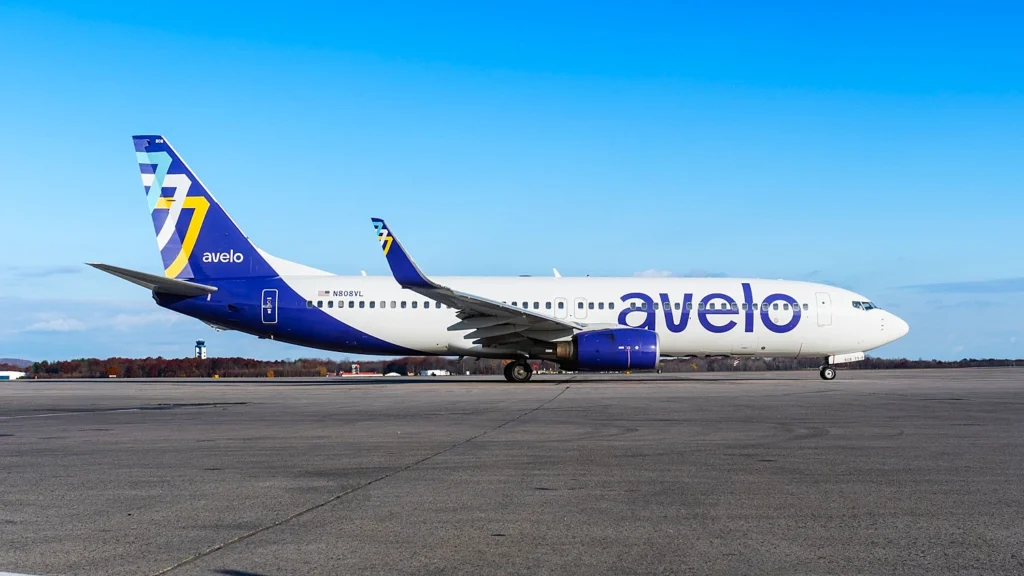
The agency has continued operating thousands of charter flights even after the new fleet was acquired. Several of the Boeing 737 aircraft had previously flown for Avelo Airlines (XP) before being acquired by the government.
Although two aircraft briefly participated in evacuation missions during the Middle East conflict earlier this year, most have seen little operational use since the purchase.
Looking ahead, DHS has acknowledged that it will require an external contractor to provide flight crews and maintenance personnel to operate the fleet, with that contract expected to begin next summer.
Stay tuned with us. Further, follow us on social media for the latest updates.
Join us on Telegram Group for the Latest Aviation Updates. Subsequently, follow us on Google News
