

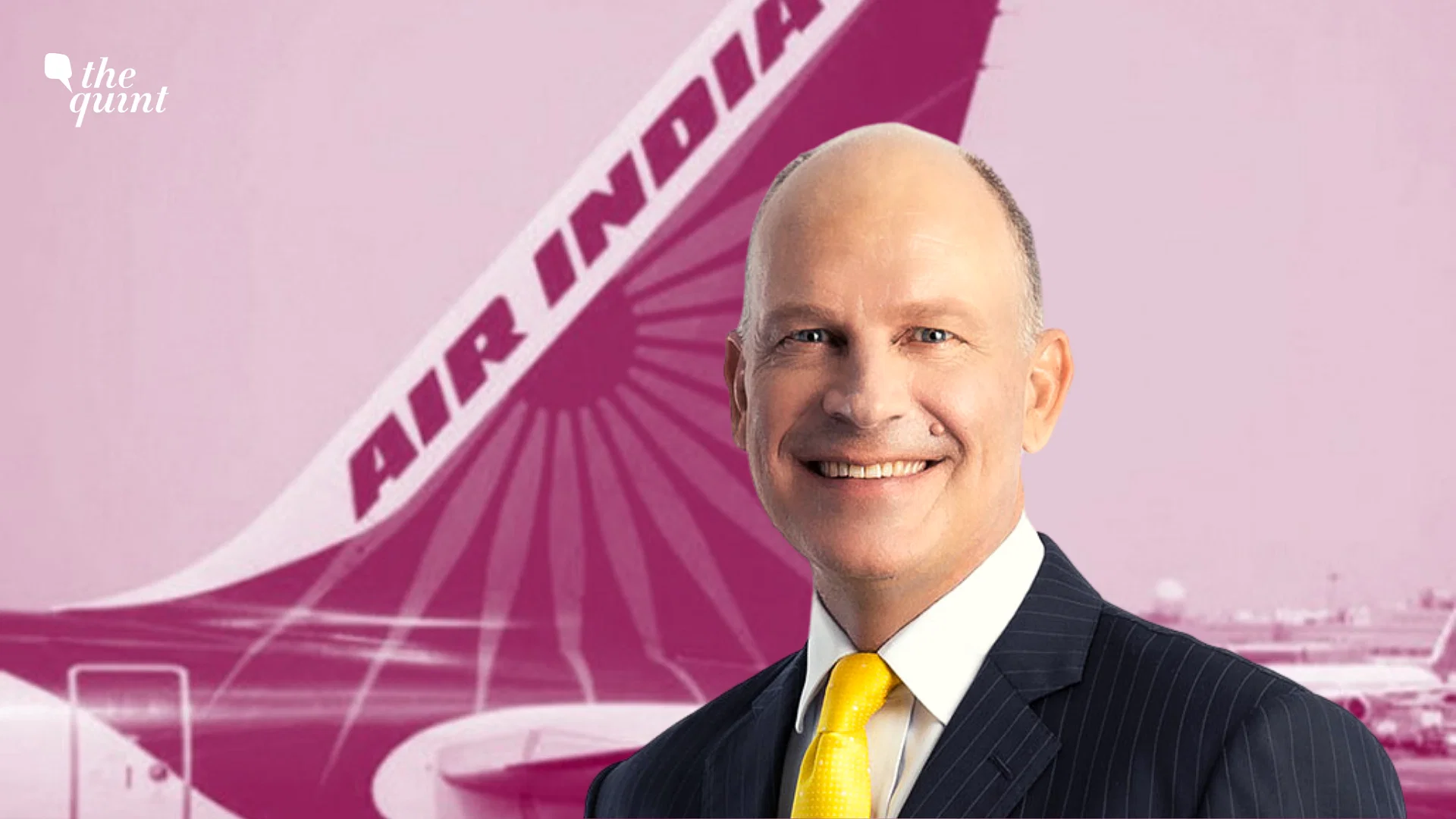
DELHI- Tata Group-owned Air India (AI), India’s second-largest airline, is navigating a leadership transition as CEO Campbell Wilson has stepped down and is currently serving his notice period. The Tata Group, which owns Air India (AI), has begun its search for a successor to lead the carrier through an ongoing but troubled turnaround.
Wilson, who joined Air India (AI) from Singapore Airlines’ (SQ) low-cost subsidiary Scoot (TR) in May 2022, was originally contracted to lead the airline until July 2027. As reported by Mint, the airline has yet to publicly confirm a replacement, and an official comment from Air India (AI) remains pending, Mint exclusively reported.
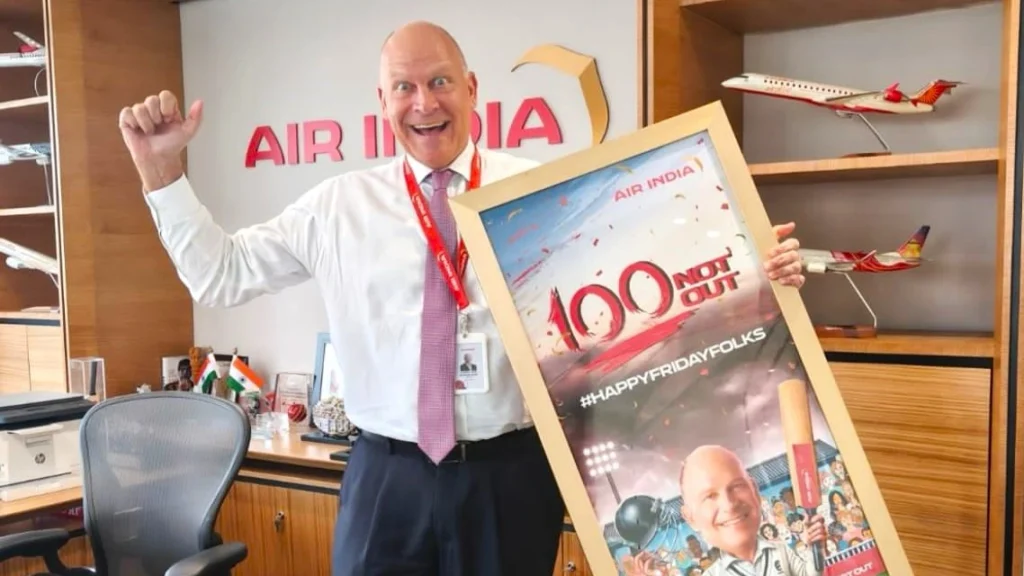
Air India CEO Campbell Wilson Resigns
Wilson took charge of Air India (AI) at a critical juncture, just months after the Tata Group acquired the formerly government-run carrier for ₹18,000 crore in January 2022.
He announced a comprehensive five-year transformation plan called “Vihaan.AI,” which in Sanskrit signifies the dawn of a new era. The plan targeted a full overhaul of fleet, technology, service quality, and network expansion.
One notable achievement during Wilson’s tenure was the smooth completion of the Vistara merger into Air India. Following this consolidation, Singapore Airlines (SQ) became a 25.1% shareholder in Air India (AI), while Tata Sons retained a 74.9% stake.
The airline also expanded its fleet and, on select metro routes, briefly outpaced market leader IndiGo (6E).
However, Wilson’s leadership began to face serious headwinds. Global supply chain problems slowed down the turnaround plan, and delays in aircraft deliveries and refurbishment of older planes affected service quality and punctuality, especially on long-haul routes to Europe and North America.
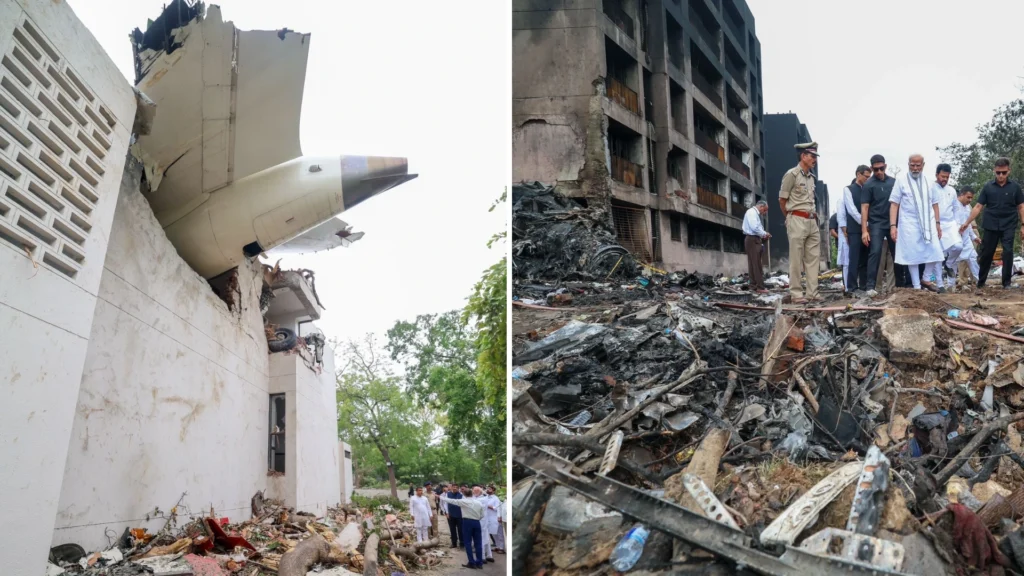
The June 2025 Crash and Its Impact on Wilson’s Position
A turning point came on June 12, 2025, when an Air India (AI) flight from Ahmedabad (AMD) to London (LHR) crashed shortly after takeoff, killing 260 people.
The crash subjected the airline to greater scrutiny, with investigations identifying issues including flying aircraft without performing necessary emergency equipment checks and delays in replacing worn-out engine components.
Regulatory pressure increased significantly, with the Directorate General of Civil Aviation (DGCA) issuing show-cause notices to several senior Air India (AI) officials, including Wilson, over alleged violations and non-compliance.
Senior government officials reportedly chose to engage directly with Tata Group’s top leadership rather than with Wilson after the incident, a development that is understood to have weakened his position.
Financial Performance: Growth Clouded by Rising Losses
Air India’s (AI) standalone revenue rose 13% to ₹61,080 crore in FY25, and the airline reduced its standalone losses from ₹5,031 crore to ₹3,976 crore during Wilson’s tenure. Standalone borrowings, excluding lease liabilities, also fell over 8% to ₹29,713 crore from ₹32,465 crore in FY24.
However, its low-cost subsidiary, Air India Express (IX), tells a different story. Revenue at the subsidiary rose 26% year-on-year to ₹16,033 crore in FY25, but losses expanded more than fourfold to ₹5,822 crore.
Its debt, excluding lease liabilities, jumped 61% to ₹10,087 crore. Air India (AI) and Air India Express (IX) together reported a combined loss of ₹10,859 crore in FY25 on revenues of ₹78,636 crore, making them the biggest loss-making entities within the Tata Group.
Retrofit Delays and Geopolitical Pressures
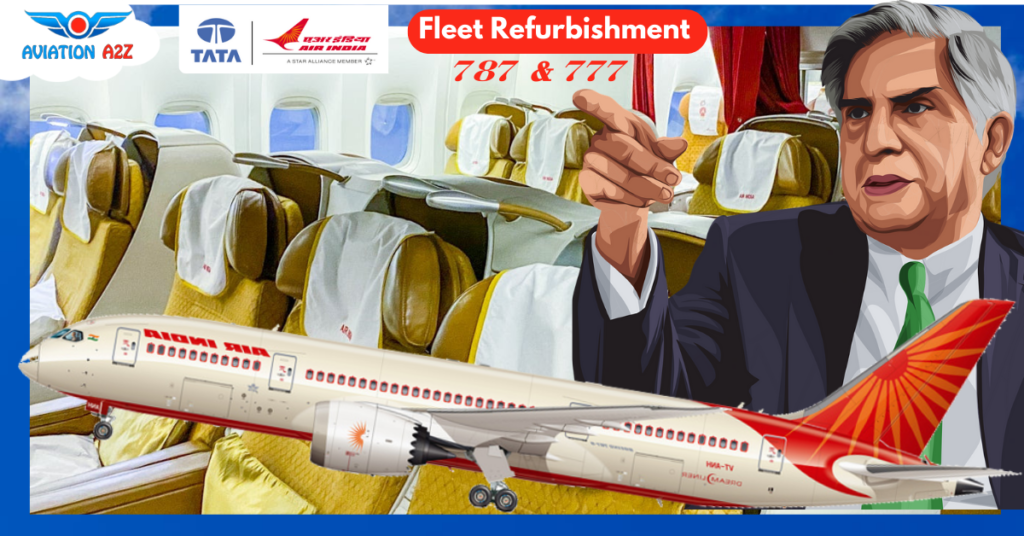
Air India’s (AI) $400 million aircraft retrofit programme is running two years behind schedule, slowing fleet upgrades and international expansion.
The airline has maintained that costs remain on track and most designs are finalized, but the delay has visibly impacted operations.
The closure of Pakistan’s airspace has forced the airline to take longer and more expensive routes on international flights, pushing up fuel costs and hurting overall profitability.
The ongoing conflict in West Asia has further compounded these challenges, extending flight durations and limiting viable international routes.
Tata Group Initiates New Leadership Search
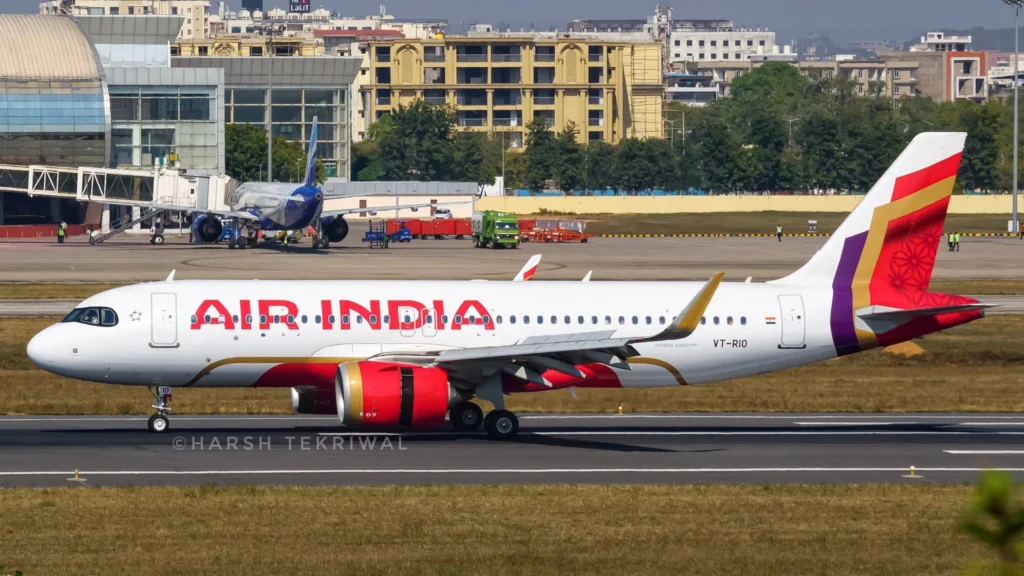
Tata Group Chairman N. Chandrasekaran has held initial discussions with potential CEO candidates who have experience running large airlines, including those with sizable domestic operations.
Murmurs around a leadership change started as early as April 2025, when Wilson stepped down as Chairman of Air India Express (IX) and was replaced by Air India’s Chief Commercial Officer, Nipun Aggarwal.
The leadership transition at Air India (AI) follows broader shifts across India’s aviation sector. Former British Airways (BA) CEO William Walsh has been appointed as the new CEO of IndiGo (6E), India’s largest carrier.
IndiGo (6E) also named Aloke Singh, former CEO of Air India Express (IX), as its Chief Strategy Officer, reflecting a broader reshuffling of executive talent within the industry.
Stay tuned with us. Further, follow us on social media for the latest updates.
Join us on Telegram Group for the Latest Aviation Updates. Subsequently, follow us on Google News
