

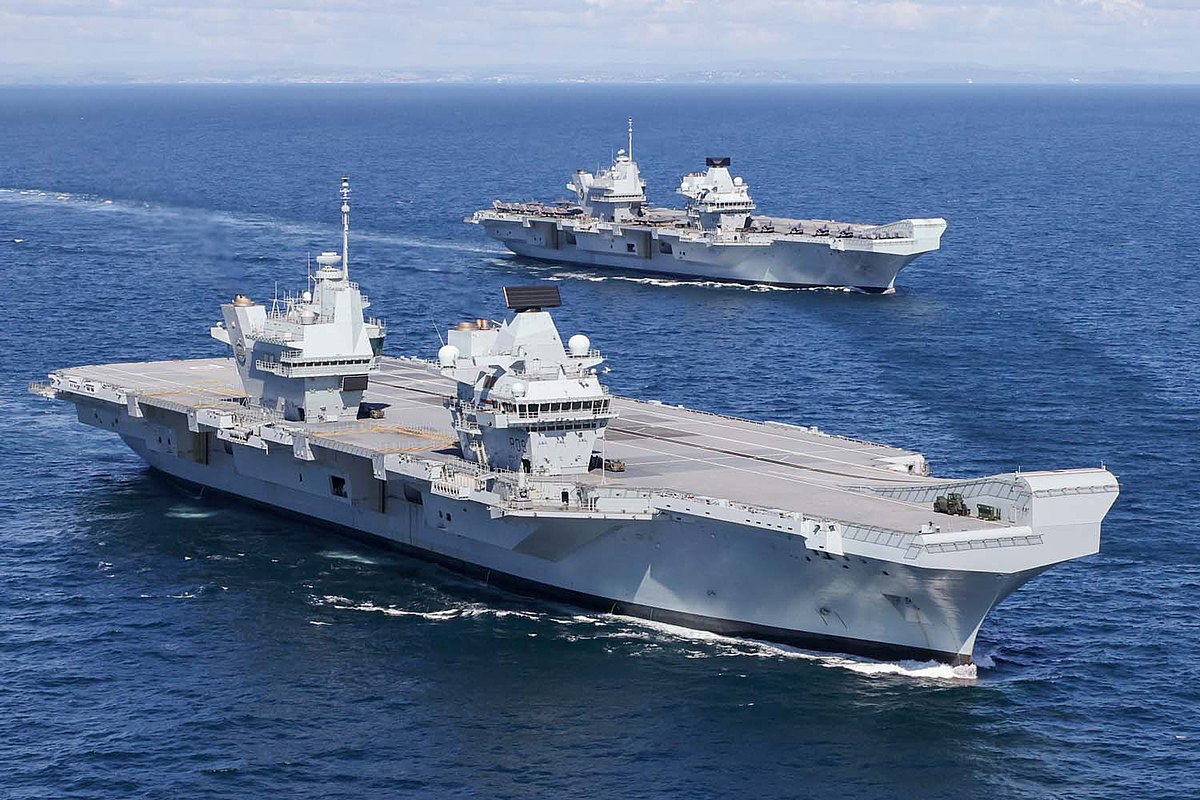
Aircraft carriers are the ultimate expression of naval power projection. They serve as floating airbases capable of launching fighter jets, helicopters, and surveillance aircraft thousands of miles from home shores.
Built at enormous costs and with unmatched engineering, these giants represent not only military might but also national ambition and technological achievement.
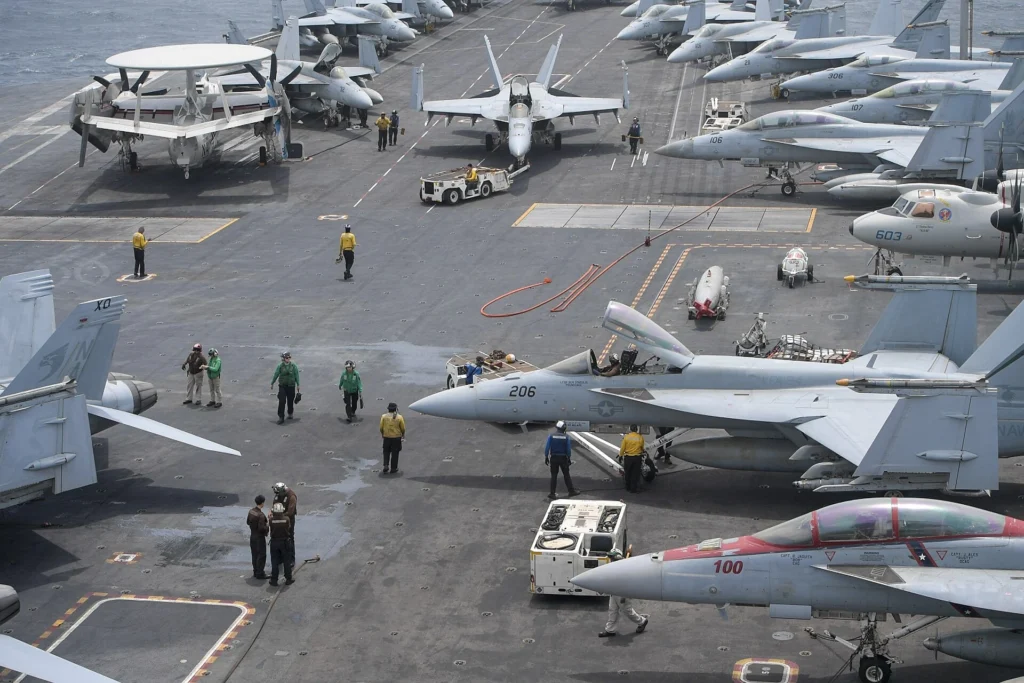
10 Biggest Aircraft Carriers
From the United States’ nuclear-powered behemoths to Europe and Asia’s domestically built warships, here are the biggest aircraft carriers in active service today.
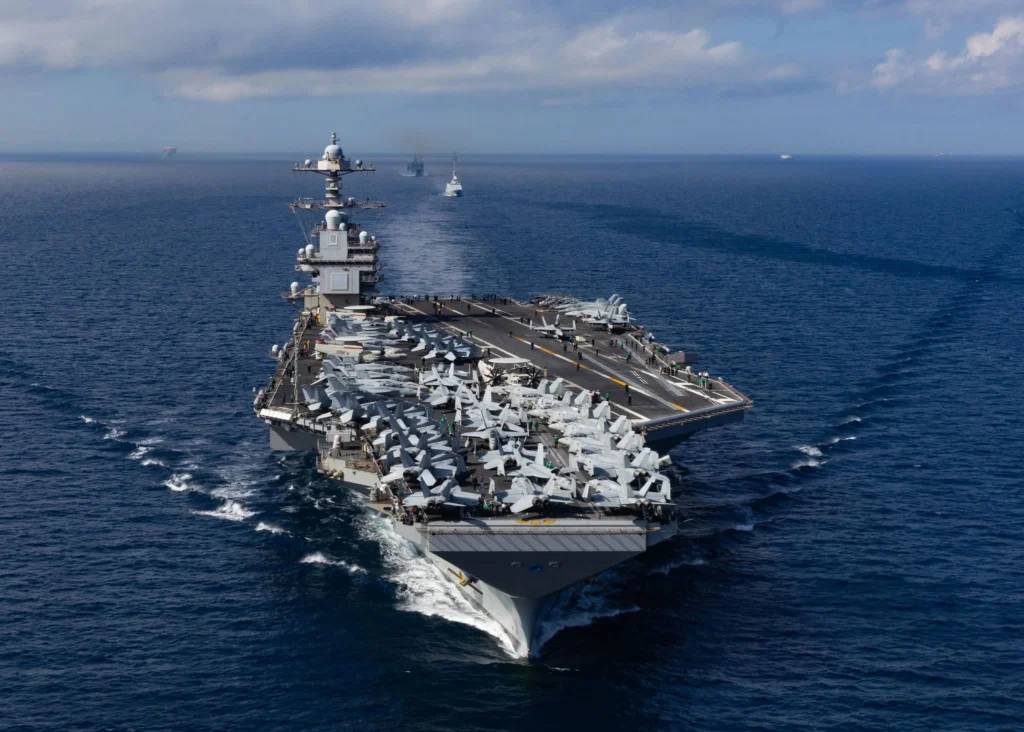
1. USS Gerald R. Ford Class (CVN-78) – United States
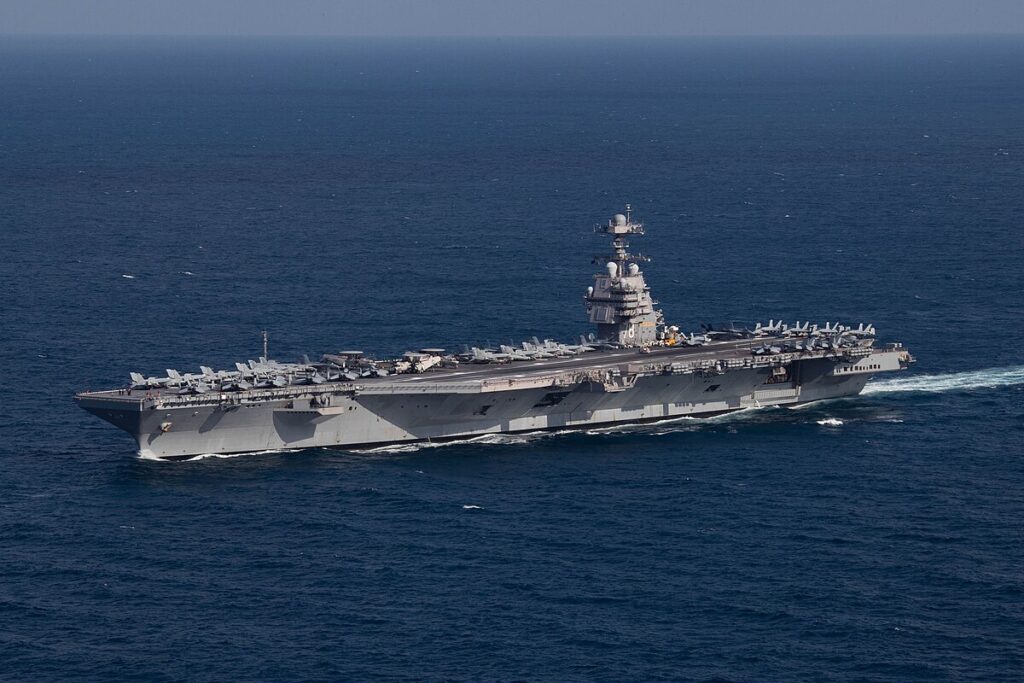
The crown jewel of modern naval engineering, the Gerald R. Ford class is the world’s largest and most advanced aircraft carrier. Commissioned in 2017, USS Gerald R. Ford stretches 337 meters in length with a massive 100,000-ton displacement.
What makes her revolutionary is not just her size but her technology: an electromagnetic aircraft launch system (EMALS) replaces traditional steam catapults, allowing faster, smoother launches.
Designed to accommodate more than 75 aircraft and over 4,500 personnel, the Ford class represents the future of naval aviation.
Armed with RIM-162 Evolved Sea Sparrow missiles and close-in Phalanx systems, she is as defensible as she is powerful. With four more Ford-class carriers under construction, this program cements U.S. naval dominance for decades to come.
2. Nimitz Class – United States
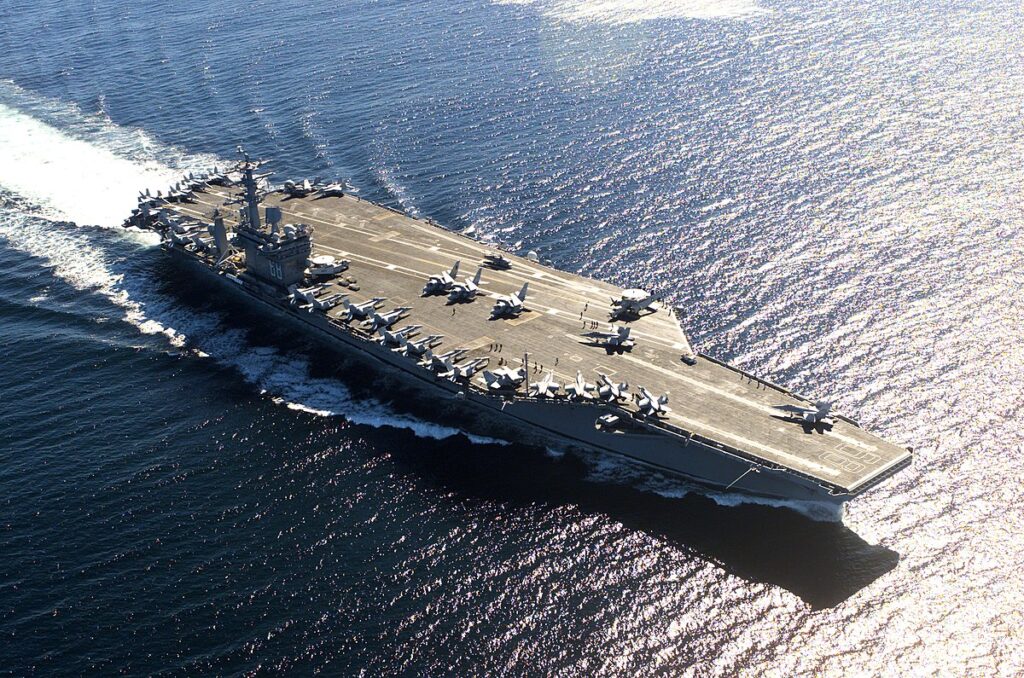
Before the Ford class, the Nimitz-class carriers ruled the seas as the backbone of American naval power. Launched in the 1970s, these ten nuclear-powered ships remain formidable even today.
At 333 meters long and displacing 97,000 tons, each has a flight deck spanning 4.5 acres, large enough to host over 60 aircraft at once.
The Nimitz class was revolutionary for its time, combining nuclear propulsion with multirole carrier capabilities. They house up to 5,000 personnel between crew, air wings, and command staff, essentially functioning as a floating city.
Even decades after their launch, they remain cutting-edge, thanks to consistent upgrades in radar, weapons, and aircraft handling systems.
3. Fujian (Type 003) – China
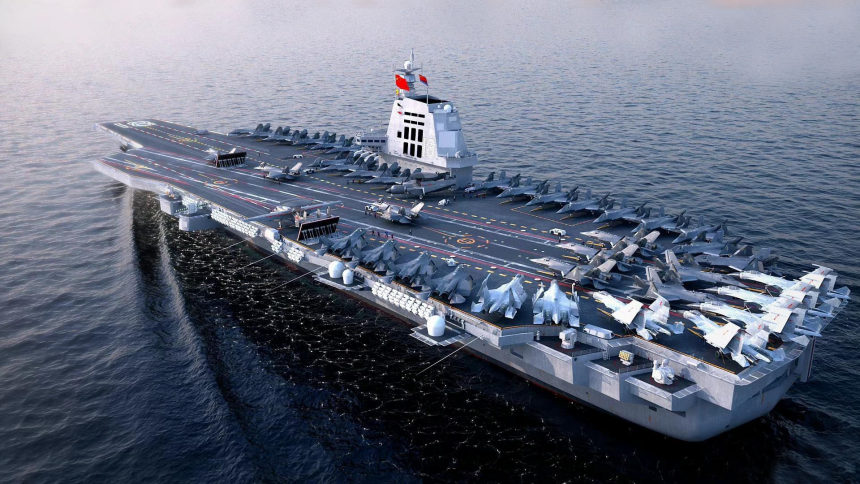
China’s naval ambitions took a massive leap forward with the launch of the Fujian in June 2022. Unlike its predecessors, Liaoning and Shandong, this is China’s first fully indigenous supercarrier.
Measuring 316 meters long with a displacement of around 80,000 tons, Fujian introduces advanced features such as electromagnetic catapults, rivaling U.S. carriers in technology.
The ship’s flat-top design enables smooth operations for next-generation fighter jets and carrier-based aircraft.
As China continues to expand its naval reach, Fujian symbolizes Beijing’s push to challenge American maritime dominance, particularly in the contested waters of the Indo-Pacific.
4. Shandong (Type 001A) – China
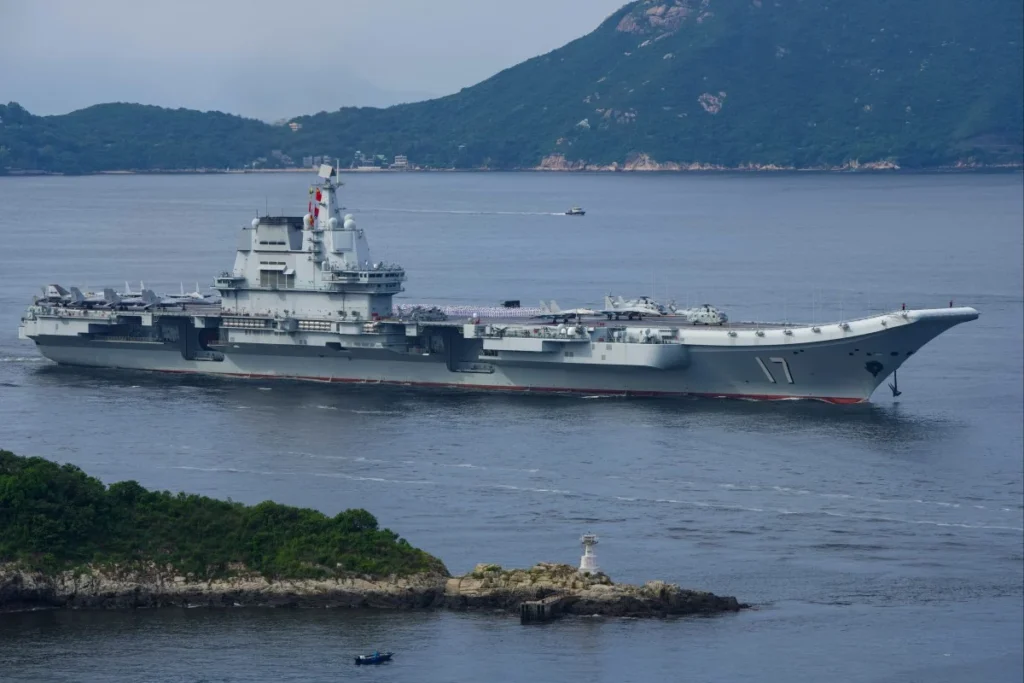
The Shandong, launched in 2017, was China’s first domestically built aircraft carrier and a symbol of its industrial rise.
At 305 meters long and 70,000 tons displacement, Shandong follows a STOBAR (Short Take-Off But Arrested Recovery) design, launching aircraft via a ski-jump ramp rather than catapults.
Though less advanced than Fujian, Shandong remains highly capable, carrying up to 44 aircraft, including J-15 fighters.
As China’s frontline operational carrier, Shandong plays a central role in regional exercises, patrols, and power projection in the South China Sea.
5. Queen Elizabeth Class – United Kingdom
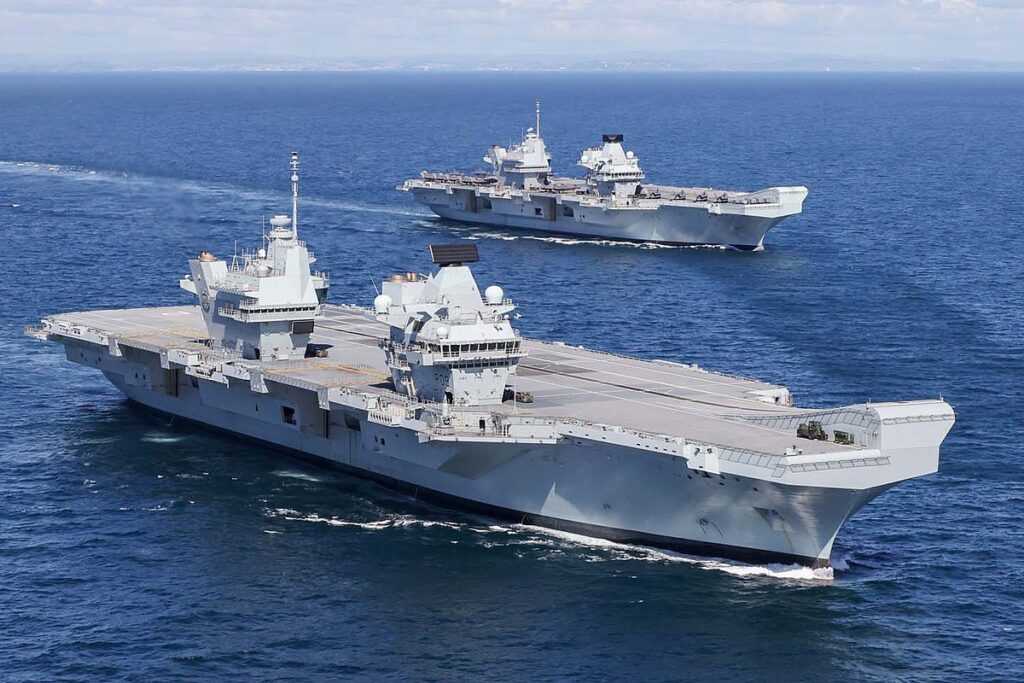
The pride of the Royal Navy, the Queen Elizabeth class represents Britain’s largest-ever warships. HMS Queen Elizabeth entered service in 2017, followed by HMS Prince of Wales in 2019.
At 280 meters long with a displacement of 65,000 tons, these carriers are smaller than their American counterparts but embody British innovation.
Capable of deploying up to 40 aircraft, including the F-35B Lightning II stealth fighters, these carriers are designed for flexibility. Despite their size, they operate with a relatively small crew of around 700, thanks to advanced automation. The class underscores Britain’s commitment to maintaining a global naval presence post-Brexit.
6. Admiral Kuznetsov – Russia
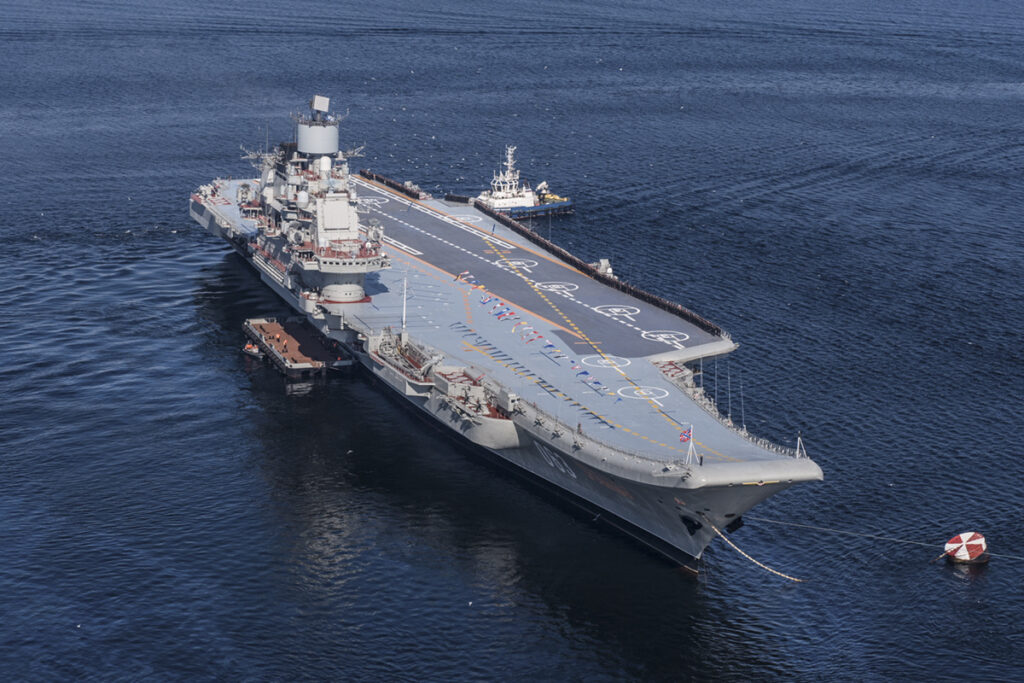
Russia’s only active carrier, the Admiral Kuznetsov, has a reputation both for its size and for its troubled service history. At 305 meters long and displacing 58,500 tons, Kuznetsov serves as the flagship of the Russian Navy.
Unlike U.S. carriers, it combines air wing operations with heavy onboard weapons, making it part aircraft carrier, part battlecruiser.
Its deck supports Su-33 and MiG-29K fighters along with helicopters, while onboard armaments include anti-ship missiles and air-defense systems. Though plagued by maintenance issues, Kuznetsov remains a symbol of Russian power projection and is undergoing extensive repairs to extend its operational life.
7. Liaoning – China
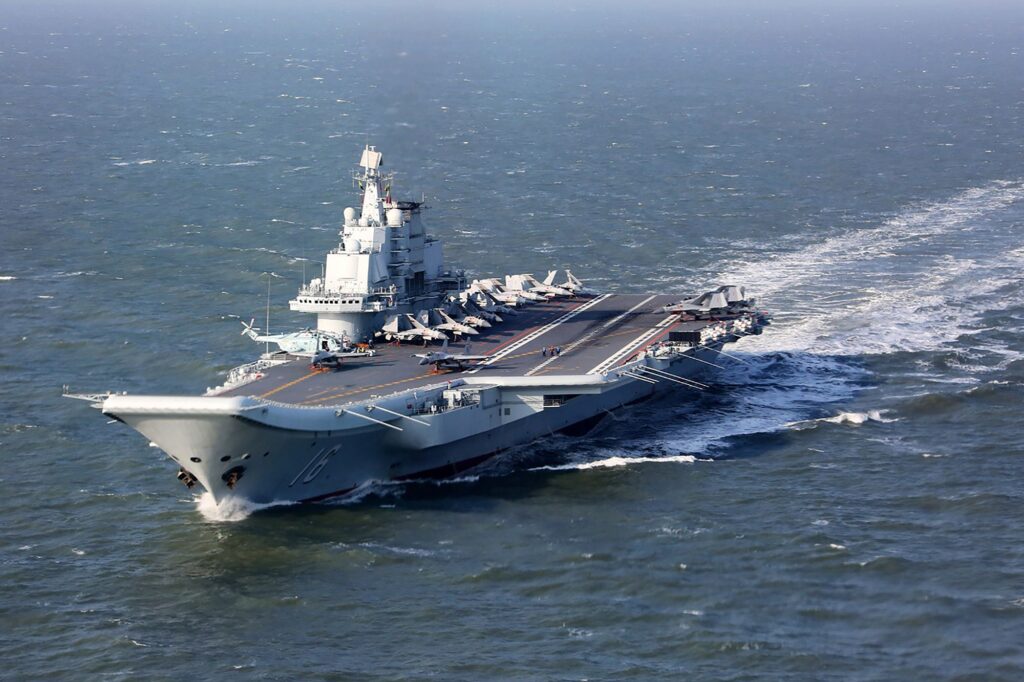
The Liaoning has an unusual history. Originally built as a Soviet Kuznetsov-class carrier, it was purchased from Ukraine in 1998 before being refitted and commissioned into the Chinese Navy in 2012.
At 305 meters long and displacing about 58,000 tons, Liaoning today serves primarily as a training and experimentation platform.
Despite its limited frontline role, Liaoning was crucial for China’s carrier development program. It provided the blueprint and experience necessary for building Shandong and Fujian.
With a capacity for around 50 aircraft, Liaoning remains operational and is often deployed to assert Chinese presence in contested regions.
8. INS Vikramaditya – India
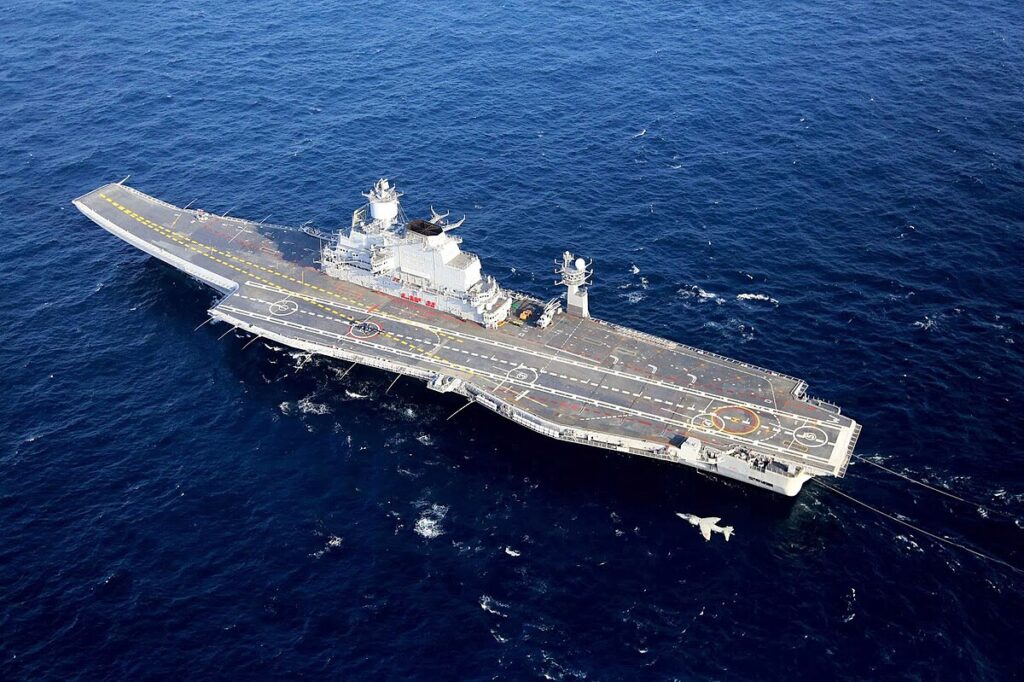
India’s largest warship, the INS Vikramaditya, entered service in 2013 after being extensively modernized from its Soviet-built Kiev-class origins.
At 284 meters long with a displacement of 45,400 tons, Vikramaditya can carry 36 aircraft, including MiG-29K fighters and Kamov helicopters.
Its ski-jump launch system and upgraded combat systems make it a potent asset for the Indian Navy. Beyond its size, Vikramaditya represents India’s transition into a blue-water navy capable of extended operations far from home. It continues to serve as the flagship until its indigenous successor takes full command.
9. INS Vikrant – India
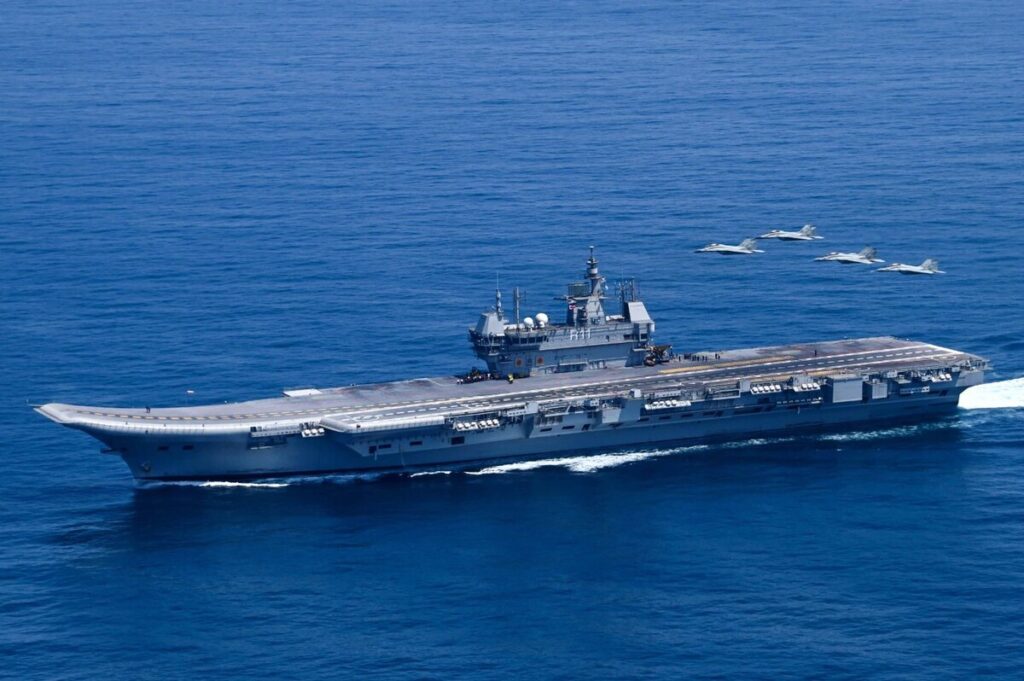
India’s first domestically built aircraft carrier, INS Vikrant, marks a turning point for the nation’s shipbuilding industry. Constructed at Cochin Shipyard, Vikrant was commissioned in 2022 after years of development.
At 262 meters long and displacing 45,000 tons, it is slightly smaller than Vikramaditya but more technologically advanced.
Capable of carrying up to 40 aircraft, Vikrant gives India the flexibility to conduct large-scale air operations. Its commissioning makes India one of the few nations in the world to design and build its own carrier, further strengthening its maritime position in the Indian Ocean.
10. Charles de Gaulle – France
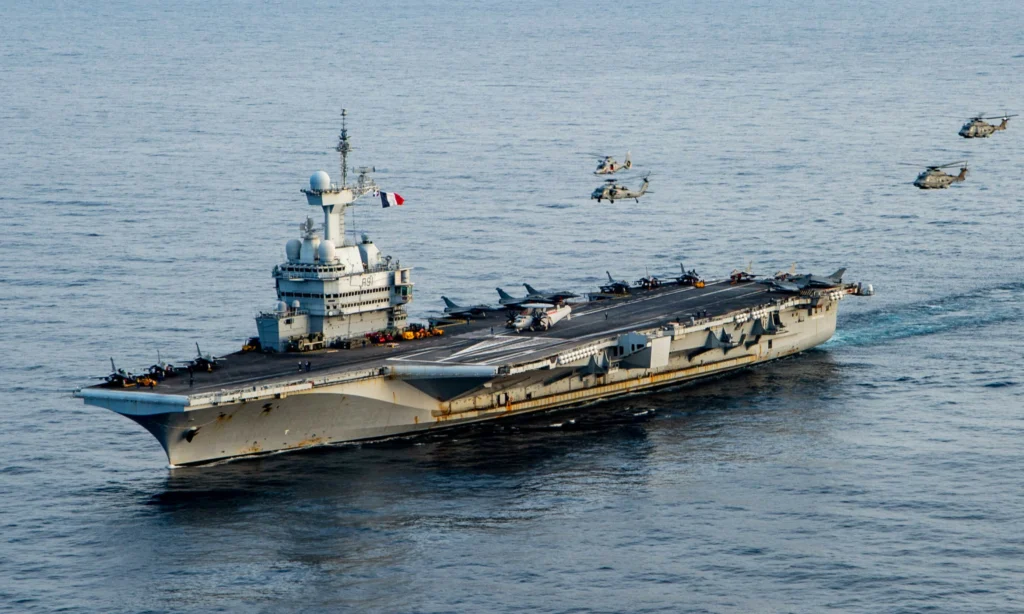
The Charles de Gaulle is unique as the only nuclear-powered aircraft carrier outside the United States. Commissioned in 2001, this French warship measures 261 meters in length and displaces around 42,500 tons.
Its nuclear propulsion allows for extended deployments without refueling, a rare feature among non-U.S. carriers.
Designed for multirole operations, Charles de Gaulle can carry up to 40 aircraft, including Rafale M fighters, E-2C Hawkeyes, and helicopters. It has been a central asset in NATO and French operations, from the Middle East to the Mediterranean, giving Paris global reach with independent striking power.
Bottom Line
From America’s nuclear giants to China’s rising fleet and Europe’s unique contributions, these aircraft carriers represent the pinnacle of naval engineering. More than just ships, they are mobile sovereign territories, capable of shaping geopolitics far from their home ports.
As technology advances, the role of these floating fortresses will only grow more significant, defining the balance of power at sea in the 21st century.
Source: Marine Insight, Aero World
Stay tuned with us. Further, follow us on social media for the latest updates.
Join us on Telegram Group for the Latest Aviation Updates. Subsequently, follow us on Google News
