

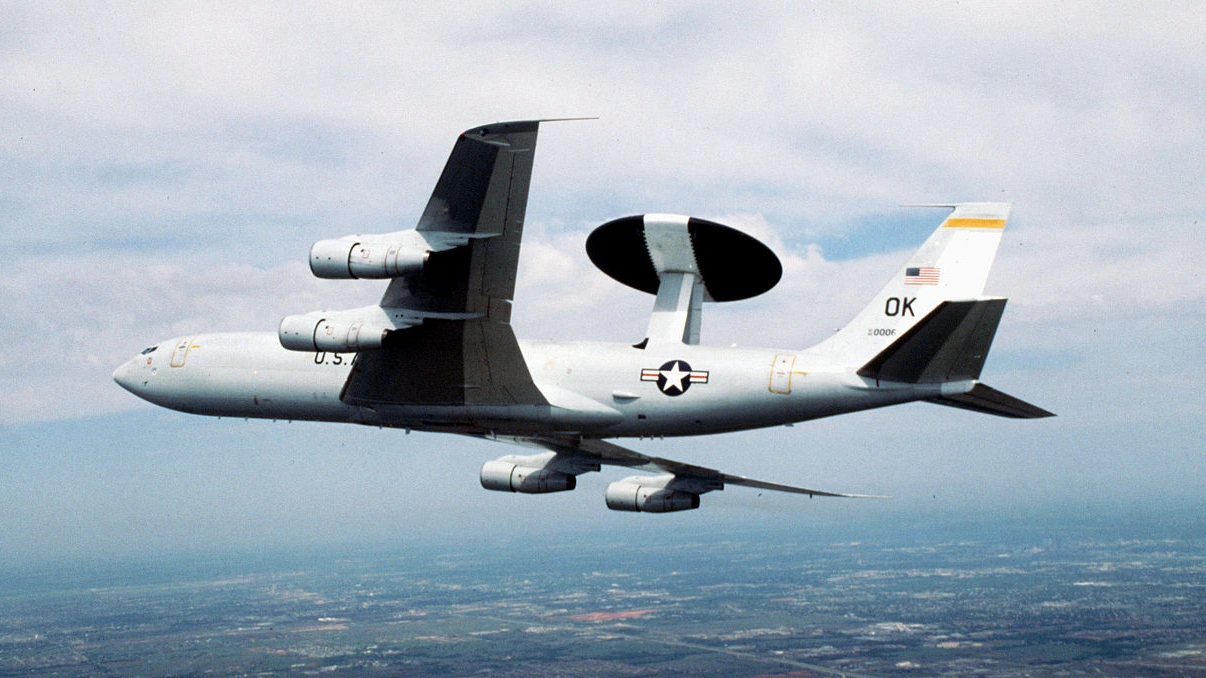
RIYADH- Iran’s March 27, 2026, attack on Prince Sultan Air Base caused significant damage to U.S. military assets, with at least 10 service members injured.
Ground-level photos have confirmed that one of the U.S. Air Force’s E-3 Sentry Airborne Warning and Control System (AWACS) aircraft was completely destroyed in the strike.
The attack, which involved long-range one-way drones and ballistic missiles, targeted one of America’s most critical airborne surveillance platforms. The loss raises serious concerns about U.S. air defense capabilities in the region amid an ongoing conflict with Iran, TWZ reported.
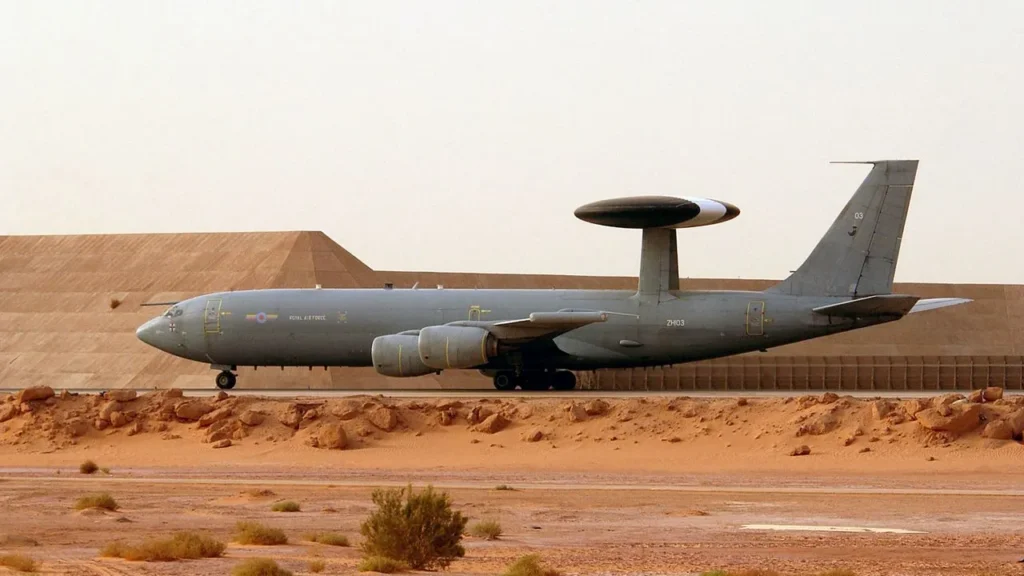
Iran Strikes and Destroys U.S. E-3 Sentry AWACS
Photos first shared on the Air Force amn/nco/snco Facebook page show E-3 serial number 81-0005 with its rear fuselage completely burned out. Debris was scattered across the surrounding area.
Experts note that a direct hit is not always necessary to destroy an aircraft, as shrapnel from a nearby impact can ignite fires and cause total destruction.
Iran subsequently released satellite imagery it claims shows the E-3 on a taxiway at Prince Sultan Air Base before and after the strike.
The satellite imagery aligns with the ground-level photos already circulating online. Chinese firm MizarVision also released additional satellite imagery showing multiple Sentry AWACS jets parked on various taxiways at the base.
Prior satellite imagery, taken before major U.S. commercial providers such as Planet Labs began delaying imagery of the Middle East, showed aircraft spread across the main apron and isolated taxiways. This dispersal was a deliberate tactic to reduce the impact of Iranian long-range weapons. Despite these precautions, the attack proved effective.
At least five U.S. tanker aircraft were also damaged in an earlier strike on the same base. Prince Sultan Air Base, located outside Riyadh, has faced repeated attacks and serves as a major hub for American aircraft supporting the ongoing war effort.
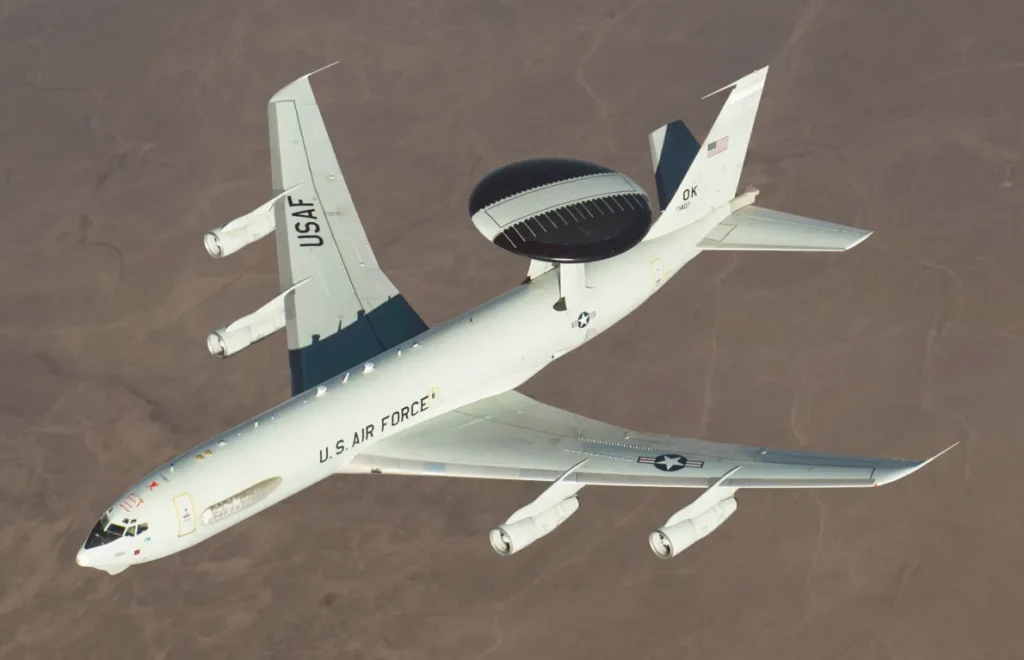
Strategic Impact of Losing an E-3 Sentry
The E-3 Sentry is a critical platform for detecting incoming missile barrages and coordinating air operations. The U.S. deployed six E-3s to the Middle East before the conflict began.
With this loss, the Air Force is left with only 15 of the originally 16 remaining aircraft in its aging fleet, a number already strained by chronic readiness challenges.
The USAF has been working to replace the E-3 with the E-7 Wedgetail, ordered as an interim solution until a space-based sensing layer reaches operational maturity. However, the program faced a major setback when the Air Force attempted to cut it from its latest budget, proposing a smaller number of E-2D Hawkeyes as a cheaper alternative.
Congress pushed back strongly, and the E-7 program now appears to be back on track, though delays remain a concern.
The combination of fleet attrition from combat losses and program delays places the U.S. in an increasingly difficult position regarding airborne early warning capabilities.
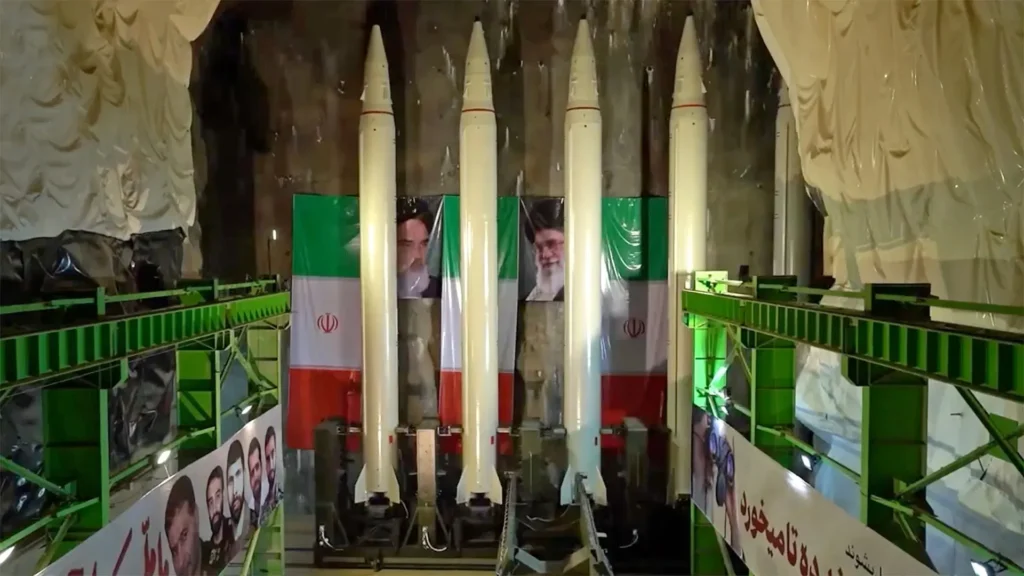
How Iran Acquired Targeting Data
Iran’s ability to precisely target the E-3 reflects a sophisticated intelligence-gathering effort. Satellite imagery from China remains available to Iran, and Russia is believed to be supplying additional imagery.
Traditional human intelligence methods can also not be ruled out, providing real-time information on aircraft positioning.
Iran has previously demonstrated success in targeting radar installations across the region, weakening air defense networks supporting U.S. and allied operations. Targeting an AWACS aircraft was a logical next step, and the results have proved damaging.
The Case for Hardened Airbase Infrastructure
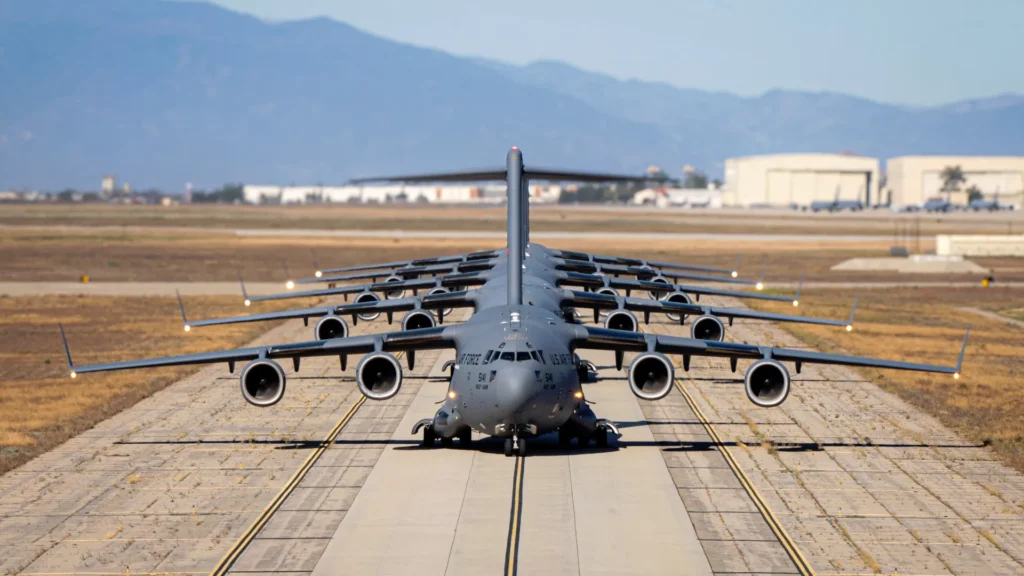
This attack has renewed urgent debate over the lack of hardened aircraft shelters at U.S. bases in the Middle East and beyond. The Pentagon has been slow to invest in hardened infrastructure despite clear evidence from recent conflicts that aircraft on the ground face serious risks.
Al Udeid Air Base in Qatar, America’s largest base in the region, has also faced repeated attacks during the conflict. Only after sustained pressure has the Pentagon begun exploring hardening options there.
The vulnerability extends to the Pacific, where a potential conflict with a near-peer adversary armed with advanced long-range weapons presents a similar threat. Investment in hardened airbase infrastructure remains critically behind where security experts say it needs to be.
Stay tuned with us. Further, follow us on social media for the latest updates.
Join us on Telegram Group for the Latest Aviation Updates. Subsequently, follow us on Google News
