


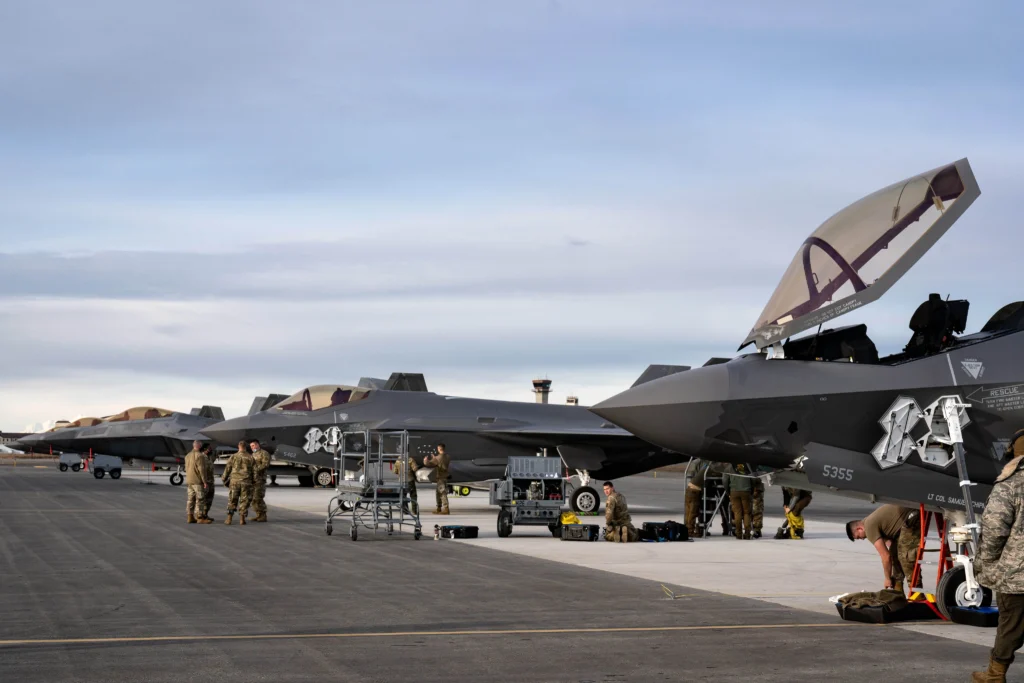
BETHESDA- The United States intensifies pressure on Canada to complete its purchase of 88 F-35 Lightning II stealth aircraft, or face consequences, amid tensions with the Trump administration.
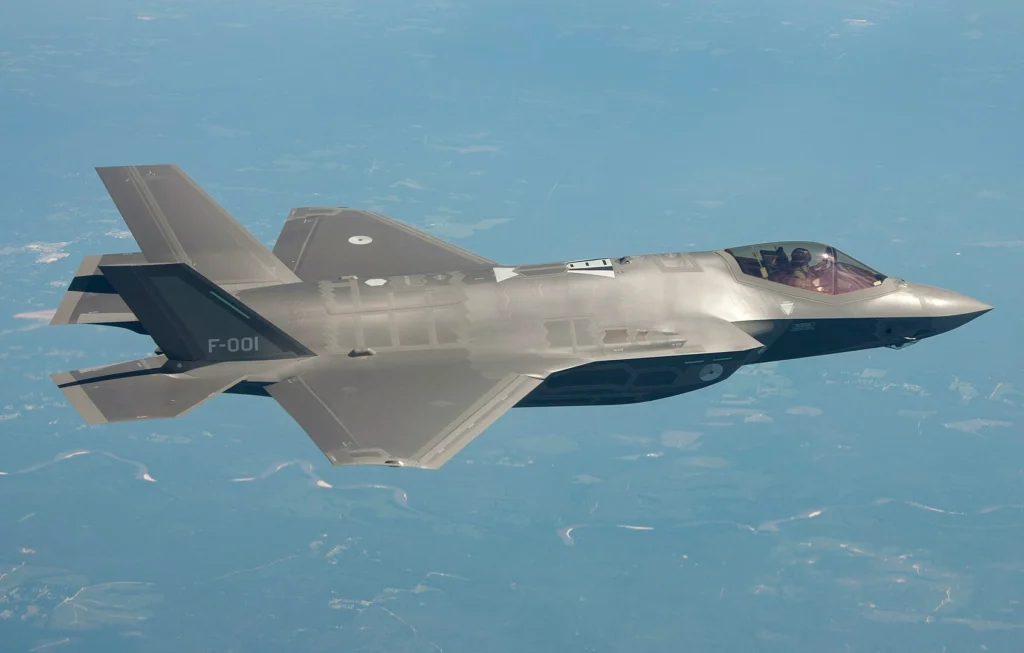
Canada inked a CA$19 billion (US$14.2 billion) deal with Lockheed Martin in January 2023 to acquire the jets in 4 tranches by 2032, replacing aging CF-18s in the Royal Canadian Air Force (RCAF).
After Carney took office in March this year, his government announced the review, planning to take delivery of the 16 F-35s already paid for while evaluating the remaining 72 under consideration by Canadian officials and defence experts.
Heightened US Diplomatic Warnings on Jet Acquisition
US Ambassador to Canada Pete Hoekstra, in an exclusive interview with CBC News, states that significant consequences await the continental defense alliance, NORAD (North American Aerospace Defense Command), if Canada does not complete the purchase of 88 F-35A jets as planned. Hoekstra warns that NORAD would have to be altered.
The ambassador argues the US would likely buy more jets for the US Air Force (USAF) and fly them into Canadian airspace more frequently to address prevailing threats to Washington. He adds that if Canada no longer provides that capability, the US must fill those gaps.
NORAD’s mission includes aerospace warning, control, and defence of North American airspace, relying on an integrated network of radar, satellites, and fighter aircraft on both sides of the border.
This structure ensures the closest available aircraft, regardless of border side, responds first to threats, enabling faster intercepts and more efficient use of resources.
Canada remains deeply committed to this partnership for its own security and that of the broader alliance.
In late 2025, Prime Minister Mark Carney’s office confirmed Ottawa actively negotiates with Washington to modernize and strengthen NORAD, including potential participation in advanced layered missile defense initiatives.
Hoekstra specifies that if Canada buys only the 16 jets already ordered, the US military will intervene more frequently in Canada.
He signals that the NORAD partnership would require reconsideration if Canada purchases the Gripen, viewed as an inferior product, less interchangeable and interoperable than the F-35.
This changes defence capability, forcing the US to replace it, Hoekstra tells CBC. Experts see this as an open threat, met with skepticism.
Public sniping only benefits adversaries and risks undermining the credibility of shared deterrence, Andrea Charron tells CBC News.
Charron directs the Centre for Defence and Security Studies at the University of Manitoba and ranks as one of Canada’s top analytical voices on NORAD.
A former senior Canadian national security officer characterizes the ambassador’s comments as clearly a political pressure tactic to force the Canadian government’s hand.
Growing Rift Between US and Canada
The decision to review the F-35 purchase follows US President Donald Trump’s imposition of unprecedented tariffs on Canada and his call for the country to become the 51st US state.
Concerns mount that, in a political fallout, the Trump administration could weaponize control over the aircraft by blocking access to spare parts and software upgrades.
Adding fuel, on January 20, Trump posted an image on a social media platform showing Canada and Venezuela covered in the US flag, implying a full American takeover of both countries.
Meanwhile, Canada sided with its NATO partners over Greenland’s autonomy, stating Trump cannot decide its ownership.
The future of Greenland is a decision for Greenland and the Kingdom of Denmark, Carney tells reporters, reiterating support for Danish sovereignty over the strategic Arctic island.
He breaks the silence on escalating rhetoric, affirming NATO partnerships with Denmark stand fully. Obligations on Article 5 and Article 2 of NATO stand, and Canada stands full-square behind those, Carney says.
Separately, Carney hits back at Trump’s provocative claim at the World Economic Forum that Canada lives because of the United States.
The 2 countries share a strong partnership built on security, trade, and cultural ties, but Carney makes clear: Canada does not live because of the United States; Canada thrives because we are Canadian.
Trump later cancelled Carney’s invitation to the Board of Peace. More recently, the two sides entered a diplomatic standoff over ties with China, as Trump threatened 100% tariffs on goods imported from Canada if it signed a trade deal with Beijing.
Carney later clarified Canada has no intention of pursuing a free trade agreement with China, explaining trade merely cuts tariffs on a few sectors.
Interestingly, Canadian troops reportedly prepare for a possible US invasion for the first time in 100 years, with plans including asymmetric tactics, drone warfare, and requests for European backup if the need arises.
Saab’s Push for Gripen Fighters
Swedish defence giant Saab offers 72 Gripen E/F fighter jets and 6 GlobalEye surveillance aircraft to the Canadian Armed Forces, promising thousands of jobs in the country.
Reiterating its offer, Saab informed the Canadian Armed Forces last week it could deliver on creating 12,600 jobs locally if Ottawa buys the 72 Gripen jets and six GlobalEye aircraft.
In November 2025, Saab CEO Micael Johansson stated the company ties up with Canadian aerospace manufacturer Bombardier to pave the way for license production of Gripen E/F fighter jets. At the time, the CEO promised 10,000 jobs but did not specify aircraft numbers needed.
The Saab pitch emphasizes job creation and local manufacturing. To make it more enticing, Saab expanded by adding GlobalEye aircraft, presenting a package deal that helps Ottawa diversify arms purchases, create more jobs, and boost the economy, as recently explained by the Eurasian Times.
Officials and experts in Canada study both aircraft proposals to assess defence and economic feasibility for procurement. Despite that, many backers of the American stealth aircraft exist within the Canadian military.
Both China and Russia have fifth-generation fighter aircraft and fifth-generation missiles that go at much greater speeds and hold Western allies at risk now, says new RCAF commander Lt.-Gen. Jamie Speiser-Blanchet, indicating obvious inclination.
Some draw attention to a 2021 evaluation by Canada’s Department of National Defence, where the F-35 received a 95% rating for military capabilities.
The Gripen E finished with 33%, scoring 19.8 points out of 60, according to data obtained by Radio-Canada.
Stay tuned with us. Further, follow us on social media for the latest updates.
Join us on Telegram Group for the Latest Aviation Updates. Subsequently, follow us on Google News
