

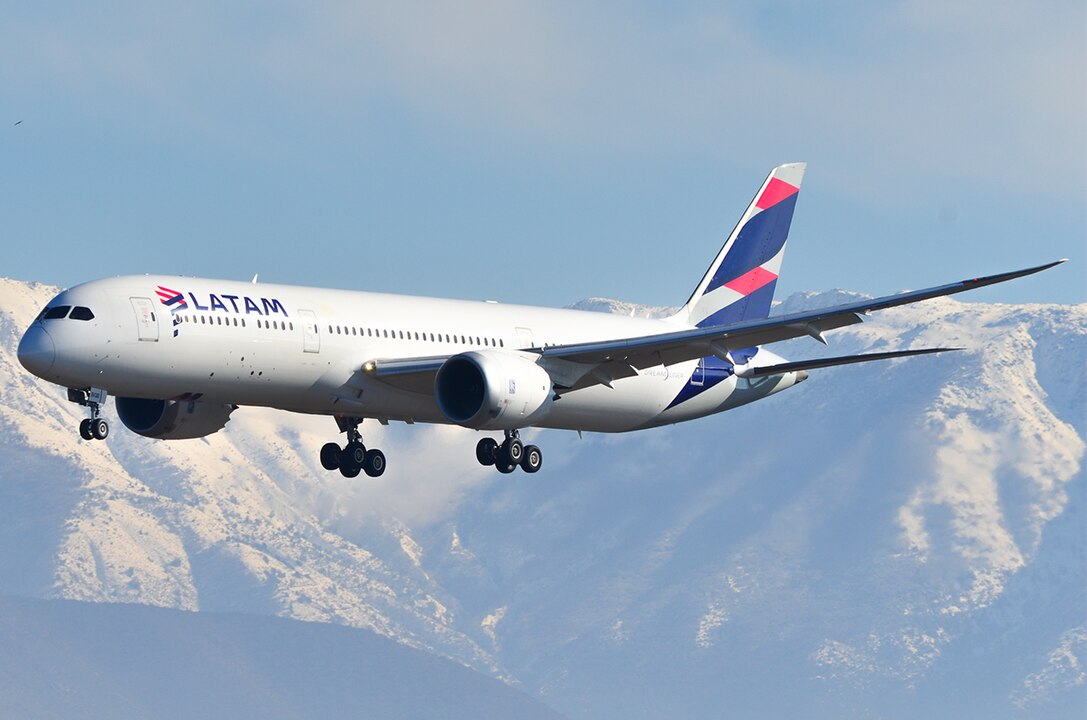
While most modern commercial aviation remains extremely safe, unexpected turbulence continues to shape passenger experience and airline planning.
Sudden aircraft movement can feel alarming, but experts stress that turbulence rarely threatens flight safety. Instead, it influences operational efficiency, fuel planning, and passenger comfort across key global corridors.
Airlines such as American Airlines (AA) and SWISS International Air Lines (LX) regularly adapt flight paths to minimize turbulence exposure.
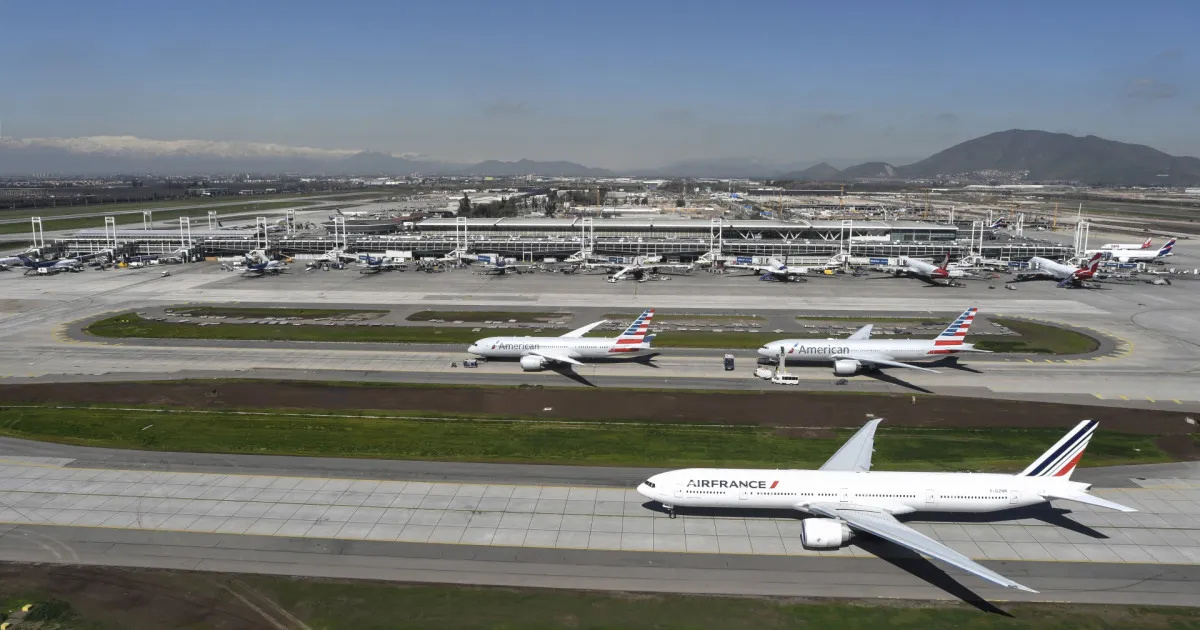
Turbulent Routes in the World
Annual analysis from turbulence forecasting specialists evaluates nearly 10,000 routes linking over 550 major airports worldwide. These routes are ranked using the eddy dissipation rate, a metric that measures turbulence intensity from light to extreme.
In 2025, mountainous regions dominated the rankings due to strong wind shear and unstable airflows. Routes crossing the Andes Mountains and parts of western China consistently recorded the highest turbulence levels.
According to CN Traveler, the most turbulent route globally connected Mendoza (MDZ) and Santiago (SCL), a short trans-Andean flight heavily affected by terrain-induced airflow. Close behind was the route between Xining (XNN) and Yinchuan (INC), where plateau geography amplifies atmospheric instability.
| Rank | Route | Distance Type | Primary Turbulence Driver |
|---|---|---|---|
| 1 | Mendoza (MDZ) – Santiago (SCL) | Short-haul | Andes mountain wave activity |
| 2 | Xining (XNN) – Yinchuan (INC) | Short-haul | Plateau terrain and wind shear |
| 3 | Chengdu (TFU) – Xining (XNN) | Medium-haul | High-altitude terrain |
| 4 | Cordoba (COR) – Santiago (SCL) | Medium-haul | Andes crossings |
| 5 | Santa Cruz (VVI) – Santiago (SCL) | Medium-haul | Strong jet stream interaction |
| 6 | Chengdu (TFU) – Lanzhou (LHW) | Medium-haul | Mountain-induced turbulence |
| 7 | Mendoza (MDZ) – Salta (SLA) | Short-haul | Complex terrain airflow |
| 8 | Chengdu (CTU) – Yinchuan (INC) | Medium-haul | Western China topography |
| 9 | Xining (XNN) – Lhasa (LXA) | Medium-haul | Tibetan Plateau altitude effects |
| 10 | Denver (DEN) – Jackson (JAC) | Short-haul | Rocky Mountains turbulence |
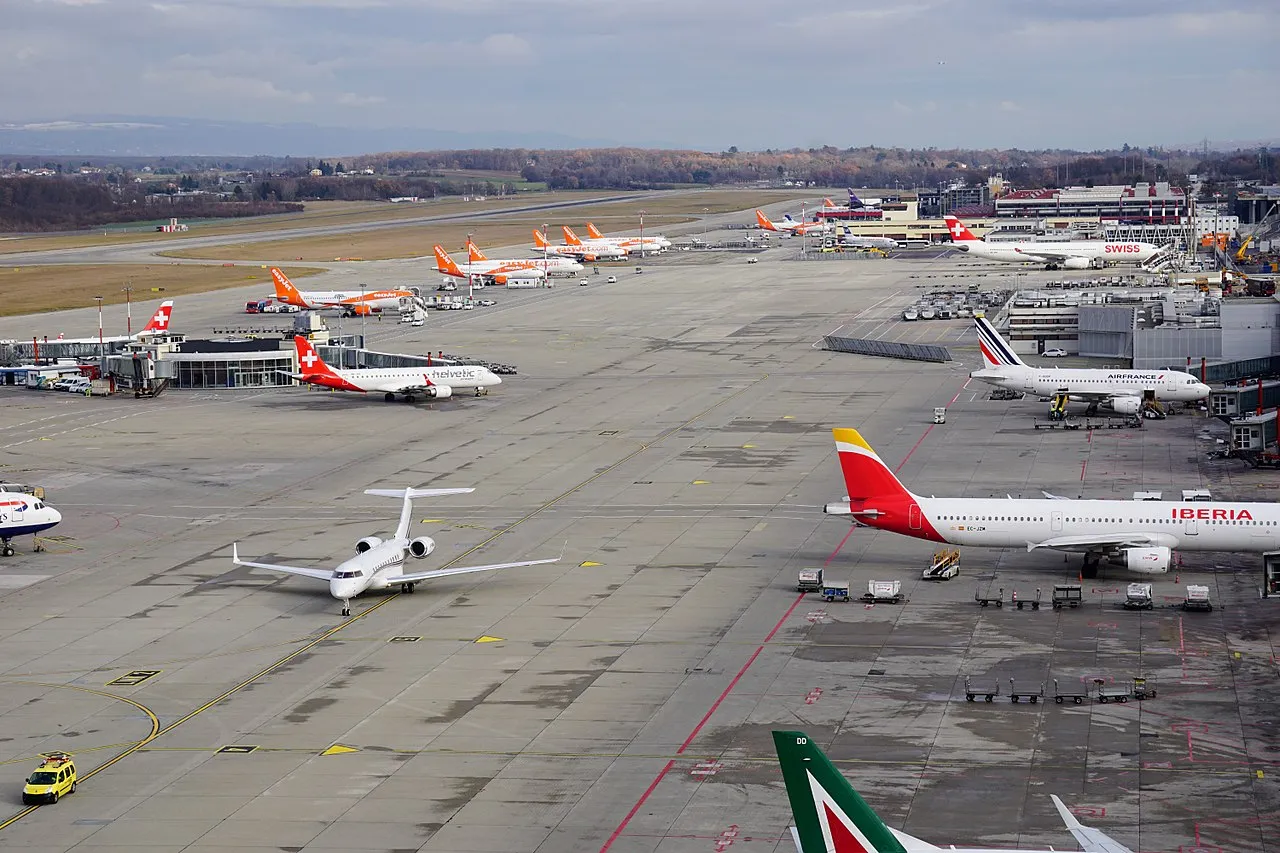
Regional Route Patterns
Asia and South America accounted for most of the world’s most turbulent routes in 2025. Five of the top ten routes operated within China, while four crossed South American airspace.
These routes were predominantly short- to medium-haul services, where altitude changes occur rapidly. Flights between Chengdu (TFU), Xining (XNN), and Lanzhou (LHW) repeatedly encountered strong vertical air currents.
North America featured only one route in the global top ten, linking Denver (DEN) and Jackson (JAC). Despite fewer entries, mountainous terrain across the Rocky Mountains continues to generate consistent turbulence.
Long-haul flights proved comparatively smoother, though not immune. The most turbulent long-distance route stretched nearly 5,000 kilometers between Avarua and Sydney, where oceanic weather systems contribute to unstable air layers.
| Continent | Most Turbulent Route | Key Terrain or Weather Factor |
|---|---|---|
| North America | Denver (DEN) – Jackson (JAC) | Rocky Mountains airflow |
| South America | Mendoza (MDZ) – Santiago (SCL) | Andes mountain waves |
| Europe | Nice (NCE) – Geneva (GVA) | Alpine wind systems |
| Asia | Xining (XNN) – Yinchuan (INC) | Plateau and desert wind shear |
| Africa | Durban (DUR) – Johannesburg (JNB) | Inland convection patterns |
| Oceania | Christchurch (CHC) – Wellington (WLG) | Strong coastal winds |
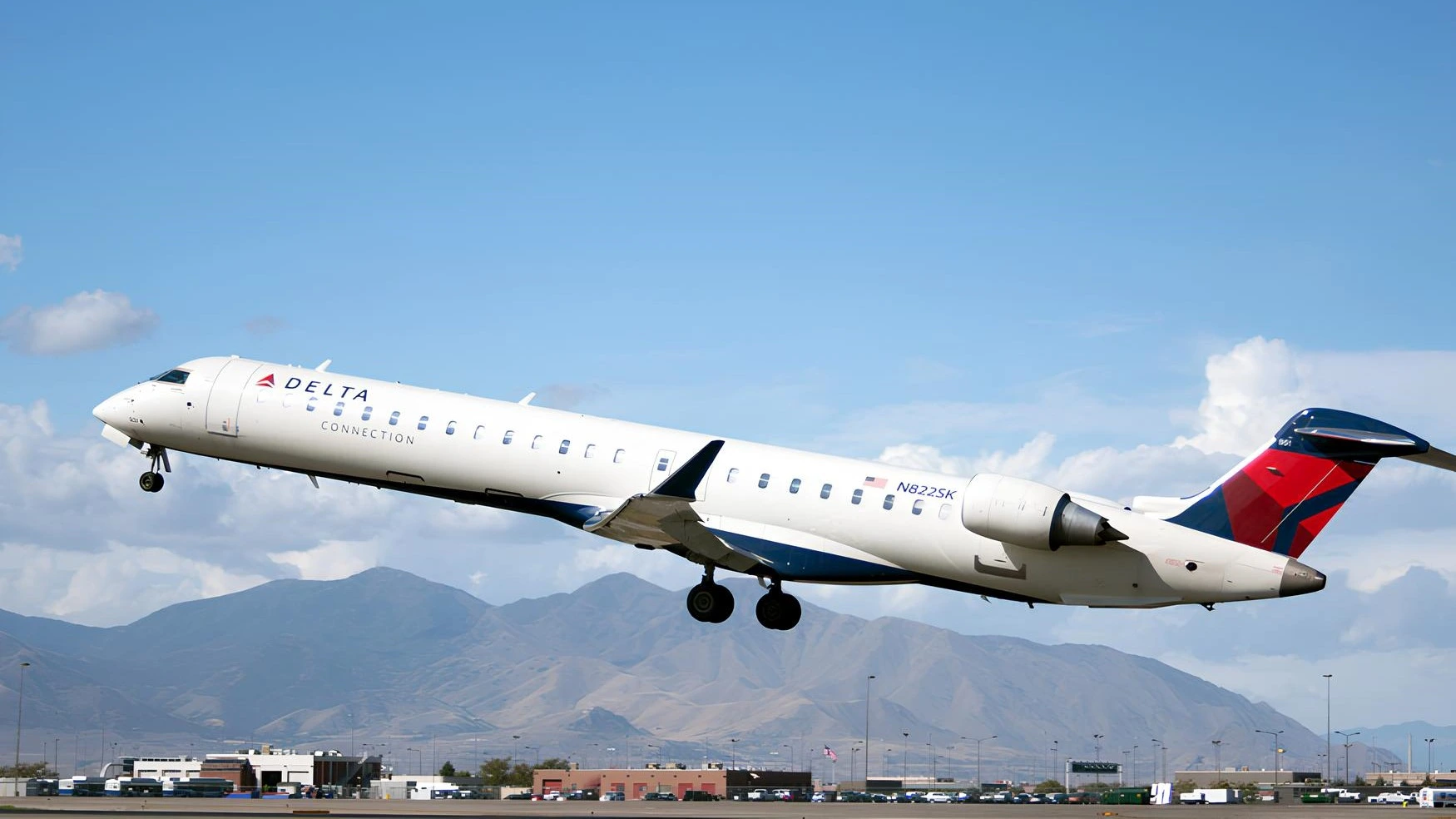
Climate Impact Trends
Meteorological data indicates that turbulence frequency is rising due to shifting climate patterns.
Changes in jet stream behavior have increased clear-air turbulence, which remains difficult to detect using onboard radar.
Airlines respond by adjusting flight levels and rerouting aircraft around forecasted turbulence zones. These measures often result in longer flight times, increased fuel burn, and occasional delays.
Passengers may experience extended travel times rather than increased onboard risk. Aviation safety experts emphasize that turbulence-related injuries are rare and usually linked to unfastened seat belts.
Bottom Line
Turbulence remains an unavoidable element of air travel, particularly on routes shaped by mountains and volatile weather systems.
While climate trends may increase their frequency, airlines continue to prioritize safety and passenger comfort through advanced forecasting and route planning.
Stay tuned with us. Further, follow us on social media for the latest updates.
Join us on Telegram Group for the Latest Aviation Updates. Subsequently, follow us on Google News
