

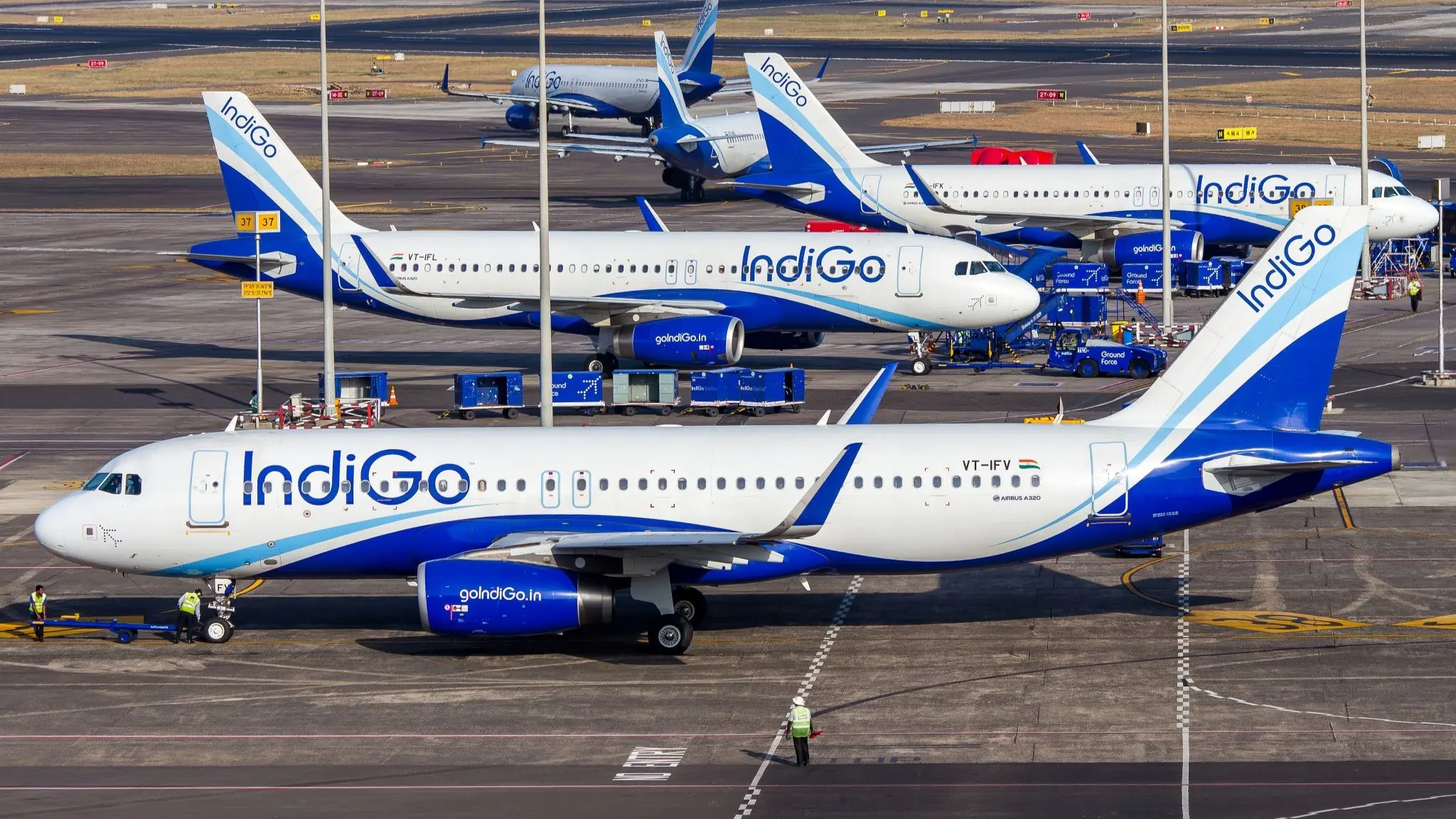
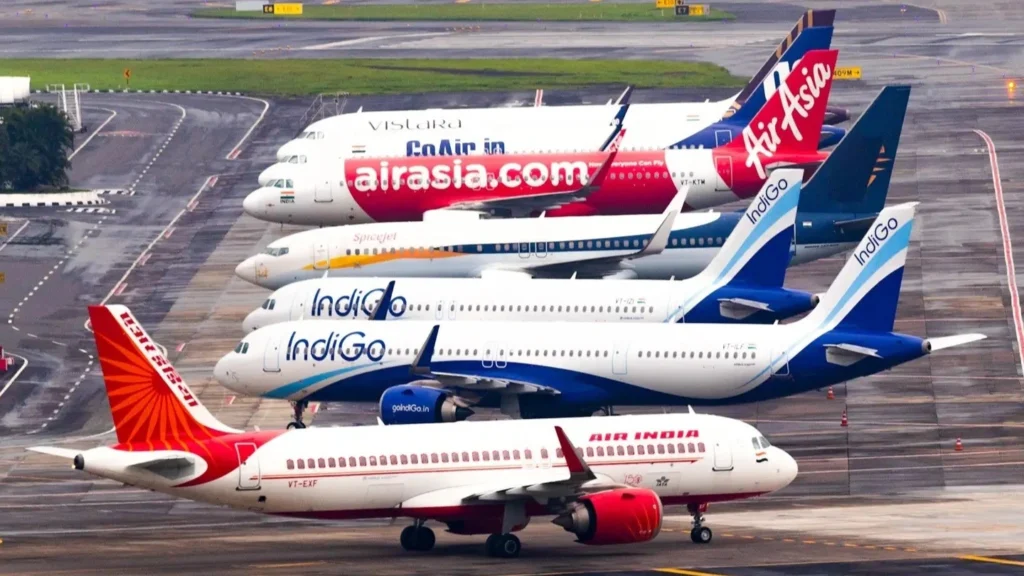
DELHI- IndiGo Airlines (6E) has vacated 717 domestic airport slots after the Directorate General of Civil Aviation ordered a 10 percent cut in its winter flight schedule. The reduction follows severe operational disruptions recorded in early December.
The surrendered slots span major airports, including Delhi IGI Airport, New Delhi (DEL), Chhatrapati Shivaji Maharaj International Airport, Mumbai (BOM), Kempegowda International Airport, Bengaluru (BLR), and Rajiv Gandhi International Airport, Hyderabad (HYD), covering the January to March period.
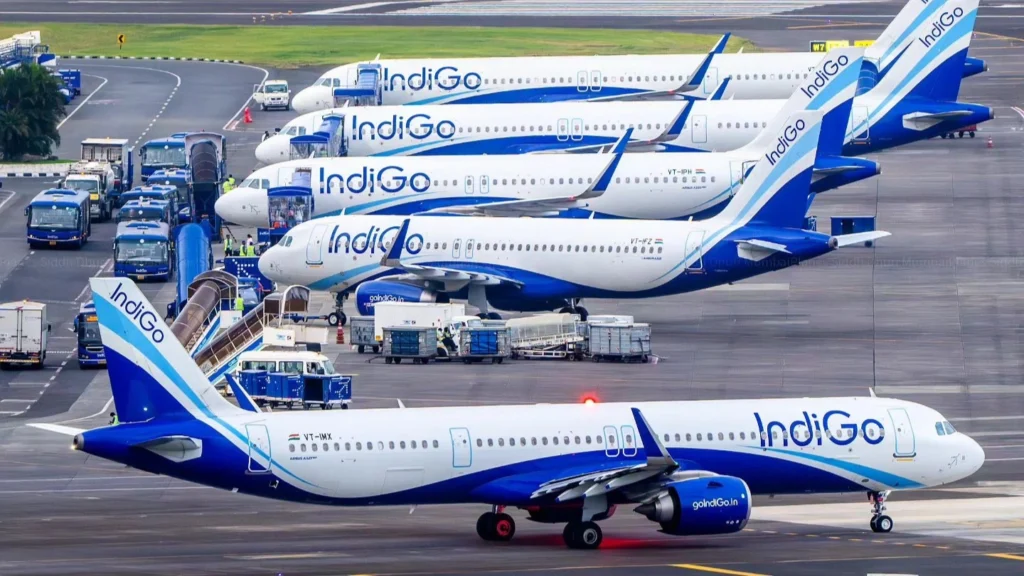
IndiGo Gave Up Domestic Slots This Winter
Slots represent fixed time windows assigned to airlines for aircraft takeoff and landing. When the DGCA reduced IndiGo’s approved winter capacity, the airline was required to stop operating flights in certain time bands, leading to the formal surrender of these slots to the civil aviation ministry.
Out of the total 717 slots vacated, 364 were concentrated across six metro airports: Delhi, Mumbai, Chennai, Kolkata, Bengaluru, and Hyderabad. Industry sources indicate that Hyderabad and Bengaluru account for the highest number among these metros, reflecting deeper schedule trimming at high-density hubs.
The vacated slots are unevenly spread across the remaining winter schedule. Data shared by sources show that 361 slots were surrendered for March, while February saw only 43 slots vacated. January also accounts for 361 slots, indicating that most of the impact is clustered at the beginning and end of the curtailed schedule window.
This uneven distribution limits the practical usability of the slots for rival carriers, as airlines typically require longer lead times to plan routes, deploy aircraft, and market new services.
DGCA Action and Reduced Flight Operations
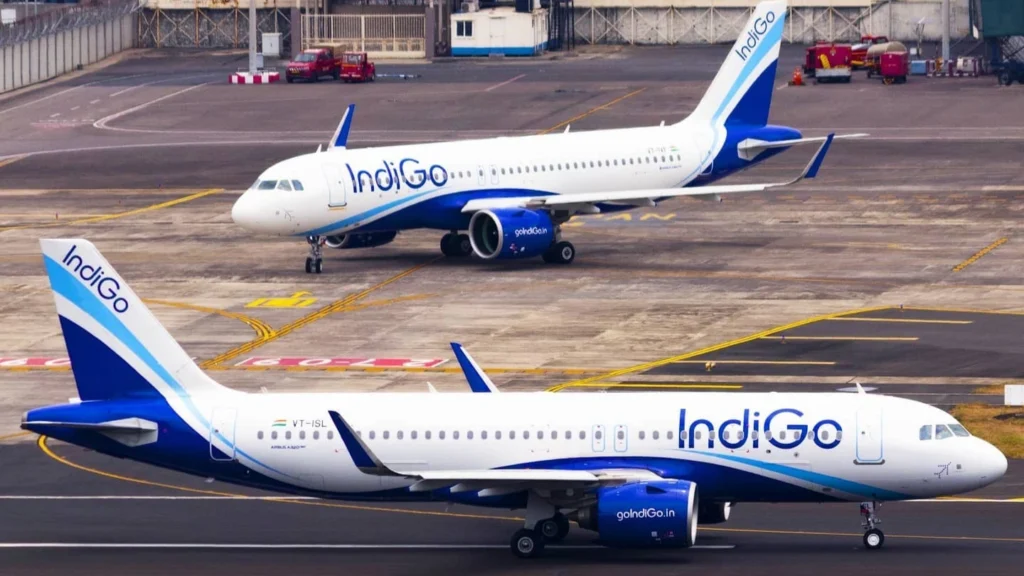
Before the reduction, IndiGo’s winter schedule for 2025 to 26 permitted 15,014 flights per week, translating to 2,144 flights per day.
After the 10 percent cut, the airline’s domestic operations dropped to about 1,930 flights daily.
IndiGo usually operates over 2,200 flights a day, highlighting the scale of the enforced reduction. For comparison, the airline averaged around 2,022 daily flights during the previous summer schedule.
December Disruptions
Between December 3 and December 5, IndiGo cancelled 2,507 flights and delayed 1,852 services, affecting more than 300,000 passengers nationwide.
The DGCA later cited inadequate crew management, weak regulatory preparedness, and shortcomings in operational control systems as key causes.
Following its investigation, the regulator imposed fines totaling ₹22.20 crore, issued warnings to CEO Pieter Elbers and two senior executives, and directed the airline to submit a $50 crore bank guarantee to ensure long-term corrective measures.
Redistribution of Vacated Slots
The civil aviation ministry has invited other airlines to apply for the vacated slots. A dedicated committee held its first meeting on January 13 to outline redistribution principles, after which carriers were asked to submit their preferences to airport operators.
However, industry executives remain cautious. Many of the vacated slots fall in late-night or early-morning windows, commonly known as red-eye flights.
Airlines are also reluctant to adjust networks for slots available only until the end of March, as they may revert to IndiGo in the next scheduling cycle.
Stay tuned with us. Further, follow us on social media for the latest updates.
Join us on Telegram Group for the Latest Aviation Updates. Subsequently, follow us on Google News
