

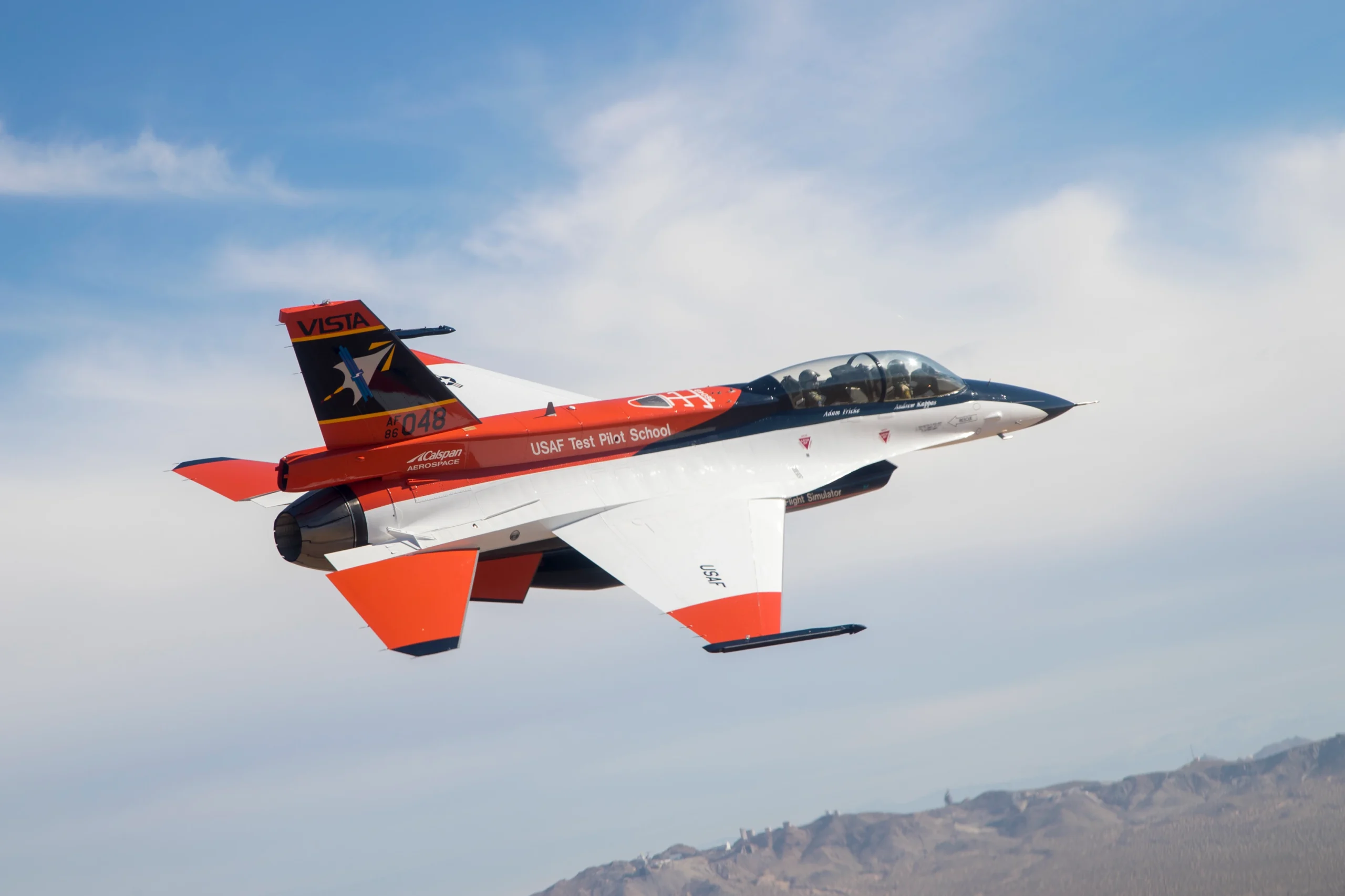
CALIFORNIA- The US Air Force (USAF) is upgrading its experimental, autonomous X-62 VISTA aircraft with advanced radar and mission systems to expand artificial intelligence flight testing and combat-relevant experimentation.
The effort is aimed at enabling more complex scenarios that demand real-time AI decision-making.
The aircraft is operated from Edwards Air Force Base, California (EDW), where the Air Force Test Pilot School is leading the modernization under the 412th Test Wing. The upgrade supports broader autonomy initiatives shaping the future of air combat operations.
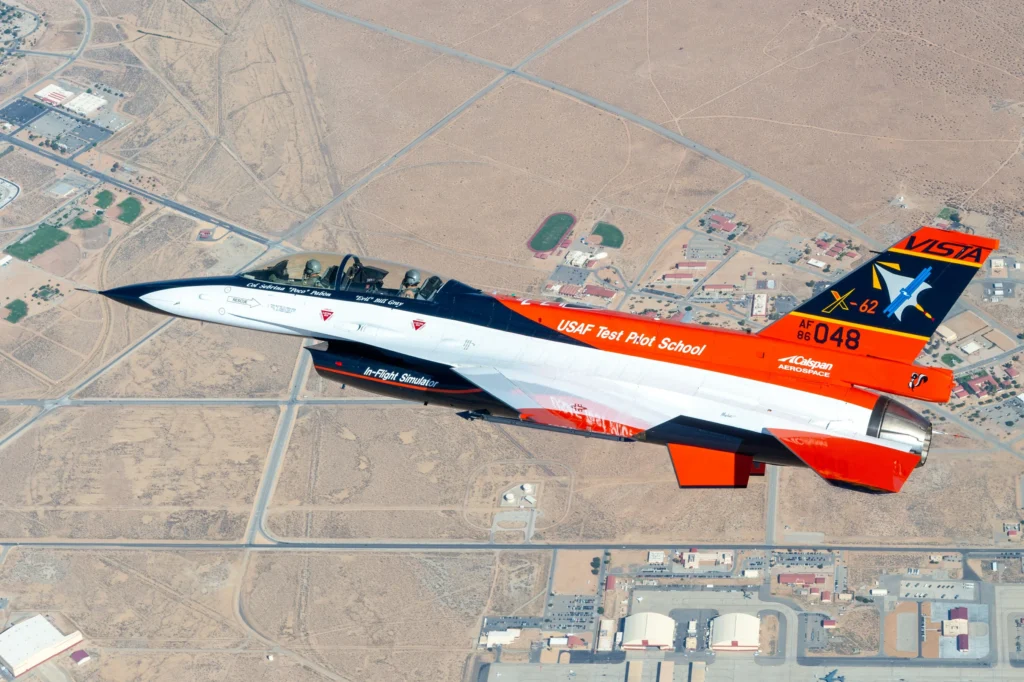
US Air Force AI X-62 VISTA Radar
The X-62 VISTA, short for Variable Stability In-flight Simulator Test Aircraft, is a heavily modified F-16D equipped with upgraded avionics.
The aircraft has long served as a platform for testing advanced aerospace technologies and has increasingly been used to evaluate autonomous flight and artificial intelligence applications.
According to an official statement released by Edwards Air Force Base, the X-62 is undergoing a comprehensive mission systems upgrade. The work is being carried out by the US Air Force Test Pilot School, which will install new systems enabling advanced radar and sensor integration.
These enhancements are designed to push the aircraft into more complex operational scenarios and to evaluate AI systems integration, collaboration, and real-time decision-making.
Reported by Defense News, the program reflects the Air Force’s accelerating focus on autonomy in air and space operations.
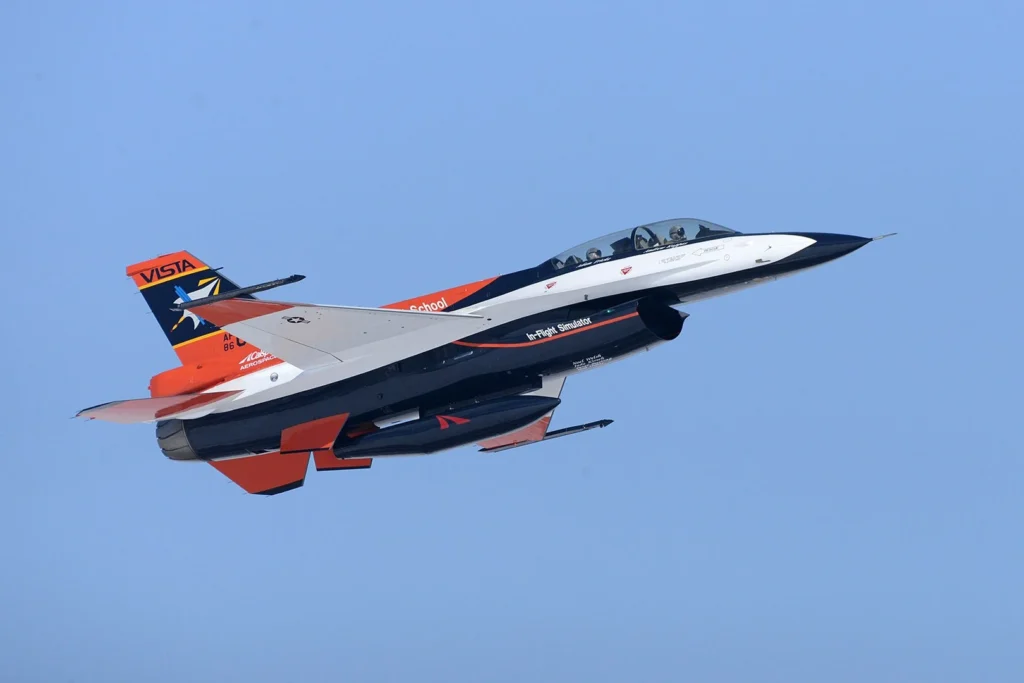
Perspective on Autonomy Integration
Col. Maryann Karlen, Commandant of the Air Force Test Pilot School, emphasized the strategic importance of the upgrade.
She stated that as the Air Force expands its exploration of autonomy, the X-62 serves as a bridge between historically human-centered flight operations and the future integration of uncrewed combat aviation.
She added that the mission systems upgrade enables continued progress toward breakthroughs in artificial intelligence and autonomy.
This leadership perspective underscores the role of the X-62 as both a technical testbed and a concept-development platform for next-generation air combat.
PhantomStrike Radar Enhances Combat Realism
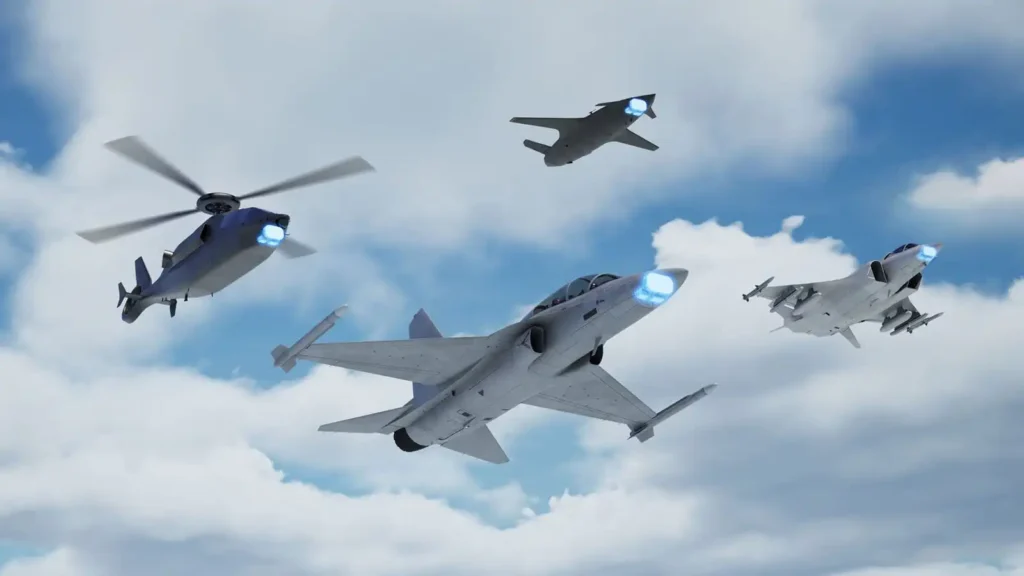
A major component of the upgrade is the integration of Raytheon’s PhantomStrike radar. Raytheon, a subsidiary of RTX, describes PhantomStrike as an air-cooled, compact fire-control radar that is smaller, lighter, and requires less power than modern active electronically scanned array radars.
The company stated that PhantomStrike can be integrated into uncrewed aerial vehicles, light attack aircraft, rotary-wing aircraft, and other platforms.
The radar is designed to deliver advanced detection and targeting performance at nearly half the cost of typical fire-control radars, significantly improving affordability and deployment flexibility for autonomous and crewed systems.
Broader Autonomy Programs
The X-62’s autonomous capabilities complement other Air Force investments, including the Viper Experimentation and Next-Generation Operations Model program.
These efforts support the development of collaborative combat aircraft, which are intended to operate as autonomous wingmen alongside crewed fighters.
In September 2023, the Air Force and the Defense Advanced Research Projects Agency jointly conducted the first-ever dogfights between a human pilot and an AI-controlled jet, using the X-62 as the test platform.
In April 2024, Air Force and DARPA officials stated that data from the successful trials would inform future collaborative combat aircraft concepts, particularly in air-to-air combat roles.
Funding and Senior Leadership Validation
The mission systems upgrade was made possible through an investment from the Pentagon’s Test Resource Management Center, highlighting the program’s priority within the Department of Defense test enterprise.
Former Air Force Secretary Frank Kendall publicly expressed confidence in the X-62’s autonomous flight capabilities in April 2024.
Shortly thereafter, he visited Edwards Air Force Base and flew as a passenger aboard the AI-piloted aircraft, providing high-level validation of the system’s maturity and safety.
Stay tuned with us. Further, follow us on social media for the latest updates.
Join us on Telegram Group for the Latest Aviation Updates. Subsequently, follow us on Google News
