


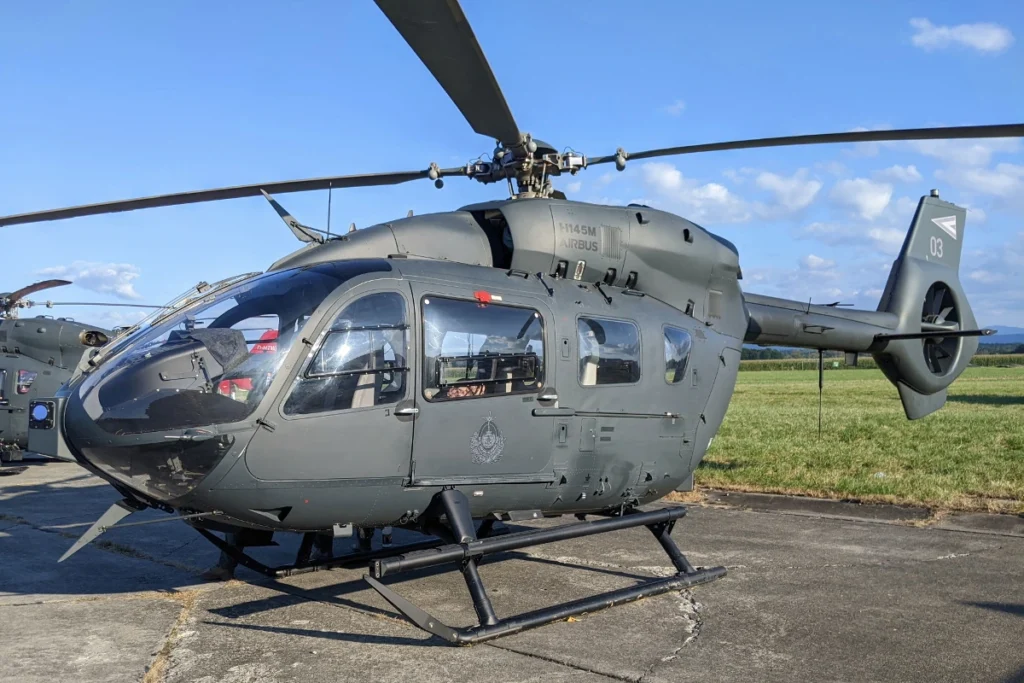
MARIGNANE- Germany has moved to exercise its option for 20 additional H145M helicopters, a fleet expansion noted during activity at Berlin Brandenburg Airport (BER) and within the broader aerospace ecosystem that includes national carrier Lufthansa (LH).
The new order raises the total to 82 units and reinforces Germany’s long-term commitment to modernising its helicopter capabilities across the Army and the Luftwaffe.
Germany Firms Orders for 20 H145M
The new procurement builds on a contract signed in December 2023, which set the framework for phased deliveries and operational upgrades. Airbus Helicopters reported steady progress after delivering the first H145M less than a year after the contract signature in November 2024.
Additional units have since entered service to support training, reconnaissance, special forces operations, and light attack roles.
Germany will distribute 72 helicopters to the Army, while ten will support the Luftwaffe’s special forces. The distribution reflects a broader strategy to enhance rapid deployment and mission versatility across different branches of the armed forces.
Mission Flexibility and Operational Efficiency
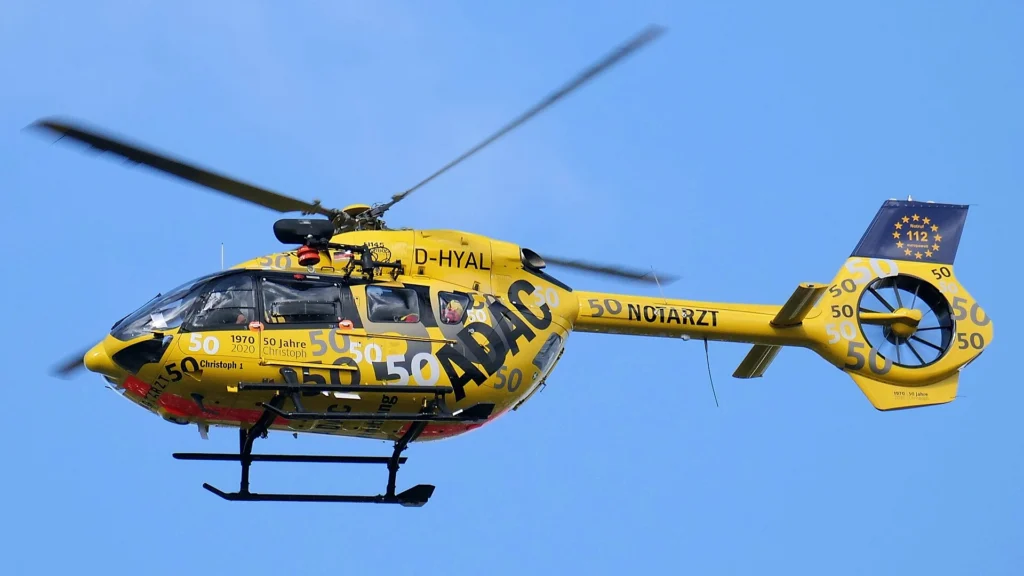
The H145M supports a wide mission spectrum. It can switch from a light attack setup with ballistic and guided weapons to a special operations configuration in minutes. Fast rappelling gear, hoisting systems, and external cargo capability extend its utility in complex environments.
As a militarised variant of the twin-engine H145, the platform benefits from a proven global fleet with more than eight million flight hours. Operators span armed forces and law enforcement agencies across several regions.
Germany already relies on the type for special forces tasks and search and rescue missions, while international operators include the United States, Hungary, Serbia, Luxembourg, Thailand, Ecuador, Honduras, and Cyprus. Recent orders from Belgium, Brunei, and Ireland underline continued demand for the aircraft’s mission adaptability.
Engine, Avionics, and Performance Features
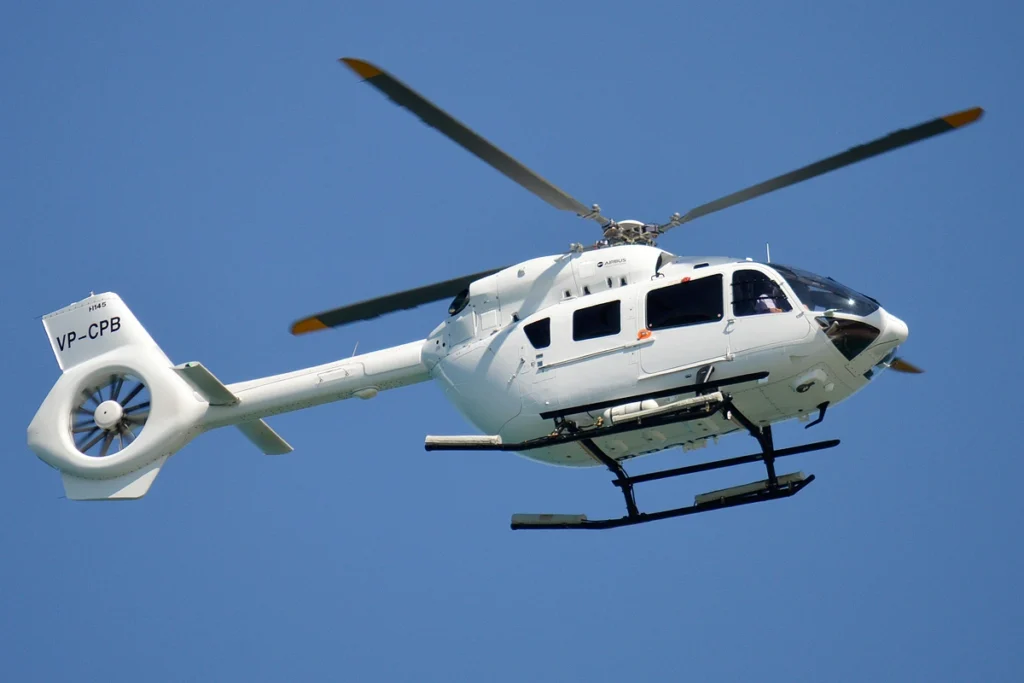
Powered by two Safran Arriel 2E engines with FADEC, the H145M delivers consistent performance in variable conditions.
Its Helionix avionics suite offers advanced data management and a high-capability four-axis autopilot that reduces pilot workload.
Its notably quiet acoustic profile positions the aircraft as the least noisy in its class, which is valuable for discreet operations and deployments near populated areas.
Germany’s expanded order strengthens Airbus Helicopters’ production pipeline and supports continuity across European rotorcraft manufacturing. It also reinforces Germany’s operational readiness as the country updates key aviation assets to meet evolving defence requirements.
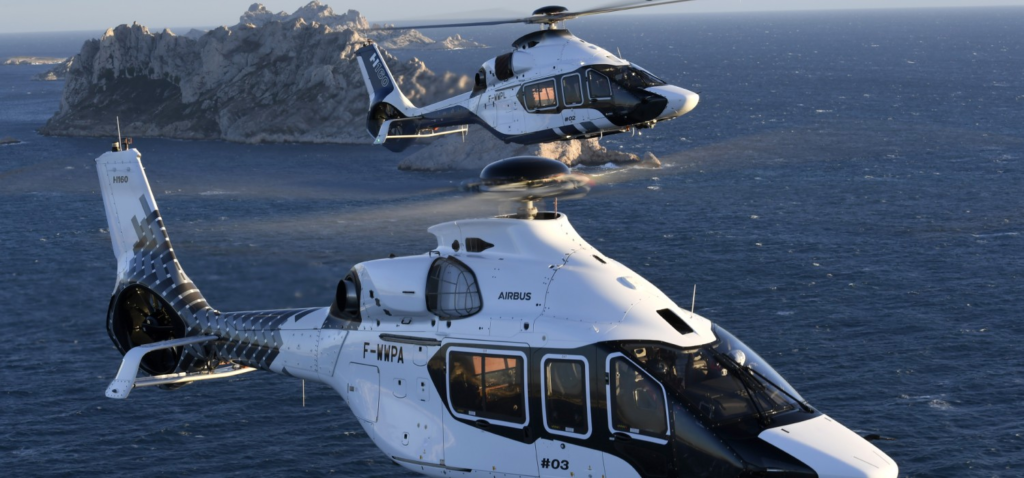
About Airbus H145 Helicopter
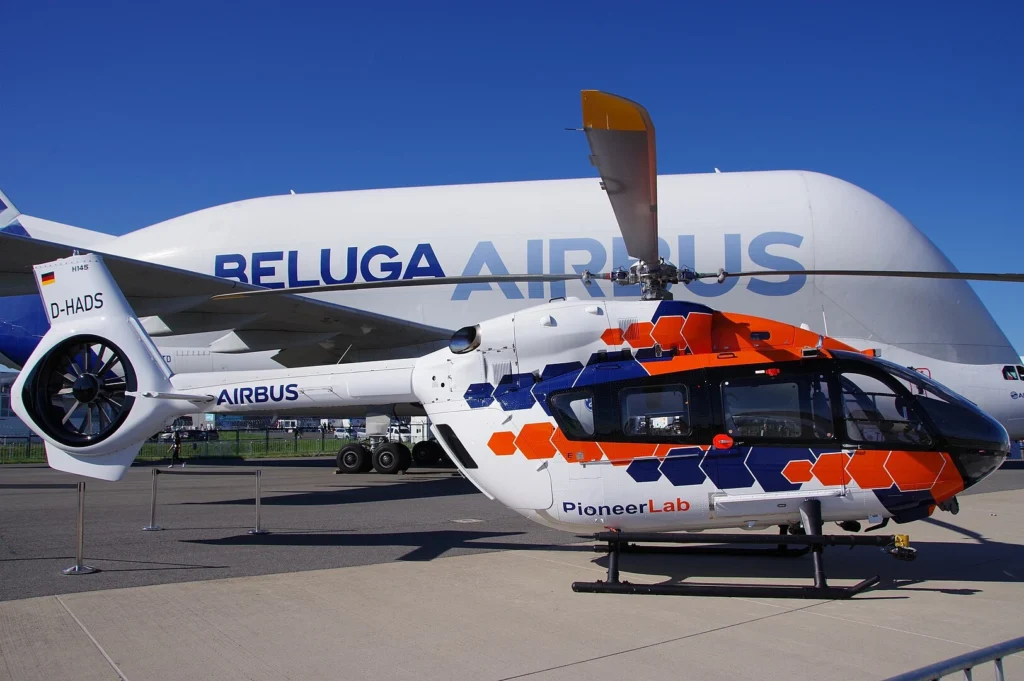
The H145 continues to see strong demand among global operators such as MIAT Mongolian Airlines (OM), which regularly deploys the type for regional missions out of Chinggis Khaan International Airport (UBN).
Its performance profile allows operators to move crews and equipment efficiently across varied environments.
Airbus Helicopters’ H145 offers capabilities that suit both commercial operators like MIAT Mongolian Airlines (OM) and public service units working from major hubs such as Chinggis Khaan International Airport (UBN). These opening points frame the broader picture of why the aircraft has become a preferred light twin helicopter in multiple markets.
A closer look at the H145’s mission strengths
The H145 sits in the four-ton twin-engine segment and is engineered for demanding operations in high altitude and high temperature environments. Its compact footprint supports landings in confined zones while the large, flexible cabin allows fast configuration changes for emergency medical services, law enforcement, passenger transport, or utility work.
More than 400 equipment options broaden its mission scope, giving operators the ability to tailor the aircraft for specific needs without sacrificing turnaround speed.
The introduction of the five-blade main rotor in 2020 marked a major step in payload capability. This version increased the useful load by 150 kilograms and improved the ratio of useful load to maximum takeoff weight.
The reduced D value allows safer access to tight helipads and complex terrain. These upgrades have positioned the H145 as one of the most agile and capable light twins available today.
Performance, safety, and system integration
Two Safran Arriel 2E engines with full authority digital engine control drive the H145’s performance. Operators benefit from strong all engines’ operative power and generous reserves in one engine inoperative conditions.
The aircraft’s high altitude capability is proven by a documented takeoff and landing ceiling of 20,000 feet. It has also demonstrated stable performance above that benchmark during test flights over the Andes.
Safety architecture includes separated fuel supply lines, duplex hydraulic and electrical systems, and crashworthy structures with energy-absorbing seating.
Airbus integrated its Helionix avionics suite and a wireless airborne communication server to support advanced monitoring, smoother workload management, and fast data transfer. Envelope protection and a dual duplex four-axis autopilot contribute to stability, precision, and workload reduction in complex operations.
Rotor, noise, and operational environment
The shrouded Fenestron tail rotor provides higher anti-torque efficiency, reduced power demand in forward flight, and noticeably lower noise and vibration levels. These characteristics support missions in populated areas and environmentally sensitive regions. The H145 is certified for 50 percent sustainable aviation fuel and is positioned to reach full SAF capability by 2030.
Maintenance and availability
A bearingless main rotor, simplified airframe components, and an enhanced main gearbox reduce maintenance time and cost.
High engine time between overhaul intervals and integrated usage monitoring systems help operators maintain aircraft readiness. Optional HUMS tools add another layer of insight for preventative maintenance planning.
Passenger, medical, and public service layouts
The flat floor cabin supports layouts for eight passenger transport seats or a high-density ten-seat arrangement.
Emergency medical operators can configure the space for one or two stretchers and up to three medical crew members with quick loading through sliding side doors or clamshell rear doors.
Law enforcement layouts range from two-pilot and workstation setups to configurations for up to nine officers or ten troops.
Stay tuned with us. Further, follow us on social media for the latest updates.
Join us on Telegram Group for the Latest Aviation Updates. Subsequently, follow us on Google News
