

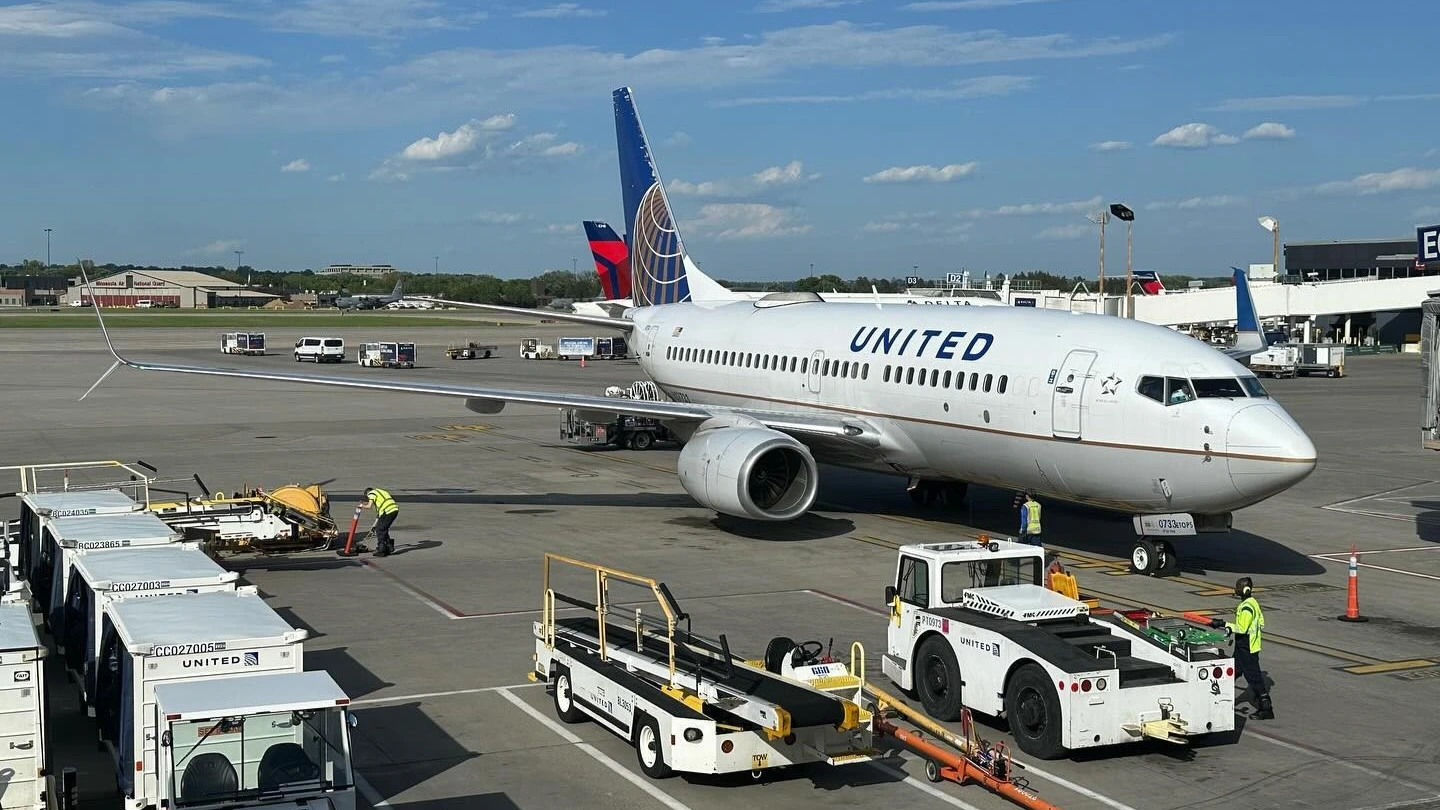
CHICAGO- A United Airlines (UA) passenger says she was removed from a flight on August 4 after declining a request to move into a middle seat and being confronted about a souvenir T-shirt from New York.
The passenger says the shirt contained profanity but drew no objection during check-in, TSA screening, at the gate or during boarding. She says about 5 United employees, including a manager, later told her to cover or remove it or leave the aircraft.
United Passenger T-Shirt Issue After Seat-Swap Refusal
The passenger’s account describes a sequence that began with an ordinary boarding process and ended with her being asked to leave the aircraft.
She says she checked in for her flight, passed through TSA, and proceeded to the gate while wearing the T-shirt. She then boarded the aircraft and took her assigned seat. According to her account, no United employee objected to the shirt during those stages.
The souvenir shirt displayed 3 lines of text:
NEW YORK
F*CKIN
CITY
The passenger says she was subsequently asked to move across the aisle into a middle seat. She declined the request.
After she refused the seat change, she says approximately 5 United employees approached her, including a manager. She was asked to step off the aircraft and was told that she needed to remove or cover the shirt or be removed from the flight.
The account does not establish that United removed her as punishment for declining the middle-seat request. However, the timing is central to the complaint because she says the shirt was not challenged until after she declined the proposed seat change.
The passenger’s husband, Denzel Joyce, publicly described the incident after the couple’s travel experience.
He said the couple felt humiliated by United and wanted a genuine explanation rather than an opportunity to attack the airline. He also said they wanted to raise awareness for other passengers who might experience a similar situation.
According to View from the Wing, the passenger said the incident occurred on August 4. Her account, as shared publicly, focuses on the sequence from boarding to the seat request and then to the clothing dispute.
That distinction matters because the available account establishes the sequence reported by the passenger, but it does not independently establish United’s reason for making the seat request or whether the seat dispute influenced the later clothing decision.
United’s Contract Over Offensive Clothing
United’s Contract of Carriage gives the airline authority to refuse transportation or remove passengers in certain circumstances.
The clothing provision covers passengers who are barefoot, not properly clothed, or whose clothing is considered lewd, obscene or offensive.
The reported T-shirt contains profanity, which makes the clothing provision relevant to the dispute. The more subjective question is whether the shirt qualifies as offensive under United’s policy and how that standard was applied by the employees involved.
The policy does not mean that every item containing profanity will necessarily result in removal. It does, however, give United a contractual basis to address clothing that employees determine falls within the stated restriction.

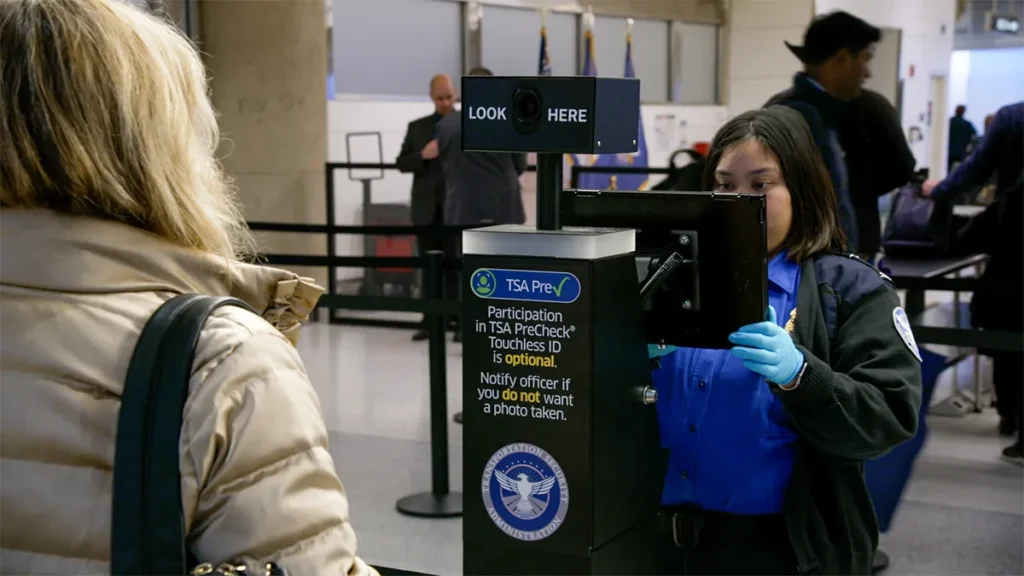
TSA Screening
The passenger’s successful TSA screening is a separate issue from United’s clothing policy.
TSA screening is designed to identify security threats and prohibited items. Airline employees enforce the carrier’s own conditions of carriage and onboard rules.
The original account notes that TSA screened the passenger for security threats, including weapons, explosives, and prohibited items such as 4-inch scissors.
The fact that the passenger passed security does not mean TSA approved the message printed on her shirt or prevented United from enforcing its own rules.
This distinction is important because an airline’s dress standards and federal airport security screening serve different purposes.
Timing Creates Questions About Enforcement
The most significant issue in the passenger’s account is the timing of the clothing enforcement.
She says United employees saw the shirt during multiple stages of the airport process. She passed TSA, reached the gate, boarded, and sat down without reporting any objection to the shirt.
The clothing issue, according to her account, became significant only after she declined the request to move into a middle seat.
That sequence does not prove that the airline retaliated against her for refusing the seat change. It does, however, explain why the passenger and her husband questioned the decision.
A publication should therefore distinguish between the reported sequence and an established causal connection. The available information supports the first, but not the second.
United’s Customer Care Response
The passenger received a response from United Customer Care after raising the complaint.
The representative, identified as Manshi, apologized for the experience and said United expects every member of its team to provide professional service. The response said the passenger’s experience would be shared with internal teams so they could follow up and review the matter with the employee.
The representative also thanked the passenger for providing feedback and said United values the information as it works to improve the travel experience.
The response does not say that United determined the removal was improper. It also does not explain whether the employee’s decision was based solely on the shirt, the seat dispute, or another consideration.
That makes the internal review significant because the customer-care response acknowledges the complaint without resolving the central question surrounding the sequence of events.
What Remains Unclear
Several important facts remain unresolved from the passenger’s account.
It is not clear why United asked her to move into the middle seat. It is also not independently established whether the seat request and the subsequent clothing complaint were connected.
The available information does not establish whether another passenger complained about the shirt, whether a particular employee noticed it for the first time after the seat discussion, or whether United had another operational reason for requesting the seat change.
United’s Customer Care response confirms that the complaint was being shared internally for review, but it does not provide the airline’s final findings.
Those unanswered questions should remain separate from the passenger’s allegations when describing the incident.
Stay tuned with us. Further, follow us on social media for the latest updates.
Join us on Telegram Group for the Latest Aviation Updates. Subsequently, follow us on Google News
