

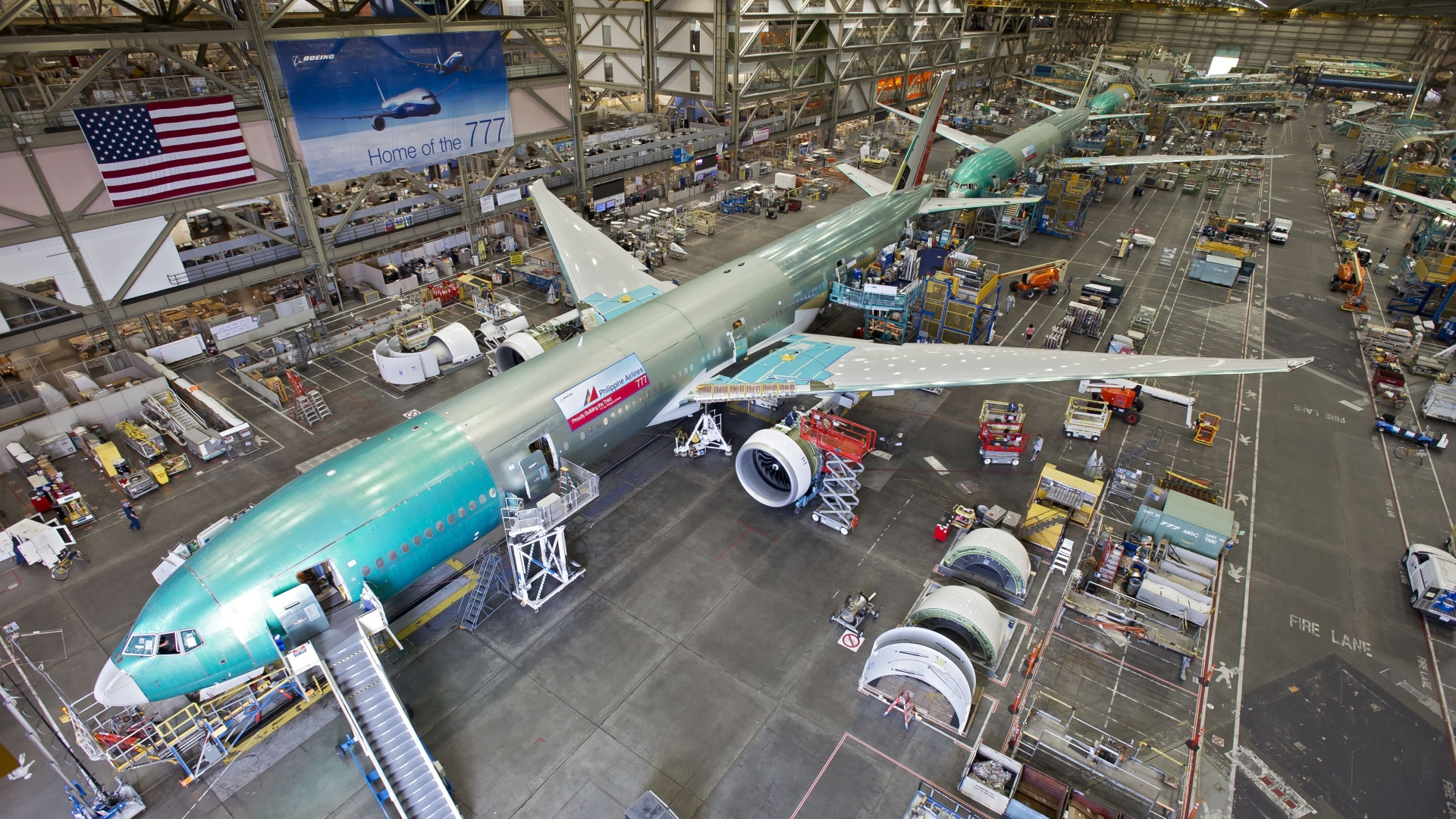
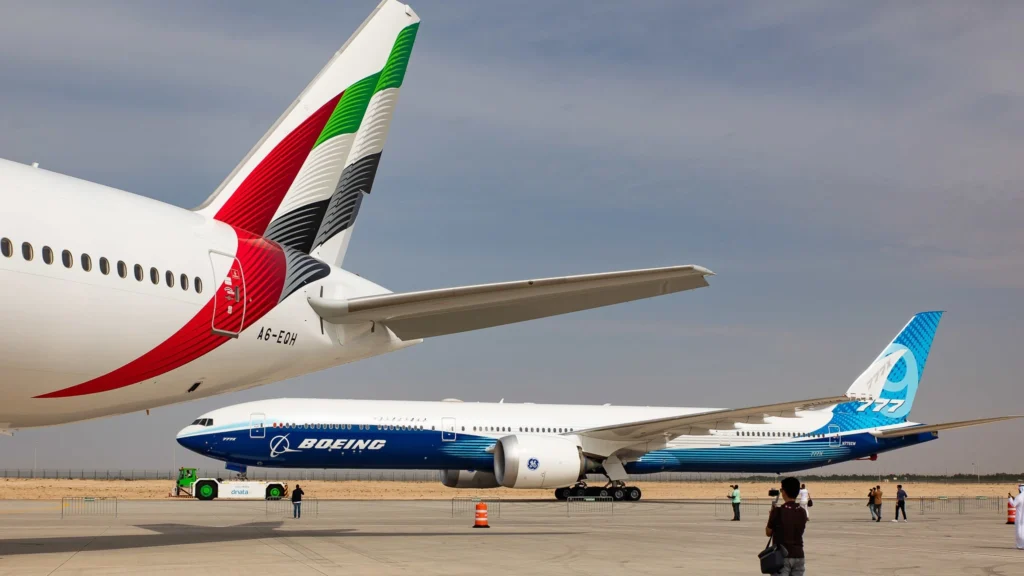
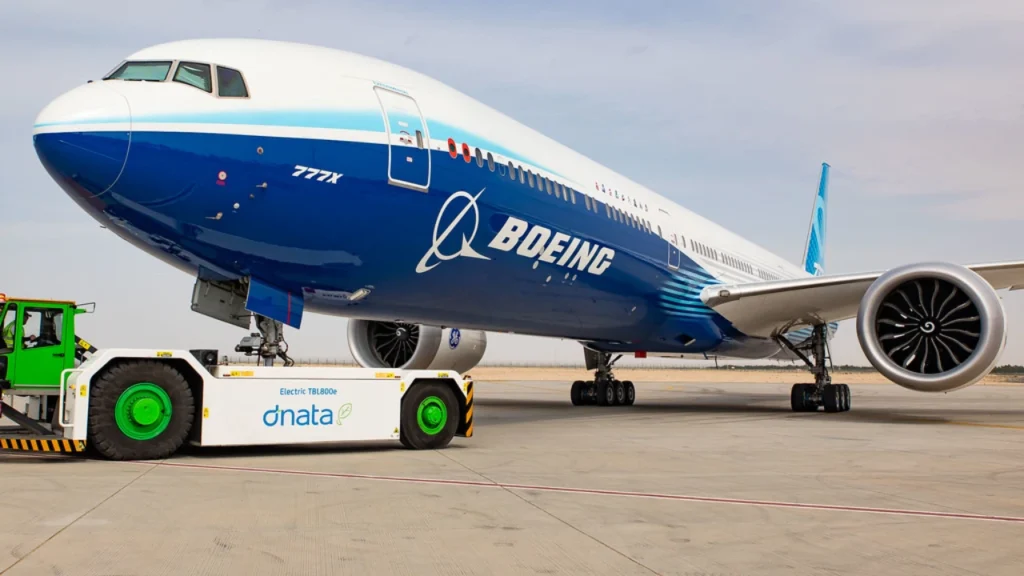
SEATTLE- Boeing removed 33 777X orders from its books after shifting them into the ASC-606 accounting category, a move linked to certification delays and shifting delivery timelines. The change follows updates in Boeing’s third-quarter report and comes as the company prepares to showcase the 777-9 in Dubai (DXB).
The adjustment coincides with soft order activity from some customers, including TUI Airways (BY), while Boeing continues working toward the delayed 777-9 certification and first delivery now planned for 2027.
Boeing Drops 777X Orders
Boeing’s decision to reclassify 33 777X orders reflects how the long certification timeline has shaped customer confidence, Flight Global reported.
The shift, applied retroactively to September figures, left the Boeing 777X backlog at 473 jets through October. ASC-606 is the accounting category Boeing uses when a contract exists, but the company is no longer confident the sale will conclude.
Certification delays continue to be the central pressure point. Boeing disclosed that the Federal Aviation Administration’s pace in approving flight-test activity pushed the first delivery of the 777-9 to 2027, extending the programme’s already lengthy schedule.
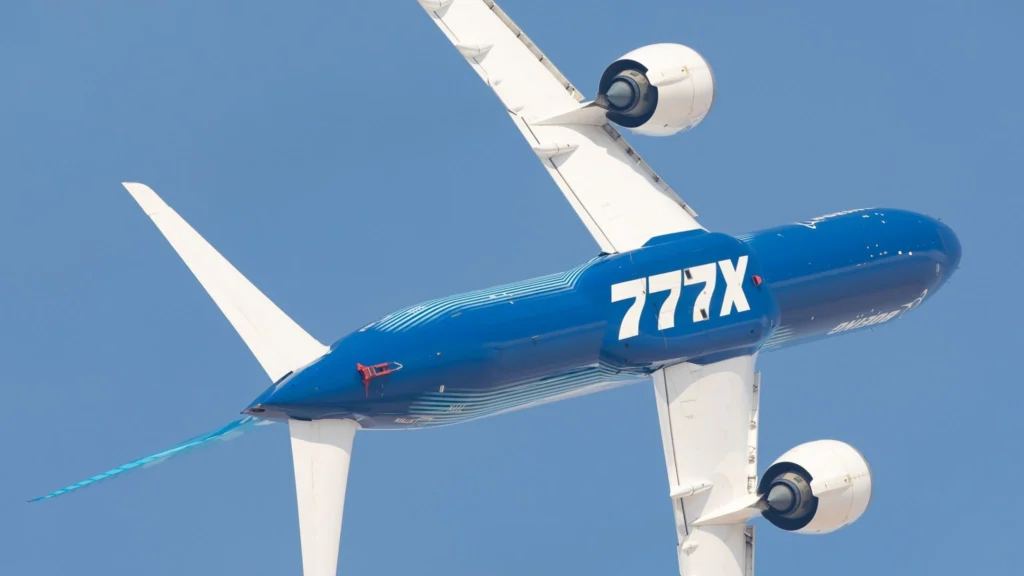
Despite those challenges, Boeing saw renewed interest in the widebody segment this year, securing 84 new 777X orders through October. That activity helped offset previous cancellations and earlier ASC-606 adjustments.
Recent Orders, Deliveries, and Backlog Trends
Boeing ended October with a total backlog of 5,911 aircraft. The figures include 4,312 737s, 85 767s, 521 777s and 993 787s.
October brought 15 new orders, a modest number for the manufacturer. Those purchases consisted of eight 737 Max jets, including six for TUI Airways, and seven 787s from undisclosed operators.
The month also included cancellations for seven 737 MAX aircraft, and two more of the type moved into ASC-606. Even so, Boeing posted a net gain of 10 aircraft in October. Deliveries moved at a faster pace, with 53 jets handed over, including 40 737s, four 767s, two 777 Freighters, and seven 787s.
How ASC-606 Shapes the Outlook
ASC-606 remains an internal risk indicator rather than a cancellation list. Boeing continues to hold valid contracts for aircraft placed in this category, and it routinely restores those orders to the backlog when customer finances or geopolitical conditions improve.
The 33 777X orders removed from the backlog could return if the market landscape shifts or certification progress stabilises.
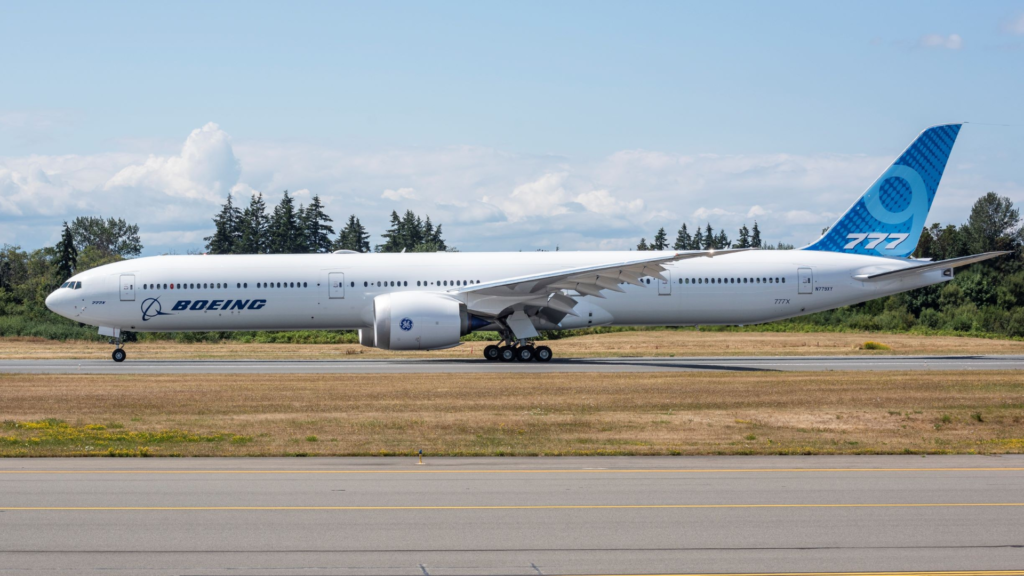
The upcoming Dubai Airshow will be a key moment for Boeing to reinforce the 777X programme. With a 777-9 on display, the company aims to capture additional demand for large twin-engine aircraft, especially as international traffic continues to recover.

Singapore Airlines CEO on Delays
Singapore Airlines (SQ) expects limited disruption from the delayed arrival of its Boeing 777-9 jets, reaffirming that its fleet strategy has enough flexibility to handle shifts in the aircraft delivery timeline at Singapore Changi Airport (SIN).
The airline’s leadership said the revised schedule for Boeing’s 777X program will not alter core operations or near-term growth plans, despite industry attention on the aircraft’s extended certification path.
Singapore Airlines highlighted that its long-term fleet plan is designed with buffers to absorb delivery changes. The carrier noted that Boeing’s move to push first 777-9 deliveries to 2027 does not significantly affect existing schedules or future deployment.
SIA’s management refrained from commenting on compensation talks with Boeing but indicated confidence in the airline’s standing as a major customer. The company believes its size, order volume, and global reputation place it favorably for future aircraft allocations.
The airline also addressed the financial backdrop surrounding the update. Its latest half-year results showed a 68 percent drop in profit, driven by losses at its Indian associate Air India (AI), rising operating costs, and growing competition across key markets. Even so, the fleet outlook remains stable, and the airline continues to emphasize disciplined capacity planning.
SIA reported that higher expenses and market rivalry have pressured margins across the network. The airline is adjusting schedules and capacity to maintain load factors while ensuring its fleet remains modern and fuel-efficient. The 777-9 delay, while notable, does not alter these broader strategies.
Boeing 777X Certification Trials
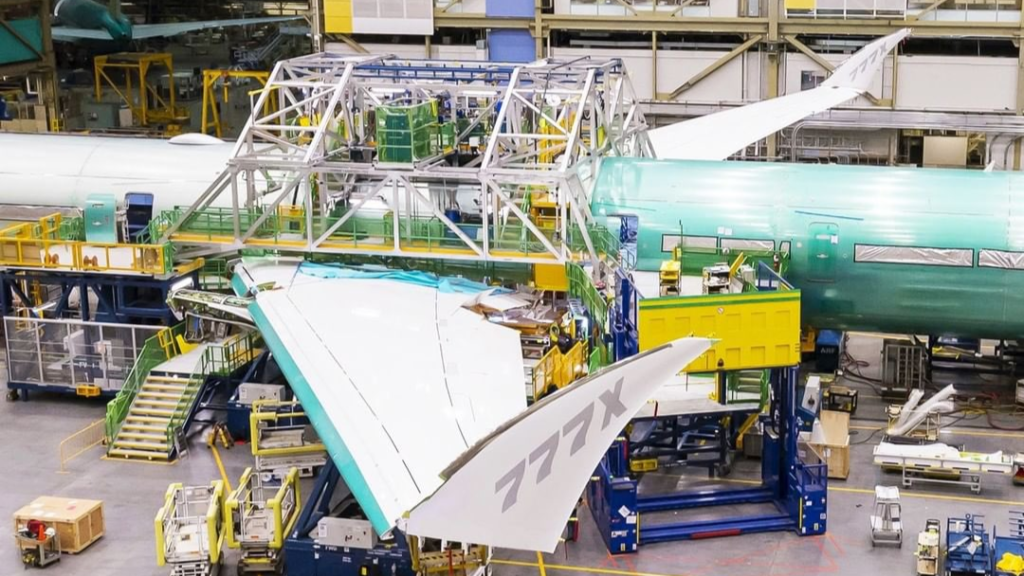
Boeing progressed to the next certification stage for the 777-9 after the Federal Aviation Administration approved the third phase of flight testing at Seattle Boeing Field (BFI) and Everett Paine Field (PAE).
The aircraft continues to move through a structured five-phase program designed to meet U.S. regulatory standards.
The approval signals growing momentum for the long-delayed jet as teams work through the most extensive evaluation stage of the program, The Air Current reported.
Progress in the 777-9 Test Program
The third phase marks the largest block of certification activity for the 777-9 and includes expanded performance checks, handling assessments, and advanced systems testing.
According to industry sources, this stage covers more complex scenarios than earlier phases and is critical for validating the jet’s final design.
Boeing confirmed that the program remains under full FAA oversight, with company teams completing required documentation and flight data reviews.
The FAA has not issued additional public statements about the approval, but the agency continues to supervise all certification milestones tied to the 777X family.
Impact on Boeing’s Wide-Body Strategy
The 777-9 is central to Boeing’s long-term position in the large wide-body market. Years of certification delays, supply challenges, and rework requirements pushed overall development costs beyond $15 billion and postponed customer deliveries by several years.
These setbacks opened room for Airbus and its A350 to capture airlines seeking near-term wide-body capacity as international travel rebounded. The shift in market timing added pressure on Boeing’s financial results and long-term planning.
Updated Delivery and Certification Timelines
Boeing recently revised its financial outlook and confirmed that the first 777-9 delivery is now expected in 2027.
The company also recorded a $5 billion charge tied to updated program costs and revised certification timelines.
The manufacturer has made progress elsewhere in its portfolio. Earlier this month, the FAA granted approval to lift the 737 MAX production ceiling from 38 to 42 aircraft per month, providing stability to Boeing’s narrow-body production plans while the 777-9 advances through testing.
Stay tuned with us. Further, follow us on social media for the latest updates.
Join us on Telegram Group for the Latest Aviation Updates. Subsequently, follow us on Google News
