

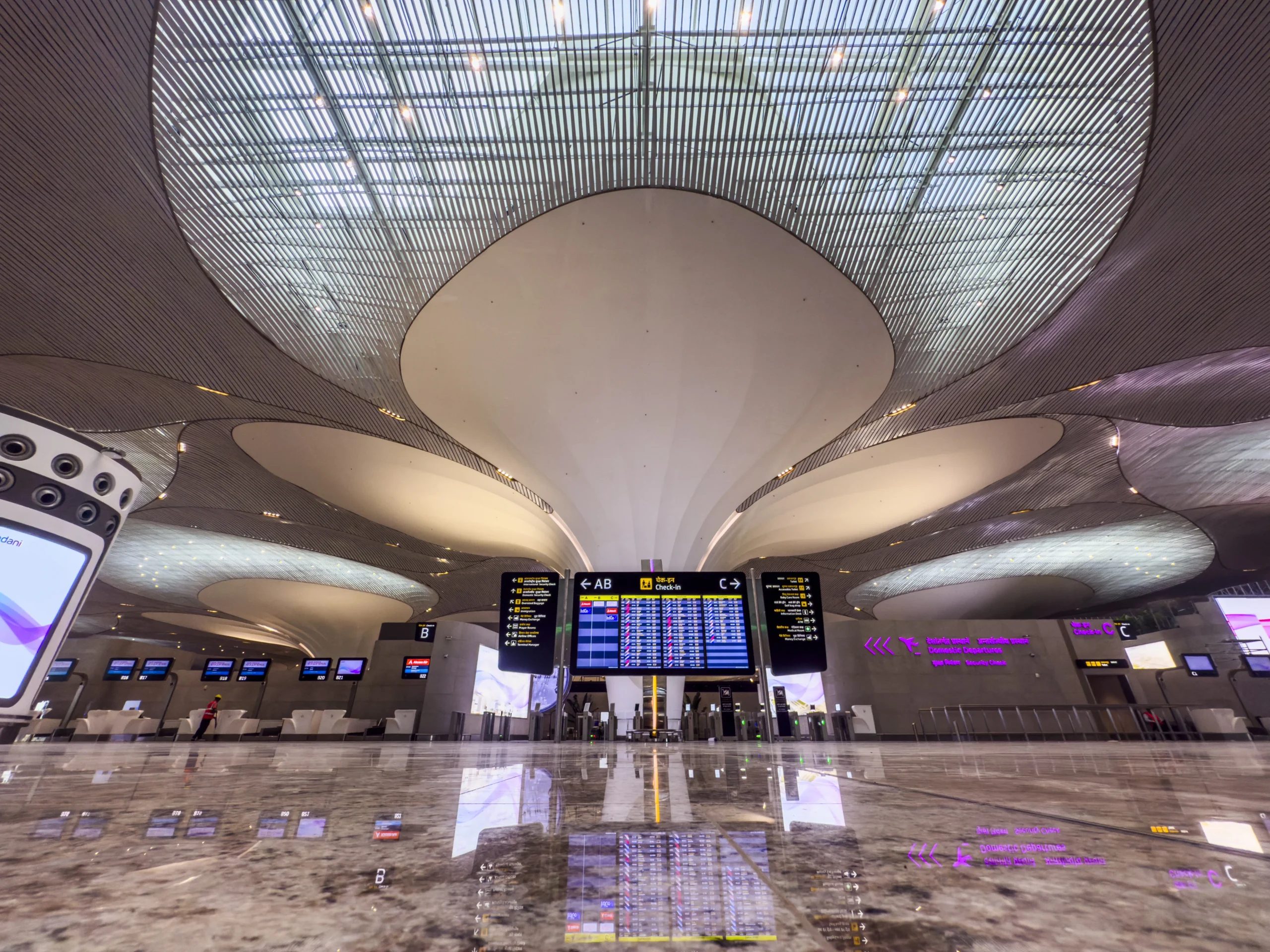
NAVI MUMBAI- Prime Minister Narendra Modi inaugurated Navi Mumbai International Airport (NMI), marking a milestone in India’s aviation expansion and infrastructure modernization.
Developed through a Public-Private Partnership between Mumbai International Airport Limited (BOM), a subsidiary of Adani Airport Holdings, and CIDCO, NMIA is designed to transform regional and global connectivity.
The new greenfield airport at Navi Mumbai (NMI) complements Mumbai’s Chhatrapati Shivaji Maharaj International Airport (BOM) in a twin-airport system, easing congestion and enabling the Mumbai Metropolitan Region (MMR) to handle nearly 90 million passengers annually upon full completion.
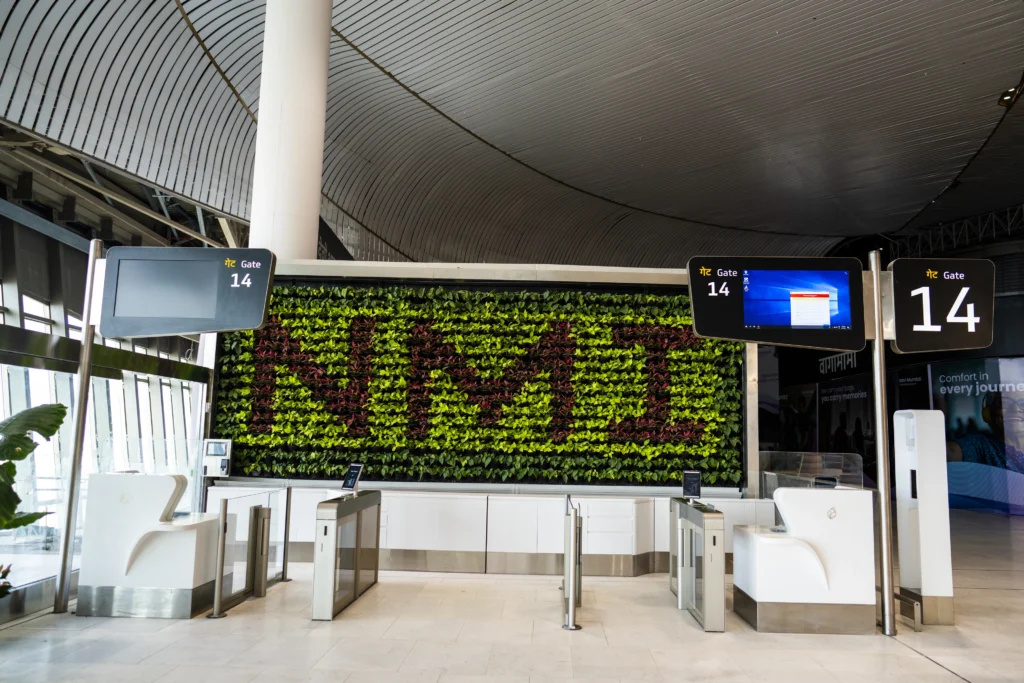
Navi Mumbai Airport Opens Gate to the World
Navi Mumbai International Airport (NMIA) represents one of India’s most significant aviation projects in recent decades.
Spread over 1,160 hectares near Panvel, the airport has been conceived as part of the government’s “Viksit Bharat 2047” vision to develop world-class infrastructure and strengthen India’s global competitiveness.
NMIA will initially handle 20 million passengers per annum, scaling up to 90 million as future terminals and runways are added.
Its strategic location connects directly to the Mumbai Trans Harbor Link (Atal Setu), suburban rail, metro corridors, and planned waterways, reducing travel times across western India
The airport’s multimodal integration supports passenger convenience while creating a strong logistics and trade ecosystem around the Mumbai–JNPT corridor.
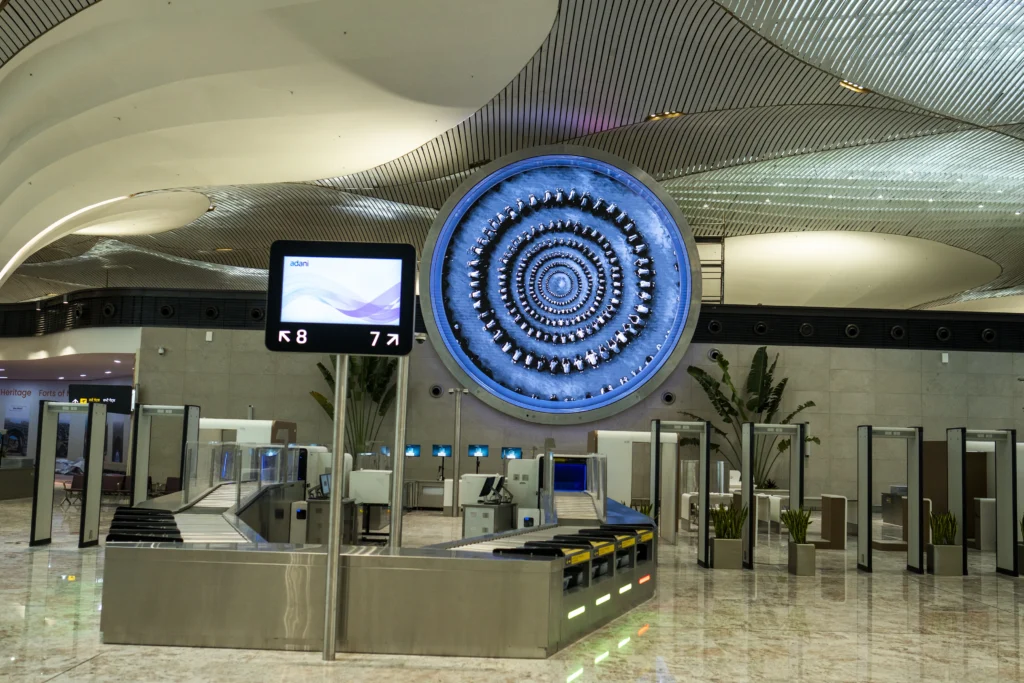
A Design Rooted in Culture and Sustainability
Designed by Zaha Hadid Architects, NMIA draws inspiration from the lotus, India’s national flower, representing purity and resilience.
The terminal’s architecture features sculptural columns and a floating lotus-shaped roof, maximizing natural light and passive cooling. The design aims to create a calm, intuitive environment while integrating advanced energy efficiency systems.
The airport’s infrastructure is aligned with global sustainability benchmarks, incorporating solar power generation, water recycling, and green building certifications. This approach positions NMIA as a model for future greenfield airports across Asia.

Maharashtra’s New Economic Engine
NMIA is expected to redefine Maharashtra’s economic geography. By relieving pressure on CSMIA, which operates near saturation, NMIA will stimulate growth in Navi Mumbai, Raigad, and Pune. Analysts project a 0.5% boost to Maharashtra’s GDP through increased investment, trade, and real estate development.
The project has already catalyzed a surge in infrastructure, hospitality, and logistics ventures across the region.
Property prices in nearby nodes like Ulwe and Panvel have appreciated significantly since construction began. With four terminals, a cargo village, and an integrated transport grid, NMIA positions Maharashtra as a hub for aviation-led growth.
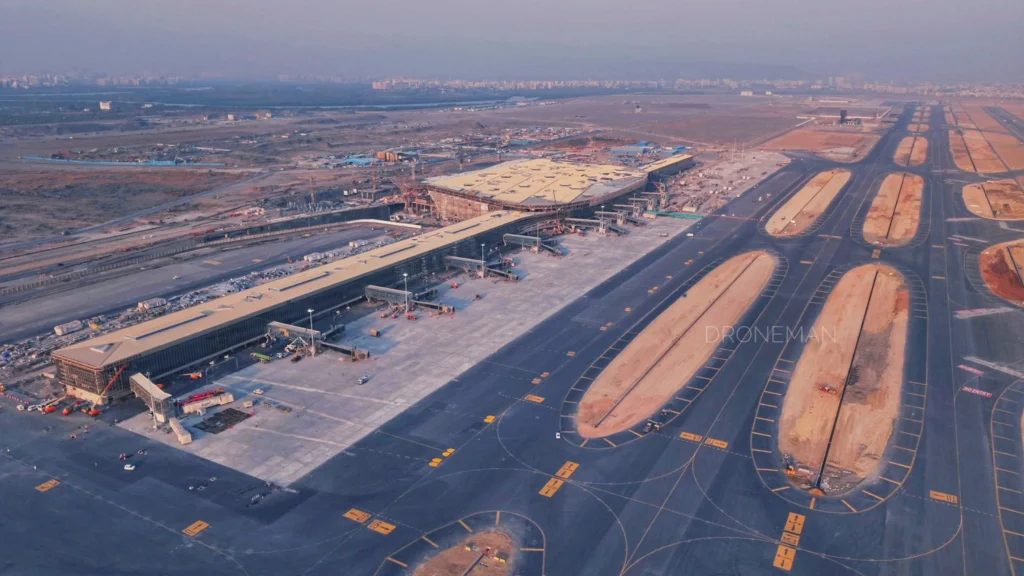
Cargo and Logistics Hub for the Future
Cargo is central to NMIA’s design. The airport will handle 0.5 million tonnes annually in its first phase, with capacity expanding to 3.2 million tonnes over time.
The facility includes India’s first fully automated cargo terminal with AI-enabled monitoring systems, a Pharma Excellence Center with temperature-controlled zones, and a dedicated perishable goods area.
Its proximity to Jawaharlal Nehru Port Trust (JNPT) creates a seamless sea-air transshipment corridor, boosting India’s position in global supply chains. This integrated approach will serve key industries such as pharmaceuticals, perishables, and e-commerce.
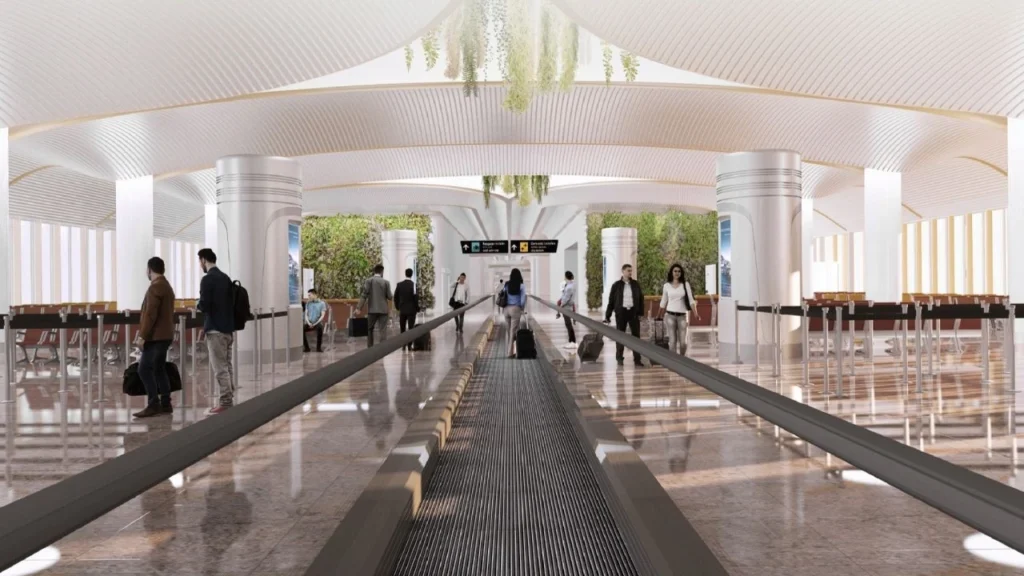
Passenger Experience and Commercial Vision
NMIA aims to set new benchmarks in passenger comfort and commercial innovation. The airport’s retail master plan features over 110 outlets and a 1,800-square-meter duty-free zone.
Beyond shopping, NMIA is designed as a lifestyle destination, offering cultural zones, curated dining experiences, and landside entertainment accessible to both passengers and visitors.
With more than 67 general aviation stands, NMIA also targets premium travelers and business aviation traffic, reinforcing Mumbai’s global aviation profile alongside hubs like Dubai and Singapore.

A Two-Decade Journey to Reality
The NMIA project traces its origins to 2007, when it was approved to address Mumbai’s growing air traffic.
After overcoming major challenges—including resettlement, environmental approvals, and complex engineering works—the project gained momentum under Adani Group’s leadership in 2021.
Construction accelerated after land transfer in 2022, and the terminal’s iconic lotus-inspired design was unveiled in 2023.
With NMIA now operational, India joins global twin-airport cities like London, New York, and Tokyo, expanding its aviation capacity and reasserting its position in international air transport.
Stay tuned with us. Further, follow us on social media for the latest updates.
Join us on Telegram Group for the Latest Aviation Updates. Subsequently, follow us on Google News
