

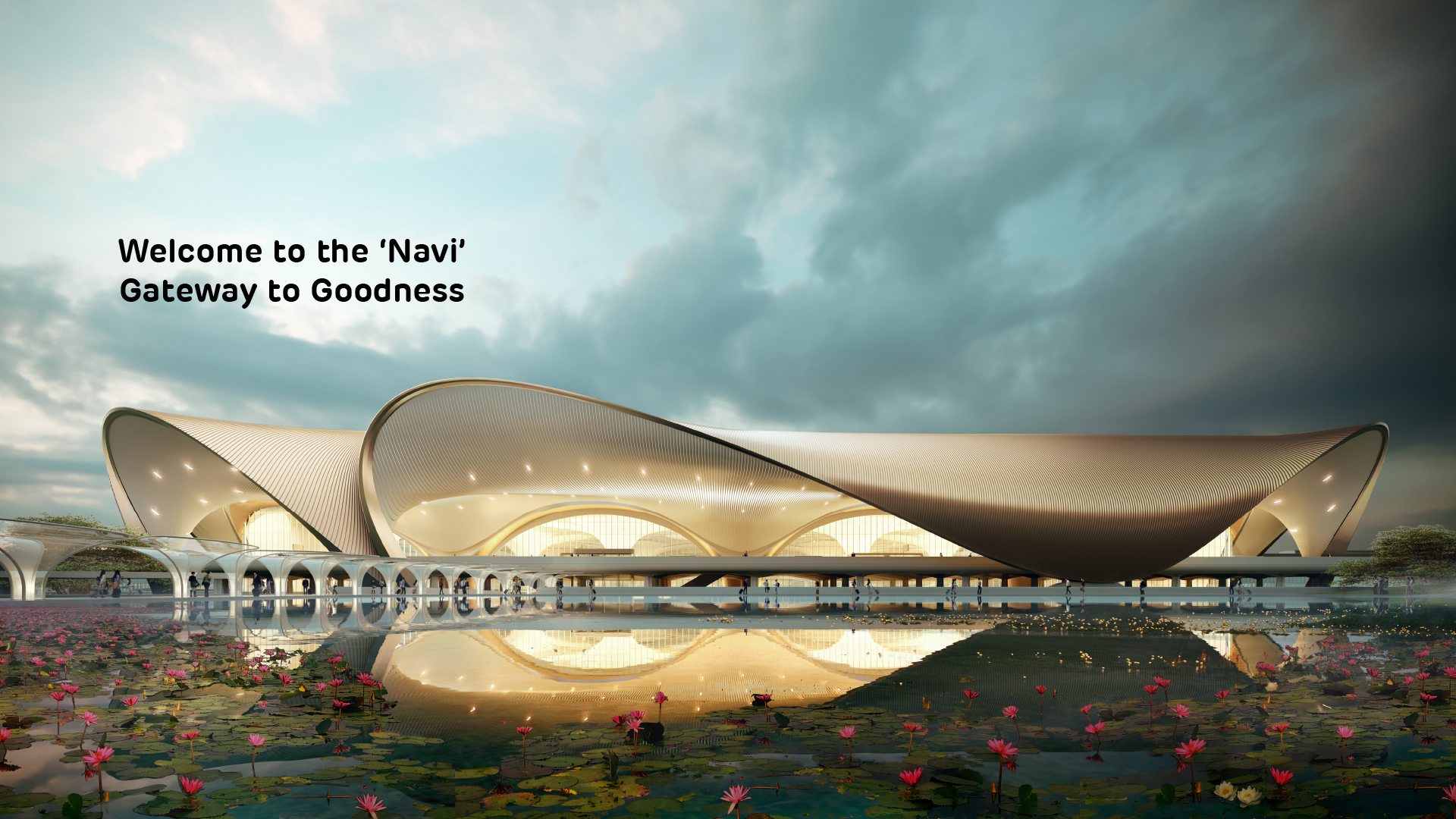
NAVI MUMBAI- Prime Minister (PM) Narendra Modi inaugurated the Navi Mumbai International Airport (NMI), marking a major step in easing congestion at Mumbai’s Chhatrapati Shivaji Maharaj International Airport (BOM). Commercial operations at Terminal 1 will begin in December, with both domestic and international flights from day one.
Airlines are planning a strong launch, with around 50–60 flights expected on opening day. A few weeks before operations start, airline websites and booking platforms will activate the new airport code NMI, officially linking it with Mumbai’s aviation network.
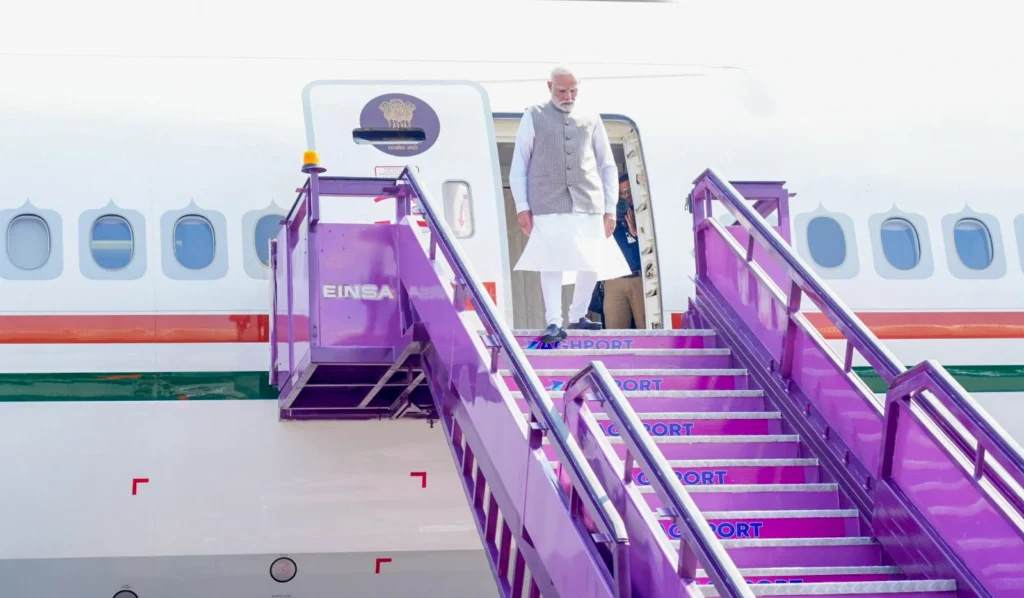
PM Modi Inaugurates Navi Mumbai Airport
The Navi Mumbai International Airport (NMI) represents India’s largest greenfield airport project, built at a cost of ₹19,650 crore under a public–private partnership.
Phase 1 covers 1,160 hectares and is designed to handle 20 million passengers annually, scaling up to 90 million once all phases are complete. The facility will also manage 3.25 million metric tonnes of cargo each year.
During its first month, operations will run from 8 a.m. to 8 p.m., handling 8–10 flights per hour. IndiGo Airlines (6E) will operate 18 departures and 18 arrivals on day one, linking 15 domestic cities and adding 15 international routes by November. Akasa Air (QP) will launch 15 daily domestic flights.
According to BVJK Sharma, CEO of NMIA, the airport’s early flight schedule is ambitious compared to other global greenfield launches, where operations typically start slowly. The goal is to meet rising passenger demand from the Mumbai Metropolitan Region, which currently exceeds 70 million annually.
Addressing Mumbai’s Air Traffic Constraints
Arun Bansal, CEO of Adani Airport Holdings, said Mumbai’s air travel capacity has been stretched for years.
The new airport will share traffic with BOM, which already handles about 950 daily flights. Once NMI begins operations, Mumbai will become the first Indian city to have two commercial airports serving scheduled flights.
Phase 1 of NMIA is expected to handle around 380 flights daily, including both arrivals and departures. However, officials project that Terminal 1 will reach capacity within 12–15 months, prompting the need for swift expansion to additional terminals and a second runway.
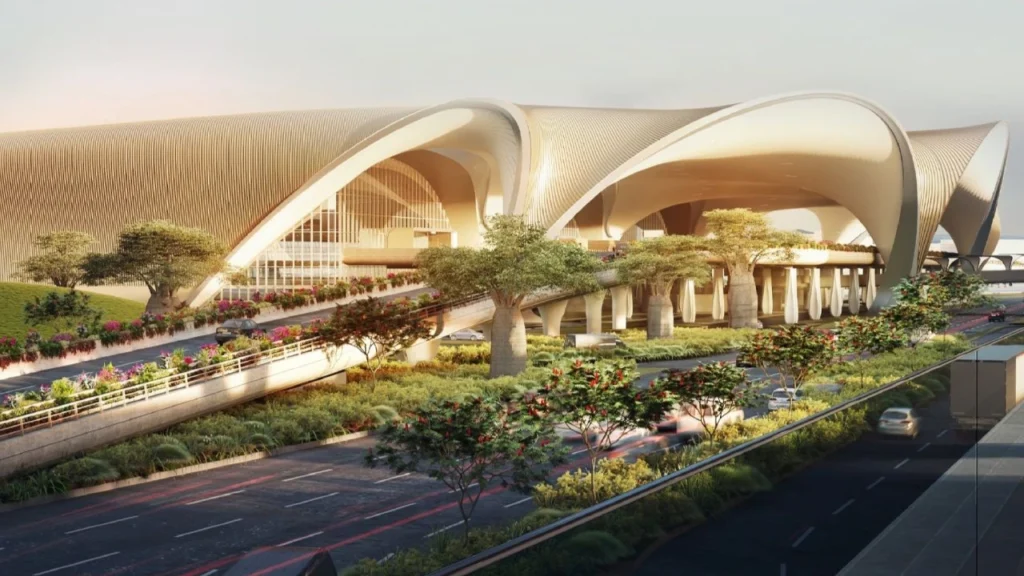
Sustainable Design and Advanced Facilities
In line with India’s sustainability goals, NMI integrates renewable and eco-friendly features. It will generate around 47 MW of solar power, offer storage for Sustainable Aviation Fuel (SAF), and use electric buses for public transport.
The airport will also be the country’s first to provide Water Taxi connectivity, linking it to other parts of the Mumbai metropolitan area.
Beyond passenger operations, NMIA will host India’s largest Maintenance, Repair, and Overhaul (MRO) hub, strengthening its role as a key aviation and logistics center. The airport’s design includes an Automated People Mover (APM) to connect all terminals and a separate city-side APM for external transit links.
Metro Connectivity and Smart Mobility
Alongside the airport’s inauguration, Prime Minister Modi also opened Mumbai Metro Line-3 (Aqua Line) from Acharya Atre Chowk to Cuffe Parade. The 33.5 km underground line, built at a cost of ₹12,200 crore, includes 27 stations and can serve 1.3 million passengers daily.
It provides integrated access to key districts like Fort, Kala Ghoda, and Marine Drive, along with connections to other metro lines and the airport.
The launch of the ‘Mumbai One’ mobility app enhances this connectivity by merging services from 11 public transport operators. The app offers digital ticketing, real-time travel updates, and route suggestions, improving multimodal travel efficiency across Mumbai.

Skill Development and Employment Push
Modi also introduced the Short-Term Employability Program (STEP) under Maharashtra’s Department of Skill, Employment, Entrepreneurship, and Innovation.
The initiative will run across 400 government ITIs and 150 technical high schools, creating 2,500 training batches.
These include over 350 programs exclusively for women and specialized courses in emerging fields like AI, IoT, EV technology, solar energy, and additive manufacturing.
Stay tuned with us. Further, follow us on social media for the latest updates.
Join us on Telegram Group for the Latest Aviation Updates. Subsequently, follow us on Google News
