

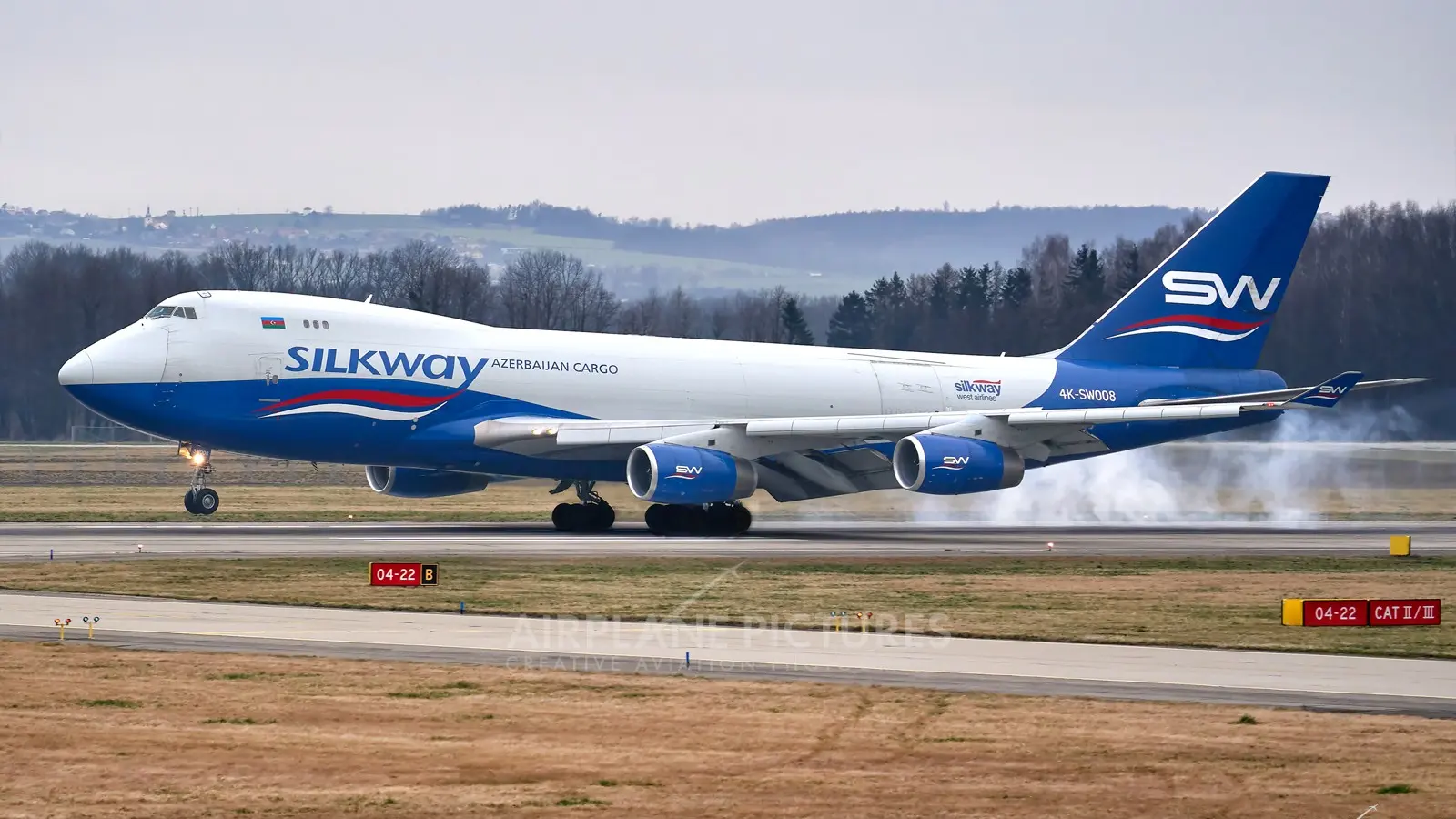
DALLAS- A Silk Way West Airlines (7L) Boeing 747-8 freighter bound for Houston George Bush Intercontinental Airport (IAH) instead flew toward the Dallas area on August 4, 2026, before declaring a fuel emergency at low altitude.
The aircraft had departed Mexico City Felipe Ángeles International Airport (NLU) on a routine 741-mile cargo run, yet ended up circling near Dallas Fort Worth International Airport (DFW), more than 200 miles off course, with a Houston air traffic controller ultimately declaring an emergency on the crew’s behalf.
How Routine Cargo Flight Ended Up Over Texas
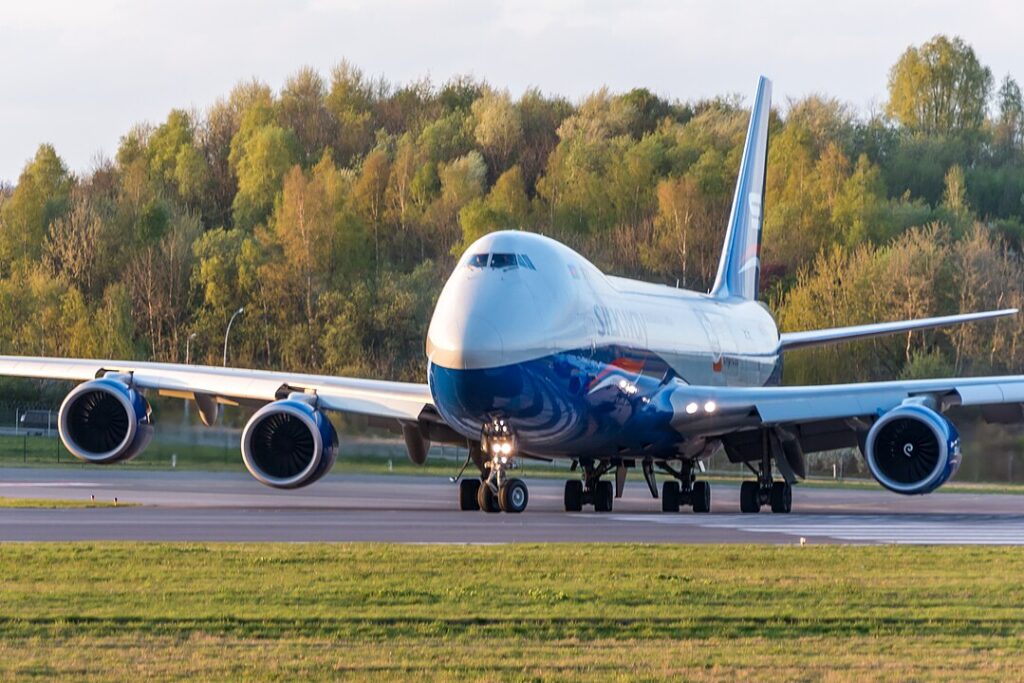
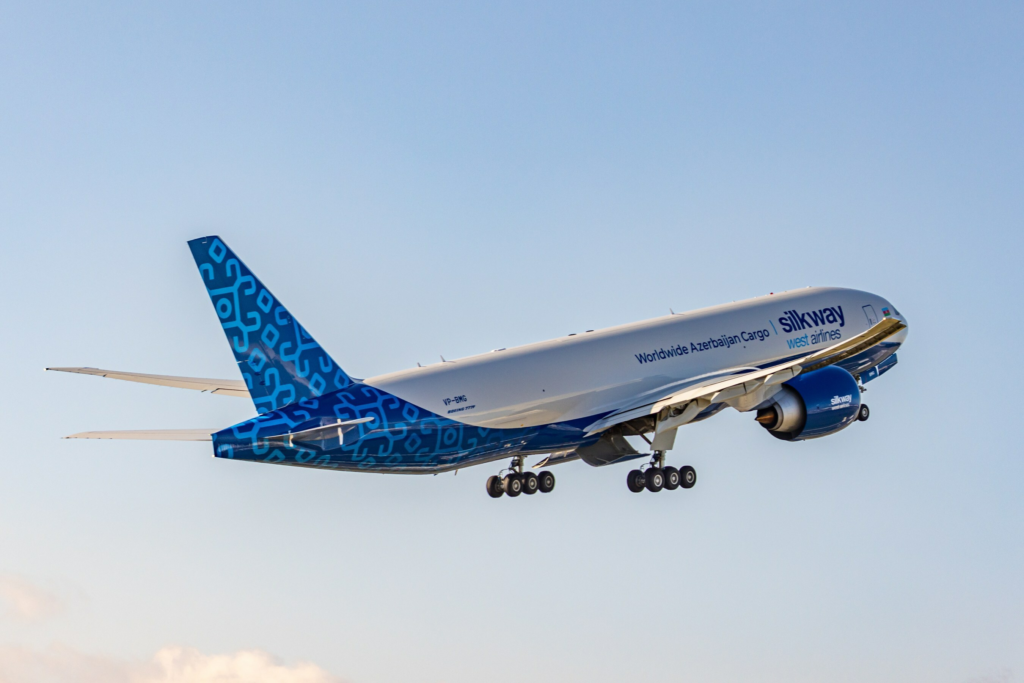
Silk Way West Airlines is an Azerbaijani cargo carrier operating a fleet of just over a dozen aircraft. Flight 7L5722 was assigned to a Boeing 747-8 registered VQ-BVB, scheduled to fly from Mexico City to Houston in roughly 90 minutes.
Instead, about 2 hours after takeoff, the freighter was operating near Dallas Fort Worth at 5,000 feet. Aircraft routinely accept indirect routings for spacing or weather, but a jet holding hundreds of miles from its filed destination would not normally descend to approach altitude.
The routing was doubly illogical because Dallas sits even further from Mexico City than Houston does. The aircraft had therefore burned more fuel, not less, by tracking toward the wrong city.
After landing and refueling at Dallas Fort Worth, the aircraft departed again a couple of hours later for Houston. That final leg took 39 minutes.
ATC Exchange
The crew declared a “pan pan pan,” advising controllers they were “running out of fuel.” The controller asked whether the crew wished to declare an emergency and divert into Dallas Fort Worth.
The pilots instead replied that they needed to “land as soon as possible on runway 26R,” a reference to Houston Intercontinental, which was still hundreds of miles behind them. The controller pointed out the distance and asked how much fuel remained on board.
The crew first indicated six tons, then confirmed 6,000 pounds. The two figures do not match. The discrepancy likely reflects a units or communication issue, with the actual quantity closer to 6,000 kilograms.
The controller advised the crew they did not have the fuel to reach Houston and again offered a diversion. The response was: “yes, we want to go to Houston, we are able to Houston now, but the shortcut, please.” At that point the controller declared an emergency on their behalf and diverted the flight to Dallas Fort Worth.
Why Fuel State Was Critical
The reported fuel figures left almost no operational margin. A Boeing 747-8 burns roughly 400 pounds of fuel per minute at cruising altitude, and consumption rises sharply during climb or a go-around, as reported by OMAAT.
Crews must also retain reserve fuel in case of a missed approach. Continuing toward Houston under the reported fuel state would have consumed those reserves before arrival.
Suspected Chain of Events
Publicly shared ACARS data points to a possible flight plan conflict rather than a simple navigational error.
Supporting that theory, an approach controller reportedly asked the crew whether they had received the ATIS information for Love Field. Silk Way West Airlines does not serve that airport.
The same analysis indicates the divergence began around 50 minutes after departure, near the MATAMOROS VOR at the United States and Mexico border. Rather than turning east toward Houston, the aircraft proceeded direct to the San Antonio (SAT) VOR, a logical waypoint for a Dallas-bound routing.
ACARS messages show the airline’s operations team asked the crew whether they were heading to Dallas Love Field. The crew replied: “due to high traffic in IAH ATC reroute us on longer route destination is IAH for the moment.”
That exchange indicates the crew believed they were absorbing a traffic delay while still bound for Houston, while controllers appear to have been working the flight as a Dallas arrival.
English was clearly not the first language of the pilot handling radio communications. That constraint plausibly contributed to the breakdown, particularly around the conflicting fuel figures and the repeated requests to continue to Houston.
A language barrier does not fully account for the outcome. The crew accepted a descent to 5,000 feet hundreds of miles from their filed destination without questioning the sequence, and continued requesting Houston after being told directly that the remaining fuel was insufficient.

Reaction to Controller’s Handling
The exchange drew wide praise for the controller once audio circulated online.
Former military pilot Buzz Patterson described American air traffic control as the best in the world and called the Houston controller a hero for how the exchange was handled.
The controller’s decision to declare the emergency on the crew’s behalf, rather than wait for the pilots to do so, moved the aircraft onto the ground before the fuel state deteriorated further.
Stay tuned with us. Further, follow us on social media for the latest updates.
Join us on Telegram Group for the Latest Aviation Updates. Subsequently, follow us on Google News
