

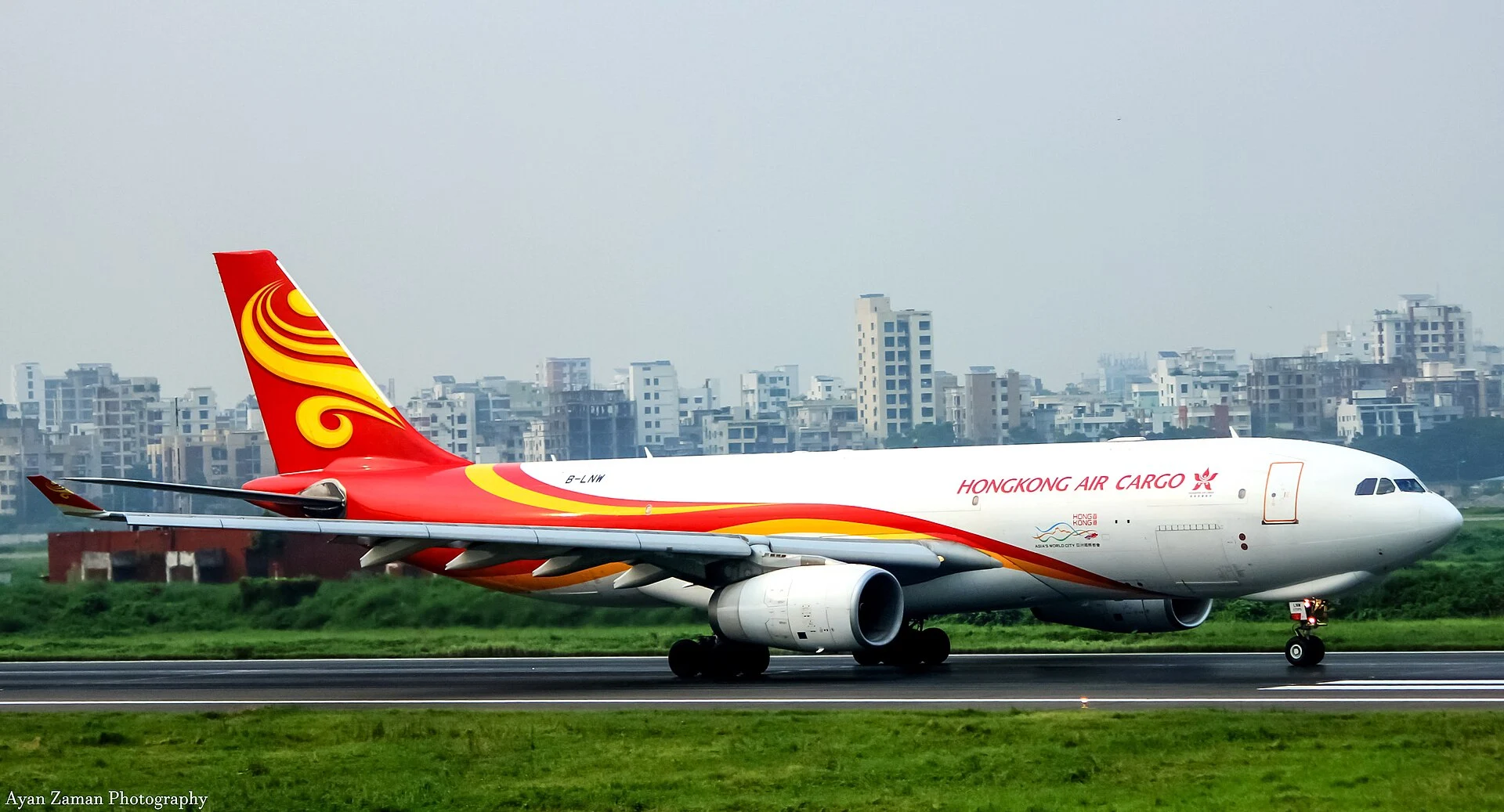
HONG KONG- Hong Kong Air Cargo (RH) will launch weekly round-trip charter flights between Hong Kong International Airport (HKG) and Navi Mumbai International Airport (NMI) from August 10, 2026, opening a fresh trade lane linking East and South Asia.
The Monday service marks the all-cargo carrier’s early footprint at Western India’s newest aviation hub and adds Navi Mumbai as its third Indian gateway after Chennai (MAA) and Delhi (DEL), arriving as freighter traffic prepares to leave Mumbai (BOM) for ten months.
Hong Kong Air Cargo Navi Mumbai Operations
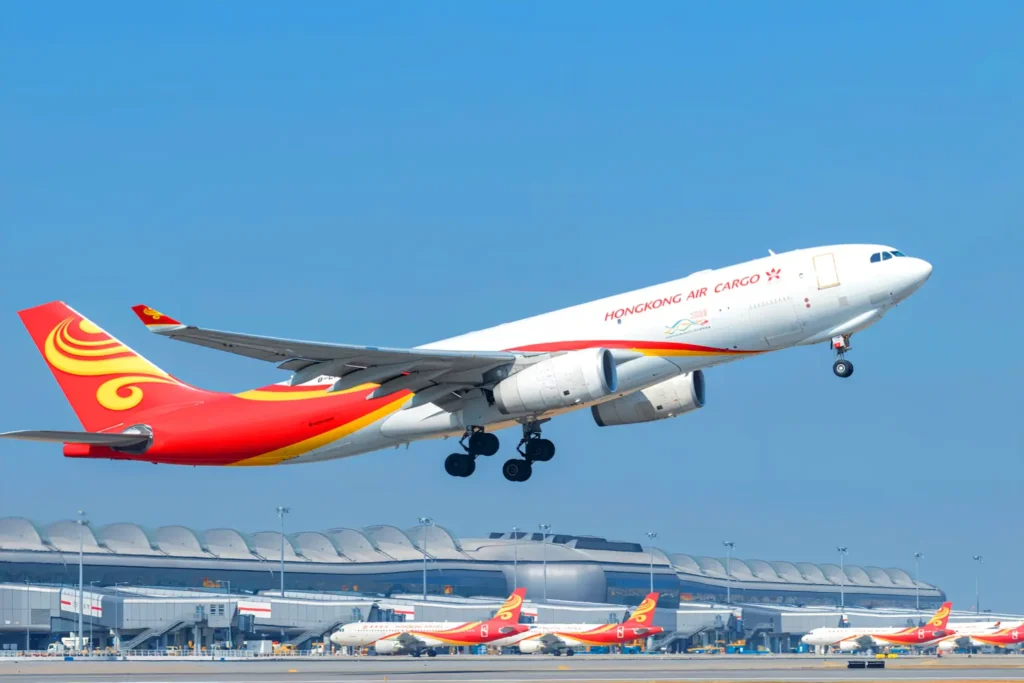
Hong Kong Air Cargo announced the Navi Mumbai charter programme on July 21, 2026. The service strengthens the carrier’s regional network and creates a new air cargo corridor between two markets central to East-West freight flows.
Flight RH9631 departs Hong Kong at 09:00 and arrives at Navi Mumbai at 13:20 local time. The return service, RH9632, departs Navi Mumbai at 14:50 and arrives in Hong Kong at 23:20 local time. Both sectors operate weekly on Mondays.
Fleet and Existing Network
Hong Kong Air Cargo has operated as an all-cargo carrier out of Hong Kong since 2017, offering charter and scheduled services tailored to varied customer needs.
The carrier operates a fleet of 6 Airbus A330 freighters. Its destination network includes Amman, Bangkok, Budapest, Chennai, Delhi, Dhaka, Hanoi, Istanbul, Manila, Shanghai, Singapore and Taipei.
The airline has been reshaping its Asian network over the past year. On January 4, 2026, it resumed scheduled services to Singapore (SIN) and converted its Chennai route from charter to scheduled operations, a move it said would give cargo customers greater consistency for shipment planning.
Mumbai Faces a 10 Month Freighter Pause
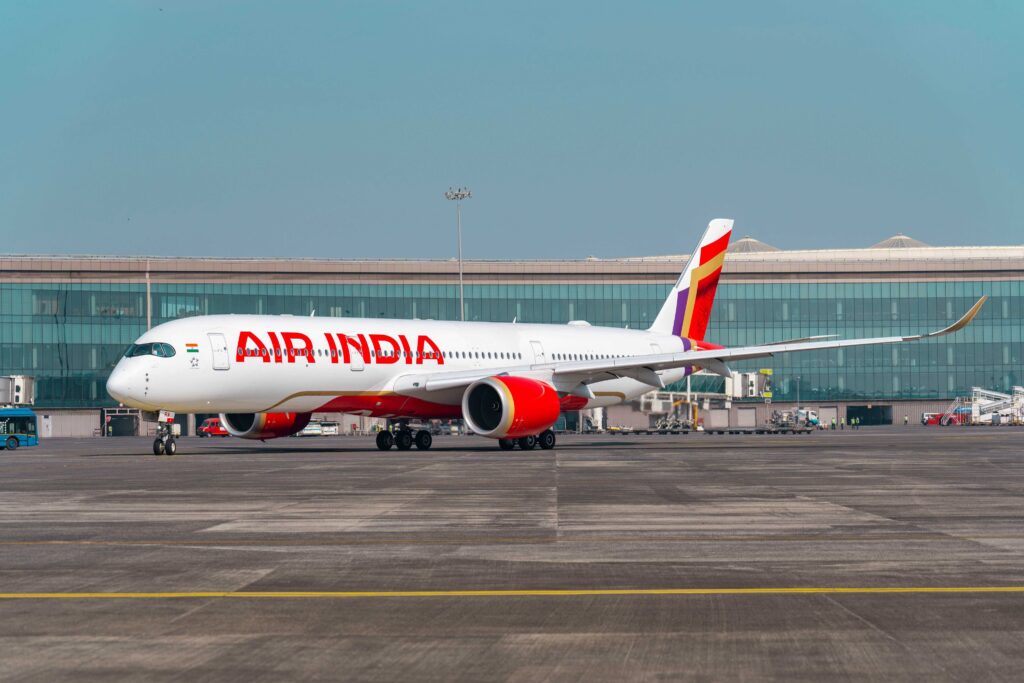
The charter launch coincides with the largest disruption to Mumbai’s air cargo operations in years.
Freighter operations at Chhatrapati Shivaji Maharaj International Airport are scheduled to pause for 10 months from August 2026 to May 2027, following a formal notification issued by Mumbai International Airport Limited in late December 2025.
According to The STAT Trade Times, the Adani Group operator told cargo stakeholders the pause is required to re-carpet Runway 09/27 and rebuild the ageing cargo apron, alongside constructing Taxiway E to eliminate aircraft crossings on the secondary runway.
An earlier proposal to suspend freighter flights in early 2025 met resistance from airlines and cargo stakeholders and was deferred.
Adani Airport Holdings has informed cargo stakeholders that no freighter slots will be available at Mumbai from August until May 2027.
The volumes involved are substantial. Mumbai handled 8.6 lakh tonnes of cargo in 2025, of which freighters accounted for 2.6 lakh tonnes, close to 31 percent of total throughput. Belly cargo carried on passenger aircraft is unaffected and continues to operate normally from Mumbai.
Carriers Redirect Freighters to Navi Mumbai
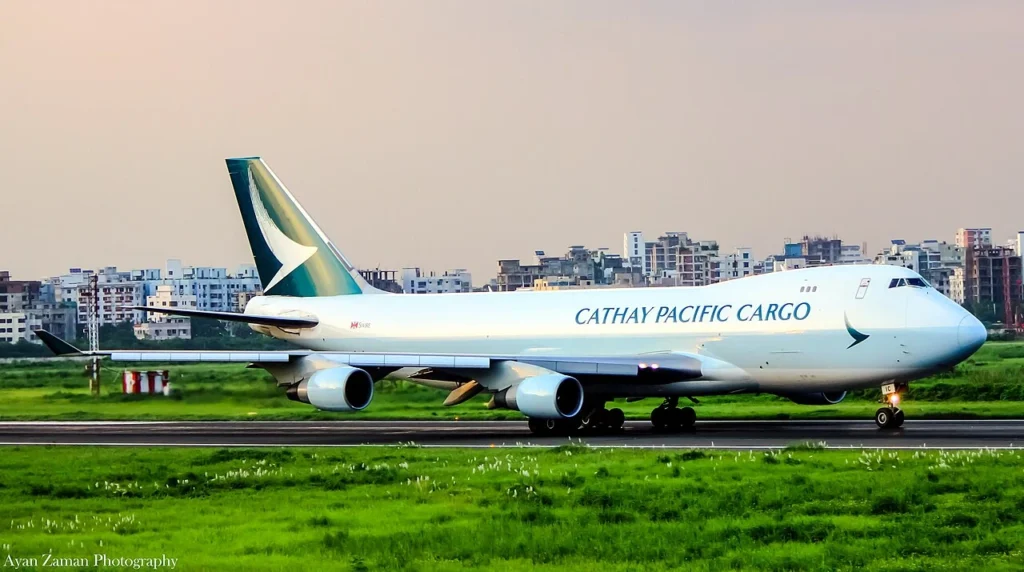
Cathay Cargo (CX) became the first international carrier to formally confirm relocating its freighter operations from Mumbai to Navi Mumbai, effective August 3.
The airline described the move as temporary, running until further notice, and said its tri-weekly summer-season freighter service to Mumbai will continue as scheduled.
The Loadstar has reported indications that Cathay intends to develop Navi Mumbai as its Mumbai hub.
Other carriers are following. Air France (AF), which operates 2 weekly freighter services between Paris and Mumbai, has indicated its cargo operations could shift as early as August 1, subject to approvals.
Lufthansa Cargo (LH) said it remains in close coordination with authorities and stakeholders while operational details are under review.
Both Mumbai and Navi Mumbai airports are operated by Adani Airport Holdings.
Airport Capacity and Cargo Targets
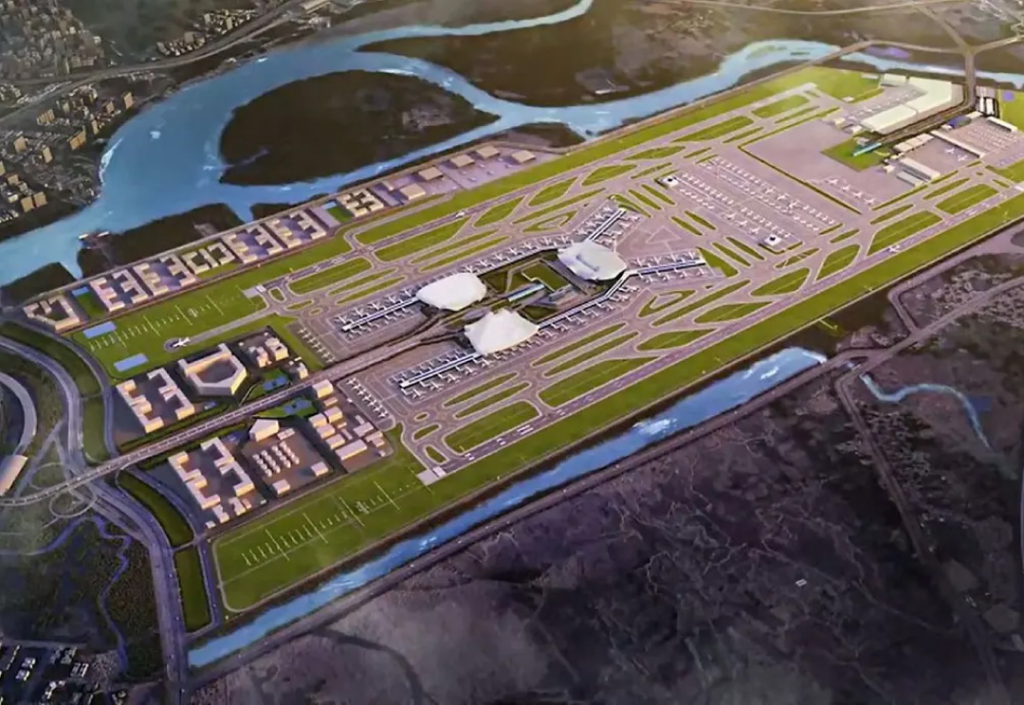
Navi Mumbai International Airport was designed as a logistics hub with cargo as a core focus, and its cargo terminal is expected to handle about 5 lakh tonnes annually in its initial phase. Terminal capacity is planned to rise from 5 to 26 lakh metric tonnes by the final phase, with initial manual operations transitioning to a fully mechanised and automated facility.
In phases one and two, the terminal handles domestic, international, express and transit cargo, including pharmaceutical, perishable, oversized, cold storage, hazardous, live animal and valuable consignments.
Airport Chairman Captain BVJK Sharma said in June that operations would ramp up to nearly 18 freighter flights a week following the July 15 start.

Industry Flags Ecosystem Gaps
Airline interest has outpaced the supporting infrastructure around the airport. Abhishek Goyal, CEO and Executive Director of Aeroprime Group, said the airport currently lacks established road feeder services and domestic air connectivity, and that shippers may need to rethink local logistics planning in the interim.
Vikash Khatri, founder of Aviral Consulting, said a functional cargo ecosystem requires airlines, freight forwarders, ground handling agents, customs brokers, technology systems and strong road connectivity, and that the current focus remains largely on infrastructure while the broader ecosystem is still evolving.
Logistics operators are preparing for hurdles including security protocols, customs registration, cargo screening and manpower relocation.
Bonded trucking services are set to go live at Navi Mumbai with the necessary regulatory permissions in place. Mumbai-based industry veteran Joy John said more airlines will start operations once bonded trucking connects cargo between the two airports.
The International Air Transport Association earlier raised concerns over what it described as a permanent withdrawal of historic freighter slots from the following scheduling season.
Mumbai International Airport Limited responded that the changes formed part of a regulator-led process under the Airports Economic Regulatory Authority of India’s Fourth Control Period review.
Navi Mumbai’s Operational Milestones
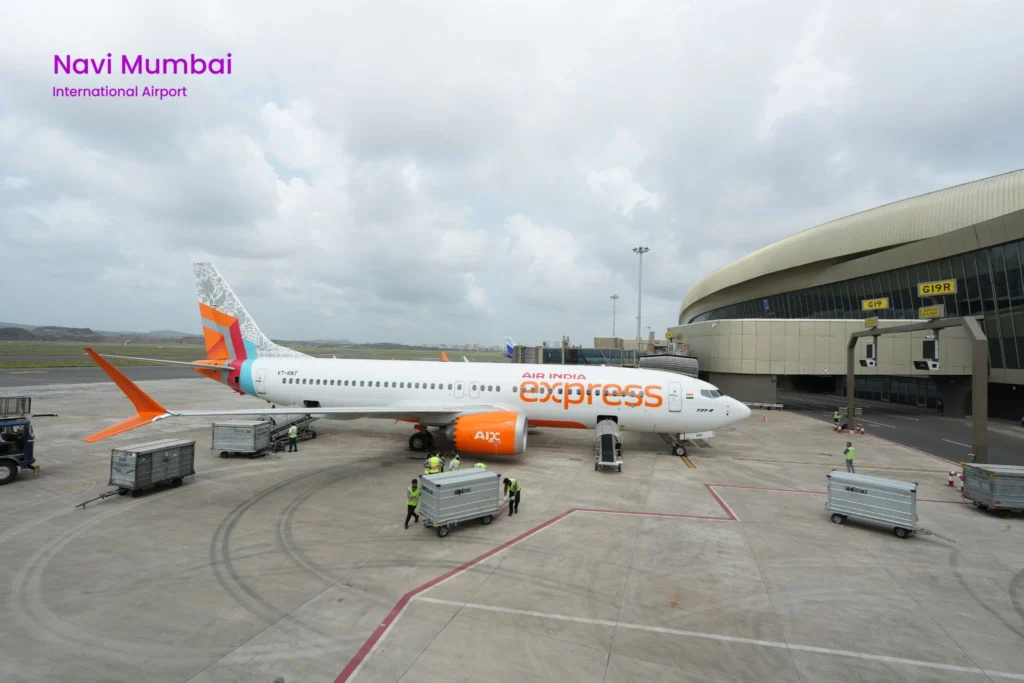
Navi Mumbai International Airport was inaugurated by Prime Minister Narendra Modi on October 8, 2025. Domestic passenger operations began on December 25, 2025.
International passenger traffic started on July 15, when Air India Express (IX) launched the airport’s first international service to Abu Dhabi (AUH). The airport handled its first international export cargo on the same day, an airlift of 1,789 kg to Abu Dhabi.
Air India (AI) subsequently began international cargo operations through belly-hold shipments to Abu Dhabi on its twice-weekly passenger service, describing the launch as part of a dual airport strategy and citing a seamless cold chain experience for its first temperature-controlled shipment.
Stay tuned with us. Further, follow us on social media for the latest updates.
Join us on Telegram Group for the Latest Aviation Updates. Subsequently, follow us on Google News
