

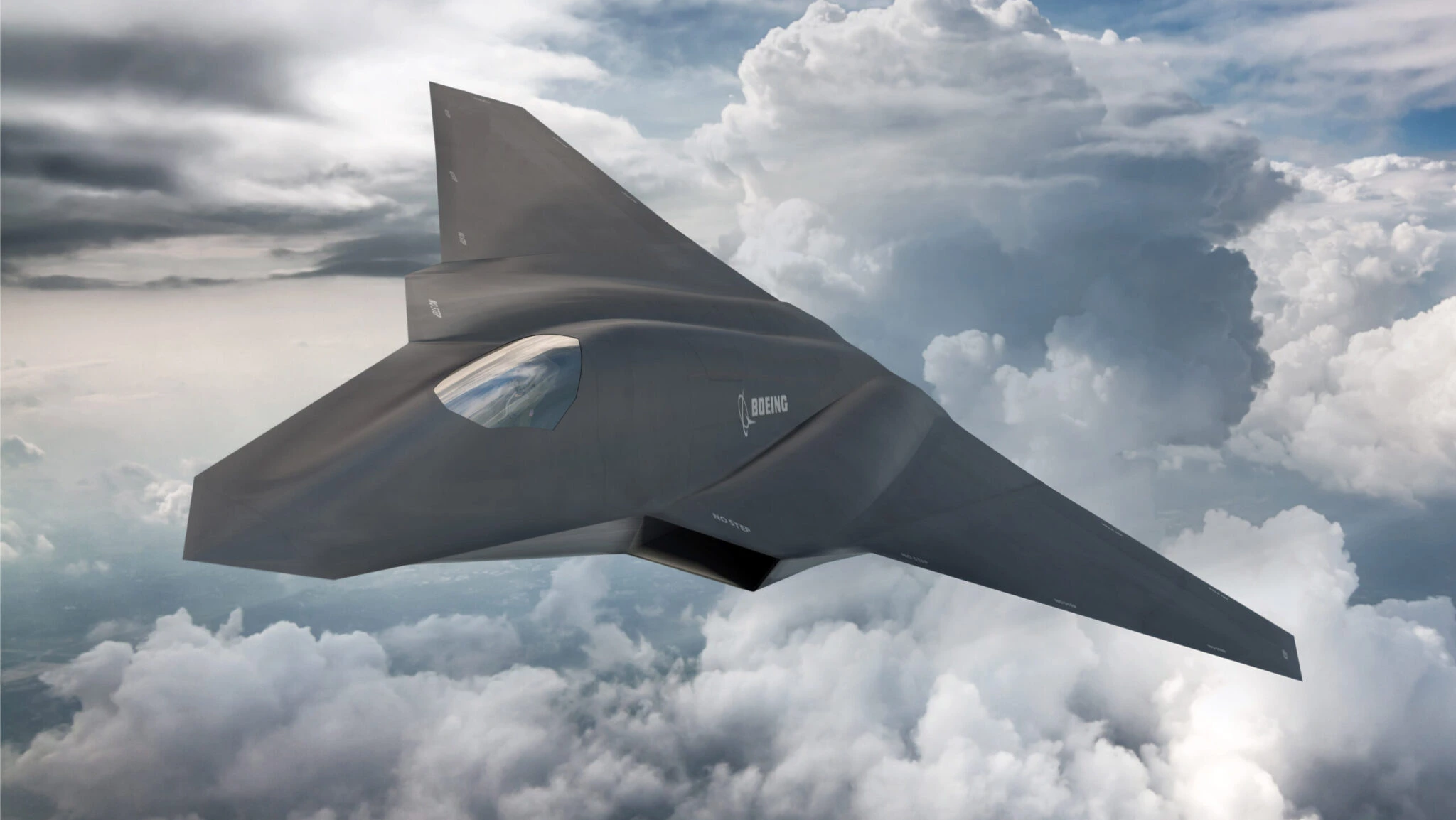
ARLINGTON- The US Air Force plans a $1.057 billion F-47 Future Campus at Nellis Air Force Base, near Las Vegas, Nevada, to support operational testing of Boeing’s next-generation fighter.
A draft solicitation released on October 23, 2026, outlines phased construction, with the first facilities targeted for completion by March 2031 and additional maintenance and support buildings planned through 2032.
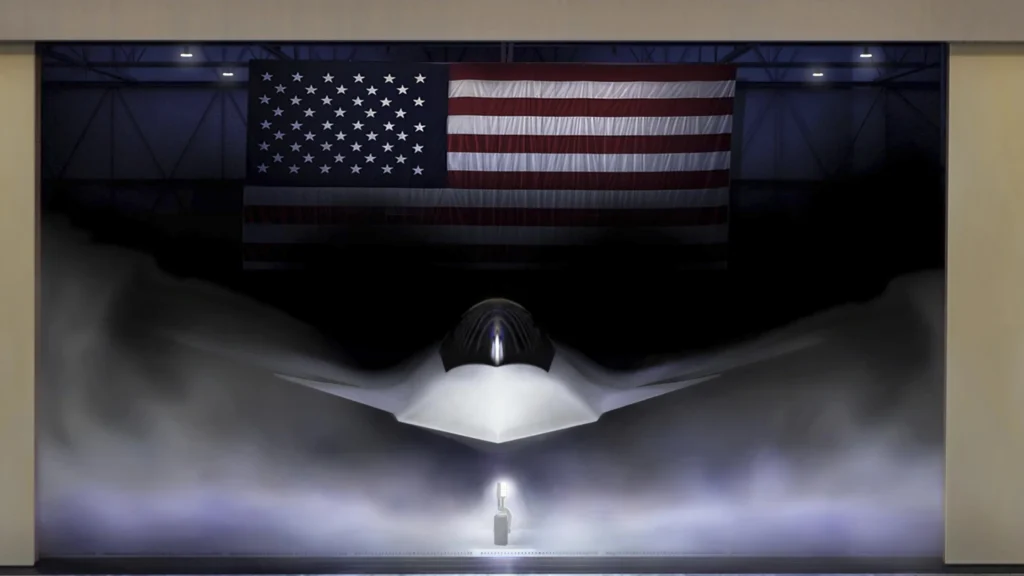
F-47 Future Campus Construction Plan and Facilities
The proposed F-47 Future Campus will establish the infrastructure needed to test and maintain the new fighter.
The Air Force plans to use a progressive design-build approach that prioritizes critical facilities before expanding the site with additional maintenance, training and support buildings.
The estimated $1.057 billion project will occupy the eastern side of Nellis Air Force Base. Under the draft solicitation, the service intends to award an other transaction agreement to between one and four vendors by February 2027.
According to Aviation Week, The agreement would initiate design and preconstruction work through November 2027, with rapid construction scheduled to begin that month and continue through March 2031.
First Phase Targets Completion by March 2031
The initial construction phase will establish four major facilities to support F-47 operational testing, aircraft maintenance, mission-system work and simulation-based training.
The planned facilities include:
- Operations and maintenance hangar: 116,745 square feet for aircraft operations and maintenance activities.
- Reprogramming laboratory: 39,200 square feet to support aircraft reprogramming work.
- Simulator facility: 40,903 square feet for simulation-based activities and training.
- Aircraft apron with sunshades: 1.154 million square feet for aircraft parking and associated ground operations.
The Air Force aims to have the initial campus facilities ready by spring 2031. The scheduled March 2031 construction completion target would place this infrastructure ahead of the F-47’s planned entry into operational service in the 2030s.
Second Phase Will Expand Maintenance and Training Facilities
A subsequent construction phase is expected to continue through 2032. This stage will add six facilities to expand the campus’s maintenance, training and support capabilities.
The planned buildings are:
- A fuel cell hangar.
- A low-observable corrosion control hangar.
- A weapons-load training hangar.
- A consolidated maintenance facility.
- A maintenance training facility.
- A dining facility.
These buildings will complement the first phase by providing specialized maintenance areas, weapons-loading training space, and additional facilities for personnel and daily operations. The two-phase approach allows the Air Force to prioritize essential test infrastructure while continuing to develop longer-term campus support.
Nellis AFB Confirmed as F-47 Operational Test Site
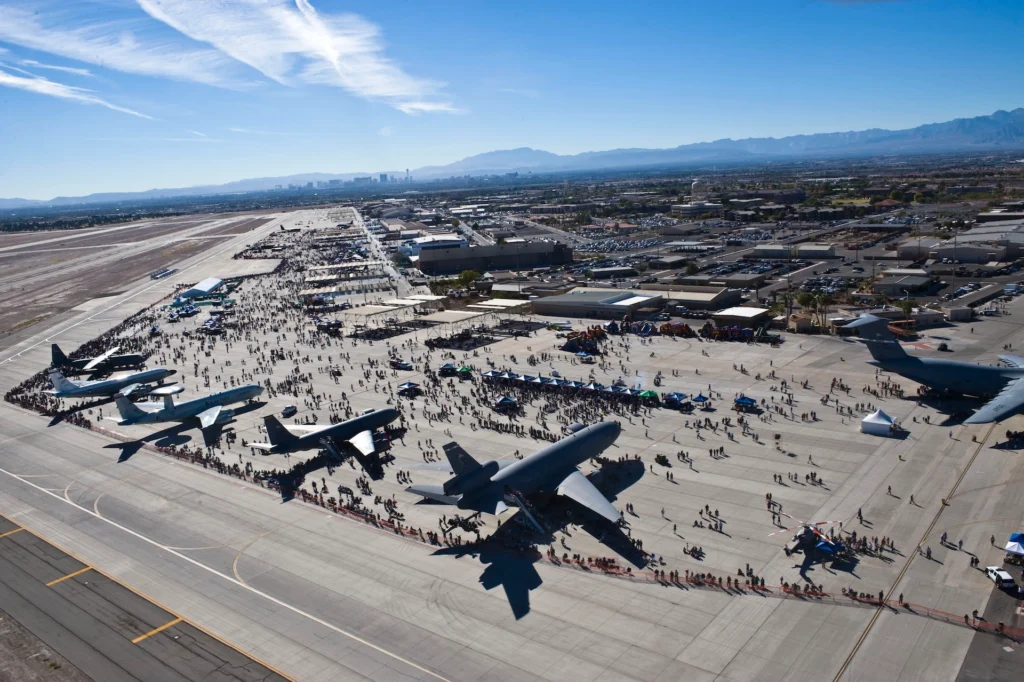
The draft solicitation confirms that Nellis Air Force Base will host operational testing for the Boeing F-47. The Nevada installation already supports combined developmental and operational testing of the Boeing F-15EX, giving it an established role in advanced fighter evaluation.
Environmental planning has also identified Nellis as the site for the F-47-related program work. In August 2026, the Department of the Interior awarded Versar Inc. a $1.9 million contract to prepare an environmental impact statement for the Next Generation Air Dominance (NGAD) program. The contract notice was subsequently updated to specify Nellis as the site.
Although the Air Force has confirmed the planned test location, it has not specified where the F-47 will be permanently based for operational missions.
Testing infrastructure and operational squadron basing are separate planning decisions, and the construction proposal does not resolve the aircraft’s future deployment locations.
F-22 Squadron Transition Plans Through 2035
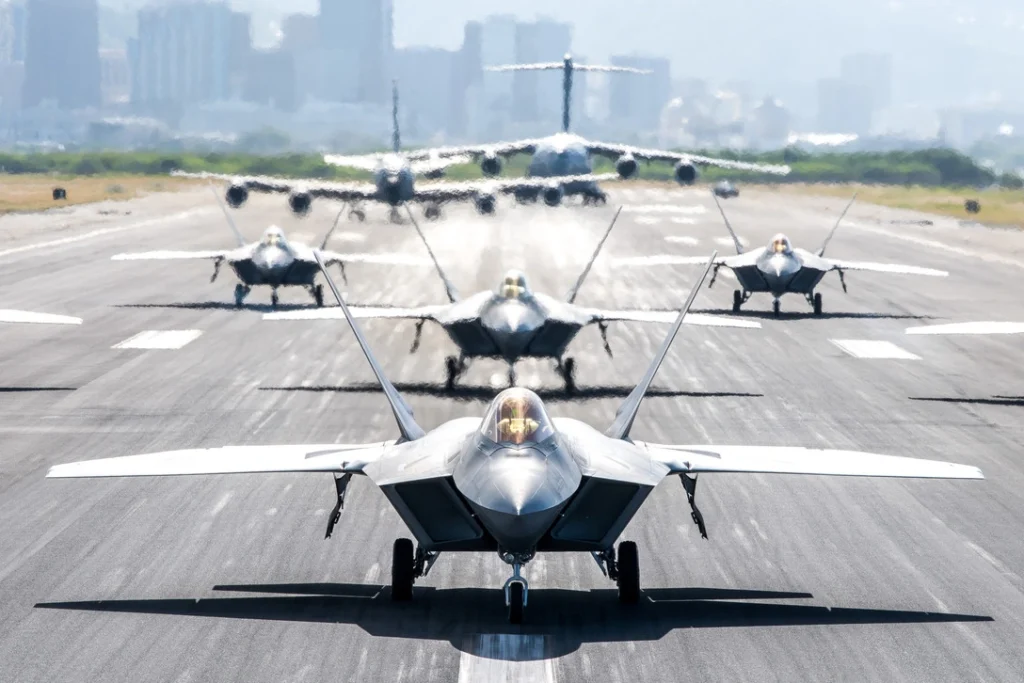
The F-47 is expected to replace the existing F-22 fleet over time. A report to Congress outlining the Air Force’s fighter fleet plans through 2035 provides information about squadron missions and possible transitions, but it does not establish a complete F-47 basing plan.
The report identifies two F-22 units at Joint Base Elmendorf-Richardson in Alaska whose transition missions remain to be determined:
- 90th Fighter Squadron: Based at Joint Base Elmendorf-Richardson, Alaska.
- 525th Fighter Squadron: Also based at Joint Base Elmendorf-Richardson, Alaska.
The report lists the transition mission for both squadrons as “to be determined.” It does not confirm when either squadron will transition to the F-47 or whether both will receive the new aircraft.
The Air Force’s other F-22 squadrons at Joint Base Langley-Eustis in Virginia and Joint Base Pearl Harbor-Hickam in Hawaii are planned to retain the F-22 mission within the report’s planning period.
These distinctions show that the Air Force’s fighter transition plans remain subject to squadron-level decisions. The report provides a planning framework through 2035, but it does not identify the complete set of future F-47 operating bases.

F-47 Development and Expected Operational Service
The campus construction plan supports the wider development schedule for the F-47. When the Air Force announced Boeing’s selection for the fighter program in 2025, the service said it expected the aircraft to begin flying by the end of President Donald Trump’s current term and enter operational service in the 2030s.
The proposed construction schedule sets a March 2031 target for the initial test facilities, followed by further campus development through 2032. This timeline is intended to provide dedicated infrastructure for the aircraft’s operational testing and supporting activities.
The key distinction is that the construction proposal confirms where the Air Force intends to conduct F-47 operational testing, not where it will permanently station operational squadrons.
The service has not yet specified the complete operational basing plan, and the available congressional report does not establish the final F-22 replacement schedule.
Stay tuned with us. Further, follow us on social media for the latest updates.
Join us on Telegram Group for the Latest Aviation Updates. Subsequently, follow us on Google News
