

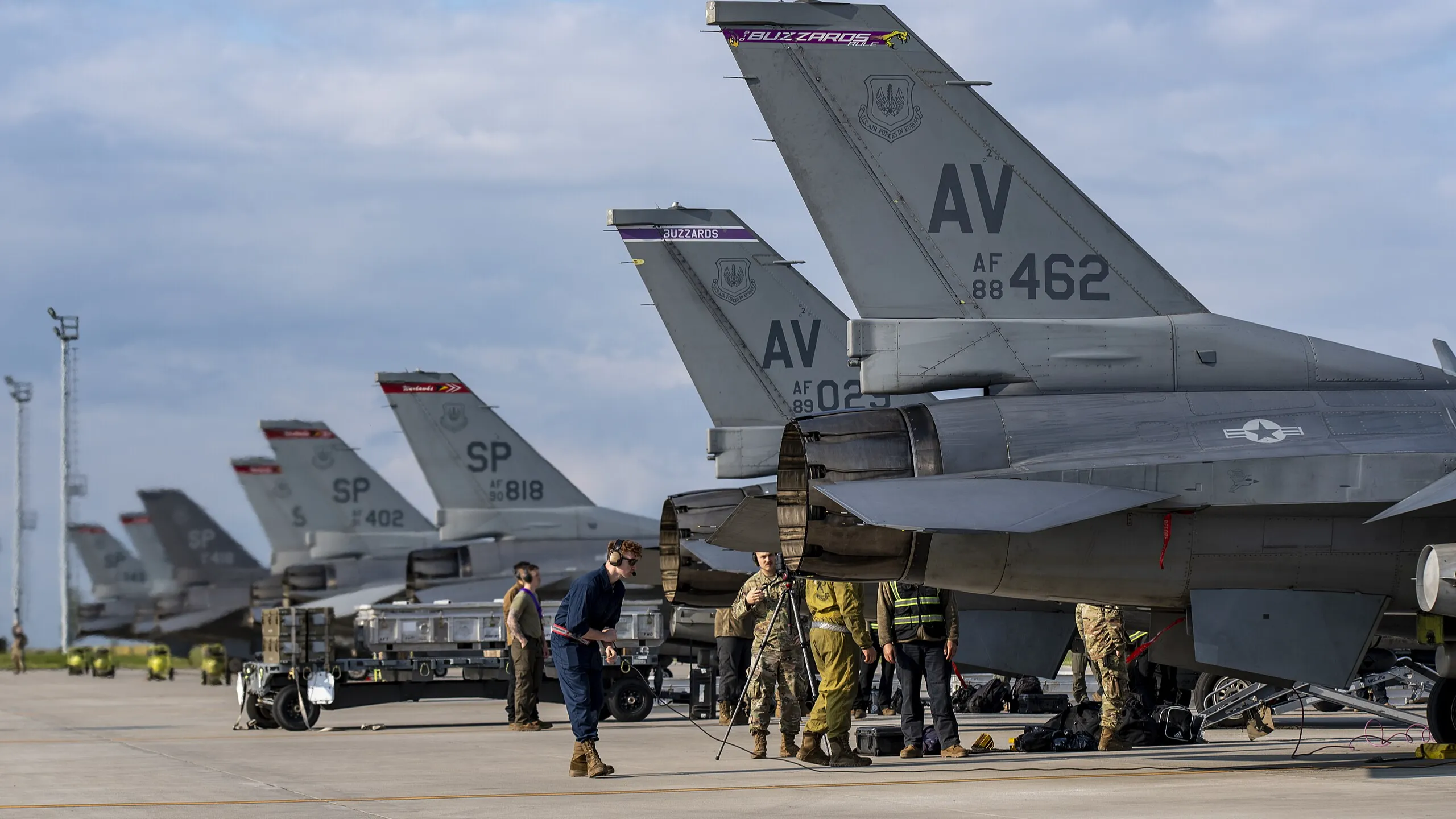
ARLINGTON- The US Air Force (USAF) plans to grow its combat-coded fighter fleet to 1,509 aircraft by 2035, according to a report it sent to Congress on October 16.
Lt. Gen. David Tabor said a decision on buying new F-16 Vipers from Lockheed Martin’s plant in Greenville, South Carolina (GSP), is not urgent.
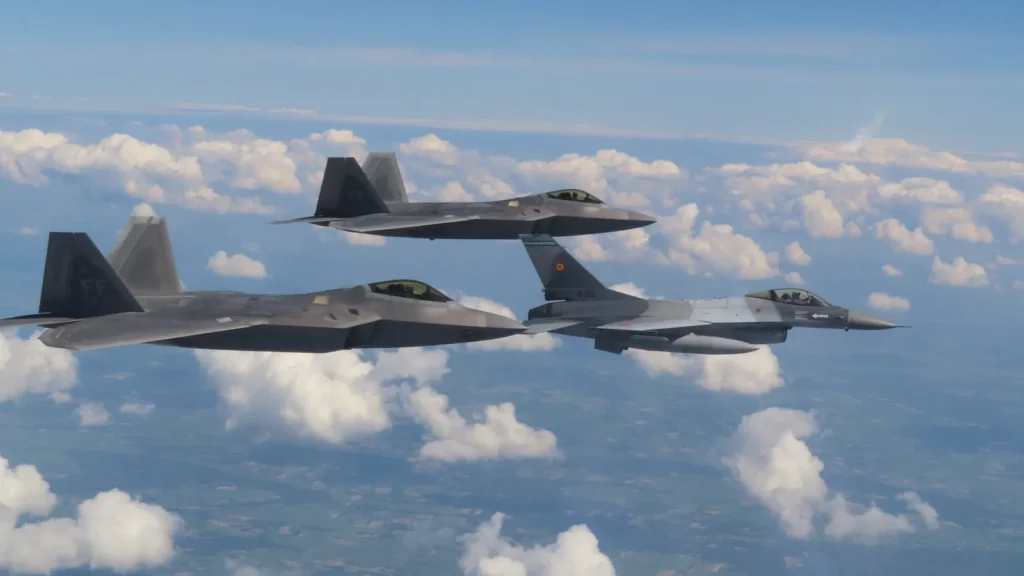
Air Force Options for Replacing Older F-16s
Tabor, the Air Force’s deputy chief of staff for plans and programs, discussed the report at a Pentagon media roundtable on October 20. The Air Force did not release a full copy of the report to reporters.
He said the service has made no decision on a new F-16 version, tentatively called the F-16G. He also said the decision will likely fall outside the fiscal 2028 budget process, which will produce a proposal early next year. It may come in the years after that.
Older F-16s will reach the end of their lifespans in the mid-2030s, and Tabor said “we are very conscious of that.” He described the simple approach of replacing them one-for-one with new F-16s as “maybe the lazy” option, and said it may not be the best strategy.
“There is a spectrum of capability that we might want to replace the F-16s with,” Tabor said. “It’s not urgent, frankly. What we don’t want to get to is a point where it is urgent, and we haven’t done the homework and decided ‘hey, this is really the right place to be.’
We do have time to churn through that and make sure that we have a good option going forward.”
An Air Force spokesperson said last month that the service had defined neither the mission requirements nor the range of options for the next Future Years Defense Program.
Fighter Fleet Mix Planned for 2035
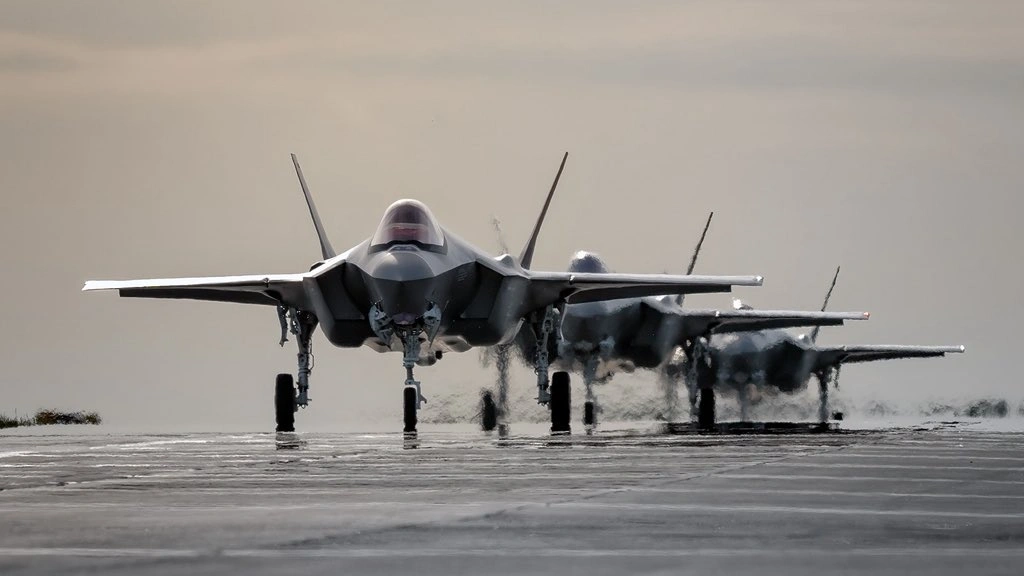
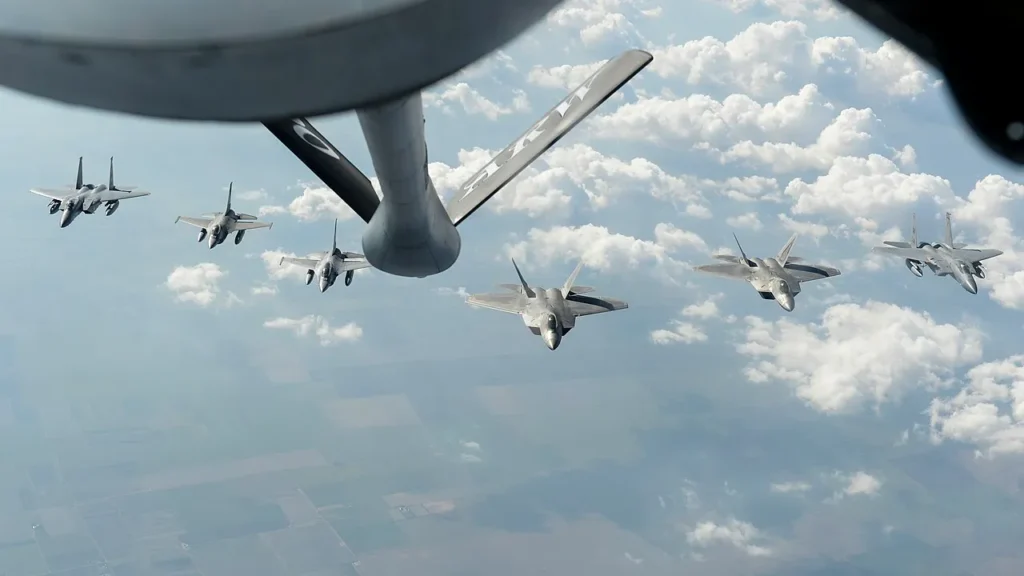
The Air Force expects the 2035 fleet to be about 40 percent F-35s. F-22 Raptors and F-47s would make up 20 percent. F-15 variants, including F-15E Strike Eagles and F-15EXs, and F-16s would share the remaining 40 percent, split about evenly.
The current fleet, not counting A-10 Warthogs, is about 45 percent F-16s, 30 percent F-35s, 15 percent F-15s and 10 percent F-22s. The service plans to retire the last A-10s by 2030.
The Air Force had 1,168 combat-coded fighters at the start of fiscal 2026. Last year’s report estimated 1,271 for 2026 and set a goal of 1,369 by 2030. The new 1,509 target adds about 140 jets, a mix of F-35s, F-15EXs and F-47s.
On the F-47, Tabor said the Air Force still plans to replace its F-22s with roughly the same number of F-47s. Reports put the operational F-22 fleet at 185 or 186 jets. The final F-47 fleet size remains unclear.
Tabor said the previous report used “pretty old” data, so researchers gathered newer information. He said that work began before combat operations against Iran earlier this year and was not driven by the war.
The estimate rests on combatant commanders’ requirements to reach their goals at “medium risk.” Tabor called these subjective assessments that will likely change. “Certainly, world events and changing requirements in the combatant commands will change that number,” he said.
Budget and Industry Capacity
Tabor said two factors must fall into place. Congress must fund the aircraft, and the defense industry, mainly Lockheed Martin and Boeing, must build enough of them in time.
Air Force leaders have said for years that the service needs 72 new fighters a year. The fiscal 2027 request falls short with 38 F-35s and 24 F-15EXs, a total of 62. Tabor said purchases can “ramp over time.”
The request counts on $2.34 billion from a budget reconciliation bill to pay for 14 of the 38 F-35s. If that bill fails, the Air Force could take money from its base budget. Tabor said that would mean “we just lose 14 times [an] F-35’s worth of other capabilities that we were planning on.” The service could also push those purchases to 2028, which would delay progress toward its fleet goals.
Tabor addressed industry capacity directly. “The question is, can industry produce at those levels?” he said. “They’ve assured us that they can, and we believe them, but we also actually need to see it manifest.”
The Air Force is also seeking multiyear procurement authority for the F-35 and F-15EX, and the request is pending before Congress. Tabor said such deals give industry financial stability, which could help it expand and steady production.
Lockheed Martin’s order books are already full because U.S. allies and partners want F-16s. That raises questions about its capacity to add a large Air Force program, similar to questions about Boeing’s ability to meet F-15EX demand.
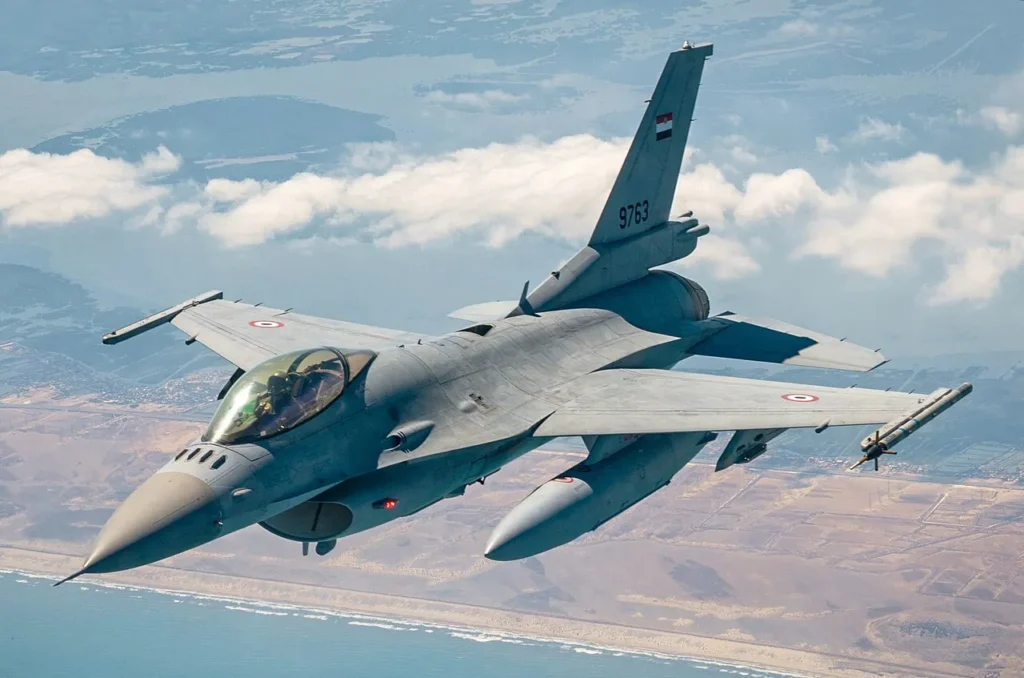
Case for New-Build F-16s
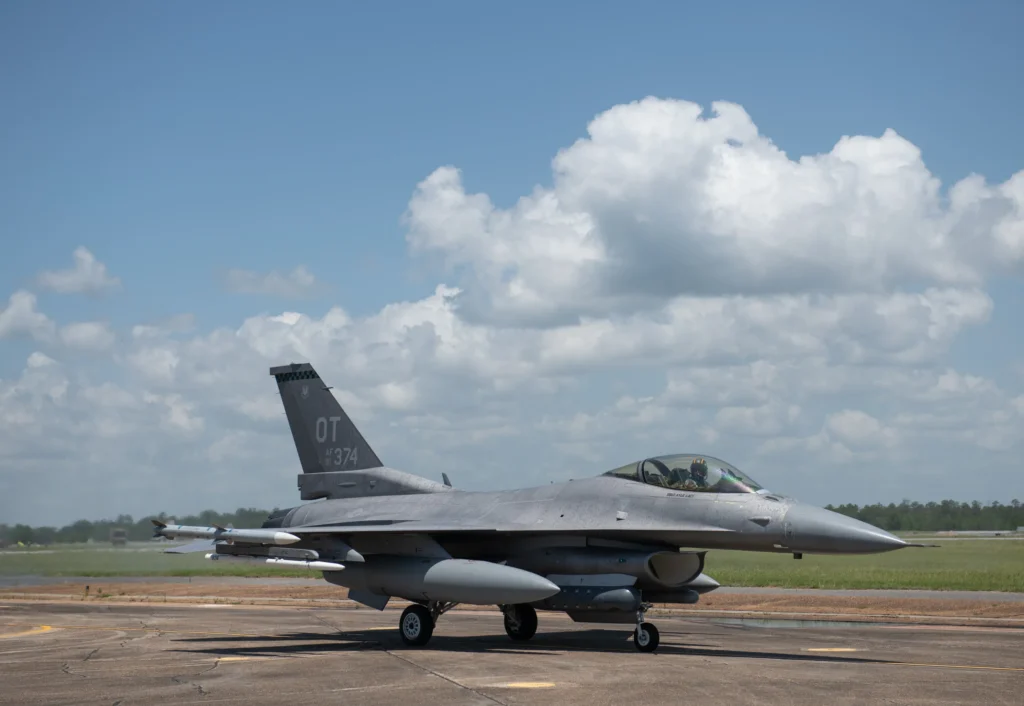
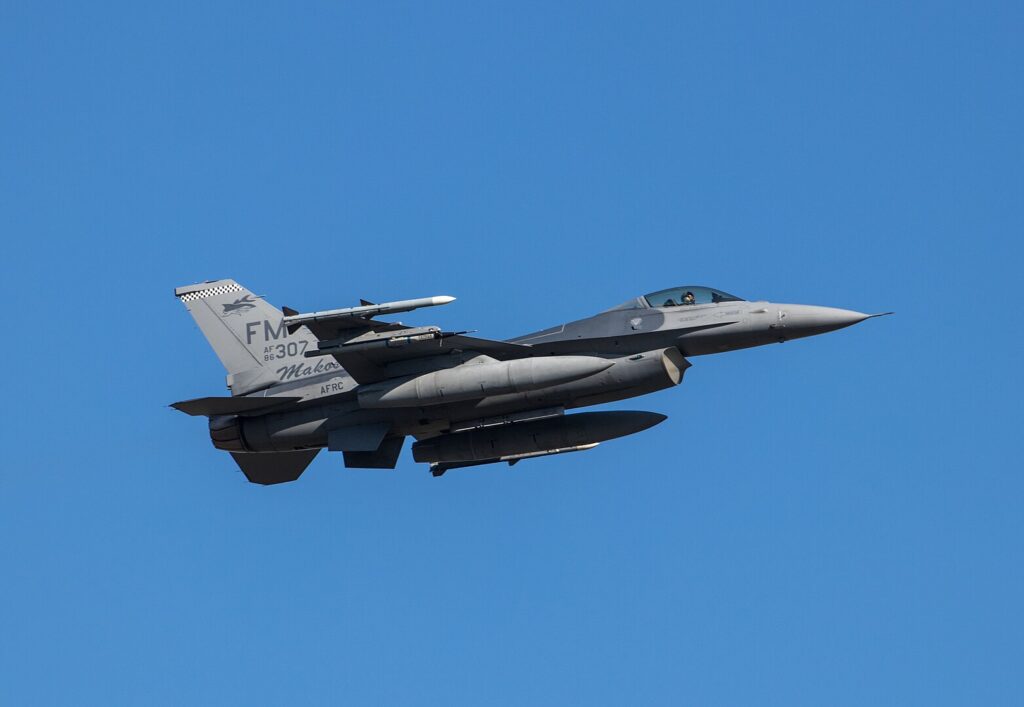
The Air Force had 774 F-16s at the start of fiscal 2026 and expected that number to fall to 768. Not all of them serve in combat-coded units.
The service is upgrading many of them with new active electronically scanned array (AESA) radars and electronic warfare suites. It also moves newer F-16s from squadrons that switch to the F-35 into units that fly older jets. Last year’s report planned to replace Block 30 F-16s in five Air National Guard formations with Block 40 and 50 jets.
Lockheed Martin builds Block 70 and Block 72 F-16s in Greenville, which differ in engine type. Reports last month said the company pitched the Air Force a Block 70-based version. The first Block 72 F-16D, destined for Morocco, flew in October.
Tabor said a new F-16 is “practically a ready-made aircraft” if the Air Force wants the same type of capability. TWZ has reported that a new F-16 offers about 12,000 flight hours of structural life without structural upgrades, double that of the original F-16.
Collaborative Combat Aircraft Add Uncertainty
The Air Force has ordered the General Atomics FQ-42 Vengeance and the Anduril FQ-44 Fury Collaborative Combat Aircraft (CCA) into production.
It aims to field at least 500 of these drones by 2032. It also expects to buy more CCAs, possibly of different types, in a second development cycle called Increment 2.
Tabor said CCAs are not yet changing the fighter count the Air Force needs. “CCA is very much a reality,” he said. “It is going to be a part of our future, and there is absolutely a world in which the incorporation of CCAs into the force will mitigate the requirement for the number of fighters.
That’s not the CCA that we have right now, but it is advancing very, very rapidly. We’re confident that it will play a major role in future versions of the fighter force structure report.”
F-22s will be the first fighters to control CCAs, followed by F-35s and F-47s. Pairing CCAs with fourth-generation jets like the F-16 could also strengthen the case for new Vipers as a lower-cost option.
Congress and Politics Could Change the Plan
The 2035 target spans several election cycles, including the one that will decide the next presidential administration.
Defense spending priorities may shift in that time. Congress also regularly forces changes to major procurement plans.
In the past 2 years, lawmakers pushed the Air Force to proceed with the E-7A Wedgetail and helped save the Navy’s F/A-XX sixth-generation fighter program.
Stay tuned with us. Further, follow us on social media for the latest updates.
Join us on Telegram Group for the Latest Aviation Updates. Subsequently, follow us on Google News
