

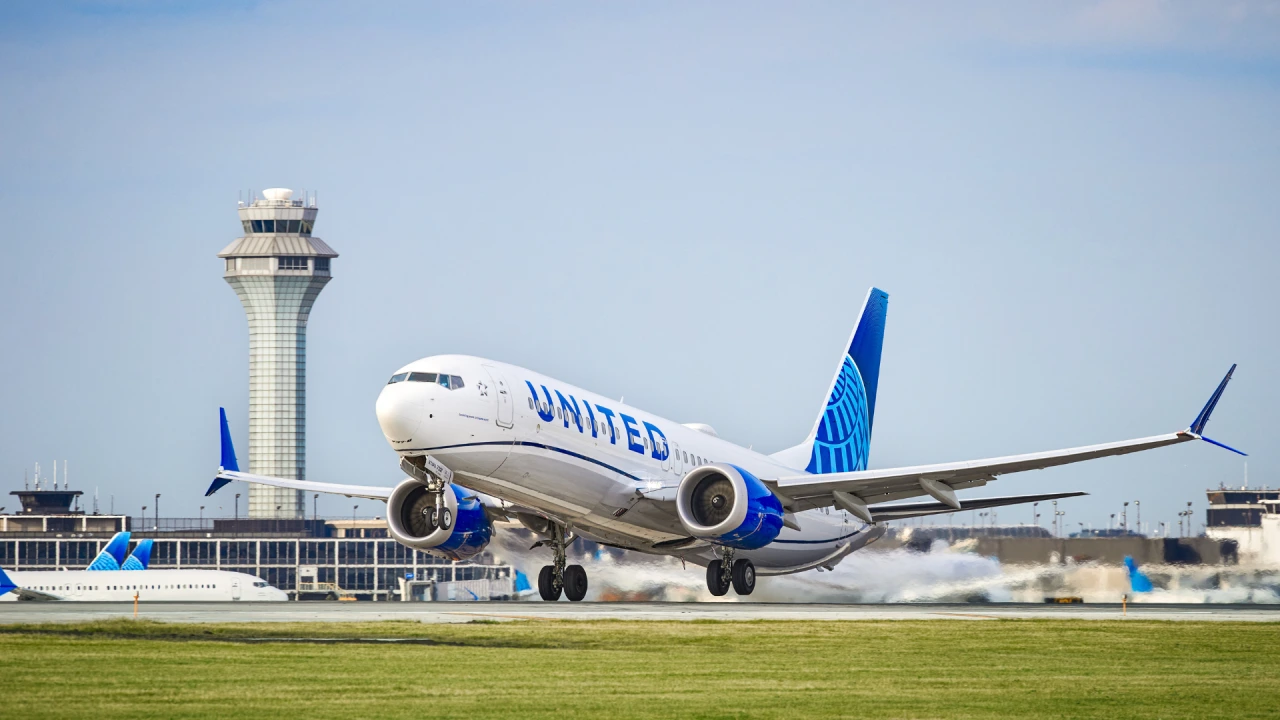
CHICAGO– United Airlines (UA) is facing questions over its decision to restrict third-party artificial intelligence (AI) agents from booking flights. Former United Airlines CEO Oscar Munoz believes customers will choose competing airlines if they cannot use their preferred AI assistants to make travel reservations.
Speaking on the November 15, 2026, special edition of Airlines Confidential, Munoz warned that airlines must adapt to changing customer preferences. His comments come as United restricts unauthorized AI agents while simultaneously developing technology that could allow approved agents to access its flight-shopping and booking systems.
Oscar Munoz Warns United Airlines Against Blocking AI Booking Agents
Former United Airlines CEO Oscar Munoz believes airlines cannot ignore the growing role of AI assistants in travel planning and reservations. He argued that passengers will increasingly expect digital assistants to compare flights, select suitable options, and complete bookings on their behalf.
During his conversation with Scott McCartney on Airlines Confidential, Munoz highlighted the importance of giving customers the flexibility to choose how they purchase airline tickets.
“If travelers want an agent booking their trips, they’re going to find the airline that lets them do that,” Munoz said.
His comments present a challenge for United’s current strategy. An airline that prevents customers from using their preferred AI assistants could lose bookings to competitors that provide more flexible access to their reservation systems.
Munoz’s position does not necessarily mean airlines should provide unrestricted access to their platforms. Instead, he believes carriers should establish safeguards and negotiate acceptable terms with AI companies.
This approach would allow airlines to protect customer information and commercial interests while accommodating passengers who prefer automated travel services.
United Airlines Wants to Keep Control of Flight Bookings
On November 11, 2026, United announced restrictions on unauthorized third-party AI agents accessing its digital platforms.
The airline cited customer data protection, account security, unintended purchases, and regulatory compliance as its primary concerns. It warned that sharing account credentials with external AI assistants could expose sensitive information or allow automated systems to make unwanted purchases, modify reservations, or use MileagePlus loyalty miles.
United also raised concerns about Federal Aviation Administration (FAA) and Department of Transportation (DOT) requirements.
For example, airline check-in procedures require passengers to acknowledge that their checked baggage does not contain prohibited substances, including explosives. United believes automated AI actions could create compliance problems when they handle processes requiring human acknowledgment.
The restrictions will apply directly through United’s digital platforms and indirectly through travel agencies and booking aggregators.
The airline also plans to update its booking, ticketing, and distribution policies to prevent unauthorized personal AI agents from accessing its services.
However, United’s decision is not simply about protecting customer accounts. There is also a significant commercial interest in controlling how passengers discover and purchase airline products.
Current United CEO Scott Kirby explained this concern during an industry event in Chicago.
“To be honest, I don’t want to create another middleman,” Kirby said.
An independent AI assistant could eventually become the starting point for airline shopping. Such an agent would decide which flights customers see, compare available fares, and recommend particular airlines.
As these platforms attract more travelers, their owners could gain substantial bargaining power over airlines. They might eventually demand referral fees, commissions, or commercial agreements in exchange for directing customers toward particular carriers.
United would prefer passengers to begin their shopping journey through its own channels. This allows the airline to maintain control over ticket sales, seat selections, additional services, customer communication, and distribution costs, View from the Wing reported.

United’s AI Developer Job Listing Reveals a Different Strategy
Despite restricting external AI assistants, United is actively developing technology to support authorized AI agents.
A November 3, 2026, recruitment listing for a Principal Developer – AI, based in Houston, Texas, provides an important indication of the airline’s technology strategy.
The position describes developing AI agents and connecting them to existing United systems, including Flight Shopping, Shopping Cart, and Reference Data.
The job description specifically states:
“Build reusable tools and APIs that expose existing business capabilities to authorized AI agents and applications.”
This indicates that United is preparing infrastructure through which approved AI agents can interact with its commercial systems.
The position also requires developers to create capabilities for selecting and executing tools, managing workflows, recovering from errors and requesting human approval when necessary.
United’s requirements extend to authentication, authorization, customer data protection, input validation and transaction safeguards. The airline also wants systems that support automated testing, monitoring, troubleshooting and ongoing improvements.
The distinction is important.
United is not necessarily rejecting AI-powered bookings as a technology. Instead, its recruitment strategy suggests that it wants to determine which agents can access its systems, what information they can retrieve and how they can complete transactions.
The airline could therefore support AI-assisted shopping and booking through authorized integrations while restricting independent agents that operate without its permission.

Airline-Controlled AI Agents vs Customer-Owned AI Assistants
The biggest difference between an airline’s AI assistant and an independent customer assistant comes down to their priorities.
An AI assistant developed by United could help passengers discover available United flights, compare cabin options, understand seat selections and manage existing reservations.
It could also provide information about baggage allowances, fare conditions, additional services and schedule changes.
However, a United-controlled assistant would primarily operate within the airline’s own commercial environment. Its recommendations would naturally focus on United’s flights and available products.
An independent AI assistant working for a passenger would have a different responsibility.
It could compare United with American Airlines, Delta Air Lines and other competing carriers before recommending the most suitable itinerary.
For example, a passenger travelling between two cities might prefer a nonstop flight even if it costs more than a connecting itinerary. Another traveler might prioritize a lower fare, additional baggage allowance, better seat selection or the ability to redeem frequent-flyer miles.
An independent assistant could evaluate these preferences across multiple airlines and present the options that best match the customer’s requirements.
It could also determine whether paying extra for a premium seat or purchasing an additional service provides sufficient value.
This creates a commercial challenge for airlines. A passenger-focused AI assistant might recommend a competitor’s cheaper nonstop flight instead of an airline’s connecting service.
It could also discourage customers from purchasing unnecessary add-ons by comparing the total cost of different travel options.
AI Booking Platforms Could Face Their Own Commercial Conflicts
Although independent AI assistants could improve airline shopping, they would also introduce new challenges for consumers.
An AI platform that receives commissions or referral payments from airlines could have an incentive to recommend certain carriers over others.
This could undermine the independence that makes customer-controlled AI assistants valuable.
OpenAI CEO Sam Altman has previously argued that an AI platform’s reputation depends on recommending the best option rather than promoting an inferior product because of commercial payments.
A transparent transaction-fee model could potentially address some of these concerns, provided that the assistant continues to rank products independently and applies consistent commercial terms.
For airlines, the challenge will be determining how to work with external AI platforms without surrendering control over customer relationships and distribution economics.
For passengers, the priority will be ensuring that AI recommendations reflect their travel preferences rather than an airline’s commercial interests or an assistant’s revenue agreements.
United Could Eventually Negotiate With External AI Agents
United’s restrictions could become difficult to maintain as more travelers adopt AI assistants for everyday activities, including travel planning and online shopping.
Passengers increasingly expect digital services to handle complicated tasks rather than simply display information. Flight shopping involves comparing schedules, fares, baggage policies, seat availability, connections and loyalty benefits.
An assistant that can complete the entire process could save customers considerable time.
United may eventually need to negotiate access arrangements with major AI companies and establish technical standards for authorized transactions.
Such arrangements could include secure APIs, controlled account access, transaction approvals, customer authentication and clear responsibility when an AI agent makes an error.
The airline could also establish commercial agreements that protect its distribution economics while allowing approved external assistants to complete bookings.
However, United would need to balance these commercial interests against customer expectations.
Passengers are unlikely to permanently abandon their preferred AI assistants simply because an airline wants them to use its website or mobile application instead.
The airline’s AI developer recruitment also suggests that it recognizes the potential of agent-driven commerce, even as it attempts to control access to its existing systems.
Munoz’s warning highlights the broader challenge facing United: airlines must decide whether to compete with independent AI booking platforms or find a way to work alongside them.
Ultimately, carriers that provide secure and flexible booking access could gain an advantage as AI-powered travel planning becomes more common.
Stay tuned with us. Further, follow us on social media for the latest updates.
Join us on Telegram Group for the Latest Aviation Updates. Subsequently, follow us on Google News
