

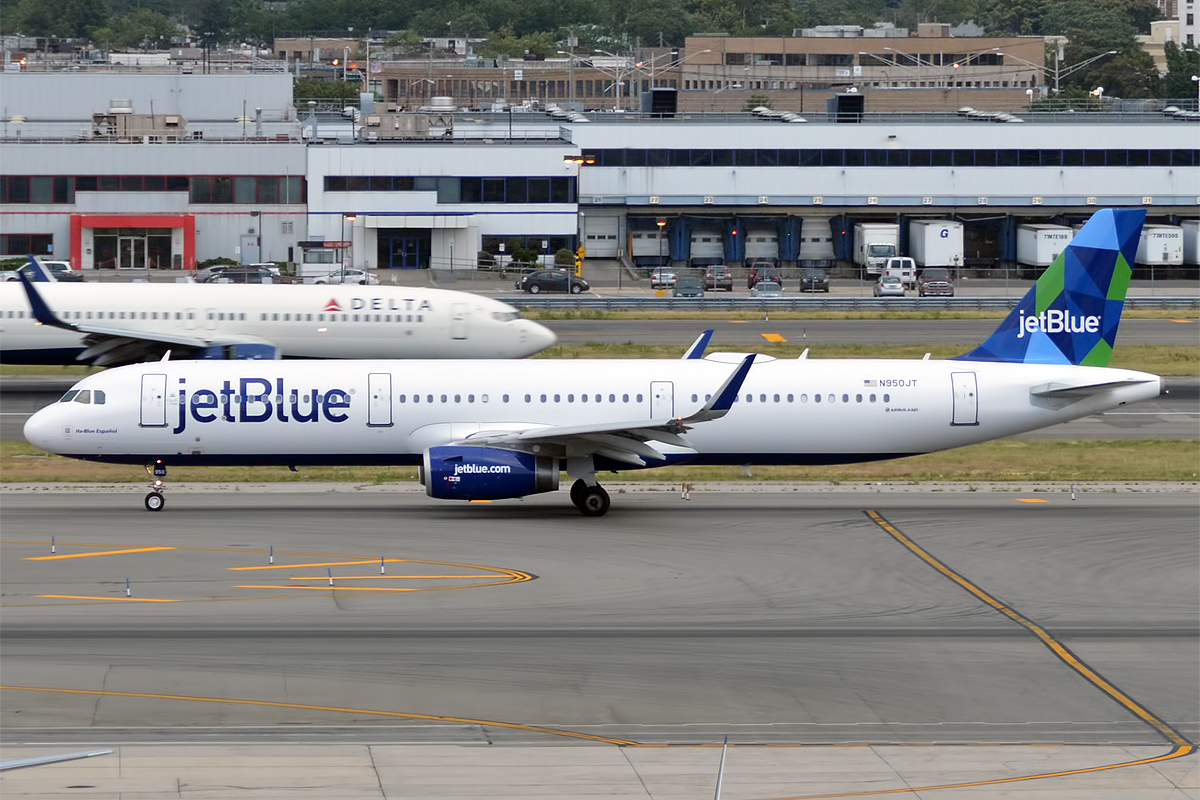
ATLANTA- Delta Air Lines (DL) faces fresh uncertainty over its planned Amazon Leo inflight Wi-Fi rollout after a United Launch Alliance (ULA) Vulcan rocket failed to place 40 satellites into orbit following its November 15, 2026, launch from Cape Canaveral Space Force Station in Florida.
JetBlue Airways (B6), which expects to introduce Amazon Leo connectivity in 2027, could also face delays. Meanwhile, United Airlines (UA) continues expanding its competing Starlink Wi-Fi service, which is already available on more than half of its daily flights.

Vulcan Rocket Failure Creates Uncertainty for Amazon Leo Satellite Network
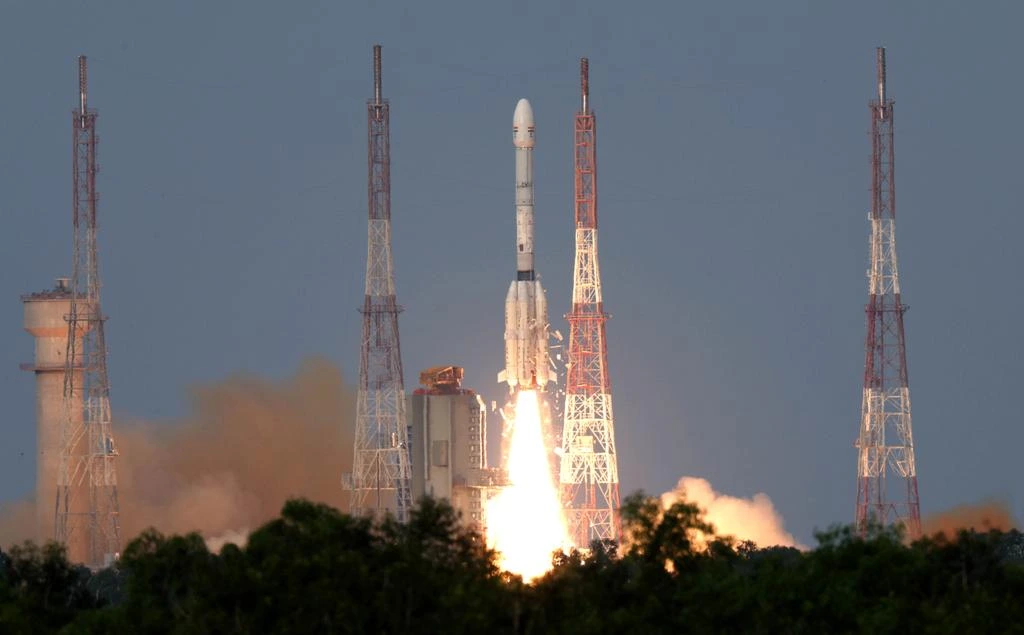
United Launch Alliance (ULA), a joint venture between Boeing and Lockheed Martin, suffered its first outright launch failure on Sunday, November 15, 2026, after its Vulcan rocket failed approximately 10 minutes after liftoff.
The rocket launched from Space Launch Complex 41 at Cape Canaveral Space Force Station at approximately 12:40 p.m. Eastern Time. It was carrying 40 Amazon Leo broadband satellites, which were supposed to enter low Earth orbit as part of the company’s expanding satellite internet constellation.
However, the rocket suffered an anomaly during its flight and failed to deliver the payload into orbit, resulting in the loss of all 40 satellites.
ULA confirmed the incident in a statement, acknowledging that the mission had failed to achieve its primary objective.
The company stated that it did not have sufficient flight data immediately after the incident to identify the cause. It also confirmed that it would work with Amazon and other relevant organizations to investigate the failure, determine the necessary corrective measures, and resume launches.
ULA said it remained committed to transparency throughout the investigation and would provide additional information as it became available.
The incident represents a major setback for ULA. The company was established in 2006 and had maintained a record of successful or partially successful missions before this failure.
The Vulcan was also completing only its fifth flight since entering service in 2024. Its previous missions included technical issues involving solid rocket booster components, but the vehicle had successfully completed those flights.
The latest failure will require investigators to examine flight telemetry and identify the technical problem before the rocket can return to operational service.
Amazon Leo Has Already Deployed Nearly 400 Satellites
The loss of 40 satellites represents a setback, but its impact extends beyond the immediate financial value of the lost payload.
Amazon Leo, previously known as Project Kuiper, is Amazon’s low Earth orbit satellite internet network designed to compete with SpaceX’s Starlink.
Amazon plans to deploy a constellation of 3,236 satellites to provide broadband connectivity across different regions worldwide.
Before the November 15 incident, the company had launched approximately 398 satellites across 14 missions, representing around 12% of the planned constellation.
The 40 satellites lost during the Vulcan mission accounted for approximately 1.2% of the total planned constellation.
Although the percentage appears relatively small, the loss is significant because Amazon needs a consistent launch schedule to expand satellite coverage and begin commercial services across additional markets.
Amazon had already completed its 1,000th satellite in early September 2026. The company also reported having hundreds of additional satellites ready for launch.
This means the manufacturing programme has continued building satellites, but the company must rely on launch providers to transport those spacecraft into orbit.
The Vulcan rocket is particularly important to this strategy.
According to Amazon, the company has contracted ULA for 38 launches that will deliver more than 1,500 first-generation Amazon Leo satellites into orbit.
Amazon described Vulcan as a primary launch vehicle for its constellation, making the rocket an important part of its long-term deployment strategy.

Vulcan Investigation Could Delay Future Amazon Leo Launches
The biggest concern following Sunday’s failure is the uncertainty surrounding ULA’s next Vulcan mission.
A launch failure generally requires a detailed investigation before the affected rocket can return to service. Engineers must examine available telemetry, identify the technical problem, develop corrective measures, and verify that the changes address the failure.
ULA has not announced a confirmed return-to-flight date.
The investigation could therefore affect the timing of subsequent Amazon Leo missions, particularly because the November 15 launch was the first flight in the companies’ 38-mission partnership.
Amazon had previously expected the second Vulcan mission, designated LV-02, to take place within weeks of the first launch.
That schedule is now less certain.
Reuters reported that the investigation could keep Vulcan grounded for months, although ULA has not announced an official duration for any suspension.
However, Amazon is not entirely dependent on ULA.
The company has agreements with several launch providers, including Arianespace, Blue Origin and SpaceX. This diversified launch strategy is intended to increase deployment capacity and reduce dependence on a single rocket programme.
Amazon’s next scheduled Leo mission is LE-04, which is expected to launch 36 additional satellites aboard an Arianespace Ariane 6 rocket no earlier than November 23, 2026.
The mission is scheduled to lift off from Europe’s Spaceport in French Guiana.
The upcoming Ariane 6 mission demonstrates that Amazon’s satellite deployment programme has other launch opportunities. However, the Vulcan failure could still disrupt the broader schedule because ULA was contracted to deliver nearly half of Amazon’s first-generation constellation.
Delta and JetBlue Wi-Fi Rollouts Face Fresh Uncertainty
The Vulcan failure has particular significance for the airline industry because Amazon Leo has secured agreements with Delta Air Lines and JetBlue to upgrade their inflight connectivity.
Both airlines selected Amazon’s satellite technology for their planned next-generation Wi-Fi services.
However, their deployment schedules were already different.
Delta Air Lines Plans Amazon Leo Installation on 500 Aircraft
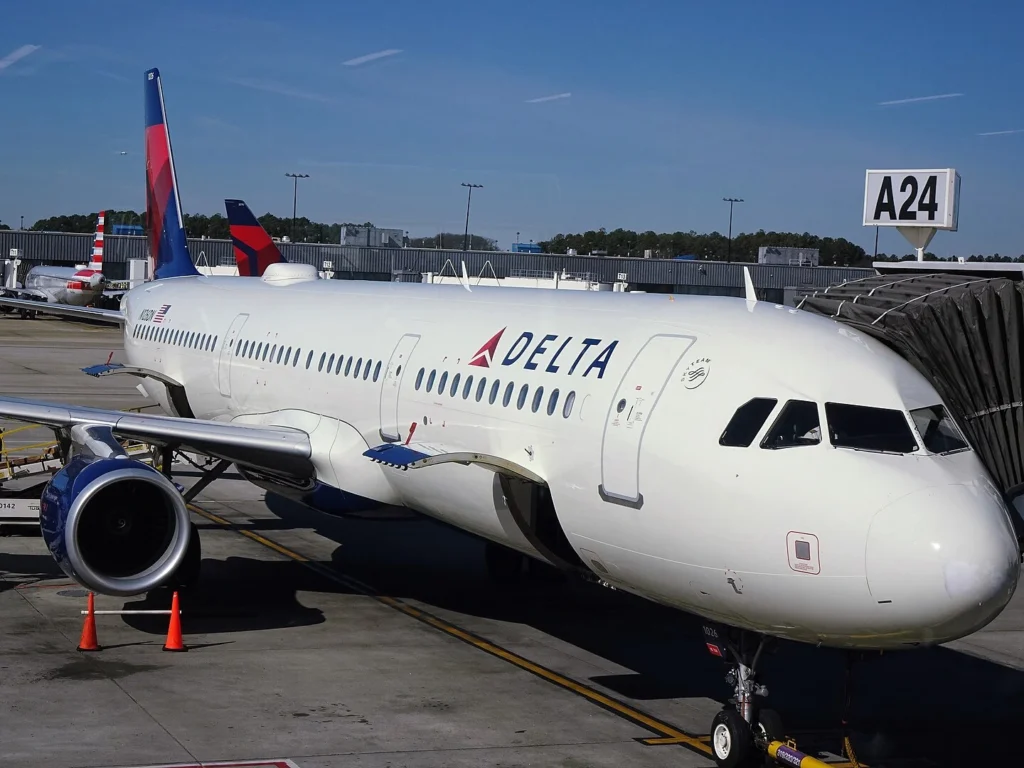
Delta Air Lines announced its Amazon Leo partnership on March 31, 2026.
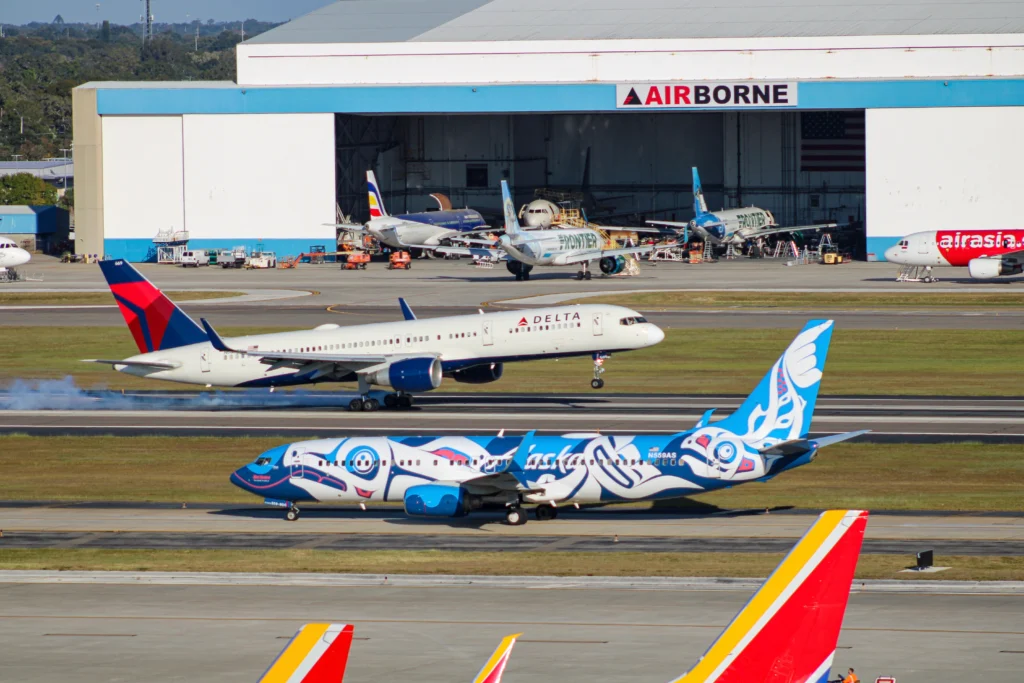
Under the agreement, the Atlanta-based airline plans to introduce Amazon Leo connectivity across hundreds of aircraft, with an initial installation programme covering 500 aircraft beginning in 2028.
The airline expects the technology to deliver faster, low-latency internet connectivity across domestic and international flights.
Delta also plans to integrate Amazon Leo with its existing Delta Sync Wi-Fi and seatback entertainment experiences.
The upgrade is expected to support activities such as video streaming, downloading and uploading content, accessing digital services, and sharing larger files during flights.
However, the November 15 rocket failure introduces uncertainty into Amazon’s ability to deliver the satellite capacity needed to support the airline’s future expansion.
Although Delta’s initial installation programme is not scheduled to begin until 2028, any prolonged disruption to Vulcan launches could affect Amazon Leo’s overall network development.
Delta has not announced a revised installation timeline following the incident.
JetBlue Could Face a More Immediate Timeline Risk
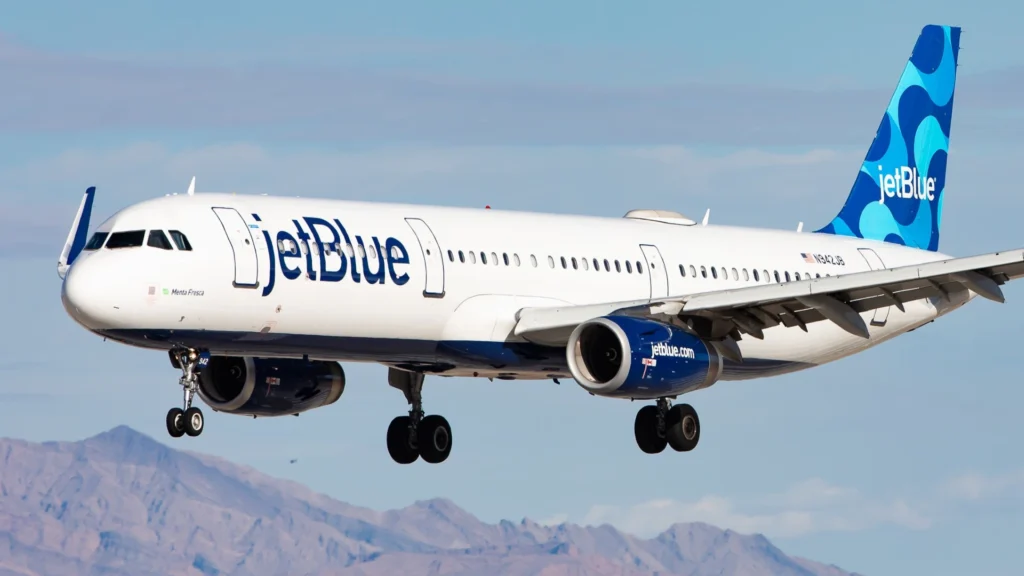
JetBlue Airways also selected Amazon Leo to improve its onboard internet connectivity.
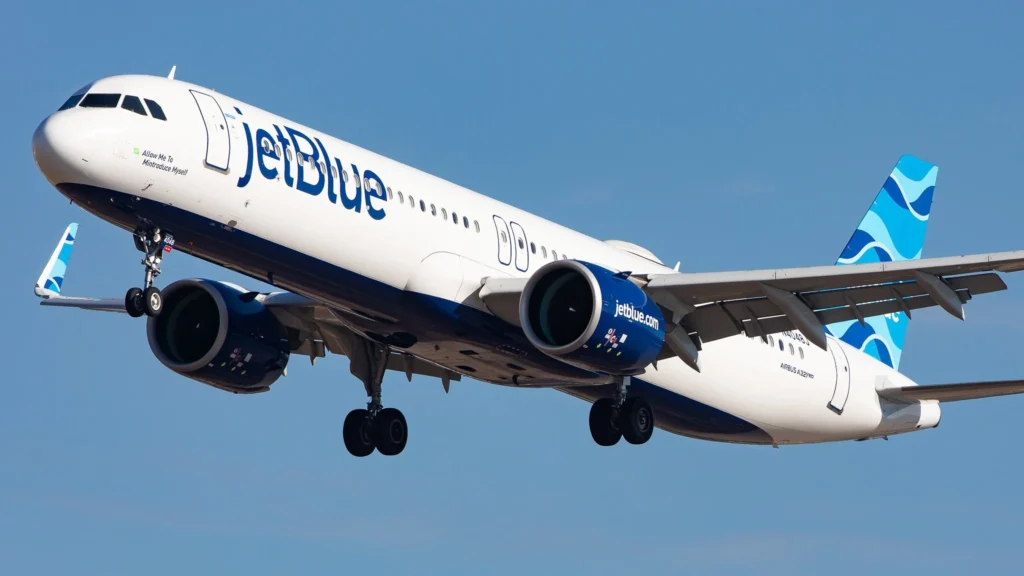
The airline announced that its rollout would begin in 2027, making its planned introduction earlier than Delta’s.
The partnership is intended to provide faster and more reliable connectivity to passengers using JetBlue’s inflight Wi-Fi service.
Unlike Delta’s 2028 introduction, JetBlue’s planned 2027 rollout leaves a shorter window for Amazon to expand its satellite network before the airline begins installations.
A prolonged investigation into the Vulcan failure could therefore create additional pressure on Amazon’s launch schedule.
However, JetBlue has not announced any changes to its previously communicated 2027 rollout target.
The extent of the potential impact will depend on how quickly ULA identifies the problem and resumes Vulcan missions, alongside Amazon’s ability to use alternative launch providers.
United Airlines Expands Starlink Wi-Fi Advantage
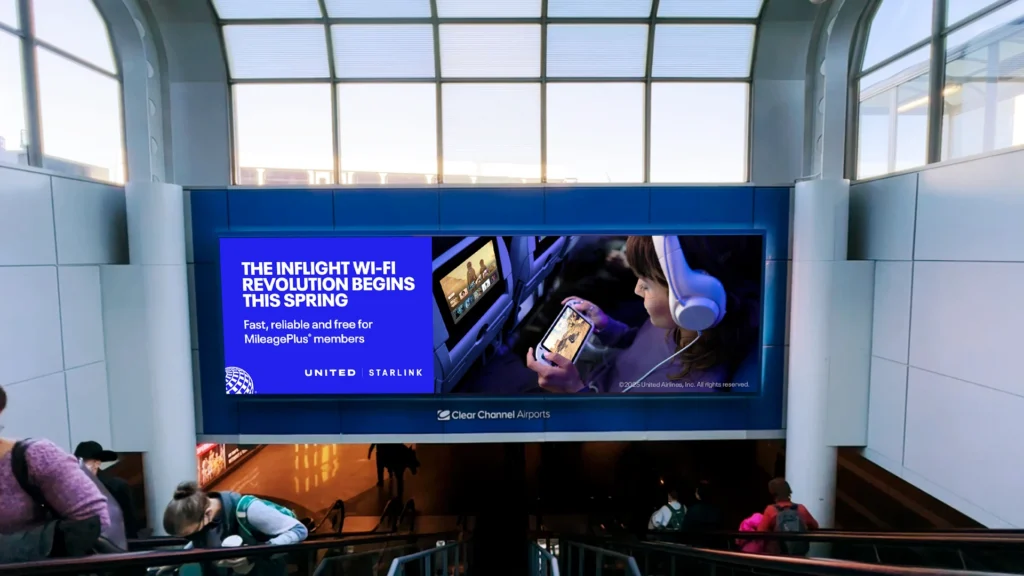
While Delta and JetBlue are preparing to introduce Amazon Leo, United Airlines is already expanding its Starlink-powered inflight Wi-Fi network.
United has been progressively installing Starlink across its aircraft, offering passengers high-speed internet connectivity through SpaceX’s low Earth orbit satellite constellation.
On November 12, 2026, United announced that Starlink was available on more than half of its daily flights.
The airline expects the service to cover nearly 64% of its daily flights by the end of 2026, with installations across its entire fleet targeted for completion by the end of 2027.
Starlink is available free to United MileagePlus members, giving the airline an additional advantage in its onboard passenger experience.
This timeline highlights the difference between the connectivity strategies adopted by the major US carriers.
United is already expanding an operational satellite internet service, while Delta and JetBlue are depending on Amazon Leo’s continued development and satellite deployment programme.
The latest Vulcan failure could widen that difference if Amazon experiences significant launch delays.
However, the incident does not automatically mean Delta or JetBlue will lose their existing inflight connectivity services. The Amazon Leo agreements concern future upgrades rather than the immediate replacement of all current Wi-Fi systems.
Delta continues to develop its existing connectivity infrastructure, including additional satellite capacity and network upgrades, while preparing for the planned Amazon Leo introduction.
Bottom Line
The November 15 failure of ULA’s Vulcan rocket represents a significant setback for Amazon Leo, particularly because the vehicle is expected to deliver more than 1,500 satellites through a 38-launch partnership.
Although the loss of 40 satellites represents only a small portion of the planned constellation, the investigation and potential suspension of future Vulcan missions could affect Amazon’s deployment schedule.
The consequences could extend to Delta Air Lines and JetBlue, both of which have selected Amazon Leo for their next-generation inflight Wi-Fi services.
JetBlue’s planned 2027 introduction and Delta’s initial 500-aircraft installation programme beginning in 2028 could face additional uncertainty.
However, neither airline has announced a revised schedule. Amazon also has other launch providers and a further Ariane 6 mission planned for November 23.
For now, the biggest question is how quickly ULA can identify the cause of the failure and return Vulcan to flight. The answer will play an important role in determining how quickly Amazon Leo can expand and support its airline partners.
Stay tuned with us. Further, follow us on social media for the latest updates.
Join us on Telegram Group for the Latest Aviation Updates. Subsequently, follow us on Google News
