

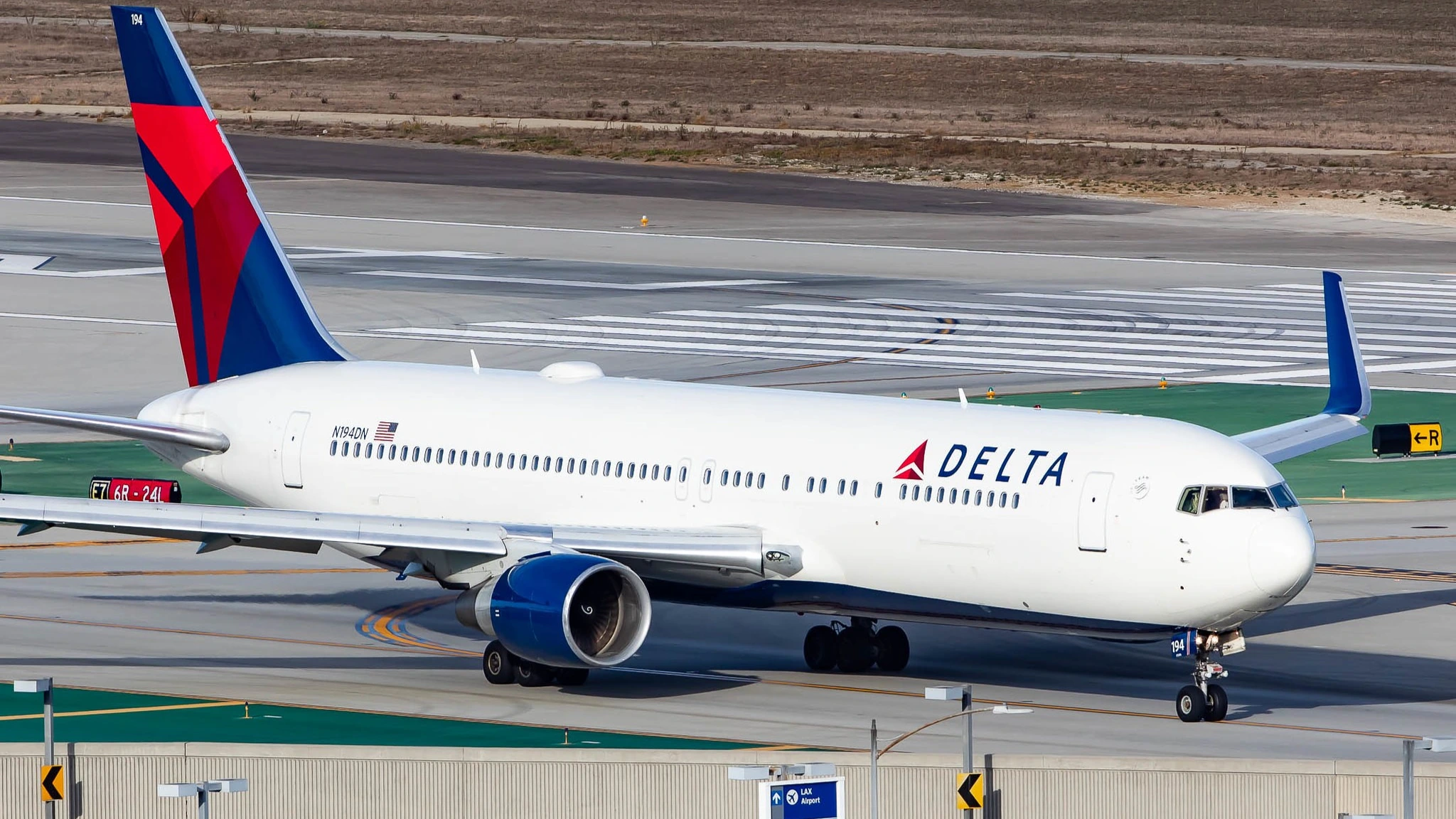
ATLANTA- Delta Air Lines (DL) continues to launch nonstop transatlantic flights from United States cities that sit outside its traditional hub network.
Many of these routes connect directly to Paris Charles de Gaulle Airport (CDG), strengthening both the carrier’s international reach and its partnership with SkyTeam member Air France (AF).
The strategy looks unconventional, but it reflects changing fleet economics, growing premium travel demand, and rising competition among global carriers.
According to Live and Let’s Fly, Delta’s recent route choices point to a calculated network plan rather than random expansion.
How Delta Is Moving Long-Haul Flying Beyond Its Hubs
Delta’s growing list of nonstop European routes from secondary US cities has led many aviation observers to describe the approach as the “Delta Dartboard.”
The phrase, associated with the Dots, Lines, and Destinations podcast, jokingly suggests executives simply throw a dart at a map before picking the next international destination.
While the concept is meant in jest, the route decisions reveal a structured method built on fleet capability, market demand, and competitive positioning.
For decades, Delta relied on its largest hubs, including Atlanta, Detroit, Minneapolis, Salt Lake City, and New York, to consolidate passengers before operating long-haul flights. A traveler from Indianapolis (IND) typically connected through one of these hubs before continuing to Europe.
Today, Delta increasingly bypasses that model with nonstop flights from cities that are not major hubs. Indianapolis to Paris and Austin (AUS) to Paris illustrate the shift. Most of these services focus on Paris, where Delta benefits from extensive onward connections through Air France.
The carrier also recently restarted the contested Los Angeles (LAX) to Hong Kong (HKG) route, though its broader international growth has stayed centered on Paris.
Modern Aircraft Have Changed Route Economics
One of the biggest reasons these routes now work is Delta’s newer-generation fleet.
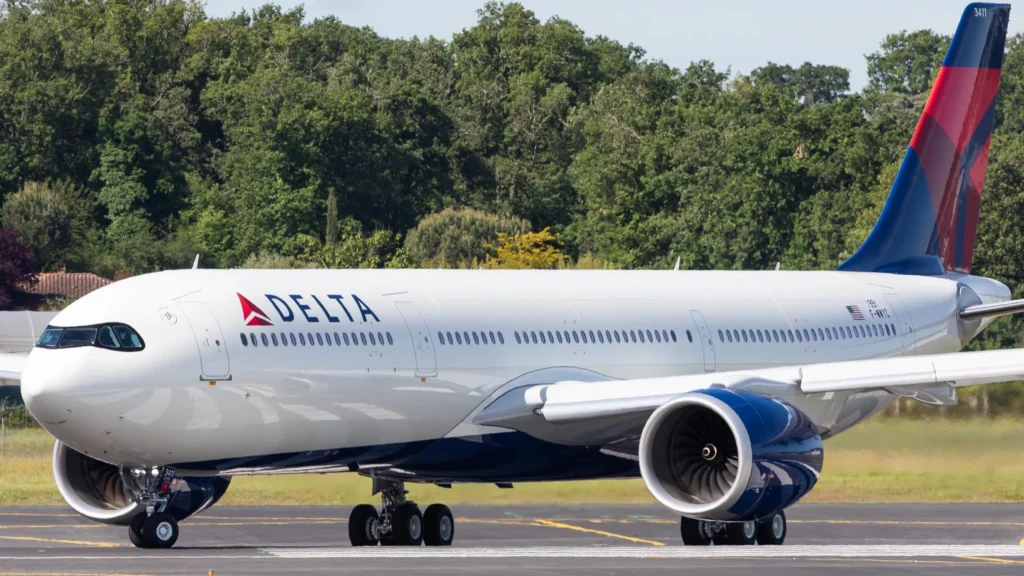
The Airbus A330neo and Airbus A321neo XLR deliver improved fuel efficiency and lower operating costs than older aircraft. Their performance lets Delta profitably serve markets that once lacked the demand to fill larger wide-body jets.
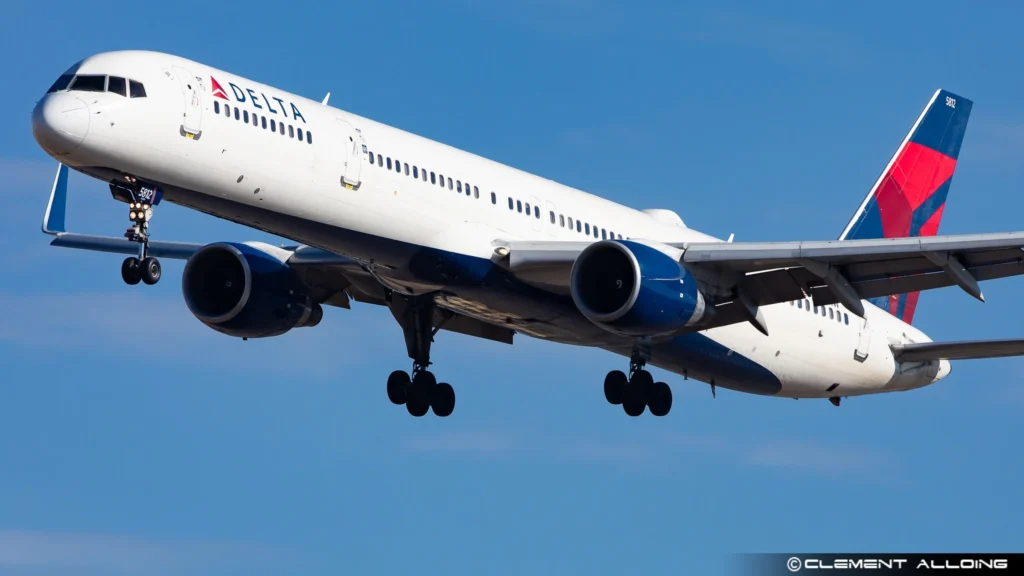
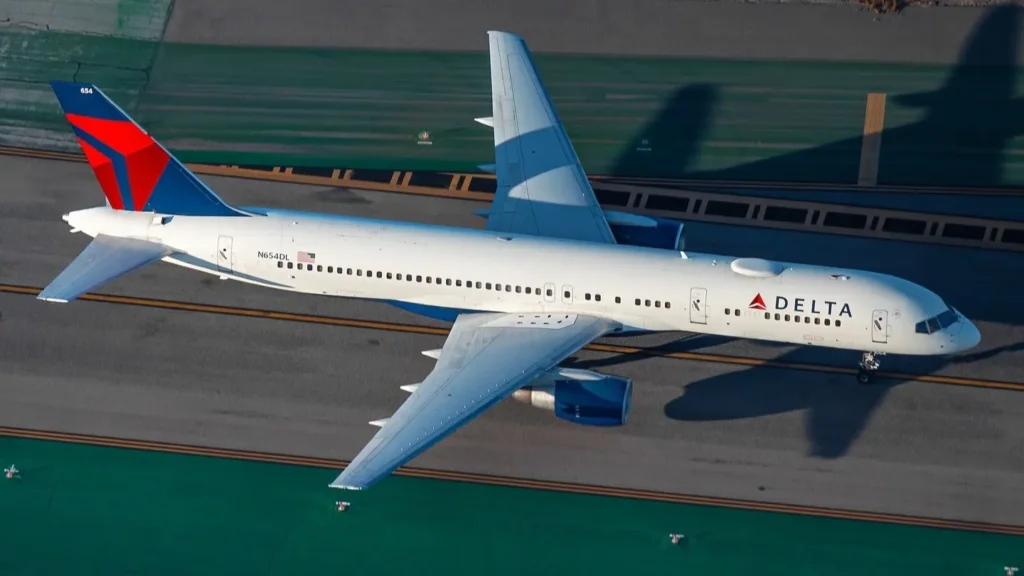
Earlier experiments leaned heavily on the Boeing 757. The aircraft successfully operated several transatlantic routes, but it lacked the range to fly longer sectors, such as Austin to Paris, with a full payload. That limitation restricted the airline’s network options.
Modern aircraft reduce operating costs, improve fuel efficiency, and lower the breakeven load factor, thereby making routes with moderate demand financially sustainable.
Premium Revenue Supports Long-Haul Growth
Passenger volume alone does not determine whether an international route succeeds. Revenue quality matters just as much.
Premium leisure travelers and corporate customers often pay significantly more for nonstop service that removes a connection. That willingness to pay produces stronger yields than a network built mainly around economy passengers.
A full Delta One cabin paired with healthy premium economy sales can support a route that a coach-only model never could.
Many target cities also host major multinational companies that generate steady business travel to Europe. Nonstop service from a passenger’s home airport often becomes more attractive than connecting elsewhere, even when alternative itineraries are cheaper or slightly faster.
Clearing customs and immigration at a familiar home airport adds to that appeal, which is why frequent business travelers frequently favor a local long-haul departure.
Competitive Positioning
Delta’s international expansion is also a competitive move. Launching routes from secondary cities lets the airline establish presence before rivals expand into the same markets.
Austin offers a clear example. British Airways (BA) serves London up to twice daily, Lufthansa (LH) flies to Frankfurt, and KLM (KL) links the city with Amsterdam on a 777. Those carriers strengthen oneworld, Star Alliance, and SkyTeam respectively.
Delta’s Paris service widens SkyTeam’s foothold while offering convenient onward connections across Europe through Air France.
The strategy also reflects competition with American Airlines and United Airlines. American pushed aggressively into Austin before scaling back some of its ambitions.
Establishing service early can help Delta secure long-term loyalty before competing airlines strengthen their own networks. Rather than simply betting on a destination, Delta often positions itself ahead of future competitive threats.
International Growth Is Balanced By Network Cuts
Delta’s international expansion has occurred alongside adjustments elsewhere in its network. The airline has trimmed several domestic and regional services that no longer meet financial targets.
The Dayton cut became one of the more visible examples during 2026 as Delta reallocated aircraft toward routes with stronger revenue potential.
This reflects a broader strategy rather than contradictory decision-making. A jet pulled from a lower-performing domestic market can generate stronger returns on a premium-focused international route.
Airport incentives also play a role. Many airports provide financial support to attract new international routes because direct overseas connectivity benefits regional economies. Local corporations sometimes commit to a set volume of travel spending to help support new services in their early years, which reduces Delta’s risk.
The approach is not new for the carrier, which previously operated a Pittsburgh (PIT) to Paris flight five times weekly, a route that is now defunct.
Which US Cities Could Be Next
If Delta keeps following its current logic- meaning an efficient jet, a premium-heavy cabin, a fast-growing or contested market, and no nearby hub already serving the demand- several cities stand out.
Nashville
Nashville (BNA) remains one of the strongest possibilities, with rapid population growth, an expanding corporate base, a thriving tourism industry, and no nearby Delta hub that would duplicate demand.
Raleigh-Durham
Raleigh-Durham (RDU) combines a large technology sector, research institutions, and growing artificial intelligence investment, exactly the kind of high-income secondary market the A321neo XLR was built to serve. American Airlines already serves London from the region, but added European demand, especially in the age of AI, could justify further expansion.
Additional Candidate Cities
Several other cities also fit the model.
- San Antonio could become a logical extension if Austin continues to perform.
- Charleston generates strong premium leisure demand despite a smaller population, the metric that matters most for this model.
- Columbus could support a three to four times weekly European schedule.
- St. Louis recently regained nonstop London service through British Airways, signaling renewed international demand.
- Pittsburgh previously supported Delta’s Paris service and now offers seasonal European flights from Aer Lingus, Icelandair, and British Airways, making a Delta return less likely in the near term.
- Cleveland carries two of those three carriers while benefiting from renewed domestic investment by United Airlines.
The strongest bets appear to be Nashville next, with Raleigh-Durham close behind.
Long-Term Network Shift
Delta’s expanding list of nonstop European flights from secondary US cities is not a random collection of announcements. Modern fuel-efficient aircraft, stronger premium revenue, airport partnerships, and competitive positioning have created opportunities that did not exist a decade ago.
Not every route will survive. Some markets may weaken during periods of softer corporate travel or higher fuel prices, and Delta has consistently shown a willingness to drop routes that miss financial expectations. Austin to Paris is not guaranteed a third summer.
That flexibility is a core part of the strategy rather than a weakness. Instead of relying only on the traditional hub-and-spoke model, Delta selectively connects high-value secondary markets directly with Europe whenever the underlying economics support long-term profitability.
Stay tuned with us. Further, follow us on social media for the latest updates.
Join us on Telegram Group for the Latest Aviation Updates. Subsequently, follow us on Google News
