


ATLANTA- Hermeus, a defense aviation company headquartered near Hartsfield-Jackson Atlanta International Airport (ATL), confirmed that its Quarterhorse Mk 2.1 aircraft completed its first supersonic flight, reaching a top speed of Mach 1.21. The flight was executed on the platform’s third test sortie out of Spaceport America over White Sands Missile Range airspace.
The achievement comes less than three months after the aircraft’s maiden flight and 364 days after the first flight of Hermeus’ earlier Mk 1 prototype. The Atlanta (ATL) based company continues to operate a propulsion testing facility at DeKalb-Peachtree Airport (PDK), reinforcing its rapid development model in defense aviation.

Quarterhorse Mk 2.1 Crosses the Sound Barrier
Quarterhorse Mk 2.1 broke the sound barrier on only its third test flight, a pace that Hermeus credits to its iterative hardware development philosophy.
The supersonic milestone validates the company’s design decisions on its F-16-scale platform and provides flight test data that will inform follow-on aircraft in the program.
The aircraft operated out of Spaceport America in New Mexico, flying within the restricted airspace above the White Sands Missile Range. This corridor offers a controlled environment for high-speed flight testing, supporting the safe evaluation of supersonic performance metrics.
Engineering Backbone and Propulsion System
Quarterhorse Mk 2.1 is powered by the Pratt & Whitney F100 engine, a proven turbofan produced by Pratt & Whitney, an RTX business.
The F100 has a long service history powering F-15 and F-16 fighters, and its integration into the Quarterhorse platform provides a reliable propulsion baseline for early flight test campaigns.
The aircraft is the first of three F-16-scale supersonic platforms in the company’s development roadmap. Hermeus designs, builds, and flies aircraft in rapid succession, using each flight to refine performance and lower risk for the next iteration.
CEO Remarks
AJ Piplica, CEO and Co-founder of Hermeus, said the program’s velocity has captured the attention of customers at the Department of War. He noted that this flight demonstrates a pace of execution that is rare in modern aviation.
Piplica added that the United States’ ability to deliver asymmetric military capability at scale depends on teams that can solve difficult technical problems quickly, a point Hermeus aims to prove with each test flight and each new airframe.

Next Aircraft in the Development Roadmap
Hermeus is already building and testing the next vehicle in the program, Quarterhorse Mk 2.2, with Mk 2.3 expected to follow shortly after. Each successive aircraft is designed to push performance further toward sustained high-Mach flight.
This compressed build-and-test cycle allows Hermeus to scale new capabilities in years rather than decades.
The company will continue its flight test campaign with Mk 2.1 while progressing on the higher-performance variants.
Pentagon Focuses on High-Speed Capability
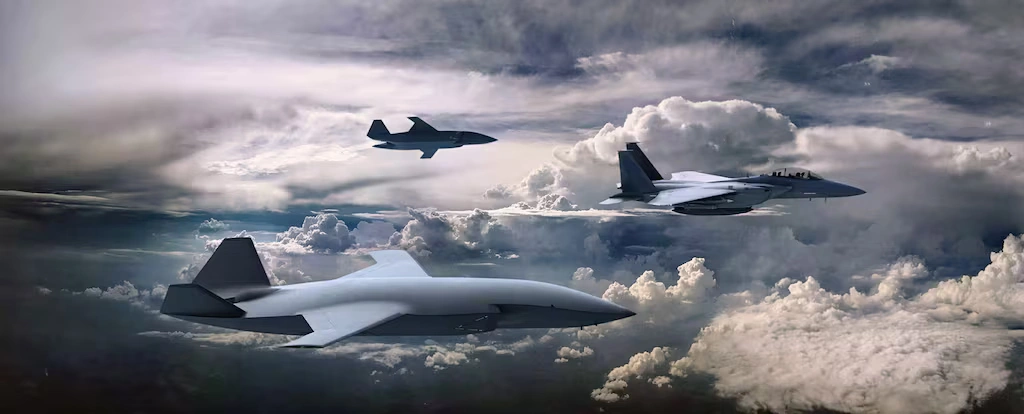
The milestone arrives as the Pentagon places greater emphasis on high-speed systems in response to advances by near-peer adversaries such as China. Faster unmanned aircraft can shorten response times and deliver affordable mass in contested environments.
Hermeus works directly with the Department of War to provide high-speed capabilities aimed at maintaining a durable, asymmetric advantage for the United States and its allies.
The Quarterhorse line forms the foundation for the company’s broader push toward hypersonic flight.
About Hermeus
Hermeus is a venture-backed defense aviation company focused on rapid iterative prototyping to build the fastest aircraft in service today. By prioritizing relentless hardware iteration, the company aims to deliver high-speed systems at the pace of the modern battlefield.
Stay tuned with us. Further, follow us on social media for the latest updates.
Join us on Telegram Group for the Latest Aviation Updates. Subsequently, follow us on Google News
