

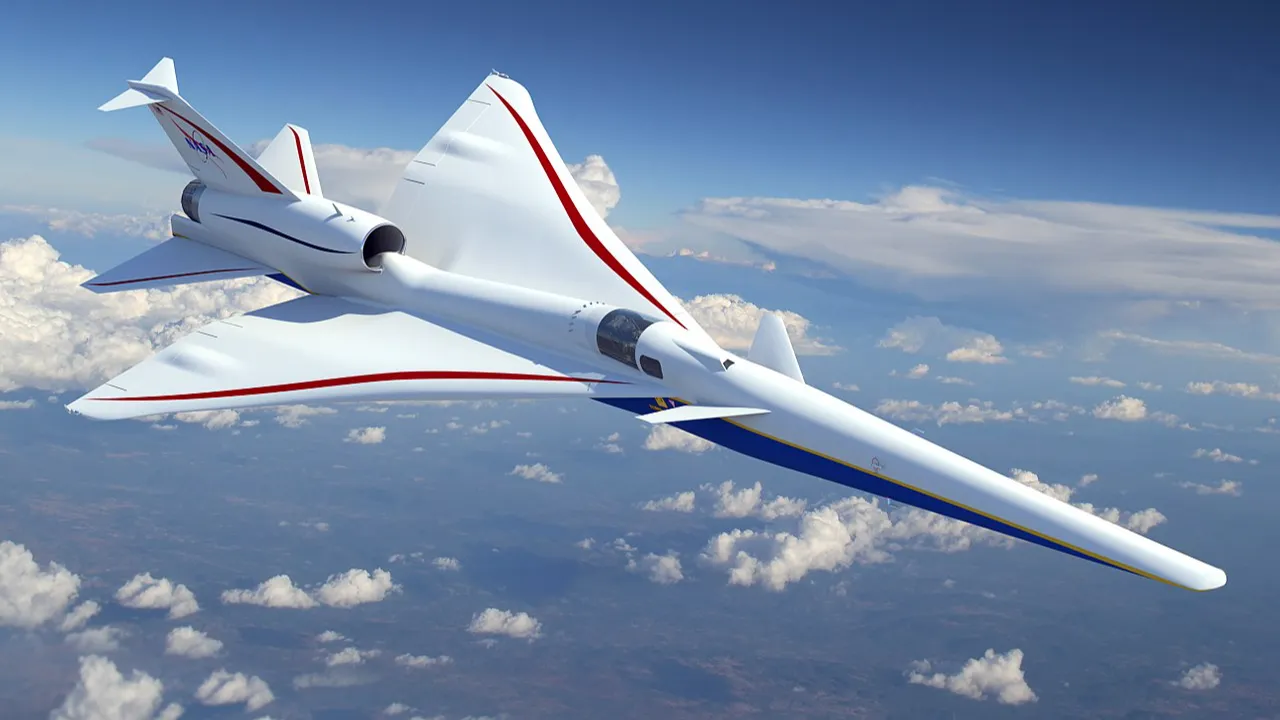
PALMDALE- In a landmark achievement for aviation, the X‑59 QueSST demonstrator, developed by Lockheed Martin Skunk Works in partnership with NASA, completed its maiden flight from Air Force Plant 42 in PALMDALE (PMD) to land near Edwards Air Force Base (EDW) in California.
The sub-sonic test sortie verifies initial flying qualities and sets a foundation for quieter supersonic travel. The experimental craft is designed to operate at speeds up to Mach 1.4 and altitudes around 55,000 ft while reducing the signature sonic boom to a gentle “thump.”
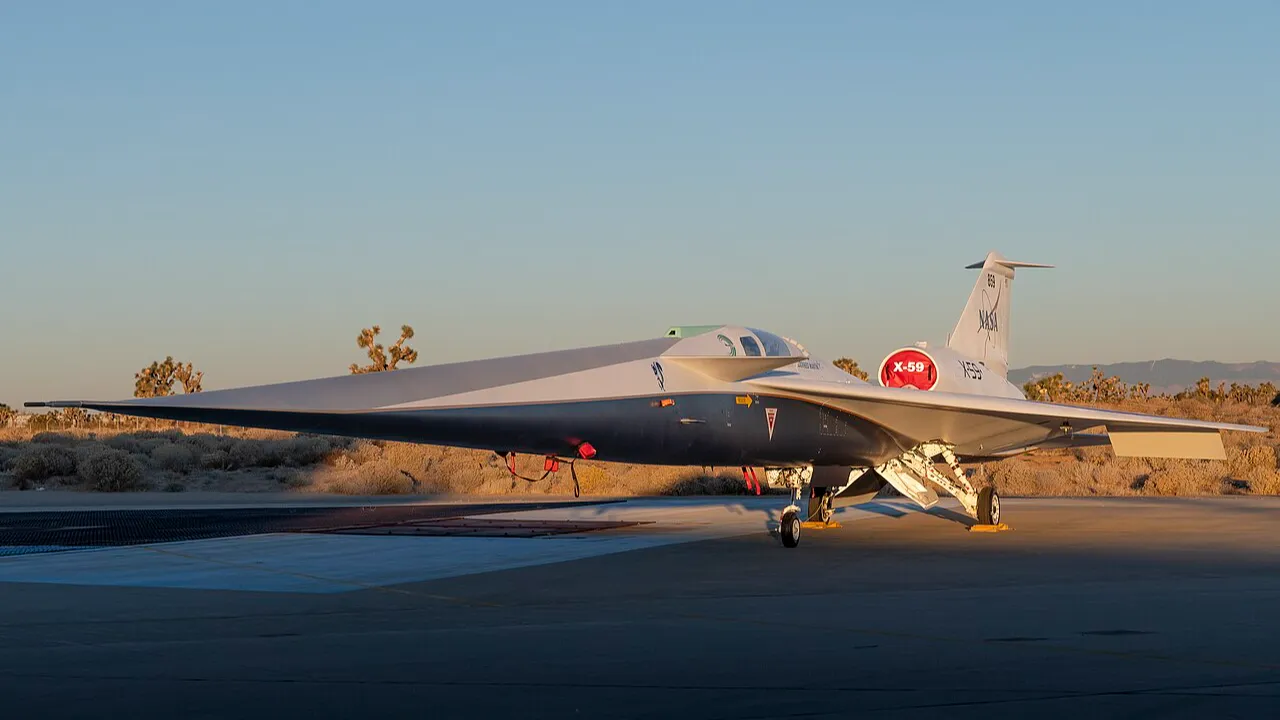
NASA X-59 Supersonic Flight
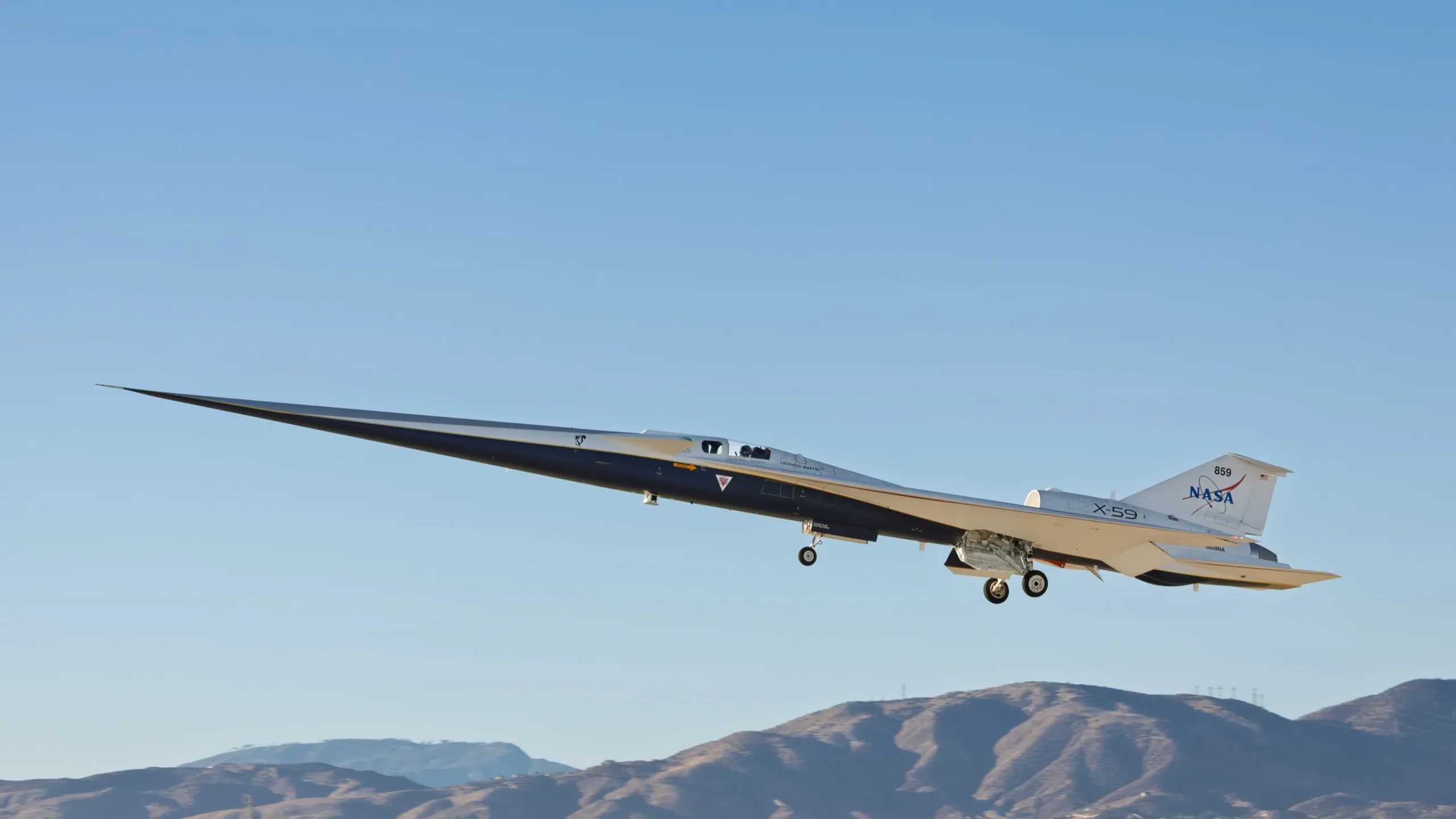
The X-59 lifted off from Plant 42’s runway early on October 28, 2025, under controlled conditions. It climbed to approximately 12,000 ft and achieved a speed in the region of 230 mph, remaining well below supersonic thresholds for this initial sortie.
The aircraft landed safely near NASA’s Armstrong Flight Research Center, completing the pilot-in-command’s validation of control systems and air-data performance.
According to Lockheed Martin and NASA, the flight performed “exactly as planned,” confirming baseline system integrity and readiness for upcoming envelope expansion:
We are thrilled to achieve the first flight of the X-59…This aircraft is a testament to the innovation and expertise of our joint team, and we are proud to be at the forefront of quiet supersonic technology development.
The mission marks the transition from ground tests to airborne evaluation in the low-boom supersonic programme.
Quiet Supersonic Technology
One of the key innovations of the X-59 lies in its ability to fly faster than the speed of sound without generating the disruptive sonic boom that has long constrained supersonic commercial aviation.
Traditional supersonic transports faced prohibitions over land primarily due to sonic-boom noise, which could exceed acceptable community thresholds.
The X-59’s elongated nose, carefully shaped fuselage, and engine integration aim to reshape shock waves and reduce noise output to levels comparable to slamming a car door.
This technological advance positions the X-59 not merely as a faster aircraft, but as a key enabler of a regulatory shift.
Data collected from its acoustic validation campaigns may support changes in noise thresholds by aviation authorities such as the Federal Aviation Administration (FAA) and the International Civil Aviation Organization (ICAO), paving the way for routine overland supersonic operations.
X-59’s Commercial Implications for Aviation
For the commercial aviation sector, the success of this demonstrator heralds the possibility of halving long-haul travel times. After the completion of the first flight, Sean Duffy, acting NASA Administrator, said:
X-59 is a symbol of American ingenuity. The American spirit knows no bounds. It’s part of our DNA – the desire to go farther, faster, and even quieter than anyone has ever gone before. This work sustains America’s place as the leader in aviation and has the potential to change the way the public flies.”
With its design cruising speed of approximately 925 mph (Mach 1.4), the X-59 could cover trans-oceanic distances in three to four hours, reducing what today takes seven or eight hours.
Airlines and aircraft manufacturers are closely watching, as the operational model of supersonic travel may soon re-emerge with vastly improved noise impacts and fuel-efficiency metrics.
Aviation hubs such as London (LHR), New York (JFK), and Singapore (SIN) could be connected in previously unthinkable timeframes, transforming business travel and premium leisure segments.
Moreover, cargo operators may explore high-speed logistics options using quiet supersonic platforms once certification and economic viability are proven.
Programme Roadmap and Challenges
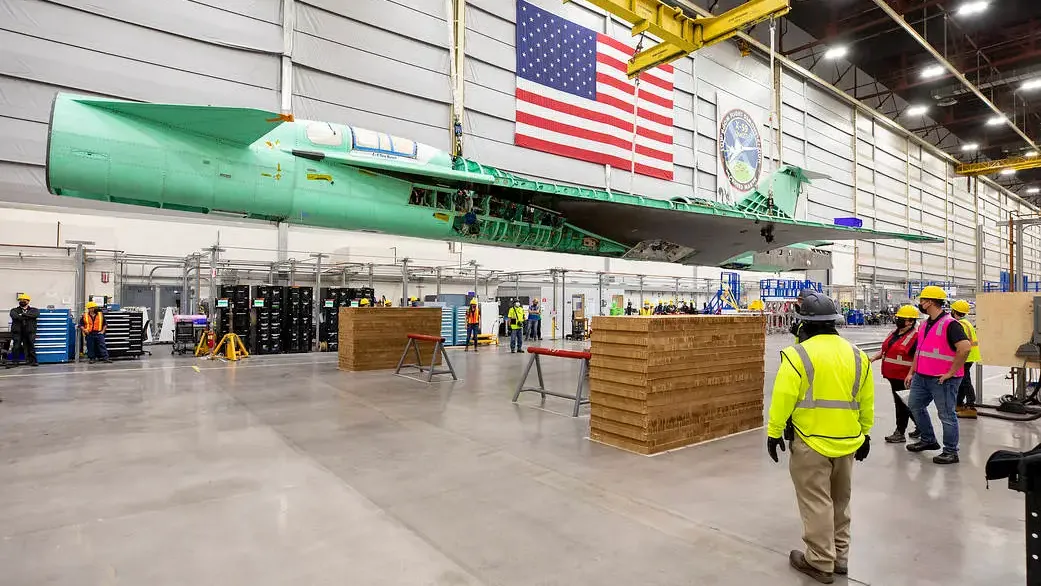
Following this initial flight, the X-59 programme will move through a series of test phases including supersonic runs, acoustic measurements, and community-response over-flight missions.
The aircraft’s flight envelope will expand to higher speeds and altitudes, culminating in supersonic cruise at ~55,000 ft. NASA estimates that community acceptance flights over selected U.S. cities will begin in 2026, and data will inform regulatory proposals by 2028.
Challenges remain: scaling from a demonstrator to a full commercial air-liner imposes hurdles in cost, certification, fuel consumption, and infrastructure adaptation.
Operators will demand proof of maintenance regimes, regulatory harmonization, and return-on-investment for relatively small fleets initially. Nevertheless, the X-59’s successful first flight marks a leap forward in overcoming these obstacles.
X-59 Specifications and Design Insights
| Specification | Detail |
|---|---|
| Aircraft Name | X-59 QueSST (Quiet SuperSonic Technology) |
| Manufacturer | Lockheed Martin Skunk Works, in partnership with NASA |
| Length | 99.7 ft (30.4 m) |
| Wingspan | 29.5 ft (9.0 m) |
| Height | 14 ft (4.3 m) |
| Maximum Speed | Mach 1.4 (approx. 925 mph / 1,488 km/h) |
| Service Ceiling | 55,000 ft (16,764 m) |
| Engine | 1 × General Electric F414-GE-100 turbofan |
| Crew | 1 (pilot) |
| Noise Level | ~75 PLdB (Perceived Level decibels) |
| First Flight | October 28, 2025 – Palmdale (PMD), California |
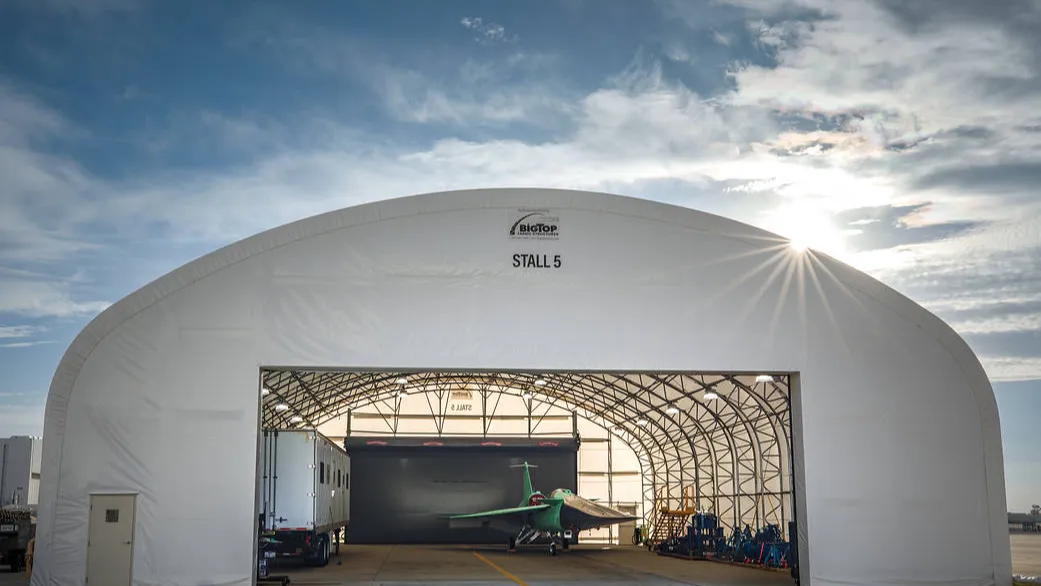
The X-59’s engineering is centered on achieving quiet supersonic flight without compromising aerodynamic efficiency. A defining element of the aircraft is its External Vision System (XVS)—a high-resolution camera and display network that replaces the traditional cockpit window.
This system combines feeds from forward and downward-facing sensors, processed into a real-time view displayed on cockpit monitors, ensuring precise visibility while maintaining the aircraft’s slender nose contour.
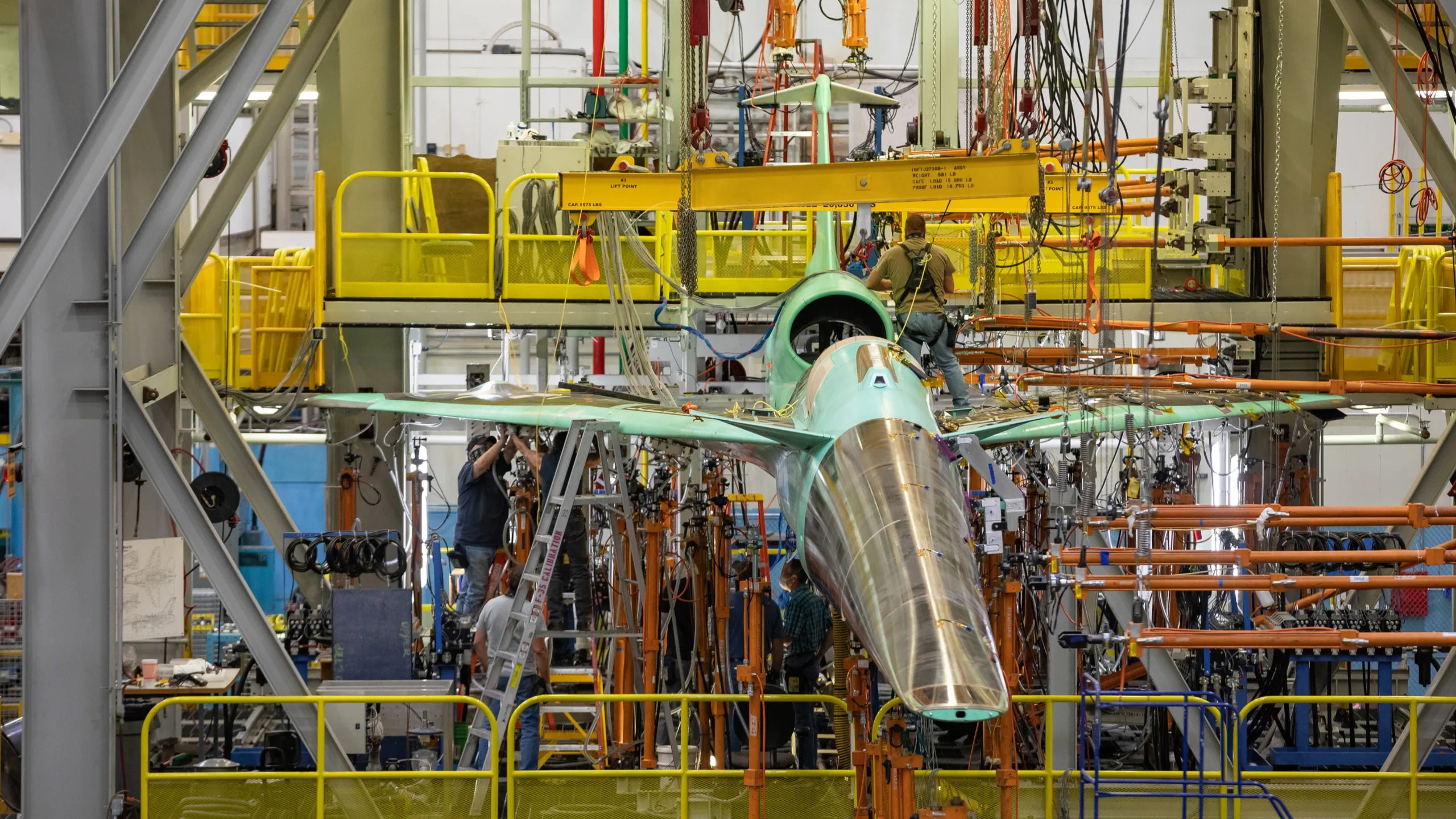
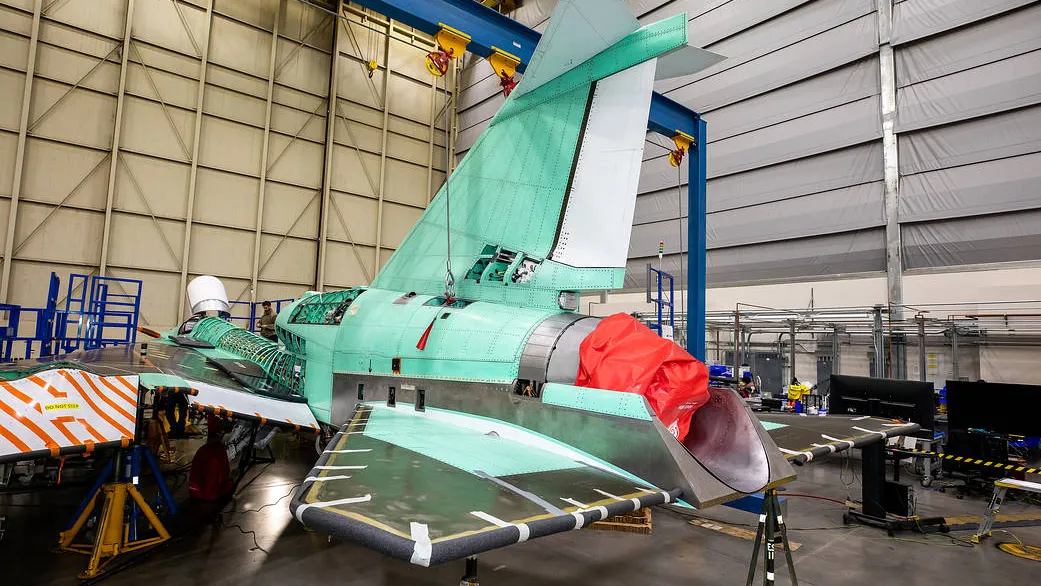
Lightweight composite materials and large, unitized skins reduce part count and enhance structural integrity.
Components such as the landing gear, ejection seat, and environmental systems are adapted from proven military aircraft, including the F-16 and T-38, streamlining production and certification.
The 38-foot nose cone and uniquely contoured fuselage reshape shock waves to prevent them from merging into a disruptive sonic boom, resulting in a softer “sonic thump.”
With digital flight controls, efficient aerodynamic shaping, and a focus on community noise reduction, the X-59 represents a technological milestone. Its data will inform future regulations, supporting the reintroduction of safe, quiet, and economically viable supersonic travel over land.
Bottom Line
The successful first flight of the X-59 represents far more than a single engineering milestone—it marks the start of a new era in supersonic aviation that balances speed, sustainability, and sound.
By demonstrating that it can fly faster than Mach 1 while keeping noise to community-acceptable levels, the X-59 has opened a realistic path toward reviving commercial supersonic operations over populated areas.
Over the coming months, Lockheed Martin and NASA will conduct a series of progressively complex flight tests to validate aerodynamic performance, acoustic profiles, and human response to the aircraft’s low-boom signature.
These community response studies will play a vital role in convincing regulatory agencies like the FAA and ICAO to review the long-standing restrictions on supersonic flight over land. If successful, such changes could redefine global air travel standards within the next decade.
Stay tuned with us. Further, follow us on social media for the latest updates.
Join us on Telegram Group for the Latest Aviation Updates. Subsequently, follow us on Google News
